The digital revolution has led to a critical shortage of IPv4 addresses. We explore innovative solutions being implemented to tackle this challenge, ensuring the Internet remains accessible and functional.
The IPv4 shortage crisis
IPv4, with its 32-bit address format, supports around 4.3 billion addresses. Initially sufficient, the explosion of internet-connected devices led to a rapid exhaustion of these addresses.
The first indications of IPv4 address depletion appeared in the 1990s, raising concerns about the sustainability of Internet growth.
Evolution from IP address to CIDR
To extend the life of IPv4, Classless Inter-Domain Routing (CIDR) was introduced. This system allowed for more efficient allocation of IP addresses, reducing wastage and extending the IPv4 lifespan.
Network Address Translation (NAT) as a solution
NAT technology allows multiple devices on a private network to share a single public IP address. This has significantly reduced the need for unique public IPv4 addresses for every device.
Transitioning to IPv6
IPv6, with its 128-bit address format, supports a vastly larger number of addresses. It is being gradually adopted to resolve the IPv4 shortage and brings enhancements in security and routing.
Innovative market solutions
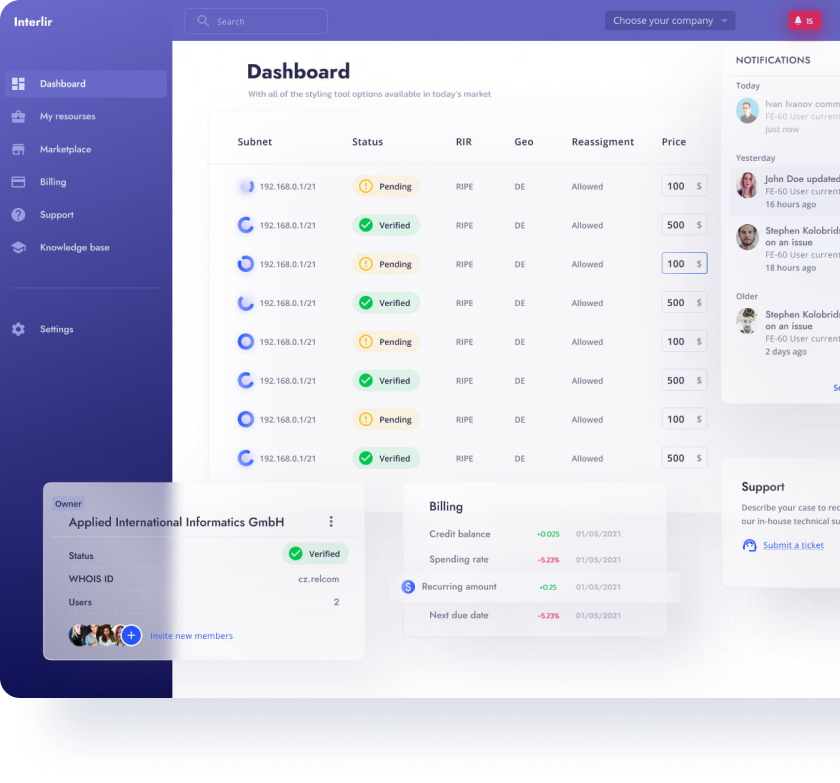
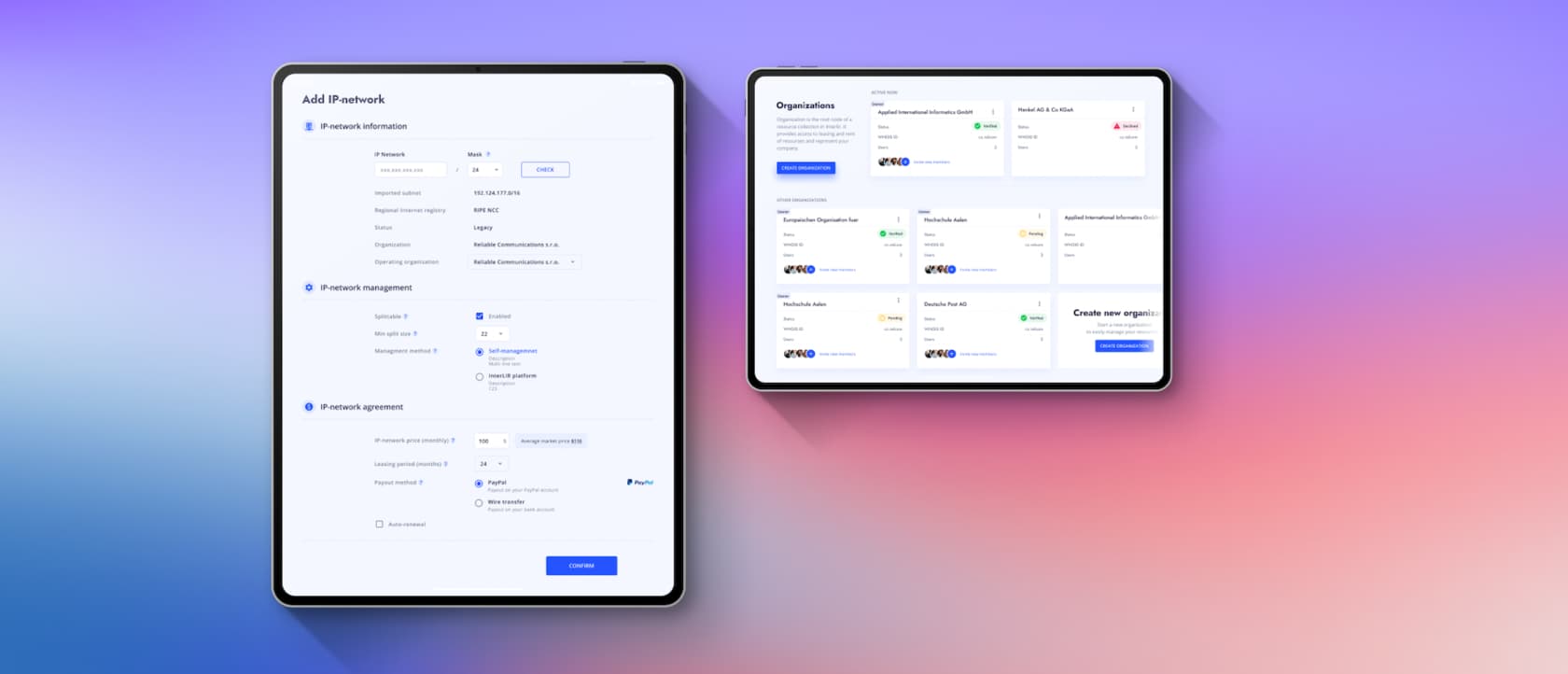
Platforms like InterLIR provide a marketplace for leasing and trading IPv4 addresses. This system helps redistribute IPv4 resources, making them accessible to those in need.
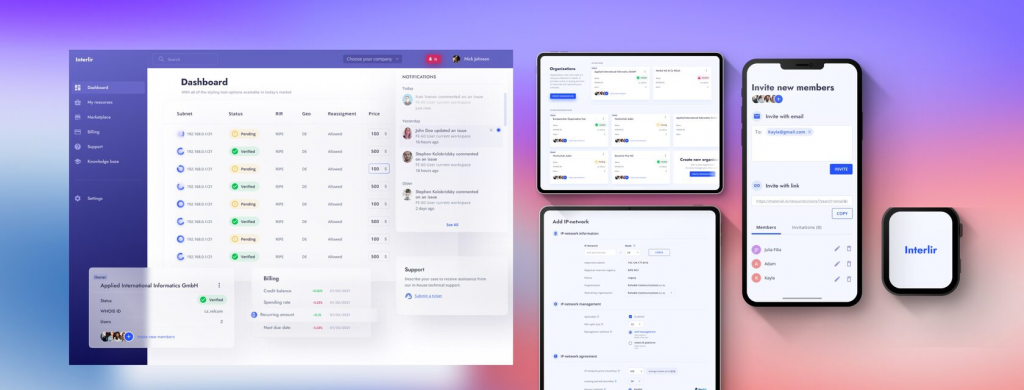
Automation in IP address management, as seen in platforms like InterLIR, optimizes the utilization of IP resources and offers a streamlined process for leasing or trading IP addresses.
Benefits of renting IPv4 addresses
Financially viable: Renting IPv4 addresses is more cost-effective for small and medium businesses.
Flexibility: Renting offers flexibility to adjust the number of IP addresses based on current business needs.
No blacklisting risks: Leasing a dedicated IPv4 address reduces the risk of being blacklisted due to spam or bad traffic generated by other users.
Leasing out unused IPv4 addresses
Revenue stream for owners: Businesses with unused IPv4 addresses can lease them out, creating a new revenue stream.
Transparency and ease: Platforms like InterLIR ensure transparency in the leasing process, making it easy and efficient for owners to lease out their unused addresses.
Conclusion
The IPv4 shortage has necessitated innovative solutions. The transition to IPv6, combined with the efficient use of existing IPv4 resources through trading and leasing platforms, offers a multifaceted approach to address this challenge. These solutions not only alleviate the immediate scarcity but also pave the way for a more sustainable and robust Internet infrastructure.
The evolution of IP addressing is a critical aspect of the internet’s development and functionality. Here’s a more detailed look into its evolution.
The evolution of IP addressing
Origins and IPv4: The original IP address system, IPv4, was established in the early days of the internet. This system uses 32-bit addresses, allowing for approximately 4.3 billion unique addresses. Initially, this seemed like a vast pool of addresses, but with the explosive growth of the internet, it became apparent that this number would not suffice.
IPv4 address exhaustion: The exhaustion of IPv4 addresses has been a growing concern. As early as the 1990s, experts predicted that the available IPv4 addresses would run out. This is due to several factors, including the inefficient allocation of addresses and the exponential increase in devices needing IP addresses.
Address allocation in 2020 and beyond
Continued IPv4 exhaustion: By 2020, the pool of unallocated IPv4 addresses had significantly diminished. The Regional Internet Registries (RIRs) were managing the final pools of these addresses, with some focusing on address reclamation efforts. For instance, RIRs like APNIC and LACNIC had been actively re-designating previously “Reserved” addresses as “Available” to manage the scarcity.
Address reclamation and redistribution: RIRs undertook efforts to reclaim and redistribute IPv4 addresses. This included marking returned or recovered addresses as “reserved” for a period, allowing services time to adjust to the changes before these addresses were allocated again. The process reflected a major effort to manage the limited IPv4 resources efficiently.
Shift in allocation processes: The allocation processes for IPv4 addresses saw a shift, becoming more about transactions where addresses were traded between networks. These address transfers, essentially sales, entailed changes in registration details, recorded similarly to allocations or assignments by the registries.
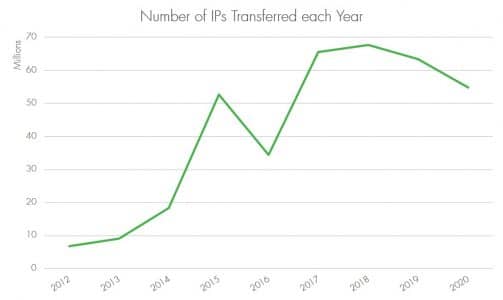
Growth of the IPv4 transfer market: There was a notable increase in the number of registered IPv4 address transfers, both within and between RIRs. This market emerged as a secondary redistribution mechanism in response to IPv4 address exhaustion, encouraging the reuse of otherwise idle or inefficiently used address blocks.
Challenges in IPv4 allocation: The situation with IPv4 addresses became increasingly complex, making it difficult to talk about ‘allocations’ in the traditional sense. The market dynamics shifted to include sales and transfers, alongside traditional allocations from residual pools.
IPv6 adoption: The exhaustion of IPv4 and the challenges in its allocation have continued to drive the gradual adoption of IPv6. IPv6 offers a much larger address space and is seen as the long-term solution to address scarcity. However, the transition to IPv6 has been slower than anticipated, owing to factors like infrastructure upgrade costs and compatibility issues.
Fragmentation concerns: There were concerns about the potential fragmentation of the IPv4 internet into disconnected parts, based on service cones of content distribution servers. This scenario might lead to a loss of the concept of a globally unique and coherent address pool.
IP Address management challenges
Handling IPv4 exhaustion: With the depletion of available IPv4 addresses, managing existing IPv4 networks has become increasingly complex. Organizations need to find ways to maximize the efficiency of their existing address space, often resorting to measures such as address reclamation and the use of Network Address Translation (NAT).
Transition to IPv6: While IPv6 addresses the limitations of IPv4, the transition to IPv6 brings its own set of challenges. These include upgrading infrastructure, ensuring compatibility between IPv4 and IPv6 systems, and training IT staff in IPv6 management.
Address space management: Efficiently managing a finite resource like IP addresses requires meticulous planning. This includes tracking and documenting address allocations, ensuring addresses are efficiently utilized, and avoiding conflicts and overlaps.
Security considerations: IPAM isn’t just about keeping track of addresses; it also involves ensuring the security of the network. This includes managing firewalls and network access controls, and monitoring IP address allocations for security threats.
Compliance and regulation: Compliance with various regulatory requirements, especially related to data privacy and security, can impact IPAM strategies. Organizations need to ensure that their IP address management practices align with these regulations.
Scalability and flexibility: As networks grow and evolve, IPAM solutions must be scalable and flexible enough to accommodate these changes. This includes managing larger address spaces, handling dynamic IP allocations, and integrating with cloud services.
Automated IPAM solutions: Automating IPAM tasks can significantly improve efficiency and accuracy. However, implementing automated solutions requires careful planning and integration with existing systems.
Decentralization and edge computing: The rise of decentralized systems and edge computing adds complexity to IPAM. Managing IP addresses across distributed networks requires a more sophisticated approach to ensure consistency and reliability.
Future perspectives
Widespread adoption of IPv6: As IPv4 addresses continue to be scarce, the adoption of IPv6 is expected to accelerate. IPv6 not only provides a practically inexhaustible pool of IP addresses but also offers improved functionality in terms of routing, auto-configuration, and security. The transition to IPv6 is crucial for supporting the growth of the internet and the proliferation of IoT devices.
Enhanced IPAM tools and automation: The complexity and scale of modern networks will drive the need for more sophisticated IPAM tools. These tools will likely incorporate advanced features like AI and machine learning to automate routine tasks, provide predictive analytics, and enhance network security.
Integration with Cloud and Edge Computing: As cloud and edge computing continue to grow, IPAM strategies will need to adapt to manage distributed networks effectively. This might involve the development of new protocols and standards to ensure seamless IP address management across various platforms.
Security and compliance: With the increasing focus on cybersecurity and data privacy regulations, IPAM will play a critical role in ensuring network security and regulatory compliance. This includes managing access controls, monitoring network traffic, and ensuring that IP address allocations comply with legal requirements.
Handling of IoT and mobile devices: The exponential growth in IoT and mobile devices presents unique challenges in IP address management. The future of IPAM will involve strategies to efficiently allocate and manage IP addresses for a multitude of devices, often with dynamic and varying connectivity requirements.
Decentralization of networks: The trend towards decentralized networks, including blockchain technologies, will impact IP address management. IPAM solutions will need to evolve to manage more complex network topologies and ensure consistent network performance.
Network fragmentation concerns: There’s a possibility of the IPv4 internet fragmenting into disconnected parts due to exhaustion. Future IPAM strategies may need to address the challenges arising from such fragmentation.
Research and development: Ongoing research in network technologies and IPAM will continue to drive innovations. This might include the development of new protocols, management strategies, and security measures to address the evolving landscape of network infrastructure.
IP Address allocation trends
Year
IPv4 Address Allocation
2019
3.682 billion
2020
3.684 billion
2021
3.685 billion
2022
3.687 billion
In conclusion, the future of IP address allocation and management is set to be dynamic and will require continuous adaptation to technological changes and evolving network needs. The focus will be on developing solutions that are scalable, secure, and capable of supporting the diverse and growing demands of the digital world.
In the ever-expanding digital landscape, the demand for IPv4 addresses is surging, driven by the proliferation of internet-connected devices. As companies strive to meet this demand, innovative solutions are emerging, and one such strategy gaining momentum is IP address subleasing.
The Imperative for Resource Optimization
Before delving into the intricacies of IP address subleasing, it’s crucial to understand the challenges that led to its rise. The exhaustion of the IPv4 address space, coupled with the gradual adoption of IPv6, has created a scenario where obtaining a sufficient number of IPv4 addresses has become a complex and expensive endeavor.
IPv4, with its 32-bit address space, was introduced in 1981 when the internet was in its infancy. The assumption was that the vast number of addresses would be ample for the foreseeable future. However, the explosive growth of internet users and connected devices led to the depletion of available IPv4 addresses. The transition to IPv6, a solution with an astronomical 128-bit address space, has been slow due to various challenges, including infrastructure costs and a lack of widespread expertise.
Enter IP Address Subleasing
In this landscape, IP address subleasing has emerged as a strategic approach for companies to overcome the challenges associated with acquiring IPv4 addresses. This practice involves leasing IPv4 addresses from organizations that have surplus resources, allowing companies to access the addresses they need without the substantial upfront costs associated with outright ownership.
Key Considerations for IP Address Subleasing:
1. Cost Efficiency:
Subleasing offers a cost-effective alternative to purchasing IPv4 addresses outright.
Companies can acquire the resources they need without the burden of significant capital expenditure.
2. Flexible Resource Management:
Subleasing provides flexibility in resource management, allowing companies to adapt to changing needs.
Short-term or long-term commitments are possible, providing agility in network planning.
3. Immediate Availability:
Unlike the often lengthy processes associated with acquiring addresses through other means, subleasing offers near-instant access to IPv4 resources.
4. Diverse Subnet Options:
Subleasing providers often offer a range of subnet sizes and geolocations, ensuring companies can find resources tailored to their specific requirements.
5. Abuse Management:
Reputable subleasing providers ensure that the leased IP addresses undergo thorough validation, reducing the risk of abuse and security concerns.
Navigating the Subleasing Landscape
Choosing the right IP address subleasing provider is pivotal for a seamless experience. Several factors should be considered:
Pricing Structure: Evaluate the pricing model to ensure it aligns with your budget and usage requirements.
Validation Procedures: Opt for providers with robust validation processes to guarantee the cleanliness and legitimacy of the leased subnets.
Regional Availability: Select providers with access to subnets from different Regional Internet Registries (RIRs) for comprehensive geographical coverage.
Abuse Management Services: A reputable subleasing provider should offer professional abuse management services to enhance the security of the leased IP addresses.
Embracing the Future of IP Resource Management
In a landscape where the acquisition of IPv4 addresses poses challenges, IP address subleasing stands out as a practical and efficient solution. By maximizing resource utilization and offering a cost-effective alternative, subleasing empowers companies to navigate the complexities of IP address acquisition with agility and financial prudence.
As industries continue to evolve and digital ecosystems expand, IP address subleasing is poised to play a pivotal role in shaping how companies manage and optimize their network resources. Embracing this innovative approach can position businesses at the forefront of efficient and sustainable IP resource management.
InterLIR remains dedicated to facilitating seamless interactions in the digital realm, and IP address subleasing aligns with this commitment by providing a pathway to enhanced resource accessibility and operational efficiency.
In the ever-expanding landscape of the internet, the demand for IPv4 addresses continues to outpace the available supply. This discrepancy has given rise to a dynamic market where businesses engage in the trading of IPv4 address space. Let’s delve into the IPv4 market, examining its current state, key trends, and the factors shaping this digital commodity’s value.
Scarcity and Growing Demand
The IPv4 market’s foundation lies in the scarcity of IPv4 addresses. With the exhaustion of the IPv4 address pool in 2011, organizations seeking to expand their online presence or support growing networks find themselves in need of additional IPv4 resources. This demand is particularly fueled by the delayed global transition to IPv6, which, despite being underway, has not yet reached universal adoption.
Market Dynamics and Pricing Trends
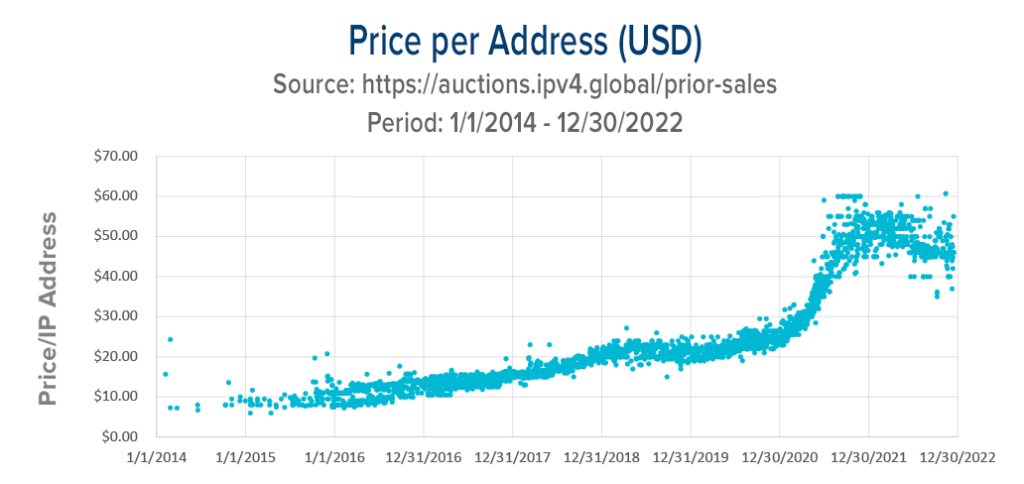
IPv4 addresses, once considered a free and abundant resource, now command a price in the market. The dynamics of IPv4 trading are influenced by various factors, including regional disparities in address availability, the urgency of demand, and evolving industry standards. As of the latest market assessments, the average price per IPv4 address hovers around $20, showcasing the premium placed on this increasingly scarce resource.
Regional Variations
The IPv4 market is not uniform across the globe. Disparities in address availability among the Regional Internet Registries (RIRs) contribute to varying market conditions. For instance, regions where IPv4 resources are relatively more abundant may experience lower prices compared to regions facing acute shortages. This regional diversity adds a layer of complexity to the IPv4 market, prompting businesses to explore opportunities in different geographies.
Marketplaces and Brokers
Facilitating the exchange of IPv4 addresses are marketplaces and brokers that connect sellers with surplus addresses to buyers in need. These platforms provide a structured environment for negotiations, ensuring that transactions adhere to legal and technical standards. Engaging with reputable IPv4 brokers and marketplaces becomes crucial for entities navigating the complexities of address space trading.
IPv4 Lease vs. Purchase Trends
While outright purchases were the norm in the earlier stages of the IPv4 market, leasing has emerged as a viable and cost-effective alternative. Leasing allows businesses to access the required address space without the substantial upfront costs associated with purchasing. This trend reflects a strategic shift, especially among smaller enterprises and those with fluctuating address space needs.
Policy and Regulatory Landscape
The IPv4 market operates within the bounds of established policies and regulations. RIRs play a crucial role in overseeing the fair and transparent distribution of IPv4 resources. Staying informed about the policies governing address space allocations is essential for businesses engaged in IPv4 trading to ensure compliance and prevent potential legal issues.
IPv6 Adoption’s Impact
The slow but steady adoption of IPv6 introduces an interesting dynamic to the IPv4 market. As IPv6 gains traction, businesses are compelled to assess their long-term address space strategies. The coexistence of both IPv4 and IPv6 in networks is a transitional phase, and the market is likely to witness further evolution as IPv6 becomes more prevalent.
Future Outlook
The IPv4 market’s trajectory hinges on the broader trends in internet infrastructure development. As IPv6 adoption accelerates and technologies evolve, the dynamics of IPv4 trading will continue to shift. Businesses navigating this space must remain adaptable, considering not only their immediate address space needs but also the evolving landscape of internet protocols.
In conclusion, the IPv4 market represents a pivotal space where businesses secure the digital resources vital for their online operations. Understanding the market’s nuances, regional variations, and emerging trends is paramount for organizations seeking to optimize their IPv4 strategies. Whether through purchases or leases, businesses must navigate this market with foresight and agility to ensure the seamless expansion of their digital footprint in an increasingly interconnected world.
In today’s interconnected world, the internet is the backbone of communication. From simple emails to complex cloud services, it’s the driving force behind the digital age. Behind this global network are two distinct but interdependent protocols – IPv4 and IPv6.
The Coexistence Conundrum
IPv4 (Internet Protocol version 4) was the pioneering protocol that laid the foundation for the internet as we know it. However, as the internet grew at an unprecedented rate, it became clear that IPv4 had limitations, most notably an exhausted pool of available IP addresses. This looming scarcity called for a new protocol – IPv6.
IPv6, the sixth revision of the internet protocol, boasts a vastly expanded address space. It’s capable of accommodating an almost unimaginable number of unique IP addresses, effectively solving the address exhaustion problem. Yet, IPv4 remains the dominant protocol, leading to the need for coexistence between the two.
The Dual Stack Solution
IPv4 and IPv6 Dual Stack is the bridge between these two worlds. It allows devices, networks, and services to operate using both IPv4 and IPv6 simultaneously. This transition mechanism helps the gradual integration of IPv6 while preserving compatibility with IPv4.
Benefits of Dual Stack
Smoother Transition: The Dual Stack approach ensures a gradual transition from IPv4 to IPv6. Existing IPv4 devices and services can continue to function without disruption while new infrastructure can be built on IPv6.
IPv6 Adoption: The Dual Stack strategy accelerates the adoption of IPv6. As more devices and services are IPv6-enabled, the internet ecosystem can harness the benefits of IPv6’s advanced features.
End-to-End Reachability: With Dual Stack, end-to-end reachability is maintained, allowing devices and services to communicate using their preferred protocol.
Reduced Complexity: Rather than a sudden shift, Dual Stack enables a controlled transition. It simplifies the coexistence of IPv4 and IPv6, making it easier to manage network infrastructure.
Challenges of Coexistence
While the Dual Stack approach is a significant step forward, it isn’t without challenges. Managing two sets of IP addresses, configuring routing tables, and ensuring security across both protocols can be complex. Additionally, not all applications and services are compatible with IPv6, creating potential issues.
The Path Forward
As the IPv4 address pool nears exhaustion, the coexistence of IPv4 and IPv6 through Dual Stack is becoming increasingly important. The industry is making strides to ensure a seamless transition. Internet Service Providers (ISPs), content providers, and hardware manufacturers are adopting Dual Stack strategies.
Conclusion: Bridging the Past and Future
The concept of IPv4 and IPv6 Dual Stack is not just a technical strategy; it’s a testament to the ever-evolving nature of the internet. IPv4 laid the foundation, and IPv6 is the path to the future. Dual Stack serves as the connector, allowing us to embrace the potential of IPv6 while maintaining compatibility with IPv4.
In the realm of Internet technologies, standards and protocols play a pivotal role in the network’s operation. IPv4 and IPv6 are familiar terms, but what about IPv5? Tech enthusiasts and networking experts may have pondered the mysterious absence of IPv5.
IPv5: A Skipped Generational Leap
IPv5 was, in theory, the next logical step in the evolution of Internet protocols. Its predecessor, IPv4, enjoyed immense success in building the Internet but had significant limitations, particularly concerning its ability to support new features and services. The development of IPv5 was seen as a generational leap that would overcome these limitations, allowing for a more advanced and efficient Internet.
Early Experiments with IPv5
The story of IPv5 commences in the 1970s when Stanford University conducted groundbreaking research into multimedia and real-time communication. This resulted in the experimental protocol known as ST-II (Stanford Telecommunications, Inc. version 2), which became the foundation for IPv5. ST-II enabled the transmission of voice and video over the network, a significant breakthrough at the time.
IPv5 and the Garbage Collection System
The mystery behind IPv5’s disappearance is partly due to a comical conflict and a lack of foresight. IPv5 was initially used for a very specific function: transmitting real-time data, such as voice and video. However, the name “IPv5” was informally used to refer to ST-II but did not become a formal Internet standard. Developers realized that the name “IPv5” was unsuitable for a general-purpose Internet standard. Consequently, they switched to the name IPv6, which was formally adopted as the successor to IPv4.
The Rise of IPv6 and the Decline of IPv5
IPv6 ultimately became the successor to IPv4. Its design focused on addressing the limitations of IPv4, such as address exhaustion and the need to support a multitude of devices and services. IPv6, with its vast address space and security enhancements, became the natural choice for the future of the Internet.
Conclusion: The Enigma of IPv5
As we delve into the mystery of IPv5, we uncover a curious tale of how a protocol experiences an unexpected evolution. While IPv5 never became the successor to IPv4, its legacy endures as a reminder of the challenges technology faces as it progresses. IPv6, on the other hand, has proven to be a success and is the protocol of choice for the future expansion of the Internet.
Ultimately, the mystery of IPv5 lies in how history and naming decisions can shape technological development. Though IPv5 never became a fundamental Internet protocol, its story offers a unique insight into the process of evolution and standardization in the world of information technology.
The United States Department of Defense (DoD) IPv6 Mandate, set in motion to address the limitations of the aging IPv4 protocol, has far-reaching implications for the IPv4 market. IPv4 brokers, who facilitate the transfer of IPv4 addresses, are at the forefront of these changes.
Understanding the DoD IPv6 Mandate
The DoD IPv6 Mandate, introduced by the U.S. Department of Defense, aims to transition its networks from the outdated IPv4 protocol to the more advanced and scalable IPv6. This shift is driven by the exhaustion of IPv4 addresses, which has been exacerbated by the increasing number of internet-connected devices worldwide. While IPv4 provides approximately 4.3 billion unique addresses, IPv6 offers an almost infinite pool of addresses, making it a sustainable choice for the future.
Increased Demand for IPv6
The DoD’s commitment to IPv6 has catalyzed a global shift towards the adoption of IPv6. As a result, we are witnessing a substantial surge in the demand for IPv6 addresses. This is particularly evident in the defense sector and, subsequently, in the broader technology landscape. IPv6’s extensive address space is essential for the DoD’s evolving requirements and, by extension, for all organizations that aim to engage with DoD networks.
Impact on IPv4 Market Dynamics
The increased focus on IPv6 has caused significant ripples in the IPv4 market. IPv4, while still essential for many businesses and services, is now a finite and increasingly valuable resource. This scarcity has driven up the price of IPv4 addresses, making it a seller’s market. IPv4 brokers are witnessing a surge in demand from companies seeking to acquire IPv4 blocks while they are still available.
IPv4 Address Transfers
As the IPv4 market tightens, more organizations are turning to IPv4 brokers to facilitate address transfers. Companies with excess IPv4 resources can capitalize on this demand by selling or leasing their surplus addresses. IPv4 brokers play a crucial role in matching sellers and buyers and ensuring that transactions are conducted securely and in compliance with regional regulations.
Brokering IPv4 for the DoD
IPv4 brokers are also actively engaged in assisting the DoD and its contractors in efficiently redistributing IPv4 resources. This includes transferring unused or underutilized IPv4 blocks to entities with the greatest need. This strategic allocation optimizes IPv4 utilization within the DoD’s network ecosystem.
Conclusion
The DoD IPv6 Mandate is a pivotal development in the world of networking and has profound implications for the IPv4 market. IPv4 brokers are navigating these changes by mediating the transfer of IPv4 addresses and ensuring that organizations can access the resources they require. As IPv6 adoption continues to accelerate, the IPv4 market will remain dynamic, offering both challenges and opportunities for IPv4 brokers and businesses alike.
In this evolving landscape, it’s crucial for organizations to assess their IP address needs and explore their options within the IPv4 and IPv6 space. IPv4 brokers are ready to assist, ensuring a seamless transition and efficient resource allocation during this transformative period in the world of IP networking.
In today’s digital world, the use of IP addresses for spreading spam has become a concerning issue. To counter this, various services employ a defense mechanism known as spam listings or blocklists. These are organizations that diligently monitor spam activities associated with specific IP addresses and subsequently add them to their lists. These lists are then made available to other users and services.
The primary purpose of these spam listings is to enable websites, email services, and other platforms to proactively block access or prevent communication from IP addresses that might pose a potential threat due to their spammy behavior.
Numerous spam listings exist, but the most renowned and effective ones include Spamhaus, Barracuda, and Sorbs.
1. Spamhaus
Spamhaus has a long history of tracking spam activities and curating lists of IP addresses with questionable reputations. It’s important to note that Spamhaus relies on reputation-based algorithms. This means that even if you’re not directly involved in spamming, if you happen to use an Autonomous System Number (ASN) associated with spammers, your IP addresses might end up on their list.
Spamhaus maintains three lists: CSS, SBL, and PBL.
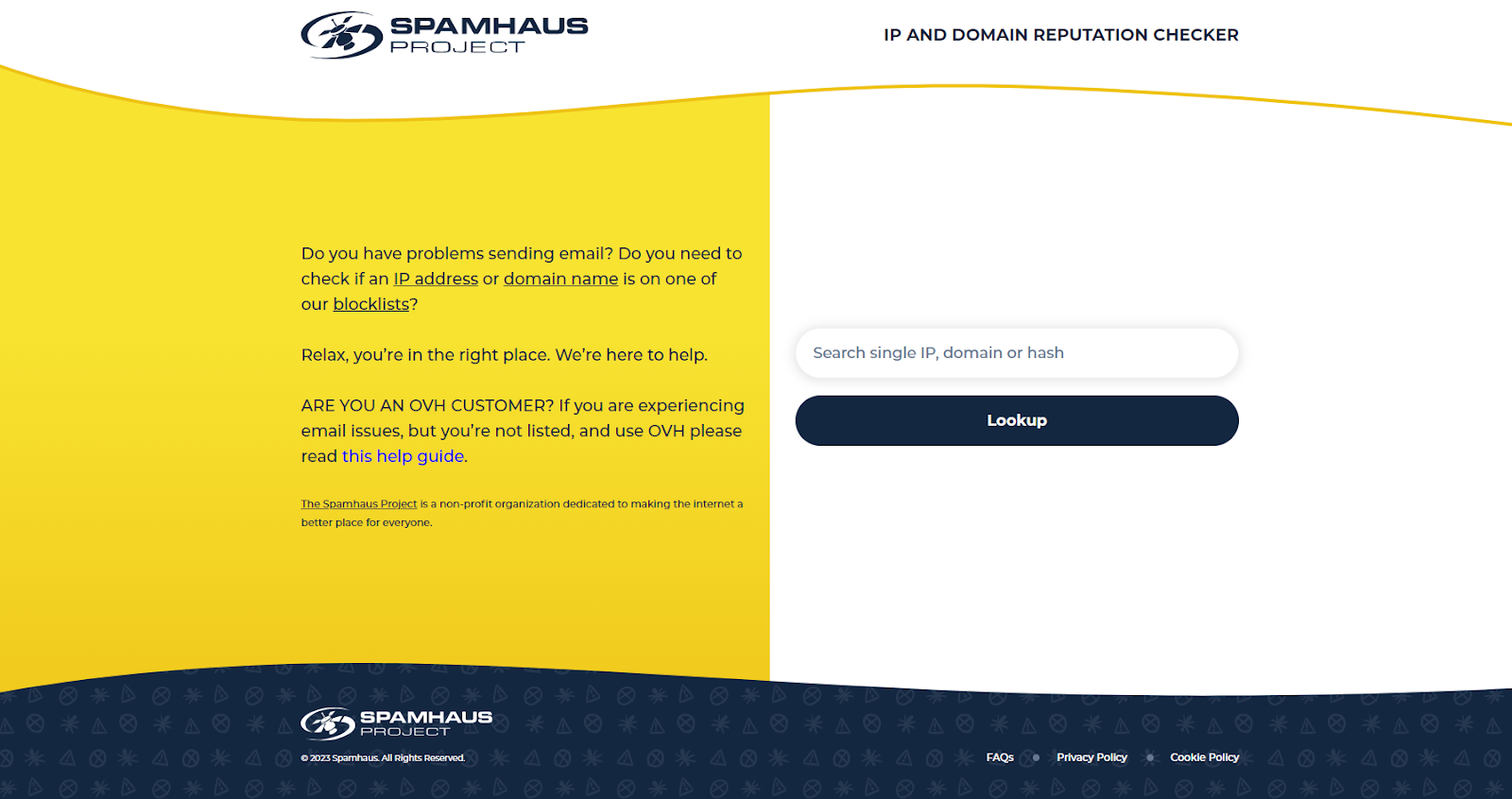
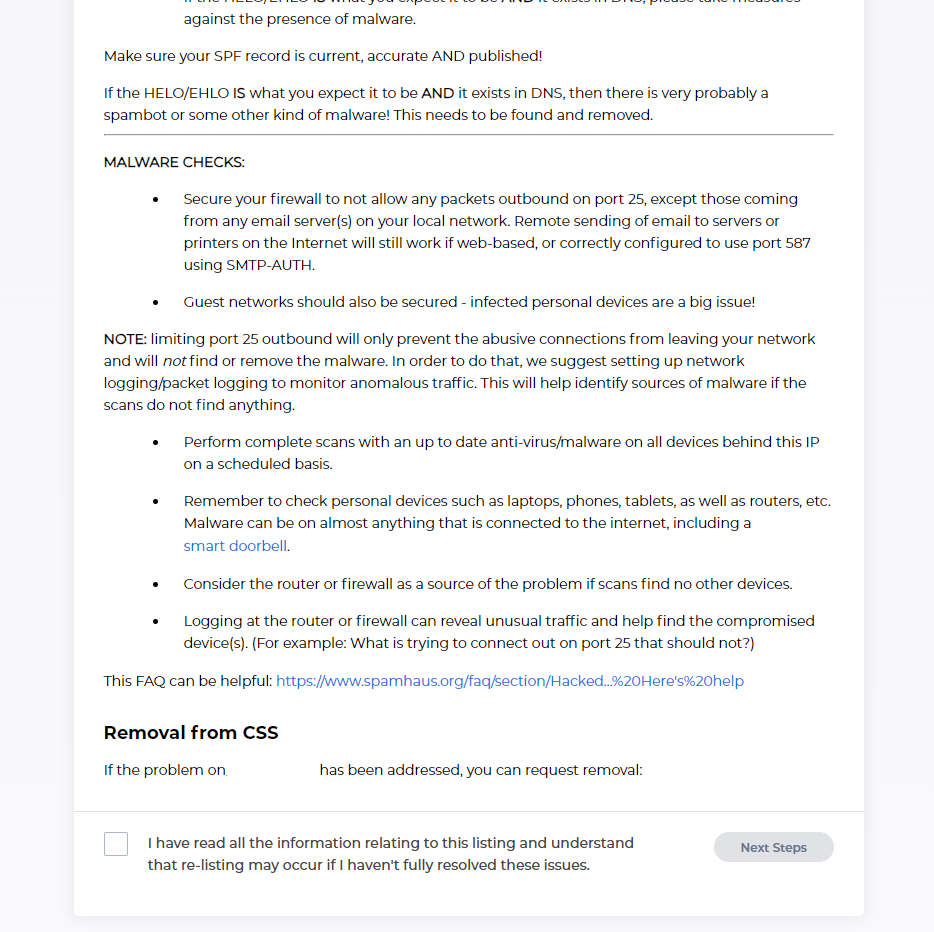
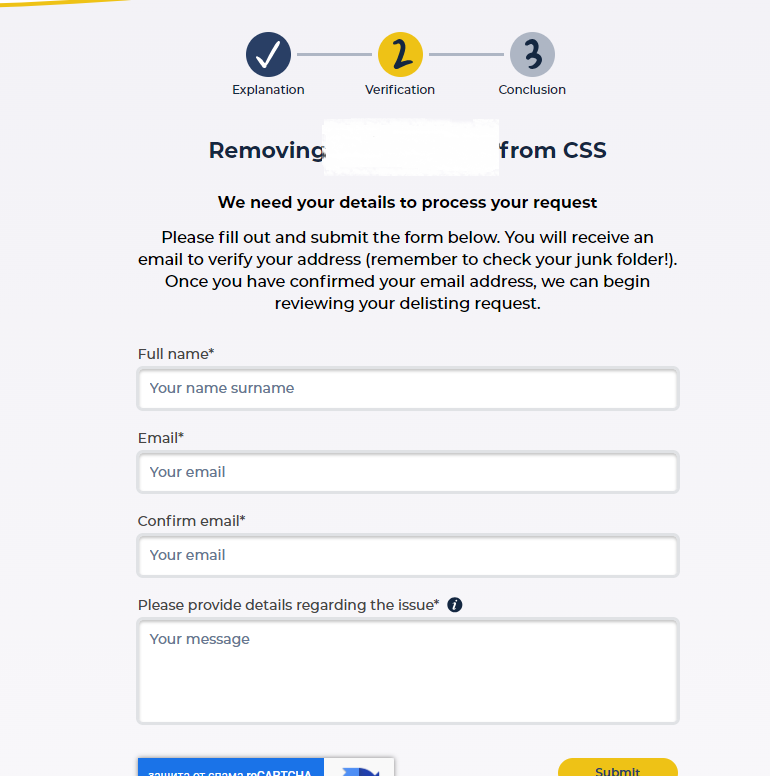
1.1. CSS. This list contains individual IP addresses directly implicated in distributing spam. If you find your IP address on the CSS list, you can request spamhaus css block removal by filling out a form on Spamhaus’ website. There are several steps for checking and removing IP-addresses from this listing.
Step 2: After that you add the IP address you want to check into the search line and press Lookup.
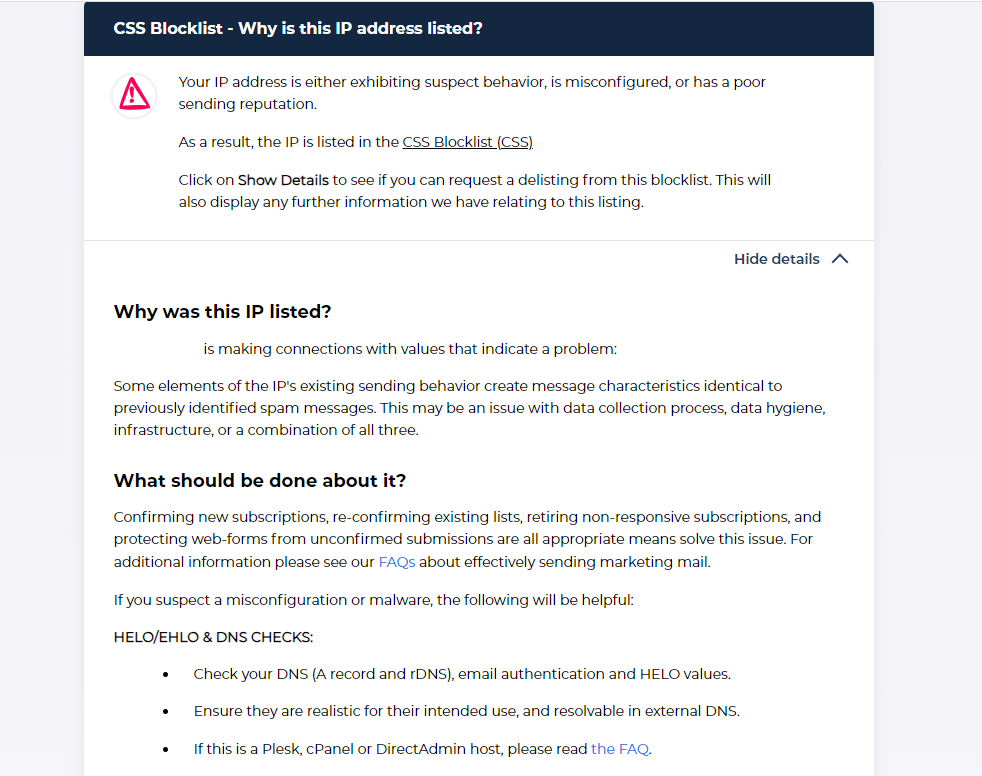
Step 3: If this address is in the list, you will see the Show details button in the bottom right corner.
Step 4: Scroll to the end of the page and there you need to confirm that you have read the information provided, after which you click on the Next Step button.
Step 5: You will be taken to a page where there is a removal request form. You will need to enter your full name, email address (twice), and the steps you have taken to stop the spam activity. After that you can press the Submit button and Spamhaus will create removal ticket for you.
1.2. SBL. The SBL is the most severe list. It is reputation-based and if your IP addresses are linked to a compromised ASN or a spammer organization, the entire IP block (for example, a /24 block, consisting of 256 IP addresses) may be listed. Only the owner of the resources or the internet service provider (ISP) can request delisting. To do so, they must drop the announcement of the IP block, remove routes, RPKI, and rDNS. There are several steps for checking and removing IP-addresses from this listing.
Step 2: After that you add the IP address you want to check into the search line and press Lookup.
Step 3: If this address is in the list, you will see the Show details button in the bottom right corner.
Step 4: Scroll to the end of the page and there you need to confirm that you have read the information provided, after which you can send an email to the SBL team for delisting. Please keep in mind that only an ISP or the subnet owner can request delisting.
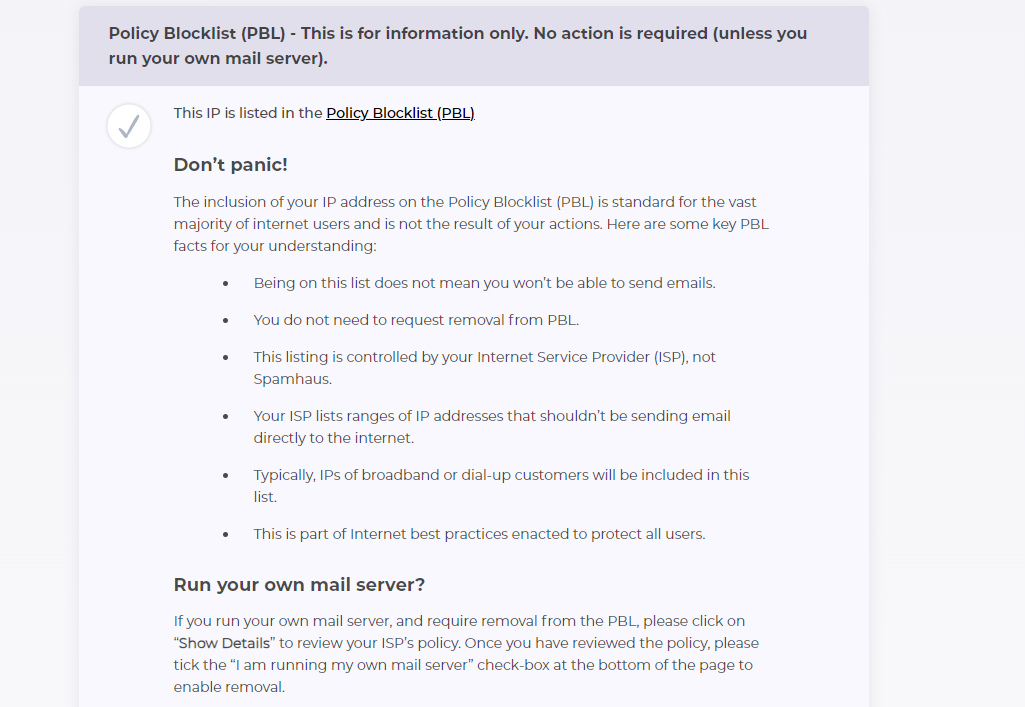
1.3. PBL. Interestingly, the PBL list is not about spam; it protects against spam. Resource owners can independently register their IP blocks on the Spamhaus website. This prevents end users from using these IP addresses to send emails through different services, such as Yahoo.
2. Barracuda
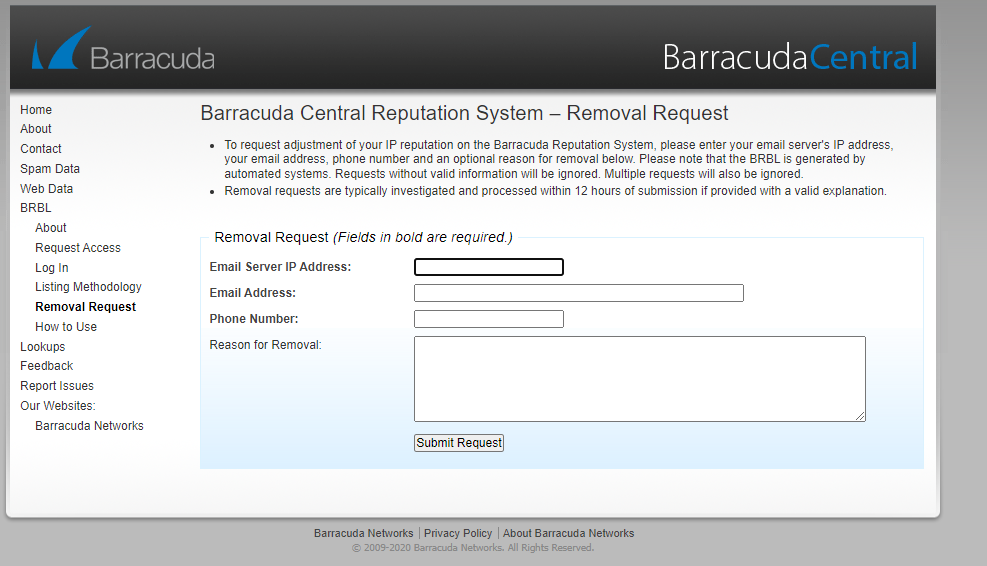
Barracuda operates automatically and lists individual IP addresses. To have an address removed from this list, one must submit a request, providing their email, phone number, and outlining the specific steps taken to combat spam.
Step 2: You will be taken to a page where there is a removal request form. You will need to enter your IP-address, email address, phone number and the steps you have taken to stop the spam activity. After that you can press the Submit button and Barracuda will create removal ticket for you.
3. Sorbs
Sorbs is one of the oldest spam listings and functions more like an archive. It displays whether an IP address has ever been on their list. Although you can’t remove an entry, you can alter its status through a standard request form. This means the IP address can transition from being associated with past spamming to being considered safe.
In essence, these spam listings follow a similar framework. If your IP address finds its way onto one of these lists, the path to removal involves discontinuing any spam-related activities associated with the address, addressing the spam problem itself, and then requesting its removal from the list. These listings play a crucial role in maintaining a cleaner and safer online environment by combating spam.
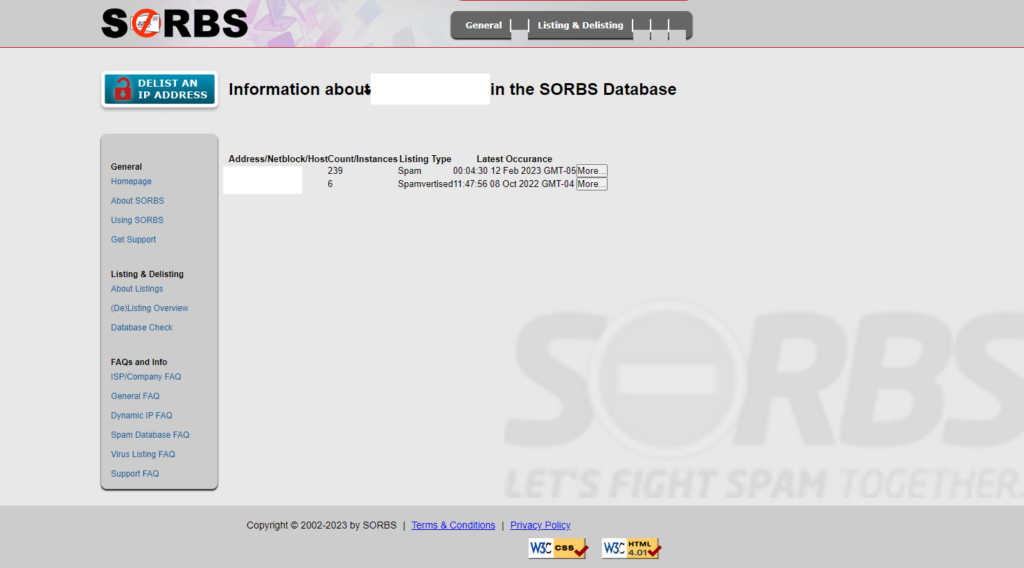
Step 2: After that you add the IP address or IP-block you want to check into the search line and press Submit.
Step 3: If this address is in the list, you will see the More button in the right corner side of this page.
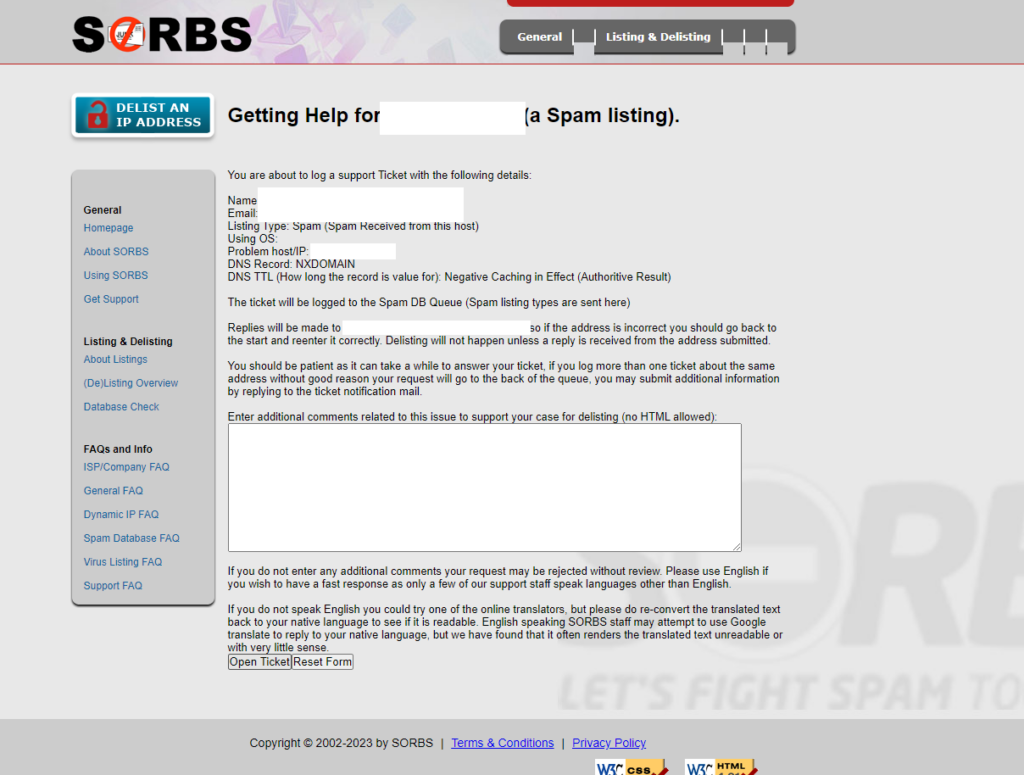
Step 4: Scroll to the end of the page and there you need to press Get Help/Support button.
Step 5: You will be taken to a page where there is a removal request form. You will need to provide the Sorbs team with steps you have taken to stop the spam activity. After that you can press the Opet Ticket button and Sorbs will create removal ticket for you.
In an era driven by digital connectivity, the value of IPv4 resources has reached unprecedented heights. As the backbone of the modern internet, understanding IPv4 pricing is paramount for businesses seeking to optimize resource allocation and adapt to evolving market dynamics.
Historical Overview of IP Price
In the nascent days of the internet, IPv4 addresses were freely distributed, reflecting a time of boundless possibilities. However, the rapid proliferation of internet users and devices swiftly depleted the available addresses. This scarcity led to a significant shift, ushering in the IPv4 market and reshaping the pricing dynamics.
Factors Influencing IPv4 Pricing
1. Supply and Demand Dynamics.The surge in internet users and connected devices has engendered an insatiable demand for IPv4 addresses. Simultaneously, the finite nature of these addresses has introduced a scarcity that fuels pricing escalation.
2. Slow Adoption of IPv6.
The transition to IPv6, while introduced as a successor, has progressed more sluggishly than anticipated. The dominance of IPv4 in facilitating internet connectivity has prolonged the demand for IPv4 addresses, contributing to their sustained high prices.
3. Leasing and Selling IPv4 Pricing Trends. A notable shift has been observed in the market, with an increasing preference for IPv4 address leasing over outright purchases. This trend has injected a new dimension into pricing dynamics, as leasing practices impact the demand and supply equilibrium.
Predicting Future IP Pricing
Forecasting IPv4 pricing trends presents a challenge due to the intricate interplay of market variables. However, several trends are discernible:
Sustained Growth: Given the expanding user base and gradual IPv6 adoption, a continued upward trajectory in IP price is likely.
Moderation of Growth. As IPv6 adoption gains momentum, IPv4 demand might stabilize, leading to a potential stabilization or reduction in prices.
Technological Innovations: Advancements in addressing and resource management could introduce innovative solutions that influence pricing trends.
Navigating the IPv4 Pricing Landscape
1. Strategies for Businesses: To thrive in the evolving pricing landscape, businesses can adopt strategies to optimize their resource utilization. Efficient planning and management are crucial for adapting to changing pricing dynamics.
2. Role of IPv4 Marketplaces:IPv4 marketplaces play a pivotal role in facilitating transparent transactions, enabling businesses to access IPv4 resources based on real-time demand and supply. These platforms contribute to market efficiency and price transparency.
InterLIR Is Your Trusted Guide To The World IPv4 Market
1. Transparent and Secure Transactions: InterLIR provides a secure and transparent platform for buying and selling IPv4 addresses. Our rigorous verification processes ensure that all transactions are genuine and trustworthy, mitigating the risk of fraudulent activities.
2. Diverse Range of IPv4 Resources: Whether you’re looking to acquire a specific range of IPv4 addresses or sell unused resources, InterLIR offers a diverse marketplace to fulfill your needs. Our platform connects buyers and sellers from various industries, creating a dynamic environment that increases your chances of finding the perfect match for your requirements.
3. Expert Guidance Throughout the Process: Navigating the complexities of IPv4 transactions can be challenging, especially for those new to the market. InterLIR provides expert guidance at every step, ensuring that both buyers and sellers have access to the necessary information and support. Our team of professionals is dedicated to helping you make informed decisions that align with your objectives.
4. Customized Solutions for Your Needs: InterLIR recognizes that every buyer and seller has unique requirements. Our platform offers customized solutions tailored to your specific needs and objectives. Whether you’re a business looking to expand your IP resources or an individual seeking to monetize unused addresses, InterLIR provides options that cater to your situation.
Network IP addresses vary and require expert guidance for network operators. In our daily lives, we often receive suspicious emails, highlighting the importance of the sender’s reputation. However, identifying senders based on their personal IP addresses can be challenging and ultimately ineffective.
In the past, email web systems disregarded correspondence sent from home internet IPs, as maintaining a reliable database of email users was difficult, especially with the exponential increase in wired home network connections, which surpassed one million by the end of 2021. The main concern was differentiating between genuine users and the numerous bots responsible for sending viral content or engaging in suspicious activities.
To address this issue, dedicated systems for email sending should be utilized. System administrators have the responsibility to assess the reputation of less numerous systems. Several tools are available for analyzing the indicators of an IP address’s reputation.
1. Is the incoming mail from this address trustworthy? 2. What is the geographic location associated with the IP? 3. Is the IP address infected with malware? 4. Is the IP address unauthorizedly using personal data of network users? 5. Does it operate an open proxy server that can aid malicious actors?
The Importance Of the Reputation for the IP
Configuring IP addresses to align with the equipment’s functionality on the web is an important aspect of the job. However, it is equally crucial to create a new range of IP addresses for your network. In many cases, the IP address range you acquire may have been previously used on a different network. Although the Regional or National Internet Registry will record the transfer of the IP range to your company, these changes may not be immediately reflected or automatically updated in most tracking tools. Therefore, it becomes necessary to manually update these systems to ensure they provide accurate information regarding IP address management, geographical location, and purpose.
The Scoring Algorithm for IP Reputation
To maintain a positive reputation, it is advisable to avoid sudden user switches and instead plan and execute a well-thought-out deployment strategy. Using an IP address space immediately after its transfer can be risky, as it may still be associated with the previous user and be listed in blacklists. It is recommended to allow some time to pass before utilizing the address space to ensure it is not negatively affected.The reputation of IP addresses used for sending emails is closely monitored, and this should be taken into consideration. Staying updated on the current situation and trends in email sending can be achieved by joining communities like Mailop, where valuable information, discussions, and mailing data are shared.If you are transferring IPs from a different geographical region and intend to cater to consumer web clients, it is advisable to contact a company that manages geodata for IP addresses (GeoIP). Consumer content may have specific requirements based on the target market, and licensing and access settings for data are managed by these companies based on local or owner restrictions.In the case where the IP address was previously used in a region with a different language, there are platforms available that describe the transfer process. These platforms allow you to set the interface to any language you prefer or that is best suited for your target audience.If your intended use of the address differs from the previous user, it is important to ensure that reputation channels have updated information about your activities. This will help avoid being identified as a suspicious user and prevent your network from appearing on blocklists. For example, if an IP address was previously used for subscriber network access, but you plan to repurpose it for cloud server purposes, it is crucial to remove the IP from various lists and databases associated with email sending, as it may otherwise be blocked.
Reputation Monitoring Tools
Brother WISP offers databases with Geo IP information, which can be valuable when catering to consumer addresses that may face content distribution restrictions imposed by regional services. These databases are particularly useful for websites or resources that offer gaming or video content. To assess the quality of traffic, it is recommended to refer to the lists provided by Spamhaus. These lists serve as a reference point for evaluating the quality of incoming traffic and can assist in making informed decisions regarding network management and security.
The Cleanup Procedure
Before deploying a new IP range, it is important to verify its reputation through reputable sources and update any outdated information if necessary. It is essential to consult relevant lists that align with your specific goals and objectives. If there are changes in the geographic location or purpose of the IP range, it is advisable to inform the administration team to ensure accurate and up-to-date information. Although the procedure may be time-consuming, it is recommended to allocate sufficient time for deployment planning. Some teams prefer to address issues as they arise, while others may prefer a proactive approach to minimize potential challenges.