Familiarizing yourself with the regulations governing Internet number resource transfers within RIPE NCC is crucial. Here are key points regarding the RIPE IPv4 transfer policy.
RIPE IPv4 transfer policy
Under the RIPE NCC, any legitimate holder of Internet resources has the ability to transfer complete or partial blocks of address space or number resources, including IPv4, IPv6, and ASN. These resources must have been previously allocated or assigned to them by the RIPE NCC or through the Regional Internet Registry (RIR) system. However, there are cases where certain resources are excluded from transfers as per RIPE Policies, requiring them to be returned to the RIPE NCC.
During the transfer process, allocated resources can only be transferred to another RIPE NCC member. On the other hand, independent resources can be transferred to either a RIPE NCC member or an entity that has a contractual relationship with a RIPE NCC member, adhering to the guidelines outlined in the RIPE Policy. Understanding and complying with these guidelines will facilitate a smooth transfer process for RIPE IPv4 addresses.
Optimize Your RIPE Transfer Buy Process With InterLIR
I need IPv4 address space and I’m looking for a source
Submit a recipient request at Interlir.com
I have IPv4 address space that I want to transfer and I’m looking for a recipient
Verify that your registration information is accurate and find an IPv4 Recipient at Interlir.com
I need an IPv4 address space and I already have a source confirmed
Obtain IPv4 pre-approval find an IPv4 source submit a recipient request at Interlir.com
I have IPv4 address space that I want to transfer and I already have a recipient confirmed
Verify your registration information is accurate submit a source request at Interlir.com
Interlir RIPE Transfer price IPv4
Buy IPv4from 38 europer IP
Sell IPv4from 38 europer IP
Background check
Inter-RIR transfer
Legal deal
Consulting
Free
Free
RIPE IPv4 Transfer Policies: An Overview
Transfer requirements
To ensure compliance with RIPE IPv4 transfer policies, several requirements must be met. First, all transfers must be documented in the RIPE Database. They can be either permanent or non-permanent, depending on the arrangement between the parties involved. The original resource holder remains responsible for the Internet number resource until the transfer to the receiving party is completed. In temporary transfers, responsibility reverts back to the original holder upon resource return. The current resource holder is responsible for adhering to all relevant policies, and the transferred resources must be used in accordance with the respective policy documents. The RIPE NCC updates the registration records to reflect the completion of the transfer.
Transfer restrictions
Scarce resources, such as IPv4 or 16-bit ASNs, have specific transfer restrictions. These resources cannot be transferred for a period of 24 months from the date of receipt by the resource holder, even in cases of organizational changes like mergers or acquisitions. However, subsequent transfers due to further mergers or acquisitions within the 24-month period are allowed. The restrictions do not apply when RIPE Policies mandate the return of resources to the RIPE NCC.
Inter-RIR transfers
Transfers of Internet number resources to or from the RIPE NCC service region are allowed. This includes legacy resources, even though there are no specific rules for legacy resource transfers within the RIPE NCC service region. However, resources are excluded from transfers if RIPE Policies require their return to the RIPE NCC. The applicable RIPE Policies govern the transfer process as long as the resources remain registered within the RIPE NCC service region.
Transferring Internet number resources to the RIPE NCC Service Region
The RIPE NCC accepts all transfers of Internet number resources to its service region, provided they comply with the relevant transfer policies. If transfers originate from RIR service regions that require needs-based policies, recipients must submit a plan to the RIPE NCC outlining the intended use of at least 50% of the transferred resources within five years.
Transferring Internet number resources form the RIPE NCC service region
When transferring Internet number resources to another RIR, the RIPE NCC adheres to the transfer policies applicable within its own service region. Additionally, the RIPE NCC complies with any requirements imposed by the receiving RIR to facilitate the transfer process.
What about RIPE Transfer Statistics?
The RIPE NCC will publish a list of all transfers. This publication shall occur on a monthly basis or more frequently if the RIPE NCC so chooses. This list will contain information about approved changes. The following information will be published: The name of the offering party The resource originally held by the offering party The name(s) of the receiving party or parties Each subdivided prefix (each partial block derived from that original block) or resource received The date each resource was transferred Whether it was a transfer according to this policy or a transfer due to changes to an organisation’s business structure (such as a merger or acquisition)
ARIN policies regulate the transfer of IP addresses and Autonomous System Numbers (ASNs) issued by ARIN or its predecessors.
Why do I need to know about ARIN transfers IP addresses?
In order to buy or sell ARIN IP addresses, certain requirements must be met, including having an account, obtaining pre-approval from ARIN, and understanding the IPv4 transfer process within the ARIN region. Transfers of IP addresses and ASNs are allowed under specific circumstances, such as when an organization acquires assets or a network through a merger, acquisition, reorganization, or similar transaction.
Additionally, organizations can release unused IPv4 address space or ASNs to qualified recipients within or outside the ARIN region, depending on the recipient’s regional Internet registry’s policy. It’s important to note that ARIN facilitates the transfer of addresses but only accepts purchases for ARIN IP addresses, while other regional Internet registries have their own policies for transfers.
Let InterLIR Help You With Your Demand
I need IPv4 address space and I’m looking for a source
Submit a Recipient request at Interlir.com
I need IPv4 address space and I already have a Source confirmed
Obtain IPv4 pre-approval Find an IPv4 Source Submit a recipient request at Interlir.com
I have IPv4 address space that I want to transfer and I’m looking for a Recipient
Verify that your registration information is accurate. Find an IPv4 recipient at Interlir.com
I have IPv4 address space that I want to transfer and I already have a Recipient confirmed
Verify your registration information is accurate. Submit a source request at Interlir.com
I need additional IPv4 addresses and haven’t yet fulfilled my 24-month pre-approval?
Interlir registered ARIN facilitator transfer service prices
Buy IPv4from 38 europer IP
Sell IPv4from 38 europer IP
Background check
Inter-RIR transfer
Escrow
Consulting
Detailed Blacklist Reporting
What does ARIN transfer policy say?
Submitting a Transfer Request
1.Log in to ARIN Online. 2. Go to the Transfer Resources section in the navigation menu. 3. Follow the provided instructions for the transfer process. 4. Pay the required non-refundable processing fee, if applicable. 5. After approval, pay any additional fees that may be applicable. 6. Within 90 days, submit a signed Registration Services Agreement (RSA). 7. Once ARIN receives the signed RSA and all fees, the transfer of resources will be completed within two business days. 8. For status updates or any inquiries regarding the transfer request, contact ARIN Registration Services. For questions related to fees or the RSA, contact ARIN Financial Services.
Transfers due to Mergers, Acquisitions, and Reorganizations
If your organization has acquired assets from another organization through a merger, acquisition, or reorganization, and those assets utilize IP addresses and/or ASNs directly registered through ARIN, you can request a transfer of those resources. ARIN will process transfer requests even if the combined number of resources exceeds what can be justified under current ARIN policy. In such cases, ARIN will collaborate with the resource holder(s) to transfer the excess resources to other organizations or accept a voluntary return of the excess resources to ARIN.
Transfers to Specific Recipients within the ARIN Region
If your organization requires unused ARIN-issued IPv4 address space or an Autonomous System Number (ASN), or if your organization already holds such resources, you can request a Specified Recipient Transfer. Both the recipient and source organizations must submit separate transfer requests, which will be reviewed by ARIN staff and linked together.
FAQ
Requirements for the Source Organization (Current Registrant)
The source organization must be the current registered holder of the resources. If the current registrant no longer exists, an Mergers, Acquisitions, and Reorganizations transfer may be required before the transfer. The source organization must not be involved in any dispute as to the status of the resources. The source organization must provide a signed and notarized Officer Acknowledgement Letter . The minimum transfer size is a /24. The source organization must not have received a transfer, allocation, or assignment of IPv4 number resources from ARIN within 12 months prior to the approval of the transfer. Address resources from a reserved pool are not eligible for transfer. The source entity will not be allowed to apply for IPv4 address space under ARIN Waitlist for a period of 36 months following the transfer of IPv4 address resources to another party.
Requirements for the Recipient Organization
The recipients must meet the transfer requirements as defined in NRPM Section 8.5. The resources transferred will be subject to current ARIN policies. If applicable the recipient will be removed from the ARIN Waitlist and will not be allowed to reapply ARIN Waitlist for a period of 90 days.
What should I do next?
Once both the source and recipient (if known) involved in the transfer meet the transfer requirements, the following steps will occur: The Admin or Tech POCs of both the source and the recipient organizations must submit a transfer request via ARIN Online. Both organizations are issued their own ticket number for their request. An ARIN Customer Service Resource Analyst links the two tickets after the source and recipient organizations are identified and confirmed. ARIN invoices the appropriate organization for the non-refundable processing fee. Upon receipt of the non-refundable transfer processing fee, an ARIN Customer Service Resource Analyst begins processing each request independently. ARIN respects the privacy and confidentiality of each organization and therefore, organizations should coordinate directly with each other to monitor progress on their respective requests. Upon approval of both transfer requests, an invoice for any other fees will be sent to the appropriate organization along with a Registration Services Agreement (RSA), if applicable. Upon receipt of all fees and a signed RSA, if applicable, ARIN will complete the transfer.
How should I do InterRiR transfers?
Inter-RIR Transfers (8.4 transfers) allow organizations within the ARIN region who hold unused IPv4 address space or Autonomous System Numbers (ASNs) to request transfers to a specific qualified recipient in another Regional Internet Registry (RIR) region. 8.4 transfers also allow organizations within another RIR’s region to transfer IPv4 addresses or ASNs to an organization within the ARIN region. In both cases, an 8.4 transfer can only be conducted between RIRs that share reciprocal, compatible, needs-based policy.
Requirements for Transfers from ARIN to Another RIR
The source organization must be the current registered holder of the IPv4 resources. If the current registrant no longer exists, an 8.2 Mergers, Acquisitions, and Reorganizations Transfer may be required before the 8.4 transfer. The source organization must not be involved in any dispute as to the status of the resources. The source organization must provide a signed and notarized Officer Acknowledgement Letter . The minimum transfer size is a /24. Source entities must not have received a transfer, allocation, or assignment of IPv4 number resources from ARIN for the 12 months prior to the approval of a transfer request, unless either the source or recipient entity owns or controls the other, or both are under common ownership or control. Number resources received as the result of an 8.2 transfer are out of scope for the purposes of this restriction. Address resources from a reserved pool (including those designated in NRPM Section 4.4 and 4.10) are not eligible for transfer. The source entity will not be allowed to apply for IPv4 address space under Section 4.1.8. ARIN Waitlist for a period of 36 months following the transfer of IPv4 address resources to another party. Recipient Requirements: The conditions on a recipient outside of the ARIN region will be defined by the policies of the receiving RIR. Upon completion, the network record will move to the other RIR and be removed from ARIN’s Whois service and a placeholder record pointing to the new RIR will be added.
What are requirements for Transfers from Another RIR to ARIN?
Source Requirement: Source organizations outside of the ARIN region must meet any requirements defined by the RIR where the source organization holds the registration. Recipient Requirements: Recipients within the ARIN region will be subject to current ARIN policies. Specified recipients within the ARIN region must meet the transfer requirements as defined in NRPM 8.5. Recipients within the ARIN region must demonstrate the need for up to a 24-month supply of IPv4 addresses. The minimum transfer size is a /24. Recipients are required to have an updated and signed RSA and pay for any other applicable fees to complete the transfer. If applicable the recipient will be removed from the ARIN Waitlist and will not be allowed to reapply under section 4.1.8. ARIN Waitlist for a period of 90 days.
What are Transfer Requirements for Specified and Inter-RIR Transfer Recipients?
Minimum IPv4 transfer size is a /24. Recipient organizations without direct assignments/allocations qualify for an initial /24. Recipient organizations may qualify for a larger initial IPv4 address block by providing documentation which: Details 50 percent of the requested IPv4 addresses will be used within 24 months Demonstrates 50 percent of the sum of all previous IPv4 assignments and allocations is efficiently used Alternatively, recipient organizations with direct assignments/allocations who demonstrate 80 percent efficient utilization of the sum of all precious assignments/allocations may qualify for a transfer equal to the total size of their current IPv4 holdings (up to a /16). Organizations may only qualify under this policy once every six months.
Who may submit a transfer request?
An Admin or Tech Point of Contact (POC) for the appropriate organization will need to submit the transfer request. Mergers, Acquisitions, and Reorganizations transfer request must be submitted by the recipient organization. Both the recipient and source organizations must submit 8.3 Specified Recipient transfer requests separately. transfer requests must be submitted by a POC of the organization in the ARIN region, whether they are source or recipient.
What kind of documentation will you be asking for?
Not all transfers require the same documentation, but some examples include bills of sale, finalized and filed merger or amalgamation agreement certificates of merger or amalgamation, other finalized contracts, certified deeds, or finalized court orders. ARIN will work with you to determine the appropriate documentation based on your request details.
Do I have to send my entire Asset Purchase Agreement?
No, we will only ask you for five key items: the page(s) that list the parties involved the page(s) that list any excluded parties the page(s) that list the physical assets that were acquired the page(s) that list any excluded assets and the signature page(s)
Can I redact any monetary listings in my merger or acquisition contracts?
Yes, ARIN is not concerned with the associated costs of the merger or acquisition.
Our contracts are confidential and we do not feel comfortable sharing the sensitive data. Is there any other way to complete the transfer?
ARIN is willing to enter into a standard non-disclosure agreement (NDA) with you prior to your organization’s submission of sensitive or confidential data.
I need to transfer resources, but the merger/acquisition took place many years ago and I no longer have the legal documentation outlining the transaction. Is there anything that can be done?
Submit your request as normal and we will work with you to obtain as much relevant information, documentation, and evidence as possible. Often, older documents are available on the Secretary of State/State Corporation Commission sites of various states, the U.S. Securities and Exchange Commission site and other local, state, and federal government sites.
The organization name listed on the records was never our legal name. What kind of documentation will ARIN need so we can update the records?
ARIN needs to see documentation showing the original registration was in error. For example, if the organization name was listed as a fictitious name or doing business as (D/B/A) name instead of the legal name, ARIN may ask you to provide a copy of the official business name document which was filed with a local or state government that shows the D/B/A name has always been registered to the actual legal organization name. ARIN will need to confirm and vet the organization in order to effectuate such an update.
How does the transfer of direct allocations affect membership status?
A General membership reliant on a single direct allocation of IP address space from ARIN is terminated when the address space is transferred to another entity. On the day the transfer process is complete, membership and the accompanying voting rights are terminated for the source organization. The recipient organization, depending on several factors, may gain the ability to apply for General membership or will simply maintain an existing membership. If a Member organization transfers a direct allocation while retaining another direct allocation, the organization will maintain its Member eligibility.
Are there any constraints when transferring address blocks using a third-party brokerage service outside of ARIN?
The negotiations and terms of a transfer of an address block between two parties is a matter for resolution between those parties. The details of such an arrangement and/or the financial terms may be negotiated between the parties directly or through a third-party facilitator. However, all transfers must be made in accordance with current ARIN policies as defined in the NRPM, and only transfer requests in compliance with ARIN policy may be processed. We recommend that parties contemplating a transfer work with ARIN early on in the process to ensure that such a transfer request would be valid under ARIN policy.
Does ARIN recommend any particular brokerage services such as those on the Registered Transfer Facilitator list?
ARIN does not make any recommendations for any brokerage services, STLS or otherwise. Parties to a transfer have the option of using the STLS to facilitate a Specified Recipient transfer; but they are not required to do so. ARIN provides the STLS for the benefit of the Internet community in response to the demand for transfer services. Parties are free to use the STLS to facilitate their transfers, or they may choose to work outside of STLS and make a transfer request independent of STLS. ARIN’s transfer policies apply whether a company uses the STLS or not, and in either case, the transfer request must meet with ARIN policy to be processed.
How does ARIN handle bankruptcy-related transfers?
Please see this article for a legal perspective on transfers within the ARIN region related to bankruptcy court proceedings.
I want to transfer Internet number resources to another party which are currently covered under an ARIN RPKI certificate. What do I need to do to prepare for this?
Upon completion of a transfer, any Internet number resources being transferred to another organization will be removed from the current ARIN RPKI certificate along with any ROAs associated with those resources. Any remaining Internet number resources will be automatically rerolled and their associated ROAs retained. However, if you are the Recipient of a transfer of Internet number resources, and you have an ARIN RPKI certificate issued by ARIN, you will need to submit an Ask ARIN ticket and let us know you’d like the newly transferred Internet number resources to be certified.
All that you need to know about APNIC transfer, merger, acquisition, and takeover policy
What is an APNIC IPv4 transfer?
APNIC recognizes that there are various scenarios where the transfer of IPv4 resources may occur:
Transfer between current APNIC account holders;
Transfer between current APNIC account holders and organizations in other RIR regions;
Transfer from holders of historical IPv4 addresses without an APNIC account to current APNIC Members;
Transfer between organizations through a merger, acquisition, or takeover.
When buying APNIC IPv4 address space, the transfer process involves the transfer of address blocks between LIRs (Local Internet Registries). These transfers are accurately recorded in the APNIC Whois Database to ensure network integrity and provide an up-to-date record of address distribution.
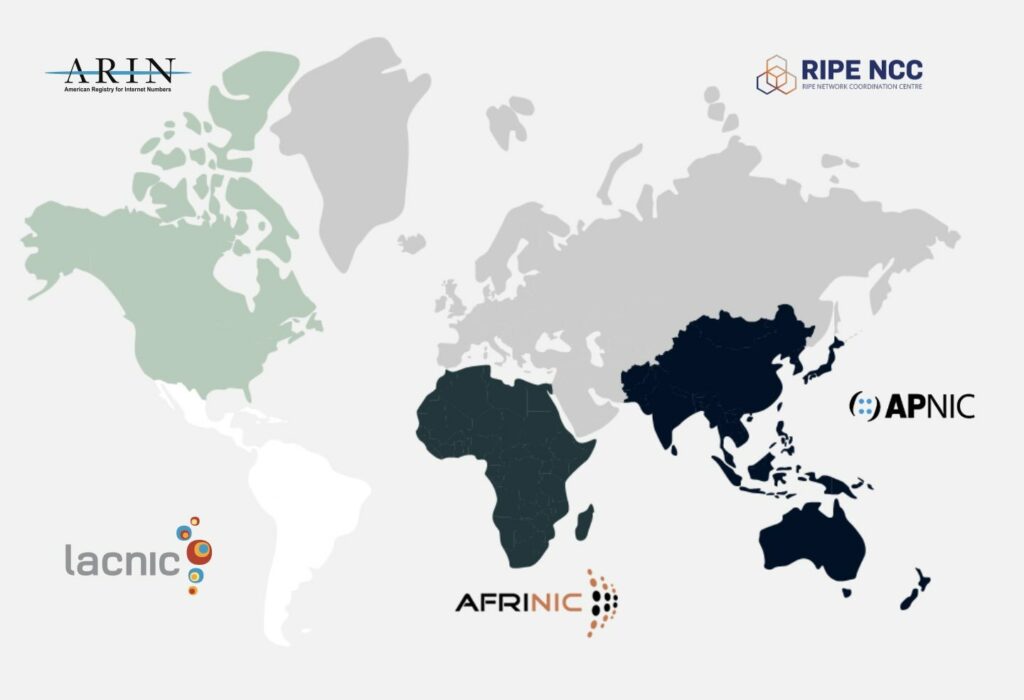
Regional Internet Registries (RIRs) are established under the authority of IANA and serve large geographical regions. Their primary responsibility is to manage, distribute, and register public Internet address space within their respective regions. The five RIRs currently in operation are AfriNIC, APNIC, ARIN, LACNIC, and the RIPE NCC.
A Local Internet Registry (LIR) typically refers to an Internet Service Provider (ISP) that can assign address space to its own network infrastructure and its customers, including downstream ISPs that further allocate addresses to their own customers.
In a resource transfer, the source refers to the organization that holds the resources before the transfer, and it must be a current APNIC account holder if it is within the APNIC region. If the source is from another RIR region, it must be equivalent to the “source” as defined by that RIR.
The recipient in a resource transfer is the organization that becomes the legitimate holder of the resources after the transfer is completed. If the recipient is within the APNIC region, it must be a current APNIC account holder. For recipients from other RIR regions, they must meet the equivalent criteria defined by that RIR.
Current resources are Internet resources registered by APNIC under explicit policies and agreements. These resources encompass public IPv4 addresses, IPv6 addresses, and Autonomous System numbers.
Optimize Your APNIC Transfer Buy Process With InterLIR
I need IPv4 address space and I’m looking for a source
Submit a Recipient request at Interlir.com
I have IPv4 address space that I want to transfer and I’m looking for a recipient
Verify your registration information is accurate Find an IPv4 Recipient at Interlir.com
I need IPv4 address space and I already have a Source confirmed
Obtain IPv4 pre-approval Find an IPv4 Source Submit a Recipient request at Interlir.com
I have IPv4 address space that I want to transfer and I already have a Recipient confirmed
Verify your registration information is accurate Submit an Source request at Interlir.com
Interlir APNIC Transfer services and pricing
Current IPv4from 38 europer /24
Historical IPv4from 38 euro/24
Background check
Inter-RIR transfer
Legal deal
Consulting
What does APNIC IPv4 transfer policy say?
Regional Internet industryRIRs are authorized by the Internet Assigned Numbers Authority (IANA) to serve and represent large geographical regions. Their main responsibility is to manage, distribute, and register public Internet address space within their respective regions. Currently, there are five RIRs globally: AfriNIC, APNIC, ARIN, LACNIC, and the RIPE NCC.
Local Internet Registry (LIR)LIRs are typically Internet Service Providers (ISPs) that have the authority to assign address space to their own network infrastructure and the users of their network services. LIRs may also have downstream ISPs as their customers, who further allocate addresses to their own customers.
SourceThe source refers to the organization that is the legitimate holder of the resources before the transfer takes place. If the source is within the APNIC region, they must be a current APNIC account holder. For sources from other RIR regions, they must meet the equivalent requirements set by that particular RIR.
RecipientThe recipient is the organization that becomes the legitimate holder of the resources after the transfer is completed. If the recipient is within the APNIC region, they must be a current APNIC account holder. For recipients from other RIR regions, they must meet the equivalent criteria defined by their respective RIR.
Current IPv4 resourcesCurrent resources are Internet resources, such as public IPv4 addresses, IPv6 addresses, and Autonomous System Numbers (ASN), that are registered by APNIC under specific policies and agreements.
Historical IPv4 resourcesHistorical resources refer to Internet resources that were registered under early registry policies without formal agreements.
InterRIR IPv4 address and ASN transferAPNIC recognizes inter-RIR transfers of IPv4 addresses and ASNs only when the counterpart RIR has an inter-RIR transfer policy allowing the transfer of those resources between APNIC and its own region.
FAQ
Conditions on the IPv4 resources to be transferred
The resource should be under the management of the RIR at which the transfer source holds an account and the authentic holder of the resource should match with the source without any disputes.
Conditions on the source of the transfer
The conditions on the source of the transfer will be defined by the RIR where the source organization holds an account.
Conditions on the recipient of the transfer
The conditions on the recipient of the transfer will be defined by the RIR where the recipient organization holds an account.
Closure of LIRs
If an LIR holding current APNIC resources ceases to provide Internet connectivity services, all of its current resources (this includes IPv4, IPv6 and AS numbers) must be returned to APNIC. It is the responsibility of the LIR (or any liquidator or administrator appointed to wind up the member’s business) to advise all of its customers that address space will be returned to APNIC, and that renumbering into new address space will be necessary. In the case that a new LIR takes over the business or infrastructure of the closed LIR, the existing address space may be transferred to the new LIR, however such a transfer is subject to re-examination by APNIC and may be treated as a new address request process.
Consequences for allocations
Following ownership change of an LIR, APNIC will review the status of any allocations that are held by the new entity or entities, with regard to the practical effect on their infrastructures. If the practical effect of ownership change is that the infrastructures are merged, then APNIC will not continue to make separate allocations to both. This situation will invalidate the membership agreement of the LIR that is effectively subsumed. When assessing the status of allocations, APNIC requires full disclosure of all address space held by all of the entities in question. If full disclosure is not made, then APNIC will consider any allocations to be invalid and will require that they be returned.
Effect on membership agreement
If an LIR changes ownership then the new entity should advise APNIC of the change. APNIC membership is not transferable from one entity to another; however, if the effect of the ownership change is that the LIR becomes a subsidiary of another entity, and the infrastructures of the respective entities remain fully independent, then the membership agreement may continue.
Updating registration details
If an LIR changes ownership (due to a merger, sale, or takeover), then the new entity must register any changes to its network usage and contact personnel. If the effect of the ownership change is that the LIR changes name, then the LIR must provide to APNIC relevant legal documentation supporting the name change.
Policies applicable to transferred resources
All resources transferred under this policy are subject to the provisions of all normal address management policies. In particular, future address requests from the member must document the use of transferred resources as a part of the member’s current resource holdings. For more information on transferring historical resources, please see Guide to the transfer of historical Internet resources.
Transfer procedure
All transfers of historical resources to current APNIC account holders made under this policy are recognized and registered by APNIC. APNIC does not require any technical review or approval of the resource’s current use to approve the transfer. In addition, APNIC does not review any agreements between the parties to a transfer and does not exert any control over the type of agreement between the parties.
Our cloud service provides a convenient option to rent resources for your Virtual Datacenter. Simply specify the number of CPU cores, RAM, and SSD capacity you require, and vCloud Director will assist you in setting up your personalized Virtual Data Center to meet your exact needs. No further complexities or additional steps are necessary.