In the realm of Internet technologies, standards and protocols play a pivotal role in the network’s operation. IPv4 and IPv6 are familiar terms, but what about IPv5? Tech enthusiasts and networking experts may have pondered the mysterious absence of IPv5.
IPv5 was, in theory, the next logical step in the evolution of Internet protocols. Its predecessor, IPv4, enjoyed immense success in building the Internet but had significant limitations, particularly concerning its ability to support new features and services. The development of IPv5 was seen as a generational leap that would overcome these limitations, allowing for a more advanced and efficient Internet.
The story of IPv5 commences in the 1970s when Stanford University conducted groundbreaking research into multimedia and real-time communication. This resulted in the experimental protocol known as ST-II (Stanford Telecommunications, Inc. version 2), which became the foundation for IPv5. ST-II enabled the transmission of voice and video over the network, a significant breakthrough at the time.
The mystery behind IPv5’s disappearance is partly due to a comical conflict and a lack of foresight. IPv5 was initially used for a very specific function: transmitting real-time data, such as voice and video. However, the name “IPv5” was informally used to refer to ST-II but did not become a formal Internet standard. Developers realized that the name “IPv5” was unsuitable for a general-purpose Internet standard. Consequently, they switched to the name IPv6, which was formally adopted as the successor to IPv4.
IPv6 ultimately became the successor to IPv4. Its design focused on addressing the limitations of IPv4, such as address exhaustion and the need to support a multitude of devices and services. IPv6, with its vast address space and security enhancements, became the natural choice for the future of the Internet.
As we delve into the mystery of IPv5, we uncover a curious tale of how a protocol experiences an unexpected evolution. While IPv5 never became the successor to IPv4, its legacy endures as a reminder of the challenges technology faces as it progresses. IPv6, on the other hand, has proven to be a success and is the protocol of choice for the future expansion of the Internet.
Ultimately, the mystery of IPv5 lies in how history and naming decisions can shape technological development. Though IPv5 never became a fundamental Internet protocol, its story offers a unique insight into the process of evolution and standardization in the world of information technology.

Alexey Shkittin
CEO

A Beginner’s Guide to Subnetting IPv4 and IPv6 Addresses Subnetting is a critical

Why IPv4 Leasing Is Becoming the Smart Choice for Businesses in 2025 1. Introduction
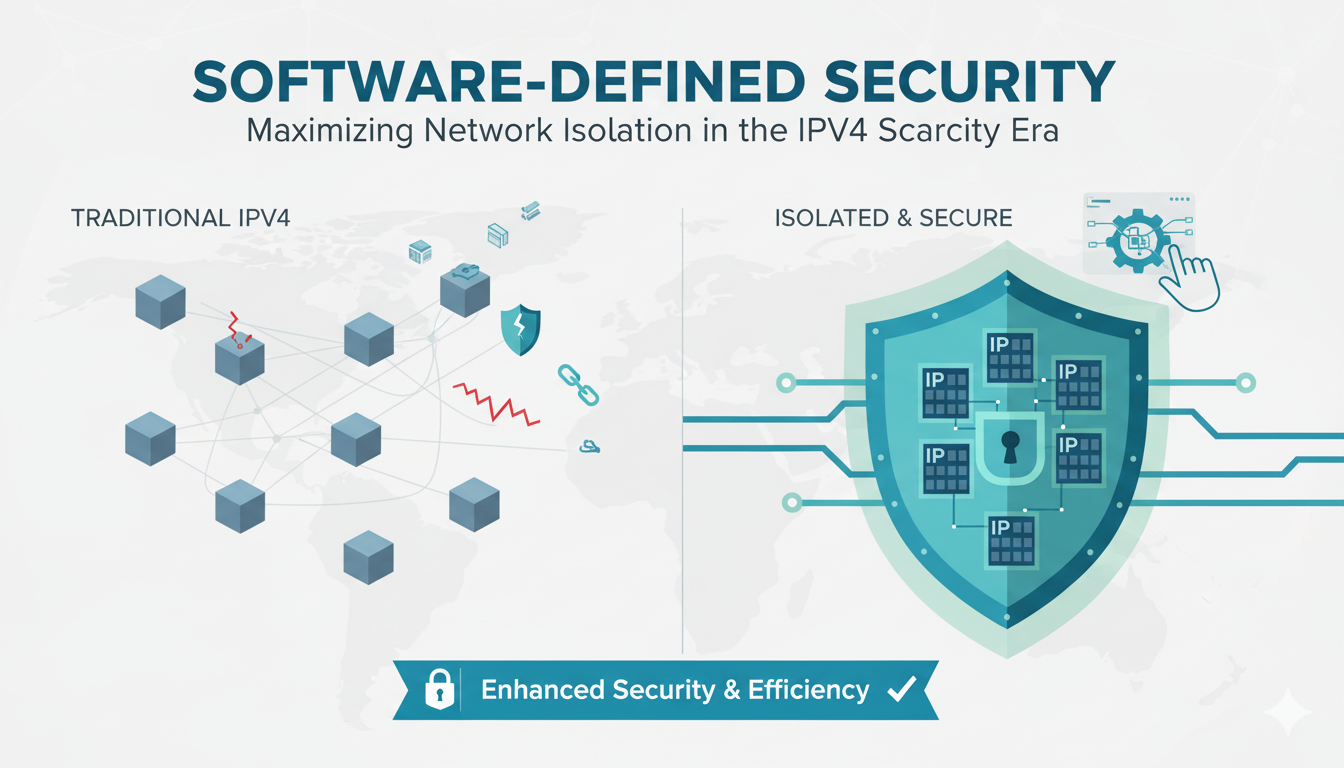
As CEO of InterLIR, I’ve witnessed firsthand how network isolation strategies

What is an ASN? ASN stands for Autonomous System Number. It is a unique identifier

Anycast DNS: A Leader’s Guide to Protecting Your Digital Infrastructure Executive

RPKI Certification: A Leader’s Guide to Internet Routing Security Executive

Executive Summary: What You Need to Know 🎯 Strategic Importance – Internet

When AWS DynamoDB failed in October 2025, thousands of businesses discovered that

Executive Summary: What You Need to Know 🎯 IP reputation directly impacts your
Live chat is provided by Intercom and is loaded only after you enable it. You can also contact us without enabling the chat.