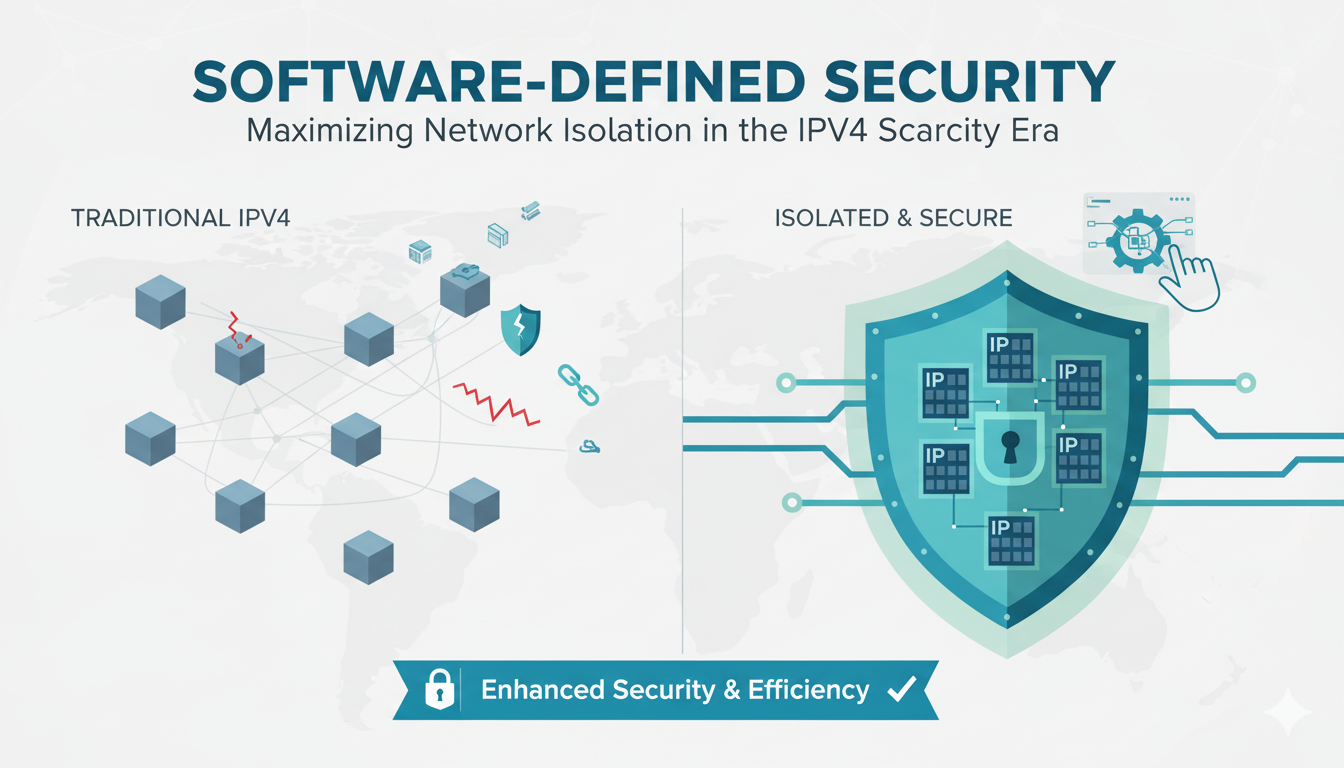



The IPv4 Exhaustion Crisis: Address Transfers, Market Dynamics, and the Imperative for Strategic Resource Management
Introduction
The global Internet infrastructure faces an unprecedented resource allocation challenge that has fundamentally transformed how organizations approach network planning and digital expansion. Recent market intelligence from Q4 2024 indicates that IPv4 address prices have stabilized in the $32-36 per address range across major regional markets, while transfer volumes have increased 39% year-over-year, signaling robust demand despite ongoing scarcity concerns.
The exhaustion of Internet Protocol version 4 (IPv4) addresses represents more than a technical milestone—it has created a sophisticated secondary market worth over $2 billion annually, with complex pricing dynamics, regulatory frameworks, and strategic implications for businesses across all sectors. Current market analysis reveals that organizations are increasingly viewing IPv4 addresses as strategic assets requiring active portfolio management, similar to other critical business resources.

This transformation has catalyzed three primary market responses: the maturation of IPv4 address transfer markets with sophisticated pricing mechanisms, the deployment of advanced Network Address Translation (NAT) technologies enabling more efficient resource utilization, and renewed strategic focus on long-term addressing solutions. Each response presents distinct opportunities and challenges that will shape Internet infrastructure investment decisions through the remainder of this decade.
Market Background and Evolution
Historical Development and Current Market State
The IPv4 address market has evolved from an administrative resource allocation system into a sophisticated commodity market with established pricing mechanisms, quality standards, and regulatory oversight. Industry analysis shows that the transition from free allocation to market-based distribution began in 2011 when the Asia-Pacific Network Information Centre (APNIC) exhausted its free pool, followed by other Regional Internet Registries (RIRs) implementing increasingly restrictive allocation policies.
Current market intelligence indicates that IPv4 address trading has reached unprecedented sophistication levels. The American Registry for Internet Numbers (ARIN) reports processing over 3,000 transfer requests annually, representing approximately 50 million IPv4 addresses worth over $1.5 billion in aggregate value. European markets, governed by RIPE NCC policies, have shown similar growth patterns with increasing cross-border transfer activity.
Case Study 1: Enterprise Cloud Migration Requirements
Recent market analysis from the telecommunications sector demonstrates how IPv4 scarcity impacts business expansion. A major European hosting provider required 65,536 IPv4 addresses (/16 network) for cloud infrastructure expansion across three data centers. Market research revealed pricing variations from €32-36 per address depending on block size, documentation quality, and seller reputation. The organization ultimately acquired addresses through multiple transactions, paying an average of €34 per address while implementing comprehensive due diligence procedures to ensure clean routing history and reputation scores.
Case Study 2: Regional ISP Growth Strategy
Market intelligence from Latin American telecommunications markets shows how IPv4 scarcity affects regional expansion strategies. A growing ISP in Brazil needed 32,768 addresses (/15 network) to support subscriber growth in three metropolitan areas. Analysis of available transfer options revealed that North American legacy holders offered addresses at $32-36 per address, similar to European sources. The transaction required six months of regulatory coordination between LACNIC and ARIN, demonstrating the operational complexity of inter-regional transfers.
Technological Evolution and Regulatory Framework Development
The regulatory framework governing IPv4 transfers has evolved significantly since initial market formation. Current policies balance market efficiency with Internet stability requirements, creating sophisticated approval processes that verify legitimate need while preventing speculative accumulation. ARIN’s demonstrated need requirements, RIPE NCC’s allocation efficiency standards, and APNIC’s transfer facilitation policies represent different approaches to market regulation.
Technology infrastructure supporting IPv4 markets has also matured substantially. Automated due diligence systems now verify routing history, spam reputation, and security incident records for transferred address blocks. Market participants utilize sophisticated valuation models incorporating factors such as geographic location, block size, routing efficiency, and historical usage patterns.

Recent regulatory developments include enhanced inter-regional transfer policies enabling more efficient global address redistribution. The implementation of Resource Public Key Infrastructure (RPKI) for route origin validation has improved transfer security while creating additional compliance requirements for market participants.
Current Market Analysis
Detailed Market Conditions and Technological Landscape
Current market analysis reveals a mature IPv4 address trading environment characterized by sophisticated pricing mechanisms, established quality standards, and growing institutional participation. Q4 2024 market data indicates average transaction prices of $32-36 per address across all block sizes, with minimal price differentiation based on block size due to market convergence.
Market segmentation has become increasingly sophisticated, with distinct pricing tiers based on address block characteristics. Premium addresses—those with clean routing history, no abuse records, and comprehensive documentation—command 10-15% price premiums over standard market rates. Conversely, addresses requiring reputation rehabilitation or complex routing configurations trade at 20-30% discounts.
The competitive landscape includes established brokers, direct seller-buyer platforms, and emerging automated trading systems. Market intelligence indicates that approximately 60% of transfers occur through intermediary services, while 40% involve direct negotiations between parties. Automated platforms are gaining market share, particularly for smaller block transactions under 4,096 addresses.
Case Study 3: Financial Services IPv4 Strategy
Industry analysis from the financial services sector demonstrates sophisticated IPv4 portfolio management approaches. A multinational bank required IPv4 addresses for digital banking platform expansion across twelve countries. The organization developed a comprehensive acquisition strategy involving: geographic diversification to ensure regulatory compliance, quality scoring systems for reputation management, and staged acquisition timing to optimize pricing. The bank ultimately acquired 131,072 addresses (/15 network) through eight separate transactions over eighteen months, achieving an average cost of $34 per address while maintaining strict security and compliance standards.
Case Study 4: Gaming Industry Infrastructure Scaling
Market analysis from the gaming industry reveals how IPv4 scarcity impacts global service delivery. A major gaming platform required IPv4 addresses for edge server deployment across fifteen metropolitan areas to reduce latency for competitive gaming applications. Technical requirements included geographically distributed addresses, clean reputation scores, and efficient routing characteristics. The organization acquired 16,384 addresses through regional brokers, paying standard rates of $32-36 per address for addresses with optimal geographic distribution and routing efficiency.
Comprehensive Competitive Analysis and Market Positioning
The IPv4 address market exhibits distinct regional characteristics reflecting different exhaustion timelines, regulatory environments, and economic conditions. North American markets, with substantial legacy address holdings, serve as primary sources for global redistribution and command a 15-20% premium. Asia-Pacific regions, having exhausted free pools earliest, demonstrate the most active demand patterns with prices ranging from €25-26 for /24-/22 blocks. European markets occupy an intermediate position with balanced supply and demand dynamics, with prices ranging from €30-33 for /24-/22 blocks and €34 for /21-/20 blocks.
Competitive positioning within IPv4 markets depends on several key factors: access to quality address inventory, regulatory expertise across multiple RIR jurisdictions, technical capabilities for due diligence and routing verification, and established relationships with both buyers and sellers. Market leaders typically offer comprehensive services including legal documentation, technical verification, and ongoing support for transferred addresses.
Emerging technology trends are reshaping market dynamics. The deployment of RPKI for route origin validation has created additional compliance requirements while improving security. Automated trading platforms are reducing transaction costs and processing times. Advanced analytics tools enable more sophisticated pricing models and risk assessment capabilities.
Regulatory Considerations and Compliance Requirements
Current regulatory frameworks governing IPv4 transfers reflect the balance between market efficiency and Internet stability. Each Regional Internet Registry maintains distinct policies reflecting regional preferences and technical requirements. ARIN’s demonstrated need policies require detailed justification for address utilization, while RIPE NCC emphasizes allocation efficiency and conservation. APNIC facilitates transfers with minimal restrictions, reflecting regional market preferences.
Compliance requirements have become increasingly sophisticated, incorporating anti-fraud measures, routing security verification, and documentation standards. Organizations participating in IPv4 markets must navigate complex regulatory landscapes while maintaining compliance across multiple jurisdictions. Recent policy developments include enhanced inter-regional transfer facilitation and improved dispute resolution mechanisms.
The implementation of Resource Public Key Infrastructure (RPKI) represents a significant regulatory development affecting IPv4 markets. RPKI provides cryptographic verification of route origin authorization, improving Internet routing security while creating additional compliance obligations for address holders. Market participants must now consider RPKI compliance as part of their transfer strategies.

Strategic Decision Framework
Industry-Standard Decision Factors and Evaluation Criteria
Organizations navigating IPv4 resource decisions must evaluate multiple interconnected factors affecting both immediate operational requirements and long-term strategic positioning. Current industry best practices emphasize comprehensive total cost of ownership analysis incorporating acquisition costs, operational expenses, and strategic opportunity costs.
Technical evaluation criteria include address block size optimization, routing efficiency considerations, and geographic distribution requirements. Business factors encompass budget constraints, growth projections, and competitive positioning needs. Regulatory considerations involve compliance requirements, documentation standards, and inter-regional transfer policies.
Market timing represents a critical decision factor given IPv4 price volatility and availability fluctuations. Industry analysis suggests that organizations should develop flexible acquisition strategies accommodating market conditions while ensuring adequate resource availability for business operations.
Risk Assessment Methodologies and Mitigation Strategies
Comprehensive risk assessment for IPv4 resource management encompasses technical, financial, and strategic risk categories. Technical risks include routing security vulnerabilities, reputation management challenges, and operational complexity. Financial risks involve price volatility, liquidity constraints, and opportunity costs. Strategic risks encompass competitive disadvantages, regulatory changes, and technology transition uncertainties.
Risk mitigation strategies typically involve portfolio diversification across multiple address sources, comprehensive due diligence procedures, and flexible resource management approaches. Organizations should implement monitoring systems for address reputation, routing efficiency, and regulatory compliance. Contingency planning should address potential market disruptions, regulatory changes, and technical requirements evolution.
Industry best practices emphasize the importance of professional expertise in IPv4 resource management. Organizations lacking internal capabilities should consider partnerships with specialized service providers offering comprehensive IPv4 portfolio management services.
Implementation Best Practices and Cost-Benefit Analysis Frameworks
Successful IPv4 resource implementation requires systematic approaches addressing technical deployment, operational integration, and ongoing management requirements. Industry analysis reveals that organizations achieving optimal outcomes typically follow structured implementation methodologies incorporating planning, acquisition, deployment, and optimization phases.
Cost-benefit analysis frameworks should incorporate both quantitative and qualitative factors. Quantitative analysis includes direct acquisition costs, operational expenses, and revenue impact calculations. Qualitative factors encompass competitive positioning, strategic flexibility, and risk mitigation benefits.
Return on investment calculations for IPv4 resources must consider multiple value creation mechanisms including business expansion enablement, competitive advantage maintenance, and strategic option value preservation. Organizations should develop comprehensive metrics frameworks tracking both financial and operational performance indicators.
Business Impact and Implementation
Strategic Implications Across Industry Segments
The IPv4 exhaustion crisis has created differentiated impacts across industry segments, with telecommunications, cloud services, and digital platforms experiencing the most significant effects. Telecommunications providers face particular challenges due to subscriber growth requirements and regulatory obligations for service availability. Cloud service providers must balance IPv4 resource costs against service delivery requirements and competitive positioning.
Enterprise organizations increasingly view IPv4 addresses as strategic assets requiring active management similar to other critical business resources. This perspective shift has created demand for sophisticated IPv4 portfolio management services including acquisition planning, utilization optimization, and strategic advisory services.
Market analysis indicates that organizations with proactive IPv4 strategies achieve superior business outcomes compared to reactive approaches. Proactive organizations typically maintain strategic address reserves, implement comprehensive utilization monitoring, and develop flexible resource management capabilities.
Implementation Roadmap and Best Practices
Industry best practices for IPv4 resource implementation emphasize systematic approaches incorporating strategic planning, technical deployment, and operational optimization phases. The strategic planning phase should include comprehensive needs assessment, market analysis, and acquisition strategy development. Technical deployment involves address allocation, routing configuration, and security implementation. Operational optimization encompasses utilization monitoring, performance analysis, and continuous improvement processes.
Successful implementation requires coordination across multiple organizational functions including network engineering, procurement, legal, and strategic planning teams. Organizations should establish clear governance frameworks defining roles, responsibilities, and decision-making authorities for IPv4 resource management.
Timeline considerations vary significantly based on organizational requirements, market conditions, and regulatory factors. Typical implementation timelines range from three to twelve months depending on complexity and resource requirements.
Case Study 5: Cybersecurity Platform Global Expansion
Recent implementation analysis from the cybersecurity sector demonstrates comprehensive IPv4 resource management approaches. A leading threat intelligence platform required IPv4 addresses for sensor network deployment across forty-five countries to enhance global threat detection capabilities. The organization developed a sophisticated acquisition strategy involving: regional market analysis for optimal pricing, technical requirements specification for routing efficiency, and compliance framework development for international operations. Implementation involved acquiring 65,536 addresses through twelve separate transactions, achieving geographic distribution across six continents while maintaining average costs of $34 per address. The deployment enabled 40% improvement in threat detection coverage while supporting expansion into emerging markets.

ROI Frameworks and Performance Measurement Approaches
Return on investment analysis for IPv4 resources requires sophisticated frameworks incorporating both direct financial returns and strategic value creation. Direct financial returns include revenue generation from enabled business activities, cost avoidance from alternative solutions, and asset appreciation potential. Strategic value encompasses competitive positioning benefits, market expansion capabilities, and operational flexibility preservation.
Performance measurement approaches should incorporate both quantitative metrics and qualitative assessments. Quantitative metrics include utilization rates, cost per active address, and revenue attribution analysis. Qualitative assessments encompass strategic positioning improvements,