bgunderlay bgunderlay bgunderlay

ARIN: Its Role and Impact on Internet Number Resources

The American Registry for Internet Numbers (ARIN) stands as a vital cornerstone in the allocation and stewardship of Internet resources, playing a pivotal role in North America. As one of the five Regional Internet Registries (RIRs), ARIN shoulders the responsibility of overseeing the allocation and management of Internet Protocol (IP) addresses, serving a vast region that encompasses the United States, Canada, and several Caribbean and North Atlantic islands.

ARIN’s core mission revolves around the allocation, registration, and management of Internet number resources, primarily IP addresses and Autonomous System (AS) numbers. Its intricate responsibilities extend to maintaining a comprehensive repository of ownership information for these critical resources. These functions are integral to the smooth functioning and equitable distribution of Internet number resources, ensuring that they are put to optimal use.

Impacting the Internet Ecosystem

Internet Governance

ARIN’s influence resonates throughout the broader Internet ecosystem. It actively participates in Internet governance forums to advocate for the interests of the global Internet community. By doing so, ARIN helps shape policies and standards that underpin the Internet’s operation, fostering an environment of cooperation and collaboration.

Educational Initiatives

One of ARIN’s instrumental roles is educating not only its constituents but also governments and international organizations about the Regional Internet Registry (RIR) model. This outreach serves to demystify the complex world of Internet number resources, dispelling misconceptions and fostering a deeper understanding among stakeholders.

Community Building

ARIN excels in cultivating relationships within its vast service region. These relationships serve as a foundation for enhancing comprehension of the number resource management model. ARIN offers educational opportunities and promotes awareness of shared principles, norms, and regulations that mold the Internet’s evolution and use.

What is the Process for Requesting Internet Number Resources from ARIN

To navigate ARIN’s allocation process successfully, organizations need to follow a structured approach. Here’s a concise outline of the steps involved in requesting IP addresses or Autonomous System Numbers (ASNs) from ARIN:

  1. Qualifying for Resources: Organizations must meticulously review the pertinent policies to ensure that they meet the requisites for requesting IP addresses or ASNs from ARIN.
  2. Submission of Request: Once an organization validates its eligibility against the applicable policy requirements, it can submit a formal request for the desired Internet number resources.
  3. Documentation Prerequisites: As part of the request procedure, ARIN mandates specific documentation to substantiate compliance with policy prerequisites. ARIN provides guidelines on the requisite documentation to facilitate a smooth request process.
  4. Out of Region Utilization: ARIN-allocated resources may be utilized outside its service region if a legitimate need exists. Nevertheless, guidelines and prerequisites govern the out-of-region utilization of these resources.
  5. Approval and Payment: ARIN scrutinizes and approves the request, and the organization is required to settle any applicable fees. Upon receipt of a signed Registration Services Agreement (RSA) and payment of fees, ARIN proceeds to allocate the requested resources, typically within two business days.
  6. Status Updates and Assistance: Should an organization seek a status update on the request or encounter queries, ARIN’s Registration Services stands ready to provide assistance. Additionally, ARIN Financial Services can aid in remitting registration fees or submitting a signed RSA.

What Information Is Required to Request Internet Number Resources from ARIN?

When soliciting Internet number resources from ARIN, organizations must furnish specific information and documentation to align with policy prerequisites. Key details that may be sought include:

  1. Detailed Contact Information: This encompasses the legal name of the organization, its physical address, and comprehensive contact particulars.
  2. Organizational and Network Particulars: Organizations may need to furnish exhaustive information regarding their network infrastructure. This includes data such as the existing number of IP addresses, network topologies, and intricate details about the network’s technical configuration.
  3. Business Plan Elaboration: In select instances, organizations might be mandated to submit a well-defined business plan elucidating the rationale behind their requirement for the requested Internet number resources.
  4. Documentation for Justification: Robust justification documents may be necessitated to elucidate the organization’s exigency for the requested resources. Clear and comprehensive justification can expedite the request process.
  5. Projected Utilization Date: Specific requests may entail the provision of an anticipated usage date, a crucial detail in planning allocations, particularly for Autonomous System Numbers (ASNs).
  6. Payment and Signed Agreements: Once ARIN grants approval, organizations are expected to fulfill any applicable fees and submit a duly executed Registration Services Agreement (RSA), as dictated by the circumstances.

How Long Does it Take to Receive Internet Number Resources from ARIN

Once ARIN obtains a signed Registration Services Agreement (RSA) and all relevant fees, it expeditiously proceeds to allocate the resources, a task typically accomplished within a mere two business days. The provision for status updates or resolution of queries further bolsters the swift turnaround time. 

What is the Cost of Requesting Internet Number Resources from ARIN

The cost of soliciting Internet number resources from ARIN varies contingent on the nature of the request and the specific services availed. 

  1. Transfer Processing Fee: ARIN imposes a non-refundable transfer processing fee of $500 USD for each transfer request concerning the rights to Internet number resources.
  2. Experimental Allocations: Organizations pursuing experimental allocations of IPv4 addresses, IPv6 addresses, and/or ASNs can anticipate an annual charge of $500 USD per experimental allocation, with a grant duration of one year.
  3. Additional Fees: Beyond these fundamental charges, supplementary fees are associated with specific services. For instance, the Premier Support Plan, tailored to XL and smaller customers, attracts an annual fee of $5,000 USD. Meanwhile, the Qualified Facilitator Fee stands at $10,000 USD annually.

Temporary vs. Permanent Internet Number Resource Allocations

AspectTemporary AllocationPermanent Allocation
DurationAllocated for a specific, usually short period.Allocated for long-term or ongoing use.
PurposeOften used for experimental or short-term needs.Primarily for core network infrastructure or sustained operations.
ExamplesResearch projects, temporary network expansions.Network infrastructure, stable operations.
Return to PoolResources are expected to be returned after the specified period.Resources are not expected to be returned unless no longer needed.

The specific policies and guidelines for temporary and permanent allocations are outlined in the Number Resource Policy Manual (NRPM) provided by ARIN. Organizations can refer to the NRPM and consult with ARIN to determine the most appropriate type of allocation based on their specific needs and use cases.

Alexey Shkittin

CEO

    Ready to get started?

    Articles
    A Beginner’s Guide to Subnetting IPv4 and IPv6 Addresses (2026 Update)
    A Beginner’s Guide to Subnetting IPv4 and IPv6 Addresses (2026 Update)

    A Beginner’s Guide to Subnetting IPv4 and IPv6 Addresses Subnetting is a critical

    More
    IPv4 Leasing Revolution: Why Smart Businesses Are Ditching Ownership in 2025
    IPv4 Leasing Revolution: Why Smart Businesses Are Ditching Ownership in 2025

    Why IPv4 Leasing Is Becoming the Smart Choice for Businesses in 2025 1. Introduction
    More
    Network Isolation Revolution: IPv4 Marketplace Insights for Enterprise Security
    Network Isolation Revolution: IPv4 Marketplace Insights for Enterprise Security

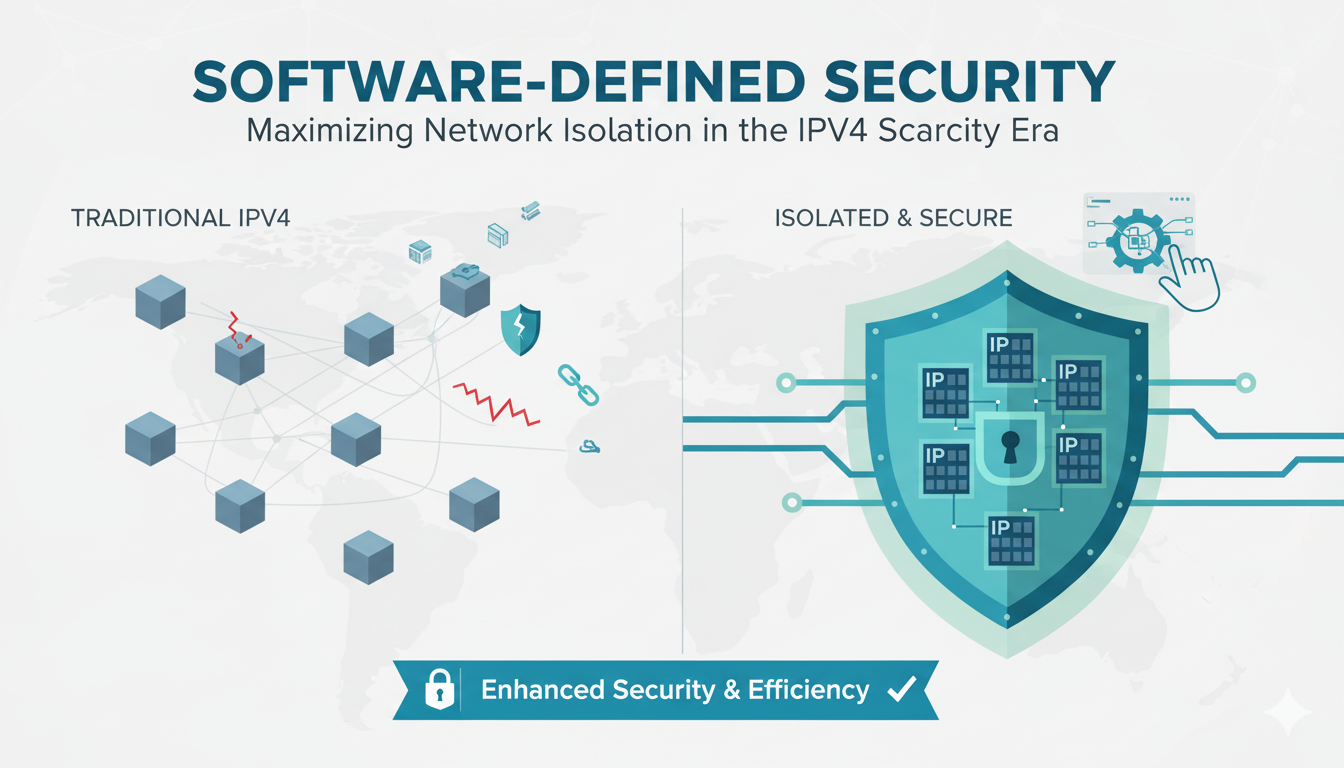
      As CEO of InterLIR, I’ve witnessed firsthand how network isolation strategies

    More
    What is ASN?
    What is ASN?

    What is an ASN? ASN stands for Autonomous System Number. It is a unique identifier

    More
    How Anycast DNS Actually Works (And Why Your Network Needs It)
    How Anycast DNS Actually Works (And Why Your Network Needs It)

    Anycast DNS: A Leader’s Guide to Protecting Your Digital Infrastructure Executive

    More
    Why RPKI Matters: Securing Your Company’s Internet Traffic
    Why RPKI Matters: Securing Your Company’s Internet Traffic

    RPKI Certification: A Leader’s Guide to Internet Routing Security Executive

    More
    Why RIPE Address Policy Matters for Your Company’s Digital Future
    Why RIPE Address Policy Matters for Your Company’s Digital Future

    Executive Summary: What You Need to Know 🎯 Strategic Importance – Internet

    More
    AWS Outages: The CEO’s Guide to Preventing Downtime & Protecting Revenue
    AWS Outages: The CEO’s Guide to Preventing Downtime & Protecting Revenue

      When AWS DynamoDB failed in October 2025, thousands of businesses discovered that

    More
    What I Wish CEOs Knew About Managing IP Reputation Risk
    What I Wish CEOs Knew About Managing IP Reputation Risk

    Executive Summary: What You Need to Know 🎯 IP reputation directly impacts your

    More
    How to Create a Subnet and Configure Routing
    How to Create a Subnet and Configure Routing

    Mastering Subnetting and Routing for Modern Networks Why Subnetting Matters in Today’s

    More