

bgunderlay bgunderlay bgunderlay
123

Acquired IPv4 Reputation: Blacklists & Hidden Costs

The Hidden Costs of Acquired IPv4: Geolocation Mismatch, Blacklists and Reputation Debt

Acquired IPv4 reputation can determine whether a leased or purchased IP block is ready for production. Every prefix carries operational history: previous routing, outdated geolocation data, blacklist exposure, abuse reports and reputation signals.

For companies leasing, buying or transferring IPv4 resources, these hidden factors can affect email deliverability, user access, fraud checks, compliance reviews and infrastructure reliability.

The global shortage of IPv4 addresses has created an active secondary market. Companies lease, buy and transfer IPv4 blocks to support hosting, cloud infrastructure, SaaS platforms, email systems, VPN services, CDN deployments and other internet-facing services.

At first glance, acquiring IPv4 space may look like a straightforward process: verify the seller or lessor, receive a Letter of Authorization, update WHOIS or RDAP records, configure routing and start using the addresses.

In practice, an IPv4 block is not a blank technical asset. Previous routing, outdated geolocation data, DNSBL listings, abuse reports and poor IP reputation can follow the block after a transfer or lease.

Quick answer: the main hidden costs of acquired IPv4 are geolocation mismatch, blacklist exposure and reputation debt. These issues can disrupt access to online services, reduce email deliverability, trigger fraud filters and increase support workload after deployment.

Acquired IPv4 reputation is the combined effect of a prefix’s previous use, abuse history, blacklist status, geolocation records and routing background. Even when ownership or leasing documentation is correct, the wider internet may still evaluate the block based on its past.

This is why IPv4 acquisition should not be treated only as a pricing decision. Whether a company leases IPv4 addresses, buys a prefix for long-term use or prepares address space for customer-facing infrastructure, it needs a proper technical and reputation check before production traffic starts.

Key takeaways

1

Geolocation can lag

IPv4 geolocation may remain outdated for weeks or months after a prefix moves to a new country, network or provider.

2

Geofeeds reduce guesswork

Geofeeds give geolocation providers a structured source of prefix-to-location information.

3

Reputation follows the block

Transferred or leased IP space may inherit abuse history, blacklist records or poor email reputation.

4

Routing must be secured

RPKI/ROA, route objects and proper authorization help reduce routing and onboarding risks.

What “acquired IPv4” really means

In this article, acquired IPv4 means any IPv4 address space that an organization starts using after it was previously controlled, routed or used by another party.

Leased IPv4 prefixes
Purchased IPv4 blocks
Transferred resources
Brokered address space
Marketplace IPv4 deals
Customer-facing IP ranges

The commercial status of the block may change quickly, but the internet ecosystem does not update instantly. Geolocation databases, mail filters, security platforms, fraud systems and reputation tools may continue to treat the addresses according to their previous history.

This matters for companies using IPv4 space for real infrastructure. A prefix can be technically routed correctly and still cause business problems if banks, SaaS platforms, streaming services, mail providers or fraud prevention systems classify it incorrectly.

Risk map: where hidden IPv4 costs appear

Risk area What can go wrong Business impact
Geolocation The IP appears to be in the wrong country, region or city. Blocked access, fraud checks, wrong content region, customer complaints.
Blacklist history The prefix was previously associated with spam, malware, phishing or abuse. Email rejection, blocked traffic, security reviews and compliance delays.
Routing records ROAs, route objects or origin ASN records are missing, outdated or inconsistent. BGP issues, invalid announcements, failed provider verification.
Documentation LOA, WHOIS/RDAP or authorization details are incomplete. Deployment delays, failed onboarding and additional manual verification.

Geolocation mismatch: when an IP appears to be in the wrong country

IP geolocation databases do not work like GPS. They estimate location from a combination of signals, including WHOIS and RDAP records, routing data, traceroutes, user-submitted corrections, commercial datasets and geofeeds.

When a prefix is reallocated, transferred or announced from a new network, it may be operationally used in one country while still being listed in another country by major geolocation providers.

This creates an IPv4 geolocation mismatch: the network operator expects the block to be treated as one location, while websites, applications and security systems see a different location.

Common consequences of incorrect IP geolocation

  • Banking portals may block or challenge users because the IP appears to come from another country.
  • Streaming platforms may show the wrong content library or deny access.
  • Fraud prevention systems may flag legitimate sessions as suspicious.
  • Ad platforms and analytics tools may misclassify traffic.
  • Compliance-sensitive services may apply the wrong regional rules.
  • Support teams may receive complaints that are difficult to diagnose.

The problem becomes more visible in the IPv4 secondary market because prefixes move more often. A block that was previously routed in one region may later be leased to a customer in another region, transferred to a new holder or used by a different infrastructure provider.

For example, a company may lease a /24 for infrastructure in Germany, but parts of the internet may still classify the range as being located in another country. From the customer’s point of view, the service may look broken even though the routing is technically correct.

Why geolocation matters for IPv4 leasing and acquisition

Geolocation accuracy is especially important when IPv4 space is leased, purchased or transferred from another organization. The new user may receive valid technical documentation, but the wider internet may still associate the prefix with its previous location, previous routing history or previous abuse patterns.

This creates a gap between legal control and operational readiness. A company may be fully authorized to use a block, but still face problems with incorrect geolocation, DNSBL listings, outdated route objects, missing ROAs or poor reputation signals.

For IPv4 lessees

A leased prefix should be checked before customer traffic starts. Price matters, but routing readiness, geolocation accuracy and reputation history often matter more in production.

For IPv4 buyers

A purchased block can become a long-term asset, but only if the buyer understands its previous use, abuse history, registry status and operational condition.

For resource holders

Owners leasing out unused IPv4 space should keep documentation, route authorization and abuse handling clean to protect long-term asset value.

For businesses that depend on stable infrastructure, these issues can affect more than network configuration. They can influence customer access, email deliverability, fraud checks, compliance reviews and support workload.

Geofeeds: a practical way to reduce geolocation mismatch

A geofeed is a standardized CSV file that maps IP prefixes to geographic information such as country, region and city. The format is described in RFC 8805.

Instead of forcing every geolocation provider to infer location indirectly, a geofeed lets a network operator publish a structured declaration of where prefixes should be geolocated.

Example geofeed entry

203.0.113.0/24,DE,DE-BE,Berlin,

The exact data should match the operational reality of the network. For privacy and accuracy reasons, geofeeds should describe infrastructure or user groups at an appropriate level, not expose overly precise information about individual users.

Benefits of publishing a geofeed

Faster correction

Geolocation providers receive a clear and structured source instead of relying only on inference.

Lower support cost

Fewer users are blocked or misclassified because of stale location data.

Better operational control

The resource holder can maintain location data as prefixes are reassigned.

Cleaner onboarding

Newly leased, transferred or acquired IPv4 space can be prepared before production traffic begins.

For operators managing many IPv4 ranges, geofeeds should be part of the normal provisioning workflow. Whenever a prefix is leased, moved, transferred or reassigned, the geofeed should be reviewed and updated.

Signed geofeeds and RPKI

Publishing a geofeed is useful, but consumers also need to know that the file is legitimate. RFC 9632 describes how geofeed data can be discovered and how it can optionally be authenticated using RPKI.

A signed geofeed helps prove that the location information was published by the legitimate resource holder or an authorized party. This matters because incorrect geolocation data can affect access control, fraud systems, digital services and user trust.

Important: RPKI does not define IP geolocation by itself. RPKI helps validate routing authorization. Signed geofeeds use resource ownership signals to make geolocation data more verifiable.

Signed geofeeds are especially relevant for IPv4 leasing providers, hosting operators, networks with frequent customer reallocations and companies operating infrastructure across several countries.

Geofeeds do not guarantee instant correction across every provider. Each geolocation database has its own update process. Still, publishing a correct geofeed gives providers a clear, machine-readable source and reduces the time spent on manual correction requests.

For companies that lease or buy IPv4 resources, geofeeds should be combined with routing security. InterLIR explains the practical role of RPKI in IPv4 leasing and BGP security in its article What Is RPKI and Why It Matters for IPv4 Leasing, BYOIP, and BGP Security.

Acquired IPv4 reputation, blacklisting and reputation debt

Geolocation is only one side of the problem. The second hidden cost is IP reputation debt.

IP reputation debt means the negative operational history attached to an IP range before the new owner or lessee starts using it. This can include spam, phishing, malware hosting, botnet activity, bulletproof hosting, scanning, abusive proxy activity or previous route hijacking incidents.

DNS-based blocklists and reputation systems track IP addresses and ranges associated with abuse. When an IPv4 block changes hands, its legal or commercial ownership may change, but reputation systems may still remember the previous behavior. A clean transfer document does not automatically erase blacklist history.

Email deliverability

Messages may be rejected, throttled or routed to spam.

Network access

Firewalls and security platforms may block or challenge traffic.

Customer trust

Users may see warnings, failed logins or unusual verification prompts.

Operational delays

Delisting and remediation may take days or weeks.

Not every listing has the same meaning. Some lists indicate direct abuse. Others are policy-based, for example dynamic residential ranges that should not send mail directly. Some listings expire automatically after the activity stops, while others require manual delisting and evidence of remediation.

This is why reputation checks should be done before purchase, lease or production onboarding.

Why acquired IPv4 reputation can be riskier than expected

Transferred or leased IPv4 space should never be assumed clean without verification. The risk varies by prefix, region, previous user and intended use case, but the operational lesson is simple: a block’s past can affect its future value.

Why the risk exists

  1. Previous abuse may not be visible in basic WHOIS checks. A block can look valid in registry data while still having a poor reputation.
  2. Bad actors may try to reset reputation through new address space. Abusive operators often move between ranges after older prefixes become burned.
  3. Reputation systems lag behind ownership changes. Filters may continue to associate the range with the previous user.
  4. Inactive blocks can be abused after reactivation. A prefix that was quiet for months may attract attention when it suddenly starts sending traffic again.
  5. Routing and registry data may not align perfectly. Route objects, ROAs, origin ASNs and WHOIS records may require cleanup after transfer or lease activation.

For IPv4 buyers and lessees, this means that price per IP is only one part of the real cost. A cheaper block can become expensive if it requires urgent delisting, repeated geolocation correction, customer support escalation or onboarding delays.

Due diligence checklist before acquiring or leasing IPv4

The best time to identify hidden IPv4 costs is before the block is used in production. A structured due diligence process should cover ownership, authorization, routing, geolocation and abuse history.

1. Verify ownership and authorization

  • Check WHOIS and RDAP records.
  • Confirm organization and maintainer details.
  • Review the chain of title for transferred resources.
  • Obtain a proper Letter of Authorization where needed.
  • Confirm that the lessor, seller or marketplace is authorized to provide the range.

2. Check routing hygiene

  • Confirm the intended origin ASN.
  • Create or update RPKI ROAs before production announcement.
  • Review maxLength settings to avoid accidental RPKI-invalid announcements.
  • Check IRR route objects and remove outdated routing records where possible.
  • Monitor BGP visibility after the prefix goes live.

3. Audit IP reputation

  • Check major DNSBLs and security reputation services.
  • Review historical abuse indicators where available.
  • Check whether the range was associated with spam, malware, phishing or proxy abuse.
  • Test email deliverability before assigning the range to mail infrastructure.
  • Document all findings before accepting the block for production use.

4. Audit geolocation

  • Compare the prefix across multiple geolocation providers.
  • Identify incorrect country, region or city data.
  • Publish or update a geofeed before customer traffic starts.
  • Add the geofeed reference in WHOIS or RDAP where supported.
  • Submit corrections directly to key geolocation providers when needed.

5. Prepare DNS and email foundations

  • Configure reverse DNS where applicable.
  • Set SPF, DKIM and DMARC for domains that will send mail.
  • Avoid using newly acquired space for high-volume email immediately.
  • Warm up email traffic gradually and monitor bounce patterns.
  • Keep abuse contact information accurate and responsive.

6. Use a staged production rollout

  • Start with low-risk services before critical workloads.
  • Monitor logs for blocked traffic, login challenges and user complaints.
  • Track blacklist status during the first weeks.
  • Keep a rollback plan ready if the range causes service disruption.
  • Allow time for geolocation and reputation corrections to propagate.

How InterLIR helps reduce hidden IPv4 costs

InterLIR helps make IPv4 resources usable, not just available

InterLIR is an IPv4 marketplace for companies that need to lease, buy, sell or monetize IPv4 resources. But the value of an IPv4 block is not limited to its price or availability. The block also needs to be operationally ready.

That means checking authorization, routing records, geolocation consistency and reputation risks before the prefix is used in production.

For companies leasing or acquiring IPv4 space, InterLIR helps reduce the operational friction that often appears after the transaction:

IPv4 leasing and marketplace access

Companies can access available IPv4 blocks through a structured marketplace model instead of relying on informal or poorly documented arrangements.

Authorization and documentation

Proper LOA handling, WHOIS/RDAP checks and resource-holder verification help reduce onboarding delays and ownership confusion.

Routing readiness

Route objects, RPKI/ROA and origin ASN checks help ensure the prefix is technically ready for announcement.

Geolocation support

Geolocation review and correction workflows help reduce wrong-country classification and related customer-facing issues.

Reputation awareness

Blacklist and abuse-history awareness helps customers avoid assigning problematic address space to sensitive workloads too quickly.

Operational continuity

A more structured IPv4 process reduces the chance that hidden issues appear only after production traffic starts.

For companies that need IPv4 space quickly, InterLIR IPv4 leasing provides access to available IPv4 blocks through a marketplace model. For IP resource holders, leasing out IPv4 addresses through InterLIR can turn unused IPv4 space into recurring revenue while keeping the process organized.

If an acquired or leased prefix will later be used in a cloud environment, InterLIR BYOIP can also help with IP-side preparation. However, BYOIP is only one possible use case. The broader issue is making sure the IPv4 block is clean, authorized, correctly routed and ready for real infrastructure.

How to prepare acquired IPv4 before production use

Before a leased or purchased IPv4 block is assigned to customers, applications or production infrastructure, operators should verify that the prefix is ready from several angles.

Preparation step Why it matters What to check
Authorization Confirms that the announcing party is allowed to use the prefix. LOA, resource holder, lessor or seller, registry records.
Routing Prevents invalid announcements and routing conflicts. Origin ASN, RPKI ROA, IRR route objects, BGP visibility.
Geolocation Reduces wrong-country classification and service disruption. Major geolocation providers, geofeed, WHOIS/RDAP references.
Reputation Protects email, access control and customer-facing services. DNSBL status, abuse history, mail reputation, traffic patterns.
Rollout Limits the impact if a hidden issue appears. Low-risk testing, monitoring, rollback plan, support readiness.

FAQ: acquired IPv4, geolocation and blacklists

What is IPv4 reputation debt?

IPv4 reputation debt is the negative history attached to an IP range before a new owner or lessee starts using it. It may include spam, malware, phishing, proxy abuse, scanning, botnet activity or previous blacklist listings.

Can a geofeed instantly fix incorrect IP geolocation?

No. A geofeed gives geolocation providers a structured source of information, but each provider updates its database on its own schedule. A geofeed reduces uncertainty and manual work, but it does not guarantee instant global correction.

Does RPKI fix IP geolocation?

No. RPKI helps validate whether an ASN is authorized to originate a prefix. It improves routing security. Geolocation is handled separately through geolocation databases, geofeeds and provider correction processes.

Should acquired IPv4 be used for email immediately?

Usually not. Email is highly sensitive to IP reputation. Before using acquired IPv4 for mail, check DNSBLs, configure reverse DNS, set SPF, DKIM and DMARC, test deliverability and warm up sending volume gradually.

Why is InterLIR relevant to this topic?

InterLIR works with IPv4 leasing, buying, selling and operational preparation of IPv4 resources. These are exactly the scenarios where hidden IPv4 costs appear: geolocation mismatch, blacklist exposure, routing inconsistencies and reputation debt.

Conclusion

IPv4 scarcity has turned address blocks into valuable assets, but acquired IPv4 space can carry hidden operational costs.

Geolocation mismatch can break user access, trigger fraud systems and generate support tickets. Reputation debt can damage email deliverability, network access and customer trust. Routing inconsistencies can create additional risk if RPKI, IRR and WHOIS records are not updated correctly.

The solution is not to avoid the IPv4 market. The solution is to treat IPv4 acquisition as an operational risk process, not only a commercial transaction.

Before using purchased or leased IPv4 space, verify ownership, audit reputation, publish geofeeds, configure RPKI/ROA and plan a staged rollout. With proper preparation, acquired IPv4 can become a reliable infrastructure asset instead of a source of preventable problems.

Need IPv4 space without hidden operational surprises?

InterLIR helps companies lease, buy and prepare IPv4 resources with attention to authorization, routing, geolocation and reputation risks.


Lease IPv4 addresses
Talk to InterLIR

Related InterLIR resources

Rent IPv4 Addresses with InterLIR
Lease Out IPv4 Addresses
What Is RPKI and Why It Matters
InterLIR BYOIP

What Is RPKI and Why It Matters for IPv4 Leasing, BYOIP, and BGP Security

RPKI, or Resource Public Key Infrastructure, is one of the most important routing security technologies used on today’s Internet. It helps IP resource holders prove which Autonomous System is authorized to originate their IP prefixes, reducing the risk of unauthorized BGP announcements, route hijacks, and accidental routing failures.

The Internet depends on thousands of independent networks exchanging reachability information through the Border Gateway Protocol, better known as BGP. BGP makes global routing possible, but its original trust model did not include strong cryptographic verification of whether a network was actually allowed to announce a specific IP prefix. RPKI was developed to close part of that gap.

Key idea: RPKI does not replace BGP. It adds a cryptographic authorization layer that helps networks check whether the origin ASN in a BGP route is authorized to announce a specific IP prefix.

What Is RPKI?

RPKI stands for Resource Public Key Infrastructure. It is a public key infrastructure designed specifically for Internet number resources, including IP address blocks and Autonomous System Numbers.

Unlike the Web PKI, which is mainly used to validate domain names and website identities, RPKI validates statements about Internet routing resources. In practical terms, it allows the holder of an IP prefix to create a signed authorization showing which ASN may originate that prefix in BGP.

This signed authorization is called a Route Origin Authorization, or ROA. Network operators can then use Route Origin Validation, or ROV, to compare BGP announcements against validated ROA data.

Why RPKI Matters for Internet Routing

Without RPKI, a network may accidentally or deliberately announce IP space that belongs to another organization. If other networks accept that route, traffic can be redirected, dropped, degraded, or exposed to interception risks.

RPKI helps reduce this risk by giving resource holders a way to publish cryptographically verifiable routing intent. When a route is inconsistent with the published authorization, networks that perform Route Origin Validation can reject it or treat it with lower preference.

  • It helps prevent unauthorized origin announcements.
  • It reduces the operational impact of BGP misconfigurations.
  • It gives IP holders more control over how their prefixes are originated.
  • It supports safer multi-homing, Anycast, cloud, CDN, and DDoS protection setups.
  • It improves routing hygiene across the global Internet.

How RPKI Works

RPKI follows the allocation hierarchy of Internet number resources. IP addresses and ASNs are distributed through IANA, Regional Internet Registries, National Internet Registries, Local Internet Registries, and resource holders. RPKI certificates reflect that resource hierarchy.

A resource certificate confirms that a holder has been allocated or assigned specific IP resources. The certificate itself does not define routing policy. Instead, it allows the resource holder to create signed objects, especially ROAs, that describe which ASN is allowed to originate a prefix.

RPKI Component What It Does Why It Matters
Resource certificate Confirms control over IP address space or ASNs within the RPKI hierarchy Provides the cryptographic foundation for signed routing statements
ROA Authorizes a specific ASN to originate one or more IP prefixes Lets networks verify whether a BGP origin announcement is legitimate
RPKI repository Publishes certificates, ROAs, manifests, CRLs, and related objects Makes routing authorization data available to relying-party validators
Relying-party validator Fetches and validates RPKI data from repositories Produces validated prefix-origin data for network operators
Router using ROV Compares BGP routes against validated RPKI data Can accept, reject, or de-preference routes based on validation state

What Is a ROA?

A ROA, or Route Origin Authorization, is a digitally signed object that states which Autonomous System is authorized to originate a particular IP prefix or group of prefixes.

A typical ROA includes three key elements: the IP prefix, the authorized origin ASN, and the maximum prefix length that may be announced. For example, a resource holder might authorize AS64496 to originate 203.0.113.0/24. If more specific announcements are allowed, the ROA may include a maximum length such as /25 or /26.

Important: The maximum length field must be configured carefully. If it is too broad, it may authorize more specific announcements than intended. If it is too narrow, legitimate announcements can become RPKI-invalid.

For IP resource holders, ROA accuracy is critical. A wrong origin ASN, an incorrect maximum length, or a forgotten ROA update after a network change can cause legitimate routes to be marked Invalid by networks that enforce RPKI validation.

Route Origin Validation: Valid, Invalid, and NotFound

Route Origin Validation is the process of checking a BGP announcement against validated RPKI data. The result normally falls into one of three states: Valid, Invalid, or NotFound.

Validation State Meaning Typical Operational Response
Valid The route matches a ROA: the origin ASN is authorized and the prefix length is permitted. The route can be accepted according to the operator’s normal routing policy.
Invalid A covering ROA exists, but the route does not match the authorized ASN or allowed prefix length. Many operators reject the route or assign it a lower preference.
NotFound No relevant ROA exists for the prefix. The route is usually treated differently from Invalid; NotFound does not automatically mean malicious.

The distinction between Invalid and NotFound is important. Invalid means there is a relevant authorization record and the route conflicts with it. NotFound simply means there is no matching ROA. Since RPKI deployment is still not universal, many routes may remain NotFound.

RPKI Repositories, Validators, and Routers

Routers usually do not perform all RPKI cryptographic validation themselves. Instead, relying-party software fetches RPKI objects from repositories, validates them, and produces a set of validated prefix-origin records.

Routers then receive this validated data through the RPKI-to-Router protocol. This design keeps heavy cryptographic processing away from routers while still allowing routing policy to use RPKI validation results.

RPKI repositories were historically fetched using rsync, but RRDP, the RPKI Repository Delta Protocol, was introduced to improve scaling. RRDP uses HTTPS-based snapshots and deltas, making it better suited to caching and large-scale distribution.

RPKI vs IRR: What Is the Difference?

RPKI and Internet Routing Registries are both used in routing policy, but they are not the same. IRR data is widely used to build prefix filters and document routing intent, while RPKI adds cryptographic validation tied to Internet number resources.

Area IRR RPKI
Main purpose Publishes routing policy and route objects Cryptographically authorizes route origin
Trust model Depends on registry quality, maintainer controls, and operational discipline Follows the resource certificate hierarchy
Common object route / route6 object ROA
Operational use Prefix filter generation and routing policy documentation Route Origin Validation
Best practice Keep route objects accurate where required by peers or upstreams Create accurate ROAs and monitor validation status

In modern network operations, RPKI and IRR often coexist. Many upstreams and peers still use IRR data, while RPKI is increasingly expected for origin validation and routing security.

What RPKI Protects Against

RPKI is especially useful against unauthorized route origination. If an attacker or misconfigured network announces a prefix from an ASN that is not authorized in the ROA, networks enforcing Route Origin Validation can identify the route as Invalid.

  • Accidental prefix hijacks caused by configuration errors
  • Deliberate BGP origin hijacks
  • Some cases of incorrect route propagation
  • Misaligned routing after ASN changes or provider migrations
  • Operational mistakes involving more-specific announcements

This is why RPKI is important for ISPs, cloud providers, hosting companies, enterprises, CDNs, DDoS protection networks, and organizations using multi-homed or Anycast infrastructure.

What RPKI Does Not Solve

RPKI is powerful, but it is not a complete solution for all BGP security problems. Its most widely deployed function is origin validation. That means it checks whether the origin ASN is authorized to announce a prefix, not whether the full AS path is legitimate.

Because of this, RPKI by itself cannot fully prevent all route leaks, AS path manipulation, or policy violations. Other mechanisms and operational controls are still needed, including prefix filtering, peer review, monitoring, routing policy hygiene, and emerging technologies such as ASPA.

Practical view: RPKI should be treated as a core routing security layer, not as a single complete security system. It reduces an important class of BGP risks, but it must be combined with sound routing operations.

Common RPKI Mistakes

Most RPKI problems are operational rather than conceptual. The technology is designed to improve routing security, but incorrect records can create real reachability problems.

  • Creating a ROA for the wrong origin ASN
  • Setting the maximum prefix length too narrowly
  • Setting the maximum prefix length too broadly
  • Forgetting to update ROAs after changing transit providers
  • Announcing more-specific prefixes that are not covered by ROAs
  • Not checking validation status before a routing migration
  • Assuming NotFound means malicious or Invalid means always malicious
  • Failing to coordinate ROAs with IRR route objects and upstream filters

For businesses that lease IPv4 addresses, use BYOIP, migrate providers, or route prefixes through multiple networks, RPKI should be included in the change management process. A routing change should not be considered complete until ROAs, route objects, upstream filters, and monitoring have been checked.

RPKI Checklist for IP Resource Holders

Before creating or updating ROAs, IP resource holders should confirm the routing plan and the authorization chain. This is especially important when using leased IPv4 ranges, multiple upstreams, Anycast, or cloud and CDN providers.

Recommended RPKI checklist:
  • Confirm which ASN or ASNs will originate each prefix.
  • Confirm the exact prefix lengths that will be announced.
  • Set ROA maximum length only as broad as operationally required.
  • Check whether IRR route objects also need to be updated.
  • Validate the route before and after BGP changes.
  • Monitor Valid, Invalid, and NotFound states after deployment.
  • Include ROA updates in provider migration and BYOIP workflows.
  • Document who is responsible for future RPKI changes.

RPKI and BYOIP

RPKI is increasingly relevant in BYOIP projects. When a company brings its own IP prefix to a cloud, CDN, hosting, or DDoS protection provider, the provider may need to confirm that the prefix can be safely originated or used in its infrastructure.

A correct ROA can show which ASN is authorized to originate the prefix. If the ROA is missing, too restrictive, or points to the wrong ASN, the BYOIP onboarding process may fail or the route may be rejected by networks that enforce RPKI validation.

For leased IPv4 ranges, this becomes even more important. The organization using the range must ensure that the lease terms, authorization documents, registry data, route objects, ROAs, and provider-specific requirements all support the intended routing setup.

Need IPv4 Ranges Prepared for BYOIP or Routing?

InterLIR helps businesses lease IPv4 ranges and prepare the IP-side configuration needed for routing, BYOIP, RPKI/ROA coordination, route objects, LOA documentation, WHOIS/RDAP updates, and verification steps where applicable.

Explore InterLIR BYOIP Solutions

The Future of RPKI

RPKI has moved from a specialized routing security technology to a mainstream part of Internet operations. More networks are publishing ROAs, more operators are validating routes, and routing security initiatives increasingly treat RPKI as a baseline practice.

The next stage of routing security is likely to involve broader automation, better monitoring, cleaner operational tooling, and complementary technologies that address route leaks and AS path validation. ASPA, or Autonomous System Provider Authorization, is one emerging direction that aims to improve protection against route leaks and certain AS path problems.

RPKI does not make BGP perfectly secure, but it significantly improves one of BGP’s weakest points: the lack of cryptographic proof that an ASN is authorized to originate a prefix. For any organization that manages IP resources, RPKI is no longer optional knowledge. It is part of modern routing hygiene.

RPKI FAQ

What does RPKI mean?

RPKI means Resource Public Key Infrastructure. It is a security framework for Internet number resources that allows IP prefix holders to publish cryptographically signed routing authorizations.

What is a ROA?

A ROA, or Route Origin Authorization, is a signed object that authorizes an Autonomous System to originate one or more IP prefixes.

What is Route Origin Validation?

Route Origin Validation is the process of checking a BGP route against validated RPKI data. The route is usually classified as Valid, Invalid, or NotFound.

Does RPKI prevent all BGP hijacks?

No. RPKI helps prevent unauthorized origin announcements, but it does not validate the full AS path by itself. It should be combined with other routing security practices.

Is NotFound the same as Invalid?

No. Invalid means a relevant ROA exists but the route does not match it. NotFound means no relevant ROA was found. Many operators treat Invalid routes much more strictly than NotFound routes.

Can a wrong ROA break legitimate routing?

Yes. A wrong origin ASN or maximum prefix length can make legitimate routes appear Invalid to networks that perform Route Origin Validation.

Is RPKI important for BYOIP?

Yes. Many BYOIP workflows depend on correct routing authorization. A cloud, CDN, hosting, or network provider may require ROA updates before accepting or announcing a prefix.

Conclusion

RPKI is one of the clearest and most practical improvements to global Internet routing security. It gives IP resource holders a cryptographic way to state which ASN is authorized to originate a prefix and gives network operators a way to detect unauthorized or misconfigured announcements.

For ISPs, hosting providers, enterprises, cloud users, CDN deployments, DDoS protection setups, and organizations using leased IPv4 space, RPKI should be part of everyday routing operations. Correct ROAs, accurate route objects, careful provider coordination, and ongoing monitoring all help reduce avoidable routing risk.

RPKI does not solve every BGP security problem, but it addresses a fundamental weakness: verifying whether a route’s origin ASN is authorized. As Internet infrastructure becomes more complex and more security-sensitive, that verification is increasingly essential.

AI Hype as a New Argument in the IPv4 Market: What Transfer Data Shows So Far

AI has become one of the newest arguments in the IPv4 market. As artificial intelligence becomes more visible across the public Internet, more commentators are linking AI growth to renewed demand for IPv4 address space.

The logic is easy to understand. Chatbots, autonomous agents, AI search tools, crawlers, automation platforms, data collection systems and distributed inference services all need to interact with existing online infrastructure. A large part of that infrastructure still depends on IPv4, so it is tempting to assume that AI growth should automatically translate into stronger IPv4 demand.

The argument is plausible. But plausibility is not the same as proof.

At InterLIR, our view is that AI is relevant to the IPv4 market, especially for leasing, proxy infrastructure, outbound connectivity and reputation-sensitive routing. However, the available March-April 2026 transfer data does not yet prove that AI has directly reshaped the IPv4 purchase market or caused broad repricing.

Key takeaway

AI may increase the operational value of clean, routable IPv4 access. But current transfer data supports a more cautious conclusion: AI is a supporting demand factor, not yet a proven primary driver of IPv4 purchase-market growth.

  • AI-related use cases are real, especially for crawling, automation, proxy infrastructure and distributed outbound traffic.
  • Transfer data does not yet show an AI-led purchasing wave. April 2026 volume was driven mainly by larger transfers, not by a surge in small flexible blocks.
  • Leasing is likely to feel the AI effect first. Flexible access is often more useful than permanent ownership for temporary or scalable workloads.
  • The market is stabilising, not breaking out. Current data points to liquidity and a firmer floor, not confirmed broad repricing.

Why AI became part of the IPv4 market story

The AI-IPv4 argument is usually built on four assumptions.

  • AI applications need access to IPv4-only and dual-stack resources. Many websites, APIs, enterprise systems and legacy services still depend on IPv4.
  • Large-scale data collection may require distributed outbound traffic. Crawlers, agents and automation platforms may need IP diversity, geographic routing and reputation management.
  • Agent-based systems can generate more automated requests than traditional human users. This may increase demand for scalable network access.
  • AI-related workloads often prefer flexibility. Companies may lease or temporarily access IPv4 space instead of committing to permanent ownership.

Taken together, these assumptions support a credible market argument: AI may increase the operational value of clean, routable IPv4 address space, especially where reputation, geography and flexible access matter.

However, this argument should not be treated as direct evidence of a broad repricing of the IPv4 market.

The commercial interest behind the AI-IPv4 argument

There is also a commercial reason why this argument is gaining visibility.

Many participants in the IPv4 ecosystem benefit from presenting AI as a new structural driver of demand. Sellers benefit from a narrative that reduces pressure to discount. Leasing platforms benefit from positioning IPv4 as a flexible infrastructure layer for AI, automation and distributed workloads. Brokers benefit when buyers believe that current prices may represent an attractive entry point before future demand increases.

This does not mean the argument is false. It means the argument should be tested against observable data.

The strongest version of the AI-related IPv4 argument is not that every chatbot or AI agent needs its own dedicated public IPv4 address. That would be too simplistic. Public IP addresses are not reliable identity units for autonomous agents. Many agents can operate behind shared infrastructure, NAT, cloud gateways, proxy layers or API-based authentication systems.

The more realistic argument is narrower: AI-related workloads may increase demand for publicly routable IPv4 access, especially for outbound Internet connectivity, crawling, API interaction, proxy infrastructure, reputation-sensitive routing and temporary scaling.

That distinction matters. It separates a credible infrastructure effect from an overstated scarcity argument.

InterLIR’s view: no direct evidence yet of AI-driven IPv4 repricing

At InterLIR, our position is that the growth of AI agents, chatbots and automation systems is relevant to the IPv4 market. But current data does not yet prove a direct causal link between AI growth and higher prices in the IPv4 purchase market.

The available March and April 2026 transfer data shows stabilisation, continued liquidity and larger transfers. It does not yet show a clear AI-specific shift in purchasing activity.

Methodology note

Public IPv4 transfer data shows the movement of address space, but it does not disclose individual transaction prices. For this analysis, several records that appeared to represent the same transfer between the same parties, on the same date and under the same transfer category were treated as one observed transaction.

This means the analysis is useful for understanding transfer volume and structure, but it should not be read as direct transaction-level pricing data.

What changed between March and April 2026

On InterLIR’s adjusted transaction-counting basis, total transferred IPv4 volume increased from 3,626,496 addresses in March to 4,863,488 addresses in April. That is a material increase of about 34.1%.

However, April was not a month of broader market activity. It was mainly a month of larger transfers.

Metric March 2026 April 2026 Change
Total transferred IPv4 volume 3,626,496 addresses 4,863,488 addresses +34.1%
Observed transactions 331 312 -5.7%
Average transaction size About 10,956 addresses About 15,588 addresses +42.3%
/17-/20 transferred volume 811,008 addresses 2,035,712 addresses +151.0%
/24 transferred volume 70,656 addresses 37,376 addresses -47.1%
M&A-related transfer volume 633,088 addresses 1,528,576 addresses +141.4%

This structure is important. More address space changed hands in April, but through fewer and larger deals. The strongest increase came from the /17-/20 segment, while /24 volume declined sharply.

That weakens the argument that April’s higher transfer volume was driven by flexible, small-block demand. Many AI-related use cases discussed in the market, including proxy pools, temporary access, distributed outbound traffic and reputation-sensitive routing, would normally be expected to support demand for smaller and easily deployable blocks. April did not show a clear increase in that segment.

The role of M&A also became more visible

The role of M&A and corporate restructuring increased significantly in April. M&A-related transfer volume rose from 633,088 addresses in March to 1,528,576 addresses in April. Its share of total transferred volume increased from about 17.5% to about 31.4%.

This makes it difficult to read April’s higher volume as direct evidence of new AI-driven buying pressure. A significant part of the increase appears to reflect corporate, structural or portfolio-related movement rather than broad open-market demand from AI infrastructure buyers.

In short, the headline volume number looks strong. But the composition of that volume tells a more cautious story.

What the transfer data actually supports

The transfer data supports several careful conclusions.

  1. The IPv4 market remains active. Large blocks are still moving, and buyers are present for meaningful volumes of address space.
  2. The market appears to be stabilising after the 2025 correction. April’s higher total volume points to liquidity, but not necessarily to rising prices.
  3. The buyer base remains diversified. Telecom operators, hosting companies, data infrastructure providers, security companies, cloud-related businesses and corporate network operators continue to appear in transfer data.
  4. AI companies are not visibly dominating purchases. Current public transfer data does not show AI companies or AI-agent infrastructure providers as the clear leading buyer category.
  5. The decline in /24 volume matters. It makes it harder to argue that flexible small-block demand has already become a visible purchase-market driver.

These conclusions do not dismiss AI as irrelevant. They simply keep the argument grounded in observable evidence.

Where AI may still matter

AI should not be ignored. The growth of automated systems, AI crawlers, agentic workflows and machine-to-machine web interaction can increase the operational need for public IPv4 access.

This is especially relevant when systems need to interact with IPv4-only services, avoid excessive concentration of traffic behind a small number of addresses, manage IP reputation or distribute outbound traffic geographically.

However, this impact is more likely to appear first in leasing, proxy infrastructure, short-term address access and reputation-sensitive routing than in large-scale permanent purchases.

The likely AI impact path

  • First: stronger utilisation of leased IPv4 space and proxy infrastructure.
  • Second: more demand for clean, reputation-sensitive routing and geographically diverse access.
  • Third: possible support for a firmer market floor if AI-related workloads become sustained and measurable.
  • Not proven yet: broad AI-driven repricing of permanent IPv4 ownership.

AI-related demand may also be partially hidden inside broader infrastructure categories. Cloud providers, hosting companies, security platforms and data infrastructure operators may buy or lease address space for mixed workloads, including AI-related customers, without those transactions appearing in public data as explicitly AI activity.

This is a real limitation of the data. The absence of a visible AI buyer category does not prove that AI has no effect. But it also does not support the stronger claim that AI has already reshaped the purchase market.

Leasing may be the first place to watch

Public leasing commentary in 2026 continues to describe the leasing segment as more resilient than the purchase market, with rates broadly around the $0.40-$0.50 per IP per month range depending on region, quality and platform. At the same time, increased available supply may create pressure on less differentiated or lower-reputation space.

This is consistent with a more nuanced view of AI demand. AI may support demand for IPv4 usage without immediately causing a broad increase in IPv4 asset prices.

In practice, AI-related workloads may help increase utilisation of leased address space, reduce sellers’ willingness to discount further, or help establish a firmer price floor. But that is different from proving that AI has already triggered a new rally in the IPv4 purchase market.

Conclusion: AI is relevant, but not yet decisive

The current AI-related argument around IPv4 has a real underlying mechanism, but it should be treated carefully.

AI agents, chatbots, crawlers and automation systems are likely to increase demand for IPv4 access in specific operational contexts. The strongest current impact is likely to be in leasing, proxy infrastructure, distributed outbound connectivity, temporary scaling and clean-address reputation.

However, the March-April 2026 transfer data does not yet support the stronger claim that AI growth has directly reshaped the IPv4 purchase market or caused broad repricing. April’s increase in total transferred volume was driven mainly by large and mid-large transfers, while /24 volume declined and M&A-related activity became more prominent.

The most accurate position is this: AI is a relevant supporting demand factor, but not yet a proven primary driver of growth in the IPv4 purchase market.

For now, AI should be viewed as one of several forces helping to stabilise the market and potentially establish a firmer price floor, rather than as confirmed evidence of a new sustained upward cycle in IPv4 purchase prices.

Planning your IPv4 strategy around AI, automation or scaling demand?

InterLIR can help you evaluate IPv4 block quality, compare leasing and ownership economics, and choose the right access model for your infrastructure needs.

Talk to InterLIR about your IPv4 strategy

The IPv4 market in 2025: The great correction and the end of the “golden addresses” era

For years, the IPv4 address market felt like a never-ending bidding war. Scarcity looked permanent, prices above $50 per address no longer seemed unusual, and many buyers treated every available block as something to grab before someone else did.

Then 2025 changed the mood completely.

The market entered one of its sharpest corrections in more than a decade. Prices moved down, especially for larger blocks, while transfer activity remained strong. In other words, demand did not disappear. The market simply became more liquid, more selective, and far less emotional.

Key takeaways

  • Large-block supply changed the pricing dynamic. /16 and larger blocks became more available, reducing the urgency premium.
  • Buyers became more disciplined. Reputation, RIR region, transfer history, and clean provenance now matter more than raw scarcity.
  • Leasing stayed resilient. Many operators now prefer flexible access over large upfront CAPEX.
  • The market is not dying. It is maturing into a more rational, quality-driven IPv4 economy.

1. A supply surge killed the urgency premium

The biggest driver of the correction was the visible increase in large-block supply, especially /16 and larger allocations. When these lots started appearing more regularly, buyers no longer had to act as if every opportunity was their last.

The market shifted from a frantic auction environment to something much closer to a buyer’s market. There was more choice, more room for negotiation, and more time for proper due diligence.

The old mindset, “buy it now before it disappears,” has largely lost its power. In 2025, buyers started asking better questions: Where is the block registered? What is the abuse history? Is the geolocation clean? Are there blacklist issues? How smooth will the transfer be?

That shift matters. IPv4 is still scarce, but scarcity alone is no longer enough to justify panic pricing.

2. Technical workarounds are reducing pressure

Buying clean IPv4 addresses outright is no longer the only way to support growth. Operators have become more sophisticated, and several practical alternatives now reduce the pressure to overpay for ownership.

  • CGNAT and proxy architectures help networks use existing IPv4 space more efficiently.
  • IPv6-first deployment is becoming more realistic in environments where applications, users, and partners can support it.
  • IPv4 leasing has become a practical option for public-facing endpoints, legacy systems, B2B integrations, reputation-sensitive hosting, iGaming, anti-fraud platforms, and other use cases where IPv4 is still required.

This does not mean IPv4 is becoming obsolete. Far from it. But demand is becoming more selective. Businesses still need IPv4 in specific operational scenarios, but many are no longer willing to pay a heavy ownership premium just to hold addresses forever.

3. The financial logic of ownership changed

In 2021–2023, holding IPv4 looked like a strong CAPEX decision. Prices were climbing, scarcity was the dominant story, and many organizations believed that buying addresses was safer than leasing them.

By 2025, that logic became much less straightforward.

Segment 2025 market behavior What it means
Large blocks (/16+) Sharpest price correction, with some reports showing multi-year lows and sub-$20/IP levels in 2025. Buyers gained leverage, especially in larger transactions.
Smaller blocks (/24–/22) Generally more resilient and more dependent on RIR region, reputation, and clean history. Quality small blocks can still command a premium.
Leasing Remained comparatively stable, often around the $0.38–$0.45/IP/month range depending on region and platform. For many teams, leasing became the more flexible operating model.

The result is a different kind of calculation. If a company buys IPv4 at a high per-address price, the break-even period against leasing can stretch for years. For teams that need flexibility, short-term capacity, or predictable operating expenses, leasing or hybrid models can make more sense than permanent ownership.

Ownership still has a place, especially for organizations with long-term infrastructure needs, stable routing requirements, and strict control over reputation. But it is no longer the automatic best answer.

4. 2026 outlook: quality over quantity

The most likely scenario for 2026 is not a collapse and not a return to the old boom. The more realistic outlook is stabilization with clear market bifurcation.

The premium segment

Clean blocks with strong reputation, accurate geolocation, good RIR positioning, low abuse history, and transparent transfer records should remain attractive. These assets may hold value better, especially when buyers need certainty and speed.

The commodity segment

Average-quality, large, or problematic blocks may continue to face pricing pressure. If a block carries reputation issues, unclear provenance, blacklist problems, or transfer complexity, buyers now have more alternatives and less reason to accept risk.

This is the real lesson of 2025: the market is no longer rewarding passive hoarding in the same way. The winners will be the players who add operational value.

  • Fast and transparent transfers
  • Clear provenance and ownership history
  • Reputation checks and blacklist screening
  • Flexible leasing and short-term options
  • Support with RIR procedures, LOA, RPKI, reverse DNS, and routing documentation

Bottom line: IPv4 is not dead. Speculation is weaker.

The IPv4 “gold rush” is over, but the market is not dying. It is becoming more professional, more liquid, and more selective.

Demand remains healthy because many networks, platforms, and applications still depend on IPv4. At the same time, buyers are more careful, leasing is more accepted, and IPv6 is slowly changing the long-term planning picture.

If you are holding IPv4 addresses, the priority should be quality, documentation, and reputation. If you are buying or expanding, this may be one of the best windows in years to secure the resources you need without the panic pricing of the previous cycle.

The era of endless price increases is behind us. Welcome to the new, more rational IPv4 market.

Need a smarter IPv4 strategy for 2026?

Whether you are buying, selling, leasing, or evaluating your current IPv4 portfolio, InterLIR can help you understand market conditions, assess block quality, and choose the right model for your infrastructure needs.

Contact InterLIR to discuss your IPv4 options

IPv4 Leasing or purchasing in 2025

Understanding the different types and purposes of IP addresses is essential for modern marketers. An IP address serves as a unique identifier that allows devices to communicate over the internet. IP addresses can be classified as either static or dynamic, and they can also be categorized as public or private.

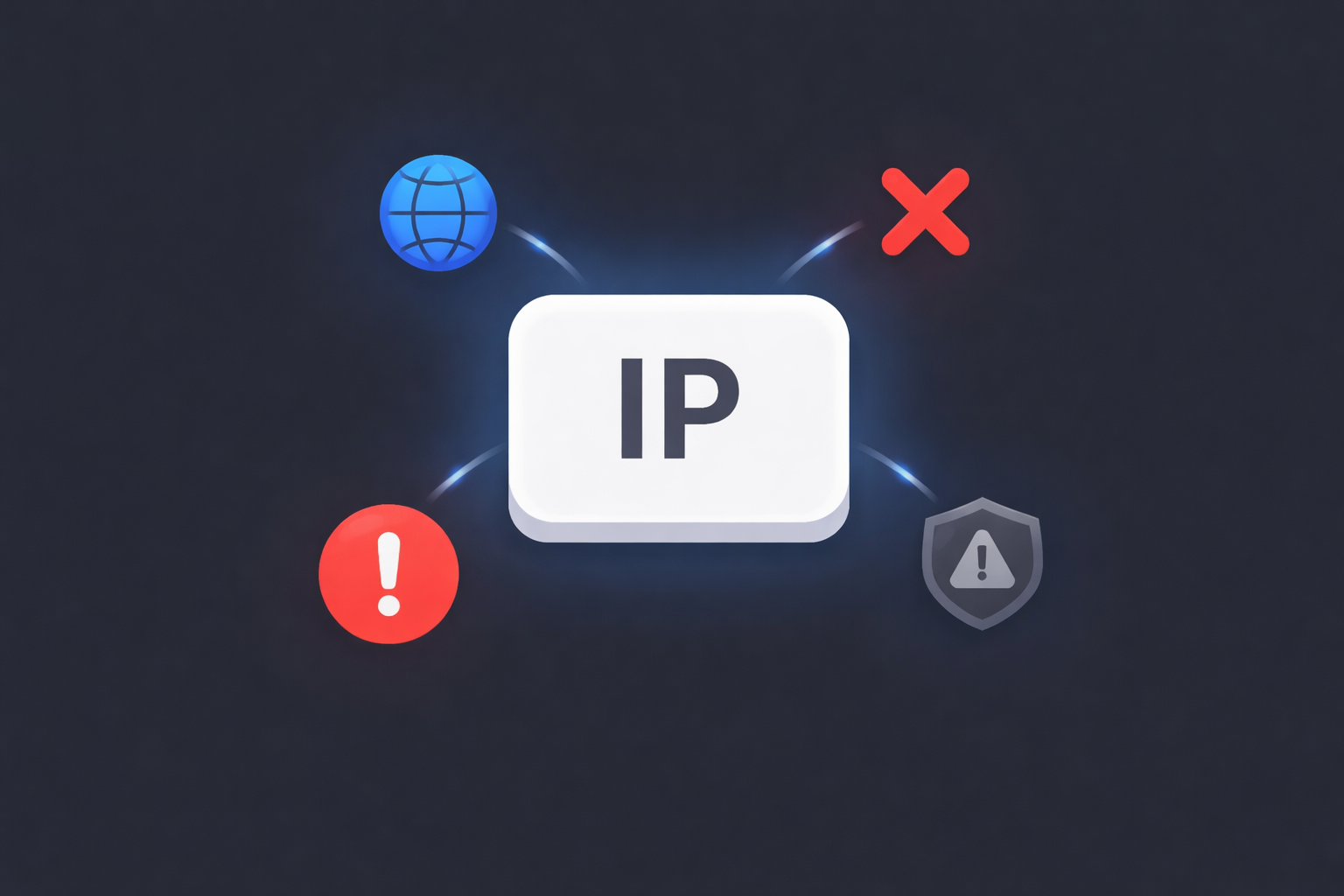
Illustration of IP network connections

To implement an effective marketing strategy, it is crucial to comprehend the distinctions between these IP address types. Dynamic IP addresses, commonly used by personal computers and mobile devices, are temporary and can change, whereas static IP addresses, typically assigned to servers, remain permanent. Private IP addresses facilitate internal network communication, while public IP addresses are necessary for communication over the internet.

Understanding these categories is essential for marketers as it allows for more precise targeting and content customization. By utilizing IP monitoring, marketers can track website traffic and determine the geographical location of visitors, enabling them to tailor advertisements and content accordingly.

IP addresses also play a significant role in marketing security. Marketers can use IP address blocking to prevent unauthorized traffic or spam, while IP whitelisting grants access only to specific IP addresses, enhancing overall website security.

It is also important to consider how virtual private networks (VPNs) can impact IP addresses in marketing. VPN users can securely connect to a network and mask their IP address to appear as if they are in a different location. Marketers need to be aware of the potential implications of VPNs to ensure their targeting remains accurate.

In summary, a successful marketing strategy requires a comprehensive understanding of different IP address types and their applications. By leveraging this knowledge, marketers can target specific demographics, personalize content, and bolster website security.

How IP Addresses Are Used in Marketing

  1. Geotargeting: Advertisers can use IP addresses to identify the location of website visitors. This information enables them to deliver location-specific advertisements and content that resonate with a particular audience.
  2. Personalization: Understanding a user’s IP address type helps marketers tailor their messages. By differentiating between desktop and mobile users, for instance, marketers can create customized experiences optimized for the user’s device.
  3. Fraud Prevention: IP blocking can be employed to prevent fraudulent activities. Marketers can block specific IP addresses associated with spam or malicious behavior, safeguarding their company’s reputation and improving the user experience for genuine visitors.
  4. Content Localization: IP addresses assist in targeting audiences who speak different languages. Marketers can use IP address location to deliver content that aligns with the linguistic and cultural preferences of specific audiences.
  5. Ad Targeting: By analyzing an IP address, marketers can infer a user’s device type and potential interests based on browsing history, allowing for more precise and relevant ad targeting.

By leveraging IP addresses in these ways, advertisers can optimize their strategies, enhance user experiences, and deliver targeted content that resonates with their audience.

In conclusion, a thorough understanding of the different types of IP addresses is crucial for building a successful marketing strategy. By leveraging this knowledge, marketers can create targeted campaigns, prevent fraud, and customize content for specific markets. Staying informed about technological advancements is essential for marketers to remain competitive and achieve desired outcomes.

Get Your Network in a Few Simple Steps

Watch the video below for detailed instructions on how to place an order: