Familiarizing yourself with the regulations governing Internet number resource transfers within RIPE NCC is crucial. Here are key points regarding the RIPE IPv4 transfer policy.
Under the RIPE NCC, any legitimate holder of Internet resources has the ability to transfer complete or partial blocks of address space or number resources, including IPv4, IPv6, and ASN. These resources must have been previously allocated or assigned to them by the RIPE NCC or through the Regional Internet Registry (RIR) system. However, there are cases where certain resources are excluded from transfers as per RIPE Policies, requiring them to be returned to the RIPE NCC.
During the transfer process, allocated resources can only be transferred to another RIPE NCC member. On the other hand, independent resources can be transferred to either a RIPE NCC member or an entity that has a contractual relationship with a RIPE NCC member, adhering to the guidelines outlined in the RIPE Policy. Understanding and complying with these guidelines will facilitate a smooth transfer process for RIPE IPv4 addresses.
I need IPv4 address space and I’m looking for a source
Submit a recipient request at Interlir.com
I have IPv4 address space that I want to transfer and I’m looking for a recipient
Verify that your registration information is accurate and find an IPv4 Recipient at Interlir.com
I need an IPv4 address space and I already have a source confirmed
Obtain IPv4 pre-approval find an IPv4 source submit a recipient request at Interlir.com
I have IPv4 address space that I want to transfer and I already have a recipient confirmed
Verify your registration information is accurate submit a source request at Interlir.com
Buy IPv4from 38 europer IP | Sell IPv4from 38 europer IP | |
Background check |  | |
Inter-RIR transfer | | |
Legal deal | | |
Consulting | Free | Free |
Transfer requirements
To ensure compliance with RIPE IPv4 transfer policies, several requirements must be met. First, all transfers must be documented in the RIPE Database. They can be either permanent or non-permanent, depending on the arrangement between the parties involved. The original resource holder remains responsible for the Internet number resource until the transfer to the receiving party is completed. In temporary transfers, responsibility reverts back to the original holder upon resource return. The current resource holder is responsible for adhering to all relevant policies, and the transferred resources must be used in accordance with the respective policy documents. The RIPE NCC updates the registration records to reflect the completion of the transfer.
Transfer restrictions
Scarce resources, such as IPv4 or 16-bit ASNs, have specific transfer restrictions. These resources cannot be transferred for a period of 24 months from the date of receipt by the resource holder, even in cases of organizational changes like mergers or acquisitions. However, subsequent transfers due to further mergers or acquisitions within the 24-month period are allowed. The restrictions do not apply when RIPE Policies mandate the return of resources to the RIPE NCC.
Inter-RIR transfers
Transfers of Internet number resources to or from the RIPE NCC service region are allowed. This includes legacy resources, even though there are no specific rules for legacy resource transfers within the RIPE NCC service region. However, resources are excluded from transfers if RIPE Policies require their return to the RIPE NCC. The applicable RIPE Policies govern the transfer process as long as the resources remain registered within the RIPE NCC service region.
Transferring Internet number resources to the RIPE NCC Service Region
The RIPE NCC accepts all transfers of Internet number resources to its service region, provided they comply with the relevant transfer policies. If transfers originate from RIR service regions that require needs-based policies, recipients must submit a plan to the RIPE NCC outlining the intended use of at least 50% of the transferred resources within five years.
Transferring Internet number resources form the RIPE NCC service region
When transferring Internet number resources to another RIR, the RIPE NCC adheres to the transfer policies applicable within its own service region. Additionally, the RIPE NCC complies with any requirements imposed by the receiving RIR to facilitate the transfer process.
The RIPE NCC will publish a list of all transfers. This publication shall occur on a monthly basis or more frequently if the RIPE NCC so chooses.
This list will contain information about approved changes. The following information will be published:
The name of the offering party The resource originally held by the offering party The name(s) of the receiving party or parties Each subdivided prefix (each partial block derived from that original block) or resource received The date each resource was transferred Whether it was a transfer according to this policy or a transfer due to changes to an organisation’s business structure (such as a merger or acquisition)

Alexei Krylov Nikiforov
Sales manager

A Beginner’s Guide to Subnetting IPv4 and IPv6 Addresses Subnetting is a critical

Why IPv4 Leasing Is Becoming the Smart Choice for Businesses in 2025 1. Introduction
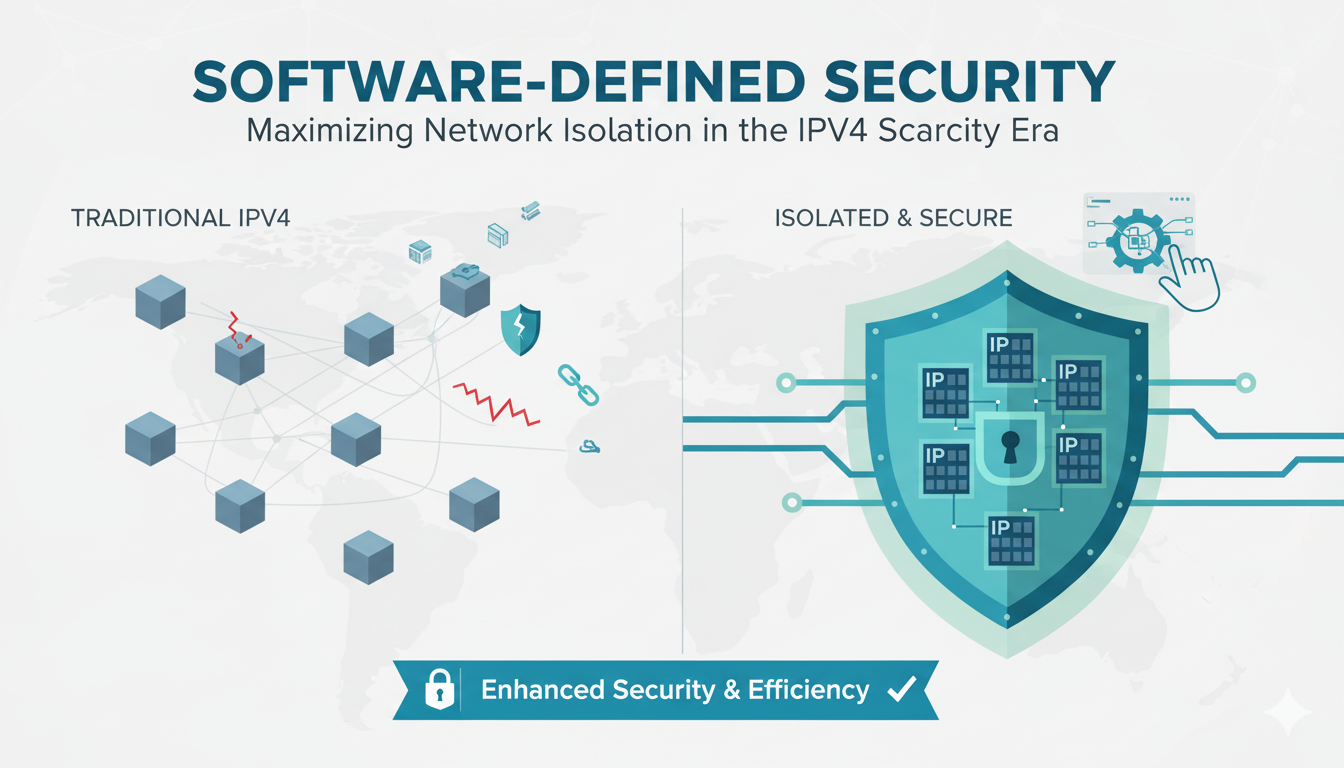
As CEO of InterLIR, I’ve witnessed firsthand how network isolation strategies

What is an ASN? ASN stands for Autonomous System Number. It is a unique identifier

Anycast DNS: A Leader’s Guide to Protecting Your Digital Infrastructure Executive

RPKI Certification: A Leader’s Guide to Internet Routing Security Executive

Executive Summary: What You Need to Know 🎯 Strategic Importance – Internet

When AWS DynamoDB failed in October 2025, thousands of businesses discovered that

Executive Summary: What You Need to Know 🎯 IP reputation directly impacts your
Live chat is provided by Intercom and is loaded only after you enable it. You can also contact us without enabling the chat.