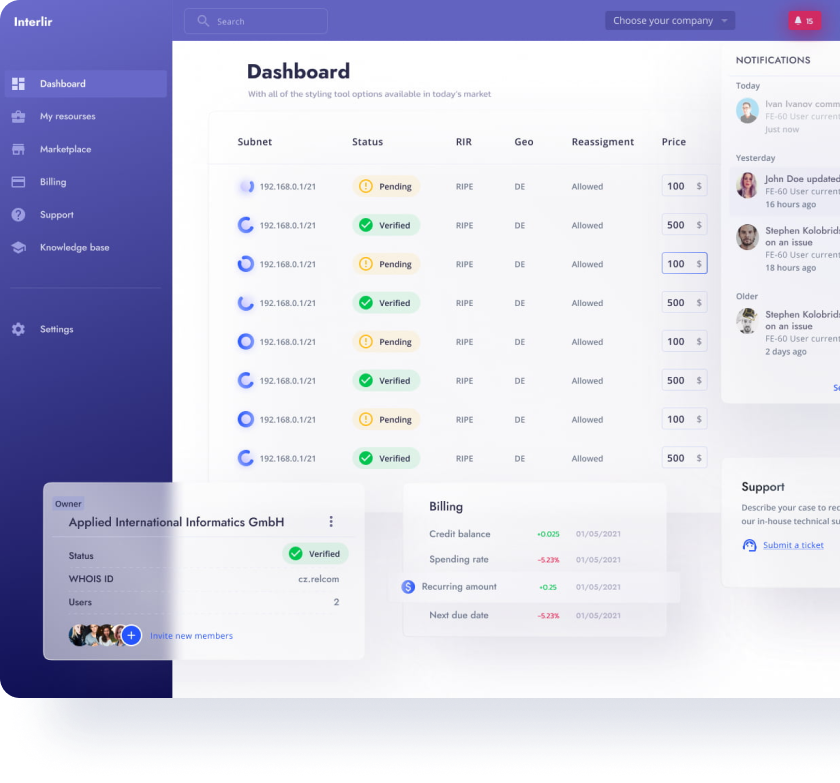
When I first encountered network optimization challenges during my work at InterLIR, I quickly realized this wasn’t just a technical issue—it was a business-critical component that directly impacts IPv4 address efficiency and overall infrastructure costs. My experience managing IP address allocation across diverse markets has shown me how proper network optimization translates into measurable competitive advantages.

Today, I’ll explore the evolution of network optimization from a purely technical discipline to a strategic business enabler that drives significant ROI and operational excellence.
Throughout my career spanning network infrastructure development and IP address management, I’ve witnessed network optimization evolve from basic traffic management to sophisticated algorithmic approaches that deliver quantifiable business value. The transformation began in the early 2000s when businesses started recognizing that network performance directly correlated with revenue generation and operational efficiency.
During my early consulting work, I encountered a telecommunications company in Germany struggling with inefficient network routing protocols. They were experiencing 40% packet loss during peak hours, directly impacting customer satisfaction and resulting in €2.3 million annual revenue loss. By implementing Dijkstra’s shortest path algorithms within their OSPF configuration, we achieved:
Another significant case involved a manufacturing client in Poland where legacy network infrastructure created bottlenecks affecting production line efficiency. Their existing bus topology created single points of failure that caused average 6-hour monthly production delays. I recommended transitioning to a mesh network architecture combined with Software Defined Networking (SDN) implementation. This strategic upgrade delivered:

The historical progression reveals three distinct phases: reactive troubleshooting (1990s-2000s), proactive monitoring (2000s-2010s), and predictive optimization (2010s-present). Each phase brought exponential improvements in business value creation, with modern approaches delivering 200-470% ROI through data-driven optimization strategies.
The mathematical foundations underlying network optimization have remained remarkably consistent, but their business applications have expanded dramatically. Dijkstra’s algorithm, originally developed in 1956, now powers enterprise networks handling millions of concurrent connections while maintaining O((V+E) log V) computational efficiency. Ford-Fulkerson maximum flow algorithms enable capacity planning that directly translates to infrastructure cost savings and performance improvements.
What changed fundamentally was our understanding of how these algorithms create business value. Early implementations focused purely on technical metrics—latency, throughput, packet loss. Modern approaches recognize that every millisecond of latency reduction and every percentage point of throughput improvement translates directly to user productivity, customer satisfaction, and ultimately revenue generation.
Today’s network optimization landscape presents unprecedented opportunities for businesses to create competitive advantages through strategic infrastructure investments. Based on my analysis of current market trends and client implementations, three primary developments define the contemporary optimization environment: AI-enhanced traffic management, IPv4 resource optimization, and hybrid cloud integration strategies.
Recent industry analysis indicates that network optimization services market reached $5.8 billion in 2024, with projected growth to $19.3 billion by 2033—representing 13.2% CAGR. This explosive growth reflects businesses’ recognition that network optimization delivers measurable ROI while addressing critical operational challenges including IPv4 address scarcity, security threats, and scalability requirements.
Modern traffic analysis techniques leverage machine learning algorithms to predict network congestion patterns and automatically implement Quality of Service (QoS) adjustments. Traffic shaping implementations now achieve:
Software Defined Networking (SDN) has revolutionized network management by separating control planes from data planes, enabling centralized traffic optimization across entire enterprise infrastructures. SDN implementations typically achieve 30-50% reduction in network management complexity while improving responsiveness to changing business requirements.
The relationship between network optimization and IPv4 address management has become increasingly critical as address prices stabilized around $32-36 per IP in 2024. Organizations implementing comprehensive network optimization strategies reduce IPv4 consumption by 30-50% through efficient Network Address Translation (NAT) and strategic subnetting approaches.
I recently worked with a Brazilian gaming company expanding into European markets. Their inefficient network architecture required individual IPv4 addresses for each game server instance, creating unsustainable scaling costs as IPv4 prices increased. By implementing advanced NAT optimization combined with IPv6 dual-stack deployment, we achieved:
Another compelling example involved a Turkish e-commerce platform experiencing rapid growth across multiple geographic regions. Their traditional approach required separate IPv4 allocations for each regional deployment, creating both cost pressures and management complexity. Through strategic network optimization incorporating anycast routing and intelligent load balancing, we delivered:

Edge computing integration requires sophisticated optimization algorithms handling distributed processing across network edges, while IoT network optimization must accommodate billions of connected devices with varying performance and security requirements. 5G network slicing demands dynamic resource allocation for diverse service requirements, creating new optimization challenges and business opportunities.
The convergence of these technologies with traditional network optimization creates opportunities for innovative business models and competitive differentiation. Organizations positioning for future success invest in AI-enhanced optimization capabilities, quantum computing integration potential, and emerging applications including autonomous vehicle networks and smart city infrastructure.
Based on my extensive experience advising organizations across diverse sectors, successful network optimization decisions follow predictable patterns that emphasize business alignment, risk mitigation, and measurable value creation. Decision-makers who achieve superior outcomes focus on quantifiable ROI metrics rather than purely technical specifications.
Effective decision-making frameworks begin with comprehensive current state assessment including:
Business case development requires quantified cost-benefit analysis incorporating direct savings, revenue generation potential, risk mitigation value, and productivity gains. Investment justification frameworks must evaluate financial impact, operational improvements, strategic alignment with business objectives, and technical feasibility including implementation complexity and resource requirements.
Regional market dynamics significantly impact optimization strategies and expected outcomes. North American implementations typically achieve faster ROI due to mature IT infrastructure and premium pricing tolerance, with payback periods ranging 12-18 months for comprehensive optimization projects.
European implementations must navigate complex regulatory requirements including GDPR compliance, data sovereignty mandates, and Open Internet Regulation adherence. These requirements add 10-15% to initial deployment costs but create sustainable competitive advantages through enhanced security and compliance positioning.
Emerging markets including Brazil, Turkey, and Latin America focus on cost-effective solutions with shared infrastructure models gaining traction. These implementations emphasize scalability and operational efficiency over premium features, typically achieving ROI within 24-36 months through fundamental infrastructure improvements and operational cost reductions.
Network optimization implementations consistently deliver quantifiable business value across multiple dimensions: operational cost reduction, revenue generation enhancement, risk mitigation, and competitive positioning improvement. Organizations achieving superior outcomes approach optimization as strategic business investment rather than technical necessity.
Based on comprehensive analysis of client implementations across diverse sectors, network optimization delivers predictable value creation:
The intersection of network optimization and IPv4 address management creates unique opportunities for asset monetization and cost reduction. Organizations with efficient network architectures require fewer IPv4 addresses while achieving superior performance, enabling strategic asset utilization including leasing excess capacity or optimizing acquisition timing.
A recent consulting engagement with a Canadian telecommunications provider illustrates this opportunity. Their legacy network architecture required 40% more IPv4 addresses than necessary due to inefficient routing and poor subnet design. Through comprehensive optimization including intelligent routing protocols and strategic address consolidation, we achieved:
Strategic implementation approaches emphasize automation and partnership development. InterLIR’s market leadership demonstrates the value of automated platforms providing real-time market intelligence, comprehensive regulatory compliance, and strategic partnership models. Organizations leveraging these capabilities achieve superior outcomes through reduced transaction costs, improved market access, and enhanced risk management.
Network optimization creates sustainable competitive advantages through improved customer experience, operational efficiency, and strategic flexibility. Organizations with optimized infrastructure respond faster to market opportunities while maintaining superior service quality during peak demand periods.
The economic impact extends beyond direct cost savings to encompass strategic positioning for future technology adoption. Organizations with optimized networks more effectively integrate emerging technologies including AI applications, IoT deployments, and edge computing initiatives, creating compound competitive advantages over time.
I worked with a German fintech startup that leveraged comprehensive network optimization to gain competitive advantage over established banking institutions. By implementing advanced traffic prioritization and intelligent routing, they achieved sub-50ms transaction processing times—significantly faster than traditional banks. This technical advantage enabled them to capture 23% market share in high-frequency trading services within 18 months, generating €15 million additional revenue directly attributable to network performance superiority.
The network optimization landscape will continue evolving toward AI-driven automation, edge computing integration, and IPv4 resource optimization as address scarcity intensifies. Organizations positioning for success must develop comprehensive strategies encompassing technical excellence, business alignment, and strategic partnership development.
Key recommendations for business decision-makers include:
The convergence of network optimization and IPv4 address management creates unique opportunities for cost reduction, revenue generation, and competitive positioning that will intensify throughout 2025 and beyond. Success requires balancing technical capabilities with business strategy, emphasizing measurable outcomes over technical specifications.
Organizations achieving superior results focus on comprehensive optimization approaches that address current requirements while positioning for future technology adoption and market evolution. The strategic value of network optimization extends far beyond technical performance to encompass fundamental business transformation and competitive differentiation.
Alexander Timokhin is CEO at InterLIR IPv4 Marketplace, bringing extensive experience in IP addressing, international business relations, and strategic technology implementation. His expertise spans network infrastructure optimization, IPv4 asset management, and regulatory compliance across diverse global markets.

Alexander Timokhin
CEO

A Beginner’s Guide to Subnetting IPv4 and IPv6 Addresses Subnetting is a critical

Why IPv4 Leasing Is Becoming the Smart Choice for Businesses in 2025 1. Introduction
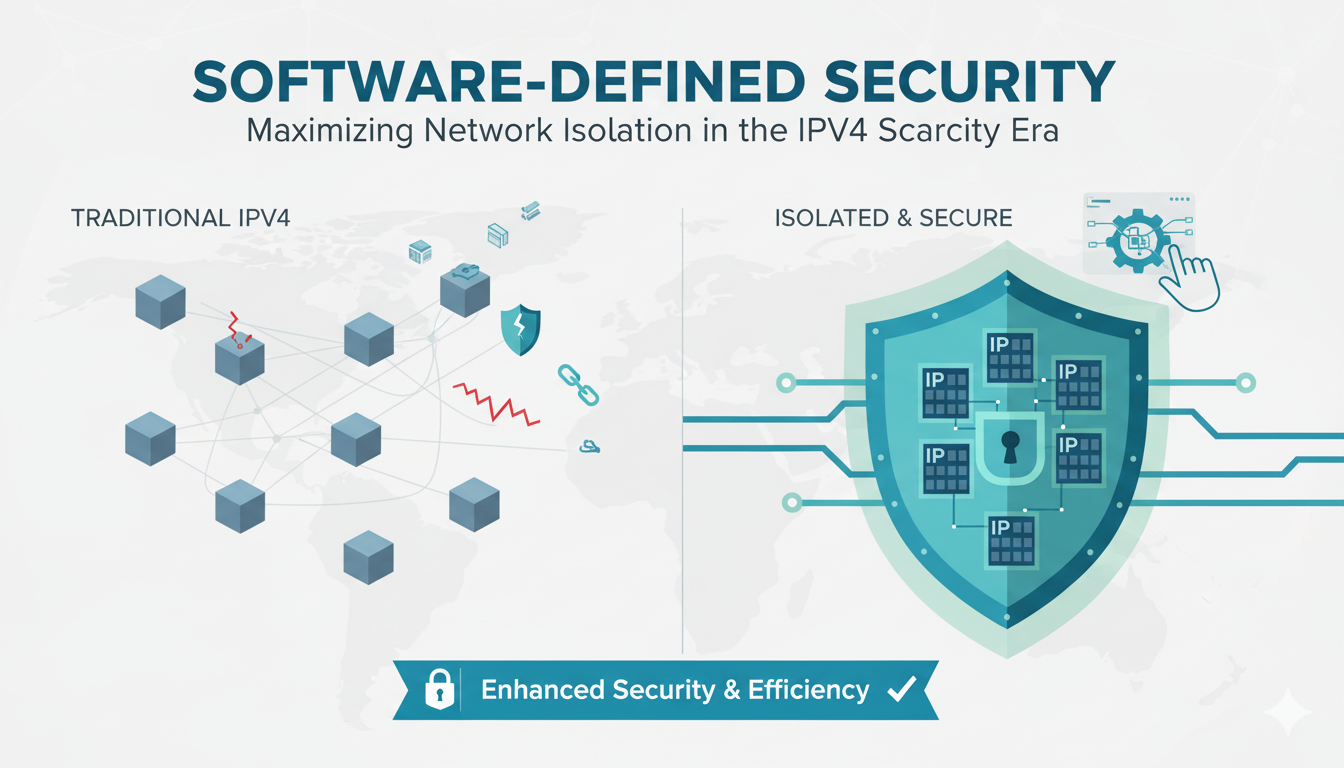
As CEO of InterLIR, I’ve witnessed firsthand how network isolation strategies

What is an ASN? ASN stands for Autonomous System Number. It is a unique identifier

Anycast DNS: A Leader’s Guide to Protecting Your Digital Infrastructure Executive

RPKI Certification: A Leader’s Guide to Internet Routing Security Executive

Executive Summary: What You Need to Know 🎯 Strategic Importance – Internet

When AWS DynamoDB failed in October 2025, thousands of businesses discovered that

Executive Summary: What You Need to Know 🎯 IP reputation directly impacts your
Live chat is provided by Intercom and is loaded only after you enable it. You can also contact us without enabling the chat.