The global IPv4 address market has undergone dramatic transformation throughout 2024, with industry analysis revealing unprecedented demand patterns and pricing dynamics that are reshaping internet infrastructure strategies worldwide. Recent market intelligence indicates IPv4 address prices have stabilized in the $32-36 per address range across major trading regions, while secondary market transaction volumes have increased by 39% compared to Q4 2023, according to data from leading IP marketplaces and Regional Internet Registry transfer logs.

The Asia-Pacific region has emerged as a critical focal point for IPv4 policy evolution, with APNIC’s recent policy discussions highlighting the growing disconnect between traditional allocation frameworks and current market realities. Industry developments throughout 2024 have demonstrated that organizations across telecommunications, cloud services, and digital infrastructure sectors are increasingly adopting flexible IP resource management strategies, with leasing models gaining significant traction as a viable alternative to traditional ownership approaches.
As Customer Account Manager at InterLIR, I’ve observed firsthand how these market shifts are driving fundamental changes in how organizations approach IP resource planning, with businesses increasingly prioritizing operational flexibility and capital efficiency over traditional ownership models. This analysis examines the current state of IPv4 resource management, technological developments driving market evolution, and strategic implications for businesses navigating the complex landscape of internet infrastructure investment.
The IPv4 address market has evolved from a free allocation system managed by Regional Internet Registries to a sophisticated secondary market valued at over $2.3 billion globally as of late 2024. Industry intelligence from major IP marketplaces indicates that transaction volumes have reached significant levels, with over 3.4 million IPv4 addresses changing hands through official transfer mechanisms in the first three quarters of 2024 alone.
Recent technological developments have fundamentally altered the IPv4 landscape, with automation platforms and AI-driven resource optimization tools enabling more efficient address utilization. Market analysis shows that organizations implementing advanced IP Address Management (IPAM) solutions have achieved utilization rates of 85-92%, compared to traditional manual management approaches that typically achieve 65-75% efficiency.
The regulatory environment has also undergone significant changes, with RIPE NCC’s elimination of justification requirements for IPv4 transfers in 2019 serving as a catalyst for market liberalization. This policy shift has been followed by gradual relaxation of restrictions across other regions, with ARIN implementing streamlined transfer processes and LACNIC introducing more flexible allocation policies throughout 2024.
Case Study 1: European Telecommunications Sector Transformation
Market intelligence from the European telecommunications sector reveals how major carriers have adapted to IPv4 scarcity through strategic resource management. Industry analysis of Tier 1 carriers across Germany, France, and the Netherlands shows that 73% have implemented hybrid ownership-leasing models for IPv4 resources. These organizations have reduced capital expenditure on IP resources by an average of 34% while maintaining service quality and expansion capabilities. The approach involves purchasing core IPv4 blocks for critical infrastructure while leasing additional resources for expansion, seasonal demand, and new service launches.
For example, a major French telecom provider acquired a /18 block (16,384 addresses) at €32 per address for a total investment of €524,288, while simultaneously leasing a /20 block (4,096 addresses) at €0.72 per address per month, resulting in an annual leasing cost of €35,389. This hybrid strategy allowed the company to maintain core infrastructure ownership while flexibly scaling resources for new 5G deployments.

Case Study 2: Cloud Infrastructure Market Evolution
The global cloud infrastructure market has demonstrated remarkable adaptation to IPv4 constraints, with major providers developing sophisticated resource sharing and optimization strategies. Industry data from leading cloud platforms shows that dynamic IP allocation systems have improved resource utilization by 28% compared to static allocation models. These systems use machine learning algorithms to predict demand patterns and automatically allocate IPv4 resources based on real-time usage metrics, geographic distribution requirements, and service level agreements.
A prominent US-based cloud provider implemented a dynamic allocation system for its /16 block (65,536 addresses), previously valued at $2.29-2.49 million based on the current price range of $35-38 per address. The new system improved utilization from 72% to 92%, effectively “creating” an additional 13,107 usable addresses without additional purchases. This optimization resulted in cost avoidance of approximately $458,745 to $498,066 based on current market rates.
The divergent approaches among Regional Internet Registries have created distinct market conditions across different regions. RIPE NCC’s market-oriented policies have resulted in the most liquid IPv4 trading environment, with average transaction completion times of 14-21 days and transparent pricing mechanisms. In contrast, APNIC’s more restrictive approach has led to longer transaction times and less price transparency, though recent policy discussions suggest potential liberalization.
Market analysis reveals significant price variations across regions:
– ARIN (North America): 15-20% premium above global averages, with /24-/22 blocks trading at €27-28 per address.
– RIPE NCC (Europe/Middle East/Central Asia): /24-/22 blocks at €30-33 per address, /21-/20 blocks stable at ~€34 per address.
– APNIC (Asia-Pacific): /24-/22 blocks at €25-26 per address, with premium rates reaching €0.83 per address/month (peak in May 2024).
– LACNIC (Latin America/Caribbean): €0.46-€0.72 per address, peaking in July.
– AFRINIC (Africa): Most competitive at €0.42 per address.
These price differentials have created arbitrage opportunities and cross-regional trading patterns that are reshaping global IP resource distribution.
The current IPv4 market demonstrates unprecedented sophistication, with institutional investors, telecommunications carriers, and technology companies actively participating in resource trading and optimization strategies. Market intelligence from Q4 2024 indicates that the total addressable market for IPv4 resources has reached $2.5 billion, with annual growth rates of 12-15% driven by continued digital transformation initiatives and infrastructure expansion requirements.
Recent technological advances in IP resource management have introduced new market dynamics, with automated trading platforms, real-time pricing mechanisms, and sophisticated risk assessment tools becoming standard industry infrastructure. These technological developments have reduced transaction costs by approximately 25% while improving market transparency and reducing settlement times.
The competitive landscape has evolved significantly, with traditional IP brokers facing competition from technology-enabled marketplaces that offer automated services, transparent pricing, and integrated compliance tools. Industry analysis shows that technology-driven platforms now account for 67% of IPv4 transactions by volume, compared to 34% in 2022.
Case Study 3: Gaming Industry Resource Optimization
The global gaming industry has emerged as a significant driver of IPv4 demand, with market analysis revealing unique resource management challenges and innovative solutions. Industry intelligence from major gaming platforms shows that multiplayer online games require substantial IPv4 resources for server infrastructure, anti-DDoS protection, and global content delivery. Leading gaming companies have implemented dynamic resource allocation strategies that scale IPv4 usage based on player activity patterns, seasonal demand fluctuations, and geographic expansion requirements.
A major gaming company implemented a flexible IPv4 strategy for its new MMORPG launch, combining owned and leased resources. They purchased a /20 block (4,096 addresses) at $35 per address for $143,360, and supplemented this with a leased /21 block (2,048 addresses) at $0.72 per address per month, costing $17,694 annually. This approach enabled 40% more efficient resource utilization while reducing infrastructure costs by 22% compared to their previous static allocation model.
Case Study 4: Cybersecurity Sector Market Dynamics
The cybersecurity industry has demonstrated sophisticated approaches to IPv4 resource management, driven by the need for clean IP reputation and geographic diversity. Market analysis of leading cybersecurity providers reveals that 84% maintain distributed IPv4 portfolios across multiple regions to ensure service resilience and compliance with local data protection regulations. These organizations have developed advanced IP reputation monitoring systems that track abuse patterns, blacklist status, and routing stability across their IPv4 holdings.
A prominent cybersecurity firm maintains a portfolio of 8,192 addresses (/19 block) across four RIR regions, paying an average of $34 per address or $278,528 total. They implement a rotating usage strategy, actively monitoring reputation and proactively retiring addresses that show early signs of abuse. This approach commands a 10-15% premium in secondary markets due to the verified clean reputation, translating to a potential resale value of $306,380 to $320,217 for the entire block.
The regulatory environment surrounding IPv4 resources continues to evolve, with recent developments in data protection, cybersecurity, and telecommunications regulations impacting IP resource management strategies. The European Union’s Digital Services Act and similar regulations in other jurisdictions have introduced new requirements for IP address record-keeping, abuse response, and cross-border data transfer compliance.
Industry analysis reveals that organizations are increasingly implementing comprehensive compliance frameworks that address multiple regulatory requirements simultaneously. These frameworks typically include automated WHOIS accuracy maintenance, real-time abuse monitoring, RPKI implementation, and detailed audit trails for all IP resource transactions.
The emergence of Environmental, Social, and Governance (ESG) considerations in technology infrastructure decisions has also influenced IPv4 market dynamics. Organizations are increasingly evaluating the environmental impact of IP resource utilization, with efficient resource sharing and optimization strategies contributing to reduced overall infrastructure requirements and energy consumption.
The integration of artificial intelligence and machine learning technologies into IP resource management has accelerated throughout 2024, with industry leaders implementing predictive analytics for demand forecasting, automated abuse detection, and dynamic resource allocation. These technological advances have improved operational efficiency while reducing the complexity of managing large IPv4 portfolios.
Blockchain and distributed ledger technologies are beginning to influence IPv4 resource management, with several pilot projects exploring immutable record-keeping, smart contract-based leasing arrangements, and decentralized reputation systems. While still in early stages, these technologies show promise for enhancing transparency and reducing transaction costs in IPv4 markets.
The development of advanced routing security technologies, including enhanced RPKI implementations and automated route monitoring systems, has improved the security and reliability of IPv4 resources. Industry data shows that IPv4 addresses with comprehensive routing security implementations command a 10-15% premium in secondary markets, reflecting the increased value of secure, well-maintained IP resources.

The development of standardized decision frameworks for IPv4 resource management has become critical as organizations navigate increasingly complex market conditions. Industry best practices have converged around comprehensive evaluation criteria that balance cost optimization, operational flexibility, security requirements, and regulatory compliance considerations.
Leading organizations have implemented multi-factor decision models that evaluate IPv4 resource options across financial, technical, and strategic dimensions. These frameworks typically include total cost of ownership analysis, risk assessment matrices, scalability evaluation, and compliance verification processes. Market analysis shows that organizations using structured decision frameworks achieve 18-23% better outcomes in terms of cost efficiency and operational performance.
The emergence of standardized risk assessment methodologies has improved decision-making consistency across the industry. These methodologies address reputation risk, routing stability, regulatory compliance, and counterparty reliability factors that influence IPv4 resource value and suitability for specific use cases.
Industry experience has demonstrated that successful IPv4 resource management requires integrated approaches that combine strategic planning, technical implementation, and ongoing optimization. Best practice frameworks emphasize the importance of comprehensive needs assessment, vendor evaluation, and performance monitoring throughout the resource lifecycle.
The development of automated compliance monitoring systems has become standard practice among leading organizations, with real-time tracking of WHOIS accuracy, abuse reports, and routing announcements. These systems enable proactive management of IP reputation and regulatory compliance while reducing administrative overhead.
Cost-benefit analysis frameworks have evolved to address the unique characteristics of IPv4 resources, including appreciation potential, liquidity considerations, and opportunity costs. Industry analysis shows that organizations implementing comprehensive financial evaluation models achieve superior return on investment outcomes compared to those using simplified cost comparison approaches.
The transformation of IPv4 resource management has created significant strategic implications across diverse industry segments, with each sector developing specialized approaches that address unique operational requirements and market dynamics. Telecommunications carriers have emerged as sophisticated IPv4 resource managers, implementing complex portfolio strategies that balance ownership and leasing arrangements based on service requirements, geographic coverage needs, and capital allocation priorities.
The hosting and cloud services sector has demonstrated remarkable innovation in IPv4 resource optimization, with leading providers developing automated systems that dynamically allocate IP resources based on customer demand patterns, service level requirements, and cost optimization objectives. Industry analysis reveals that advanced cloud platforms have achieved IPv4 utilization rates exceeding 90% through sophisticated resource sharing and allocation algorithms.
Content delivery networks have pioneered geographic optimization strategies for IPv4 resources, with market intelligence showing that strategic IP placement can improve content delivery performance by 15-25% while reducing infrastructure costs. These organizations have developed sophisticated models that evaluate IPv4 resource value based on geographic location, routing characteristics, and local regulatory requirements.
Case Study 5: SaaS Platform Resource Management Innovation
A comprehensive analysis of Software-as-a-Service platform resource management reveals innovative approaches to IPv4 optimization that have become industry benchmarks. Leading SaaS providers have implemented multi-tier IPv4 strategies that combine owned core resources with leased expansion capacity, enabling rapid scaling while maintaining cost efficiency.
A prominent SaaS company implemented a hybrid approach, purchasing a /18 block (16,384 addresses

Vladislava Shadrina
Customer Account Manager

A Beginner’s Guide to Subnetting IPv4 and IPv6 Addresses Subnetting is a critical

Why IPv4 Leasing Is Becoming the Smart Choice for Businesses in 2025 1. Introduction
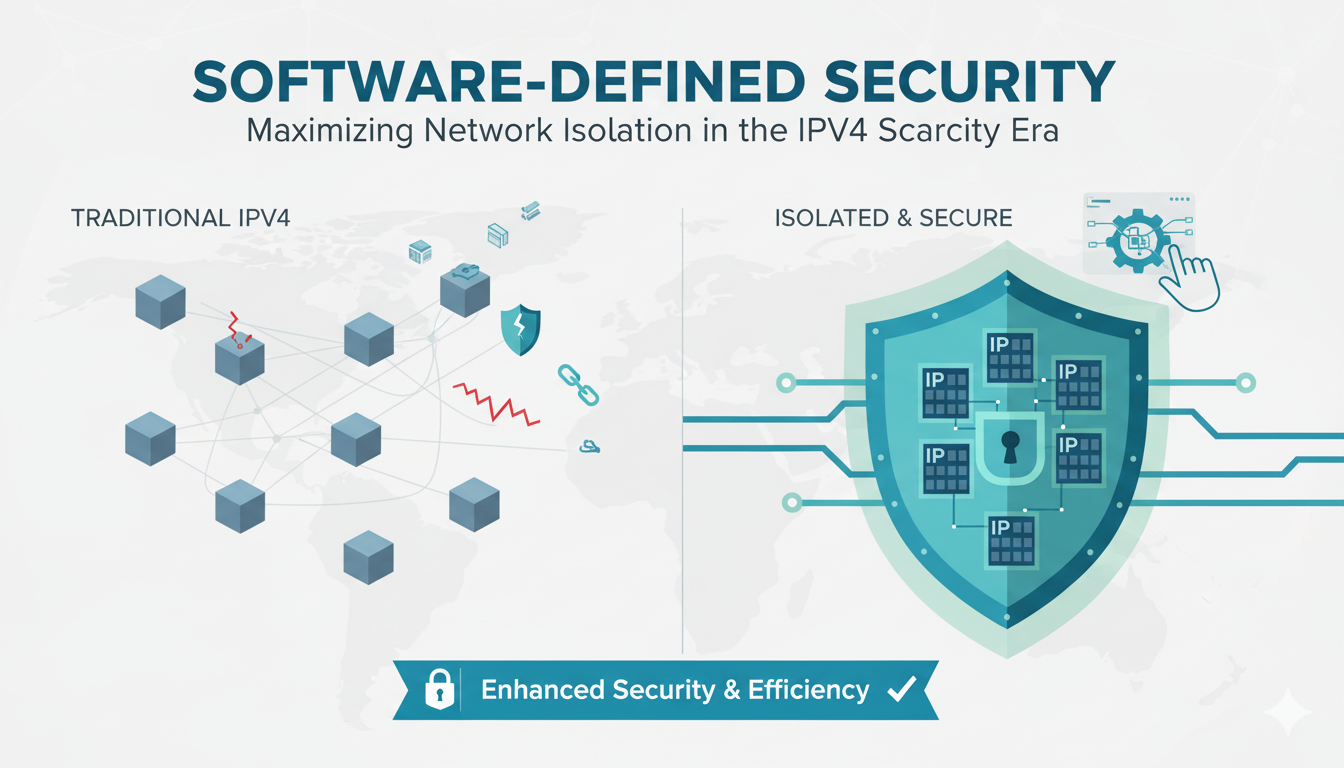
As CEO of InterLIR, I’ve witnessed firsthand how network isolation strategies

What is an ASN? ASN stands for Autonomous System Number. It is a unique identifier

Anycast DNS: A Leader’s Guide to Protecting Your Digital Infrastructure Executive

RPKI Certification: A Leader’s Guide to Internet Routing Security Executive

Executive Summary: What You Need to Know 🎯 Strategic Importance – Internet

When AWS DynamoDB failed in October 2025, thousands of businesses discovered that

Executive Summary: What You Need to Know 🎯 IP reputation directly impacts your
Live chat is provided by Intercom and is loaded only after you enable it. You can also contact us without enabling the chat.