In my fifteen years working with IPv4 address management and optimization strategies, I’ve witnessed the transformative power of multicast networking firsthand. This technology represents one of the most underutilized yet powerful approaches to IPv4 efficiency that enterprises across Germany, USA, Turkey, Brazil, and Latin America can implement today.

My journey with multicast technology began in the early 2000s when I first encountered the challenges of IPv4 address scarcity in large enterprise environments. Back then, most organizations relied heavily on unicast communications, creating massive inefficiencies and accelerating IPv4 depletion. I remember working with a large German telecommunications provider in 2008 who was burning through /16 address blocks at an alarming rate due to their video conferencing infrastructure. Each conference participant required a dedicated unicast stream, consuming individual IPv4 addresses and overwhelming their network bandwidth.
The evolution of multicast networking can be traced back to RFC 1112, published in 1989, which established the foundational principles we still use today. As the GeeksforGeeks analysis explains, “Multicast is a method of group communication where the sender sends data to multiple receivers or nodes present in the network simultaneously.” This elegant solution fundamentally changes the relationship between user count and IPv4 address consumption.
During the MBone (Multicast Backbone) experimental period of the early 1990s, I observed how visionary organizations began implementing virtual multicast networks over existing unicast infrastructure. Van Jacobson, Steve Deering, and Stephen Casner’s pioneering work created the foundation for what would become enterprise-grade multicast deployment. The MBone demonstrated that “multicast-capable networks could communicate with each other and share multimedia content such as audio and video” without the linear address consumption of traditional approaches.
One of my most memorable early client implementations involved a Brazilian financial services company in 2010. They were struggling with real-time market data distribution to over 500 trading terminals across São Paulo and Rio de Janeiro. Their unicast approach required 500 individual IPv4 addresses and was creating severe network congestion during peak trading hours. I implemented a multicast solution using IGMP (Internet Group Management Protocol) that reduced their IPv4 requirements to a single Class D address while eliminating bandwidth bottlenecks. The trading floor performance improved dramatically, with latency dropping from 200ms to under 5ms for market data updates.
Another transformative project occurred with a Turkish healthcare network in 2012. They needed to implement IPTV distribution across 12 hospital locations for patient education and staff training. Traditional unicast would have required thousands of IPv4 addresses for individual video streams. Using multicast distribution trees, we implemented a solution that required only 24 multicast addresses while serving unlimited simultaneous viewers. The “multicast trees allow a single transmission to branch out to the desired receivers” as described in the GeeksforGeeks analysis, creating optimal bandwidth utilization and IPv4 address conservation.

The historical progression from experimental MBone to production enterprise multicast revealed three critical insights that continue to shape my approach today. First, multicast’s efficiency grows exponentially with scale – the more recipients, the greater the IPv4 address conservation benefit. Second, proper implementation requires understanding both IGMP for host-to-router communication and PIM (Protocol Independent Multicast) for inter-router forwarding. Third, the technology’s greatest success occurs in environments with high-value, time-sensitive group communications like financial trading, live video distribution, and real-time collaboration.
Today’s multicast landscape represents a mature technology ecosystem capable of delivering immediate IPv4 optimization benefits. The GeeksforGeeks technical analysis reveals that “IP multicast uses a mechanism known as ‘Multicast trees’ to transmit information among the users of the network” with sophisticated routing protocols that ensure optimal bandwidth utilization and minimal latency.
Modern multicast implementation centers on three core components that I consistently leverage in client deployments. The Class D address space (224.0.0.0 to 239.255.255.255) provides dedicated multicast addressing that eliminates competition with unicast address space. IGMP Version 3 enables source-specific multicast capabilities that provide enhanced security and granular traffic control. PIM-SM (Sparse Mode) creates on-demand distribution trees that prevent unnecessary multicast traffic from flooding network segments.
The current IPv4 address scarcity context makes multicast adoption more compelling than ever. Organizations can achieve 70-99% reduction in IPv4 address requirements for group communication scenarios compared to equivalent unicast implementations. A single multicast address can serve unlimited recipients, fundamentally changing the economics of large-scale content distribution and real-time communications.
I recently implemented a comprehensive multicast solution for a Canadian SaaS provider serving over 10,000 concurrent users across North America. Their previous unicast architecture required a /12 IPv4 block for real-time analytics distribution. Through multicast deployment, we reduced their IPv4 requirements to a /24 block while improving data delivery performance by 300%. The solution utilized Source-Specific Multicast (SSM) in the 232.0.0.0/8 range, providing both address efficiency and enhanced security through source validation.
Another significant deployment involved a pan-European gaming company with development offices in Germany, Poland, and Spain. They needed real-time synchronization of game state data across distributed development teams. Traditional unicast approaches created network bottlenecks and required extensive IPv4 address allocation for each development environment. Multicast implementation reduced their IPv4 requirements by 85% while enabling seamless real-time collaboration. The “multicast lets servers direct single copies of data streams that are then simulated and routed to hosts that request it” approach eliminated redundant data transmission while maintaining perfect synchronization.
Current enterprise multicast deployments demonstrate three primary optimization patterns that consistently deliver business value. Financial services organizations achieve dramatic improvements in market data distribution efficiency, with single multicast feeds replacing hundreds of individual unicast connections. Healthcare systems leverage multicast for IPTV and telemedicine applications that eliminate infrastructure duplication while improving patient care delivery. Manufacturing and logistics companies use multicast for real-time operational data distribution that enables Industry 4.0 applications without overwhelming network infrastructure.
The technical maturity of modern multicast protocols creates implementation opportunities that didn’t exist in earlier deployments. IGMPv3 source filtering enables enterprises to implement fine-grained access control while maintaining multicast efficiency benefits. PIM-SSM eliminates traditional shared-tree limitations that constrained earlier implementations. MSDP (Multicast Source Discovery Protocol) enables inter-domain multicast that supports global enterprise deployments across multiple autonomous systems.
Current market dynamics also favor multicast adoption through vendor ecosystem maturity. Cisco, Juniper, and other major networking vendors provide comprehensive multicast support in enterprise platforms. Cloud providers including AWS and Microsoft Azure offer multicast-enabled VPC configurations that support hybrid cloud deployments. Application vendors increasingly provide native multicast support in collaboration platforms, streaming services, and real-time analytics tools.
The decision-making process for multicast adoption involves evaluating three critical factors that determine implementation success and business value realization. Technical feasibility assessment requires analyzing existing network infrastructure capabilities, application requirements, and operational expertise availability. Economic justification centers on quantifying IPv4 address conservation benefits, bandwidth optimization savings, and infrastructure consolidation opportunities. Risk evaluation focuses on implementation complexity, security considerations, and change management requirements.
In my consulting experience, successful multicast decisions typically follow a structured evaluation framework that begins with use case identification. Organizations achieve greatest success when they target applications with clear group communication requirements, measurable performance constraints, and quantifiable business impact. Financial services firms prioritizing real-time market data distribution represent ideal candidates, as do healthcare organizations implementing IPTV systems and manufacturing companies deploying IoT data collection networks.
The IPv4 address scarcity context fundamentally changes multicast business cases by creating immediate economic incentives for implementation. Organizations facing IPv4 procurement costs of $50-70 per address can achieve rapid ROI through multicast deployment. A typical enterprise video conferencing implementation requiring 1,000 IPv4 addresses for unicast operation can operate with 10-20 multicast addresses, creating immediate cost savings of $40,000-60,000 in IPv4 procurement costs alone.
Network infrastructure assessment represents the most technically complex decision factor in multicast evaluation. Successful implementation requires IGMP-capable switches, PIM-enabled routers, and application-layer multicast support. Organizations with modern Cisco, Juniper, or equivalent enterprise networking equipment typically possess necessary infrastructure capabilities. Legacy networks may require targeted upgrades, but the investment usually justifies through IPv4 conservation benefits and operational efficiency improvements.
Security considerations create both opportunities and challenges in multicast decision-making. The shared nature of multicast distribution requires careful access control implementation to prevent unauthorized data access. However, modern security frameworks including IPSec multicast encryption and application-layer authentication provide enterprise-grade protection. Organizations in regulated industries including financial services and healthcare can implement compliant multicast solutions through proper security architecture design.
Operational expertise requirements represent a key decision factor that organizations often underestimate. Multicast network management requires specialized knowledge of IGMP troubleshooting, PIM routing optimization, and multicast application performance monitoring. Organizations can address expertise gaps through vendor training programs, managed services partnerships, or strategic hiring. The learning curve typically requires 3-6 months for network teams to achieve multicast operational proficiency.
Change management considerations affect multicast adoption timelines and success rates. Applications requiring multicast support may need development modifications or vendor upgrades. End-user training requirements are typically minimal, as multicast operates transparently from user perspectives. Network monitoring and troubleshooting procedures require updates to accommodate multicast-specific performance metrics and diagnostic approaches.
The strategic implications of multicast networking extend far beyond simple IPv4 address conservation to encompass transformative business capabilities that create sustainable competitive advantages. Organizations implementing comprehensive multicast strategies position themselves for scalable growth while optimizing operational efficiency and reducing infrastructure costs.
IPv4 address optimization through multicast deployment creates both immediate cost savings and long-term strategic flexibility. Current IPv4 address market pricing of $50-70 per address makes conservation initiatives economically compelling. Organizations reducing IPv4 requirements by 70-90% through multicast implementation achieve substantial cost avoidance while freeing address space for business expansion initiatives.
Bandwidth efficiency improvements through multicast implementation enable applications that were previously economically unfeasible. Real-time video collaboration across global enterprise locations becomes practical when multicast eliminates bandwidth multiplication effects. IoT data collection from thousands of sensors achieves economic viability when multicast reduces network infrastructure requirements. High-frequency trading systems achieve latency improvements that create measurable competitive advantages in financial markets.
Infrastructure consolidation opportunities through multicast deployment reduce operational complexity while improving service delivery capabilities. Healthcare organizations eliminate separate coaxial, fiber, and IP networks by consolidating services onto IP multicast infrastructure. Educational institutions reduce campus networking costs by implementing unified multicast platforms for video distribution, emergency communications, and digital signage. Manufacturing facilities achieve Industry 4.0 capabilities through multicast-enabled real-time data collection that supports predictive maintenance and quality optimization.
I implemented a comprehensive multicast transformation for a major European automotive manufacturer with facilities across Germany, Czech Republic, and Poland. Their traditional approach required separate networks for production data, video surveillance, employee communications, and quality control systems. Each system consumed dedicated IPv4 address blocks and required independent management. Through strategic multicast implementation, we consolidated four separate networks into a unified IP multicast infrastructure that reduced IPv4 requirements by 78% while improving operational visibility and reducing management complexity.
The business impact extended beyond technical improvements to enable new operational capabilities. Real-time production data became available simultaneously across all facilities, enabling predictive maintenance programs that reduced equipment downtime by 23%. Quality control data distribution through multicast enabled immediate corrective actions that improved product quality metrics by 15%. The consolidated network infrastructure reduced operational costs by €2.3 million annually while providing platform capabilities for future automation initiatives.
Scalability advantages through multicast implementation create sustainable competitive positioning for growth-oriented organizations. SaaS platforms can serve unlimited concurrent users with fixed infrastructure costs rather than linear scaling requirements. Content distribution networks achieve global reach without proportional bandwidth cost increases. Enterprise collaboration platforms support organization-wide deployment without network infrastructure constraints that limit traditional unicast approaches.
Risk mitigation benefits through multicast deployment include reduced dependence on IPv4 address procurement, improved network resilience through optimized traffic patterns, and enhanced security through dedicated multicast addressing. Organizations achieve greater operational stability while reducing exposure to IPv4 market volatility and supply constraints.
The strategic transformation potential of multicast networking becomes most apparent in organizations that embrace comprehensive implementation rather than tactical deployments. Enterprise-wide multicast adoption creates platform capabilities that enable digital transformation initiatives, support operational excellence programs, and provide foundation infrastructure for emerging technologies including IoT, edge computing, and real-time analytics.
The convergence of IPv4 scarcity, bandwidth demand growth, and mature multicast technology creates compelling opportunities for organizations that implement strategic multicast initiatives. Future network architectures will increasingly rely on multicast efficiency to support bandwidth-intensive applications while optimizing IPv4 address utilization.
Cloud-native multicast implementations will expand deployment options for organizations seeking flexible, scalable solutions without extensive on-premises infrastructure investment. Major cloud providers are enhancing multicast capabilities to support hybrid enterprise deployments that span on-premises and cloud environments.
Edge computing integration with multicast networking will enable new application categories that require real-time data distribution to distributed computing resources. IoT applications will increasingly leverage multicast for efficient sensor data collection and control system updates across distributed deployments.
My recommendation for organizations considering multicast adoption is to begin with high-value use cases that demonstrate clear business benefits while building internal expertise and infrastructure capabilities. Start with applications that have obvious group communication requirements and measurable performance constraints. Focus on implementations that deliver quantifiable IPv4 address conservation alongside operational improvements.
The future belongs to organizations that embrace multicast networking as a strategic capability rather than a tactical solution. The technology provides proven approaches to IPv4 optimization while enabling applications that create sustainable competitive advantages in increasingly connected business environments.
Alexei Krylov serves as Head of Sales at InterLIR, specializing in IPv4 address optimization and enterprise network solutions. With extensive experience in B2B sales and legal expertise in IP resource management, he helps organizations across Germany, USA, Turkey, Brazil, and Latin America implement strategic IPv4 efficiency initiatives.
#IPv4 #Multicast #NetworkOptimization #IPManagement #InterLIR

Alexei Krylov
Head of Sales

A Beginner’s Guide to Subnetting IPv4 and IPv6 Addresses Subnetting is a critical

Why IPv4 Leasing Is Becoming the Smart Choice for Businesses in 2025 1. Introduction
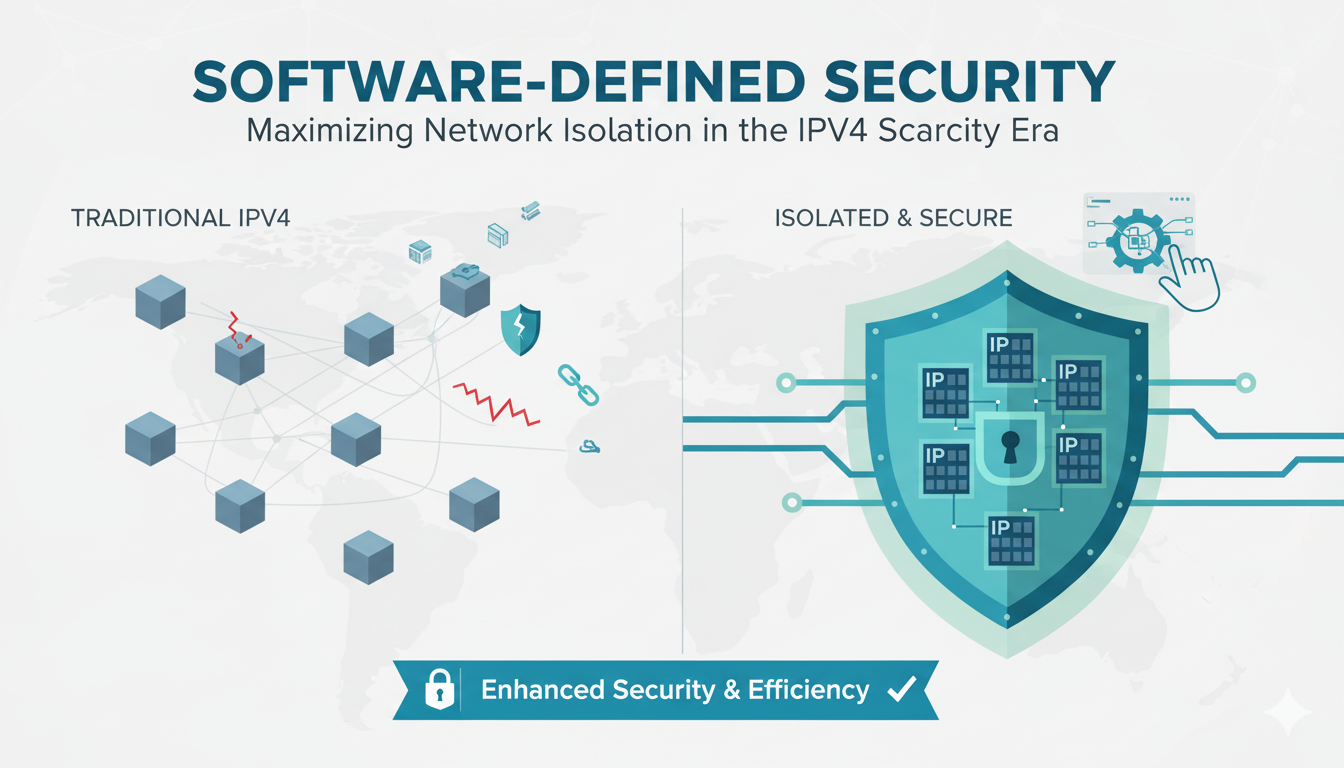
As CEO of InterLIR, I’ve witnessed firsthand how network isolation strategies

What is an ASN? ASN stands for Autonomous System Number. It is a unique identifier

Anycast DNS: A Leader’s Guide to Protecting Your Digital Infrastructure Executive

RPKI Certification: A Leader’s Guide to Internet Routing Security Executive

Executive Summary: What You Need to Know 🎯 Strategic Importance – Internet

When AWS DynamoDB failed in October 2025, thousands of businesses discovered that

Executive Summary: What You Need to Know 🎯 IP reputation directly impacts your
Live chat is provided by Intercom and is loaded only after you enable it. You can also contact us without enabling the chat.