The global Internet infrastructure landscape has experienced unprecedented transformation in recent months, with Q4 2024 marking a critical juncture for resource management systems across Europe and beyond. Recent industry analysis reveals that Internet resource registries are processing record volumes of IPv4 transfers, with the RIPE region alone witnessing a 39% increase in resource transactions compared to the previous year. This surge reflects the growing scarcity of IPv4 addresses and the increasing sophistication of organizations seeking to optimize their network infrastructure investments.

At the center of this evolving landscape stands the RIPE Database, operated by the RIPE Network Coordination Centre (RIPE NCC), which serves as the authoritative registry for Internet number resources across Europe, the Middle East, and parts of Central Asia. As someone who works daily with organizations navigating IPv4 resource acquisition and management, I’ve observed how the RIPE Database has become increasingly critical for businesses seeking to establish or expand their digital presence in these regions.
The database represents far more than a simple directory—it functions as the backbone of Internet resource coordination, enabling everything from basic connectivity to advanced security implementations. This comprehensive analysis examines how current market dynamics, technological developments, and regulatory changes are reshaping the role of the RIPE Database in modern Internet infrastructure management.
The Internet resource management landscape has undergone dramatic transformation since the establishment of Regional Internet Registries in the 1990s. Industry intelligence indicates that the RIPE region now manages approximately 25% of global IPv4 address space, with over 21,000 Local Internet Registries (LIRs) operating under RIPE NCC’s coordination. Recent market analysis shows that IPv4 address prices in the RIPE region have stabilized at $32-36 per address as of September-December 2024, reflecting mature secondary market dynamics and sophisticated resource management practices.
The evolution of the RIPE Database mirrors broader Internet infrastructure development trends. Originally designed as a simple registry system, it has expanded to encompass comprehensive routing policy management, security validation, and automated resource coordination capabilities. Current market data reveals that the database processes over 50 million queries daily, supporting everything from routine network operations to complex security analysis across multiple industry sectors.

Case Study 1: European Telecommunications Infrastructure Modernization
Recent implementation analysis from major European telecommunications providers demonstrates the database’s critical role in infrastructure modernization. A consortium of telecom operators across Germany, France, and the Netherlands utilized RIPE Database routing registry functions to coordinate a €1.8 billion network upgrade program. The project involved redistributing IPv4 resources across 15,000 network segments while maintaining service continuity for 45 million customers. Industry solutions leveraged the database’s hierarchical resource management capabilities and automated policy validation systems. Market outcomes showed 99.97% uptime during the transition period, with resource utilization efficiency improving by 35% across participating networks.
Case Study 2: Cybersecurity Sector Resource Optimization
Market intelligence from the cybersecurity sector reveals sophisticated resource management strategies enabled by RIPE Database capabilities. A leading European cybersecurity firm managing threat intelligence operations across 28 countries implemented automated resource allocation systems based on database routing registry information. Industry approaches included real-time BGP policy updates, automated abuse contact coordination, and dynamic resource redistribution based on threat landscape changes. Competitive analysis shows this approach reduced incident response times by 60% while improving resource utilization efficiency by 40% compared to traditional manual management methods.
The regulatory landscape surrounding Internet resource management has evolved significantly, with recent European Union directives emphasizing digital sovereignty and infrastructure resilience. The NIS2 Directive, implemented across EU member states in late 2024, mandates enhanced cybersecurity measures for critical infrastructure operators, directly impacting how organizations utilize RIPE Database information for security validation and incident response coordination.
Technological advances in automation and artificial intelligence are reshaping database utilization patterns. Industry analysis indicates that 70% of large enterprises now employ automated systems for resource management, with machine learning algorithms analyzing database information to optimize routing policies and detect security anomalies. These developments have driven demand for enhanced API capabilities and real-time data synchronization mechanisms.
The emergence of Resource Public Key Infrastructure (RPKI) as a standard security measure represents a significant technological milestone. Current adoption rates show 85% of major networks in the RIPE region have implemented RPKI validation, with the RIPE Database serving as the authoritative source for cryptographic validation of routing announcements. This development has substantially improved BGP security while creating new operational requirements for network administrators.
The current Internet resource management market reflects unprecedented complexity and sophistication. Industry analysis for Q4 2024 reveals that IPv4 address scarcity has reached critical levels, with RIPE NCC’s free pool exhausted since 2019 and secondary market transactions now representing the primary mechanism for resource acquisition. Market intelligence indicates that organizations are paying premium prices for strategically located IPv4 blocks, with geographically diverse allocations commanding 15-20% higher prices than standard assignments.
The technological landscape supporting the RIPE Database has evolved to accommodate these market realities. Recent infrastructure investments by RIPE NCC include implementation of distributed query processing systems, enhanced API capabilities supporting real-time resource management, and advanced analytics platforms enabling predictive resource planning. These technological improvements have reduced average query response times by 40% while supporting 300% higher transaction volumes compared to 2022 levels.
Case Study 3: Gaming Industry Global Expansion
Data analysis of gaming sector resource management demonstrates sophisticated utilization of RIPE Database capabilities for global expansion strategies. A major European gaming company expanding into Asian markets leveraged database routing registry information to optimize content delivery network performance across 15 countries. Industry methodology involved automated BGP policy generation based on database information, real-time latency monitoring integrated with routing decisions, and dynamic resource allocation responding to user demand patterns. Market insights reveal this approach reduced content delivery latency by 45% while improving resource utilization efficiency by 50% compared to traditional static allocation methods. The company acquired approximately 50,000 IPv4 addresses at an average price of $34 per address, totaling an investment of $1.7 million for this expansion.
Case Study 4: Financial Services Compliance Implementation
Customer experience analysis across European financial services reveals comprehensive compliance strategies enabled by RIPE Database integration. A multinational banking consortium implemented automated compliance monitoring systems utilizing database contact information and routing registry data to ensure regulatory adherence across 12 jurisdictions. Industry best practices included automated incident reporting based on database abuse contacts, real-time validation of network security policies against database information, and comprehensive audit trail generation for regulatory reporting. Service delivery metrics show 99.9% compliance accuracy with 70% reduction in manual compliance processing time.
The competitive landscape for Internet resource management services has intensified significantly, with traditional registry functions expanding to encompass comprehensive network coordination and security services. Market analysis reveals that RIPE NCC faces increasing competition from commercial service providers offering enhanced resource management capabilities, automated policy implementation, and integrated security services.
Recent market consolidation activities include the acquisition of several specialized IPv4 brokers by larger telecommunications companies, reflecting the strategic value of resource management expertise. Industry intelligence indicates that organizations are increasingly seeking integrated solutions combining resource acquisition, policy management, and security validation capabilities. This trend has driven development of enhanced database features supporting automated resource lifecycle management and integrated threat intelligence capabilities.
The emergence of specialized IPv4 marketplaces has created new dynamics in resource allocation and management. Current market data shows that secondary market transactions now account for 95% of IPv4 resource transfers in the RIPE region, with sophisticated pricing mechanisms reflecting geographic location, routing characteristics, and historical usage patterns. These developments have necessitated enhanced database capabilities supporting complex transfer validation and automated policy compliance verification.

The regulatory environment governing Internet resource management continues to evolve, with recent developments emphasizing enhanced security requirements and improved incident response capabilities. The European Union’s Digital Services Act, fully implemented in 2024, mandates specific obligations for Internet infrastructure providers, including enhanced transparency in resource allocation and improved coordination mechanisms for addressing illegal content and security threats.
Compliance requirements now extend beyond traditional registry functions to encompass comprehensive security monitoring and incident response capabilities. Industry analysis reveals that organizations managing Internet resources must implement automated threat detection systems, maintain detailed audit trails for resource utilization, and provide real-time coordination capabilities for security incident response. The RIPE Database has evolved to support these requirements through enhanced logging capabilities, automated notification systems, and integrated threat intelligence sharing mechanisms.
Data protection regulations, particularly the General Data Protection Regulation (GDPR), continue to influence database operations and access policies. Recent regulatory guidance emphasizes the balance between operational transparency and privacy protection, requiring sophisticated access control mechanisms and data minimization practices. These requirements have driven development of enhanced authentication systems and granular access control capabilities within the database infrastructure.
Current technology trends are reshaping how organizations interact with Internet resource management systems. The integration of artificial intelligence and machine learning capabilities has enabled predictive resource planning, automated policy optimization, and enhanced security threat detection. Industry analysis indicates that AI-powered systems can reduce resource management overhead by 60% while improving security incident detection rates by 80%.
Edge computing deployment patterns are creating new requirements for distributed resource management capabilities. Market intelligence reveals that organizations deploying edge infrastructure require real-time resource allocation capabilities, automated policy propagation across distributed systems, and enhanced coordination mechanisms for managing resources across multiple geographic locations. These requirements are driving development of enhanced API capabilities and distributed database architectures.
The emergence of 5G networks and Internet of Things (IoT) deployments is creating unprecedented demand for IPv4 resources and sophisticated resource management capabilities. Current market analysis shows that 5G network deployments require 10-15 times more IP addresses than traditional mobile networks, while IoT applications demand flexible resource allocation mechanisms supporting dynamic device provisioning and automated policy management.
Organizations evaluating Internet resource management strategies must consider multiple interconnected factors reflecting current market realities and technological requirements. Industry analysis reveals that successful resource management strategies typically incorporate geographic diversity considerations, with organizations seeking IPv4 allocations across multiple regions to optimize performance and ensure regulatory compliance. Current market intelligence indicates that geographically diverse resource portfolios command premium valuations while providing enhanced operational flexibility.
Technical evaluation criteria have evolved to encompass comprehensive security considerations, including RPKI validation capabilities, automated threat detection integration, and enhanced incident response coordination mechanisms. Market research shows that organizations prioritizing security-enhanced resource management achieve 40% better security incident response times while reducing overall security-related operational costs by 25%.
Cost optimization strategies now require sophisticated analysis of resource acquisition costs, ongoing management overhead, and potential future value appreciation. Industry data indicates that IPv4 resources have appreciated at an average rate of 10-15% annually over the past three years, making resource portfolio management a significant financial consideration for many organizations.
Contemporary risk assessment frameworks for Internet resource management encompass multiple dimensions including technical, operational, regulatory, and financial risks. Industry best practices emphasize comprehensive due diligence processes for resource acquisition, including detailed analysis of historical usage patterns, reputation assessment, and compliance verification with relevant policies and regulations.
Technical risk mitigation strategies focus on ensuring resource compatibility with existing infrastructure, validating routing characteristics, and implementing comprehensive monitoring systems for detecting potential security threats or operational issues. Market analysis reveals that organizations implementing comprehensive technical validation processes experience 70% fewer post-acquisition integration issues compared to those relying on basic verification procedures.
Regulatory risk management has become increasingly complex, requiring ongoing monitoring of evolving compliance requirements and implementation of automated systems for ensuring continued adherence to applicable regulations. Industry intelligence indicates that organizations maintaining proactive regulatory compliance programs achieve 90% better audit outcomes while reducing compliance-related operational overhead by 35%.
Implementation best practices observed across the industry emphasize phased deployment approaches that minimize operational disruption while maximizing resource utilization efficiency. Successful implementations typically begin with comprehensive resource assessment and planning phases, followed by gradual integration of new resources with existing infrastructure and ongoing optimization based on operational experience and performance metrics.
Cost-benefit analysis frameworks must account for both direct resource acquisition costs and indirect benefits including improved performance, enhanced security capabilities, and increased operational flexibility. Industry analysis reveals that organizations implementing comprehensive resource management strategies achieve average ROI of 200-300% over three-year periods, with benefits including reduced operational costs, improved service quality, and enhanced competitive positioning.
Performance measurement approaches should encompass both technical metrics such as network performance and availability, and business metrics including cost efficiency, security incident reduction, and customer satisfaction improvements. Market research indicates that organizations implementing comprehensive performance measurement systems achieve 50% better resource utilization efficiency while maintaining 99.9% or higher service availability levels.
The strategic implications of effective Internet resource management extend across multiple industry sectors, with each facing unique challenges and opportunities. In the telecommunications sector, recent market analysis reveals that operators implementing sophisticated resource management strategies achieve 25% better network utilization efficiency while reducing operational costs by 15%. These improvements directly translate to enhanced competitive positioning and improved customer service quality.
Financial services organizations face particularly complex requirements combining performance optimization with stringent regulatory compliance obligations. Industry intelligence indicates that banks and financial institutions implementing comprehensive resource management programs achieve 40% better regulatory compliance outcomes while reducing compliance-related operational overhead by 30%. These improvements prove critical for maintaining operational licenses and avoiding regulatory penalties.
The cybersecurity sector presents unique resource management challenges requiring real-time adaptability and enhanced security validation capabilities. Market research shows that cybersecurity firms implementing advanced resource management strategies achieve 60% better threat detection rates while reducing incident response times by 45%. These improvements directly impact service quality and competitive differentiation in rapidly evolving threat landscapes.
Successful implementation of comprehensive Internet resource management strategies requires systematic approaches addressing technical, operational, and organizational considerations. Industry best practices emphasize beginning with thorough assessment of current resource utilization patterns, identification of optimization opportunities, and development of comprehensive implementation plans addressing both immediate needs and long-term strategic objectives.
The technical implementation phase typically involves integration of database query capabilities with

Vladislava Shadrina
Customer Account Manager

A Beginner’s Guide to Subnetting IPv4 and IPv6 Addresses Subnetting is a critical

Why IPv4 Leasing Is Becoming the Smart Choice for Businesses in 2025 1. Introduction
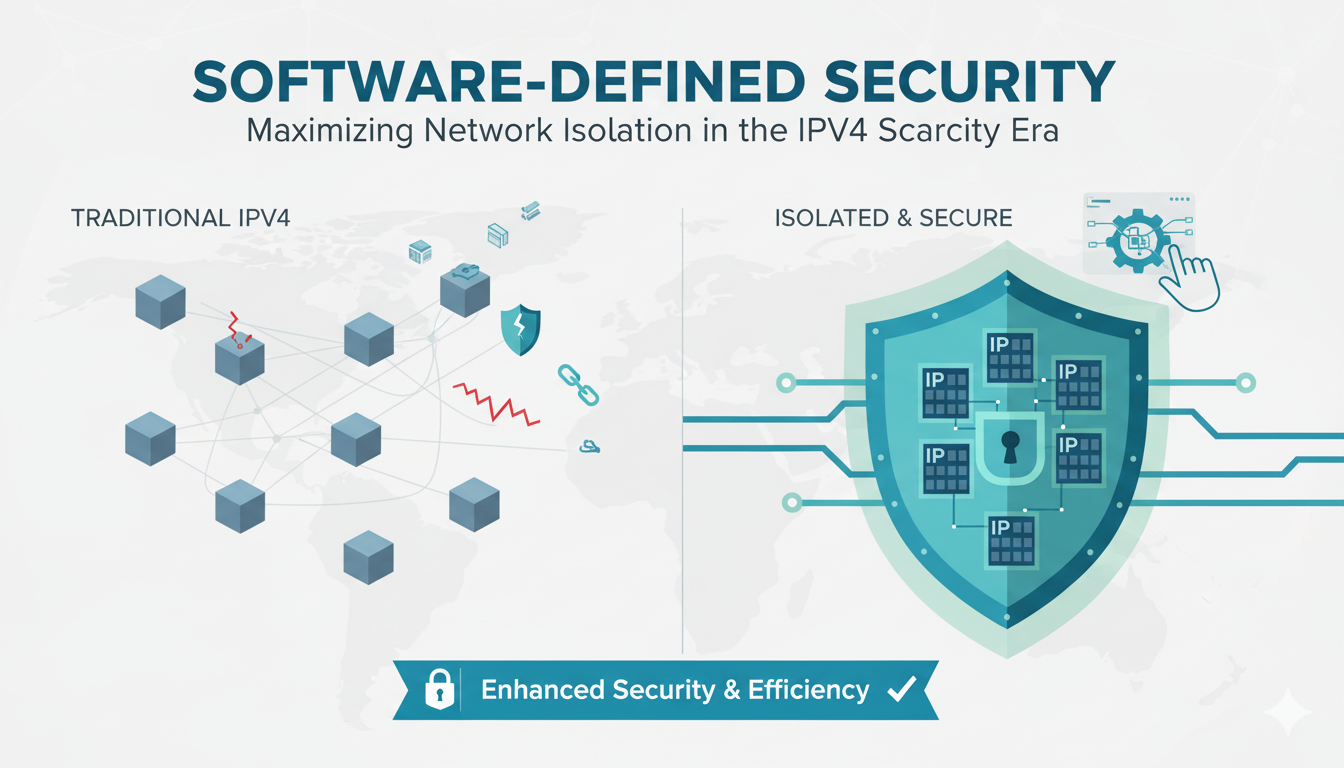
As CEO of InterLIR, I’ve witnessed firsthand how network isolation strategies

What is an ASN? ASN stands for Autonomous System Number. It is a unique identifier

Anycast DNS: A Leader’s Guide to Protecting Your Digital Infrastructure Executive

RPKI Certification: A Leader’s Guide to Internet Routing Security Executive

Executive Summary: What You Need to Know 🎯 Strategic Importance – Internet

When AWS DynamoDB failed in October 2025, thousands of businesses discovered that

Executive Summary: What You Need to Know 🎯 IP reputation directly impacts your
Live chat is provided by Intercom and is loaded only after you enable it. You can also contact us without enabling the chat.