What is an ASN?
ASN stands for Autonomous System Number. It is a unique identifier assigned to an autonomous system (AS) in the Internet that participates in the Border Gateway Protocol (BGP). An autonomous system is a collection of connected Internet Protocol (IP) routing prefixes under the control of one or more network operators that has a single, clearly defined routing policy.
In practical terms, an ASN is used by routers in the Internet to exchange information about IP routing paths. Each AS has a unique ASN, which is used to identify it to other ASes and to BGP routers in the Internet. This enables routers to determine the best path for traffic to take as it travels between different ASes and across the Internet.
ASNs are assigned by the Internet Assigned Numbers Authority (IANA) to regional Internet registries (RIRs), which in turn allocate them to individual organizations or Internet Service Providers (ISPs) that operate autonomous systems.
What is LOA (Letter of Authorization)?
The Letter of Authorization (LOA) is a formal document issued to a client after successfully completing the Assignment Request process. This document grants the client permission to announce an ASN (Autonomous System Number) for a specified IP address range.
The LOA serves as proof that the client has the right to broadcast and manage the assigned IP address range within a network. It is often required by data centers, internet service providers, and network operators to confirm that the client is authorized to use the specified resources.
The document typically includes the following details:
- Client’s name and contact information
- Assigned IP address range
- ASN details
- Authorization date
- Issuing organization’s contact information
This document ensures proper routing and compliance within global network infrastructures, preventing unauthorized use of IP address space.
What is an Assignment Request?
The Assignment Request (AR) process is initiated by the customer after successfully completing an order to rent an IP block. Other participants in the process include the supplier of the IP block (from whom the customer placed the order) and the InterLIR manager.
The outcome of the process is that the customer can announce an ASN on the IP block using an LOA (Letter of Authorization) and utilize the rented block in accordance with the signed contract and the rules governing the use of the rented resource.
You can read the rental rules in the General Terms and Conditions for the Use of the Internet Site interlir.com section.
What is rDNS?
Reverse DNS (rDNS) is the process of resolving an IP address to a domain name—the opposite of the standard DNS lookup. In a regular DNS query, a domain name is translated into an IP address. With rDNS, the system identifies which domain name is associated with a specific IP address.
rDNS is primarily used for verification and security purposes. It helps validate the origin of emails to reduce spam by confirming that the sender’s IP address matches a legitimate domain name. Many mail servers reject or flag emails from servers without proper rDNS configuration.
rDNS records are stored as PTR (Pointer) records in the DNS database. Unlike forward DNS, rDNS queries use a special domain called in-addr.arpa, where the IP address is reversed and appended with this domain for lookup.
Setting up rDNS requires administrative access to the DNS records of the IP address block. It is typically managed by the IP block owner or provider through cooperation with the relevant Regional Internet Registry (RIR), such as RIPE for Europe.
Although rDNS is not essential for most internet services, it plays a key role in improving trust and reducing network abuse.
You can submit an rDNS request for your leased IP block to configure reverse DNS.
What are admin-c and tech-c?
tech-c: The technical contact responsible for the technical operations and management of the resource.
admin-c: The administrative contact responsible for organizational decisions and resource management.
What are CIDR and IP Prefix?
CIDR (Classless Inter-Domain Routing) is a method for allocating and representing IP addresses and their associated routing paths. CIDR uses the format:
IP_address/prefix_length, where:IP_address is the starting address of the range.prefix_length specifies the number of bits used for the network portion of the address.
The prefix represents the number of leading 1 bits in the IP block mask. It determines the width (in bits) of the IP block.
What is a Route?
A “route” is an object in a Regional Internet Registry (RIR) database that ties an IP block (inetnum/inet6num) to a specific ASN (Autonomous System Number), thereby authorizing that ASN to announce the block.
What is RPKI?
RPKI (Resource Public Key Infrastructure) is a cryptographic system that ties IP blocks and ASNs to digital certificates, allowing networks to verify that a given ASN is legitimately authorized to announce a particular prefix.
What is Hijacking?
Hijacking is the unauthorized announcement of an IP block without the consent of the resource holder.
What is inetnum?
An “inetnum” (internet number) is an object in a Regional Internet Registry (RIR) database that records the details of an IP block allocation or assignment.
What is an RIR?
RIR (Regional Internet Registry) is an organization that oversees the allocation and registration of IP address space and ASNs within a defined region. There are five RIRs worldwide: RIPE NCC, ARIN, APNIC, LACNIC, and AfriNIC.
What is an LIR?
LIR (Local Internet Registry) is a member of an RIR. An LIR distributes IP addresses to end users and/or uses them in its own infrastructure.
What is an ORG Handle?
An “org” (organisation) is an object in an RIR database that provides information about an organization that has been allocated or assigned internet resources (IP blocks/ASNs).
What is abuse-c?
abuse-c (abuse contact) is an object in an RIR database that provides contact information for handling reports of network abuse.
What is Subnet Status?
Subnet status is an attribute in an IP block object (inetnum/inet6num) that indicates how a specific IP block is being used or managed. The main statuses are:
- LEGACY: Assigned before the current RIR system was established. An LIR can assign or sub-allocate from this block.
- ALLOCATED PA: Allocated to an LIR by an RIR. Can be further assigned or sub-allocated.
- SUB-ALLOCATED PA: Sub-allocated by an LIR to another organization.
- ASSIGNED PA: Assigned to an end user by an LIR. Cannot be further assigned.
- ASSIGNED PI: Assigned directly by the RIR to an end user. Cannot be further assigned.
What are Blacklists (Spam Listings)?
Blacklists are databases of IP addresses, domains, or ASNs observed sending spam, malware, or other abusive traffic. Mail servers and security appliances query these lists to decide whether to block or flag incoming connections. Major blacklists are maintained by Spamhaus Project, Barracuda Central, and SpamCop.
What is MNT-BY?
MNT-BY is a top-level maintainer object that allows you to edit information in inetnum (WHOIS), create lower-level objects like route or rDNS, and manage objects at the same maintenance level.
What is MNT-DOMAIN?
MNT-DOMAIN is a maintainer object that allows you to create and edit rDNS (domain) objects.
What is WHOIS?
WHOIS is a publicly accessible protocol and database used to look up registration information about internet resources such as IP addresses, AS numbers, and domain names.
Typical Information Provided:
- Organization name
- Contact details (admin, technical)
- IP address allocation or domain ownership
- Status and registration dates
WHOIS is essential for network troubleshooting, abuse reporting, and verifying resource ownership. Data is maintained by Regional Internet Registries (RIRs) and domain registrars.
What is ROA?
ROA stands for Route Origin Authorization—a cryptographically signed object in the RPKI system that authorizes a specific Autonomous System (AS) to originate a particular IP prefix in BGP.
Key Fields:
- Prefix: The IP block being authorized (e.g.,
203.0.113.0/24)
- Origin AS: The AS number allowed to announce the prefix (e.g.,
AS12345)
- Max Length: The maximum prefix length that can be announced (e.g.,
/24 allows 203.0.113.0/24, but not /25)
- Validity Period: Start and end dates for the ROA’s validity
Purpose:
ROAs are used by routers and validators to determine if BGP announcements are valid, helping to prevent route leaks and hijacks.
Example:
A ROA might state:
“AS64500 is authorized to announce 192.0.2.0/24 with max length /24.”
Without a matching ROA, a route may be marked as Invalid during RPKI validation.
What is IANA?
IANA (Internet Assigned Numbers Authority) is the organization that manages global IP address allocations and top-level domains. It reports directly to ICANN and is responsible for allocating address blocks to Regional Internet Registries (RIRs).
What is IPv4 Transfer?
IPv4 transfer is the procedure by which the rights to IPv4 addresses are transferred from one user to another. The outcome is the updating of RIR databases to reflect the new owner. Transfers can occur through sale, merger, or asset reassignment. Legal and procedural requirements vary by RIR and the subnet status of the addresses.
What is a Transfer Agreement?
A Resource Transfer Agreement (TA) is a document required under RIPE NCC rules to complete an IPv4 address transfer. Both parties (transferrer and transferee) sign it and submit it to RIPE NCC, after which ownership is updated in the database. Other RIRs may not require such formal agreements.
What is an NIR?
APNIC is the Regional Internet Registry (RIR) for the Asia Pacific region. To better serve local communities, APNIC works with National Internet Registries (NIRs), which operate under APNIC policies and provide local-language support. Current NIRs include APJII (Indonesia), CNNIC (China), IRINN (India), JPNIC (Japan), KISA (Korea), TWNIC (Taiwan), and VNNIC (Vietnam).
What is IPv4?
IPv4 (Internet Protocol version 4) uses 32-bit addresses (e.g., 192.0.2.1), allowing for 4,294,967,296 unique addresses. Due to address exhaustion, IPv4 resources are now scarce and highly valued in leasing and resale markets.
What Is a “Usage Type” of IP Addresses?
The usage type classifies the intended purpose or deployment environment of an IP address. It is widely used in security, fraud detection, geolocation, and reputation systems.
Common usage types include:
- COM (Commercial): Businesses and commercial organizations
- ORG (Organization): General non-commercial organizations
- GOV (Government): Government entities
- MIL (Military): Military organizations
- EDU (Education): Schools, colleges, and universities
- LIB (Library): Libraries
- CDN (Content Delivery Network): CDN providers
- ISP (Fixed ISP): Fixed-line internet service providers
- MOB (Mobile ISP): Mobile network operators
- DCH (Data Center): Hosting, data centers, or transit providers
- SES (Search Engine): Search engine crawlers
- RSV (Reserved): Reserved for special purposes
Understanding usage type helps assess an IP’s trustworthiness. ISP-tagged IPs are particularly valuable because they mimic end-user traffic, making them less likely to be blocked by anti-bot systems or web application firewalls. This is why proxy and service providers often seek ISP-classified IPs for better compatibility and higher resale value.
What is a VPN?
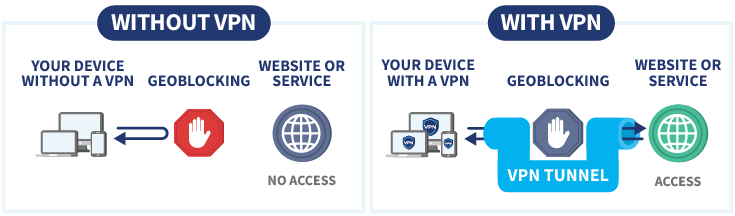
A VPN (Virtual Private Network) creates a secure, encrypted tunnel between your device and a remote server, protecting your data from eavesdropping on public networks. It is used for privacy, bypassing geo-restrictions, and securing remote access.
What is Cloud?
Cloud computing delivers on-demand computing services—servers, storage, databases, networking, software—over the internet. Instead of owning physical infrastructure, users access scalable resources from cloud providers like AWS, Google Cloud, or Azure.
What is a Proxy?
A proxy server acts as an intermediary between your device and the internet. It forwards your requests and returns responses, often hiding your real IP address. Proxies are used for anonymity, bypassing restrictions, or caching content—but unlike VPNs, they typically do not encrypt traffic and operate at the application level (e.g., web browser).
What is Hosting?
Hosting is a service that stores website files on a server connected to the internet, making them accessible via a domain name. Types include shared, VPS, dedicated, and cloud hosting—each offering different levels of performance, control, and cost.
What is a Data Center?
A data center is a secure facility housing servers, storage, and networking equipment. It provides power, cooling, and connectivity for digital services like websites, cloud platforms, and enterprise applications. Types include enterprise, colocation, cloud, and edge data centers.
What is a Domain?
A domain (e.g., example.com) is a human-readable address for a website or service. The Domain Name System (DNS) translates it into an IP address. Domains are registered through registrars and come in types like .com (generic TLD) or .de (country-code TLD). Subdomains (e.g., blog.example.com) help organize content.
What is VPS?
A VPS (Virtual Private Server) uses virtualization to divide a physical server into isolated virtual environments. Each VPS runs its own OS and offers root access, more control than shared hosting, and better performance at a lower cost than dedicated servers. Ideal for websites, development, and applications needing scalability and security.