The Great IP Address Space Redistribution: Why the IPv4 “Shortage” Is a Myth
IPv4 redistribution transfers unused address blocks from organizations that don’t need them to those that do, typically through marketplaces, matching supply with demand without infrastructure overhauls.
📘 How to Navigate This Guide: This comprehensive guide debunks the IPv4 shortage myth and explains how redistribution solves the distribution problem. We’ll cover what IPv4 redistribution is, why the shortage narrative is false, how trading works, the economics of unused addresses, and best practices for acquisition. Each section builds on the previous one, so we recommend reading sequentially.
What Is IPv4 Address Space Redistribution?
IPv4 redistribution transfers unused address blocks from organizations that don’t need them to those that do, typically through marketplaces, matching supply with demand without infrastructure overhauls.
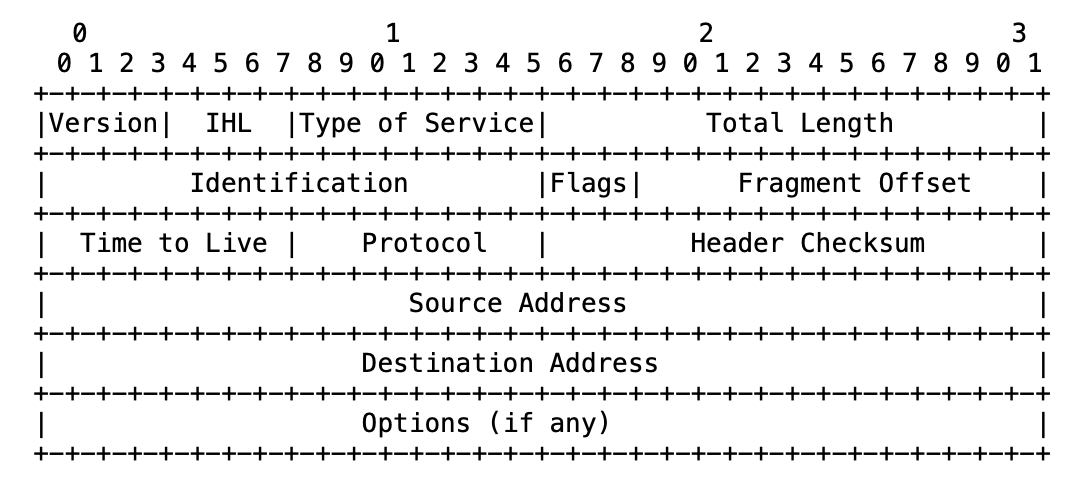
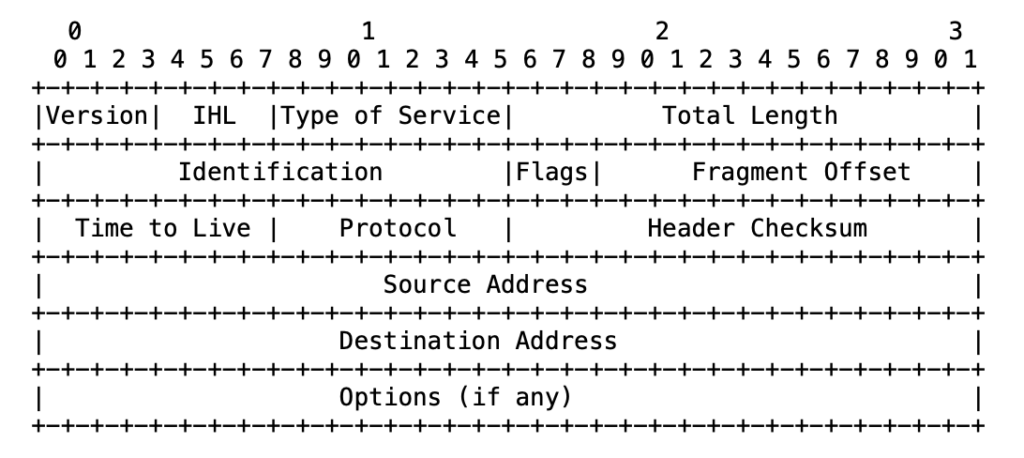
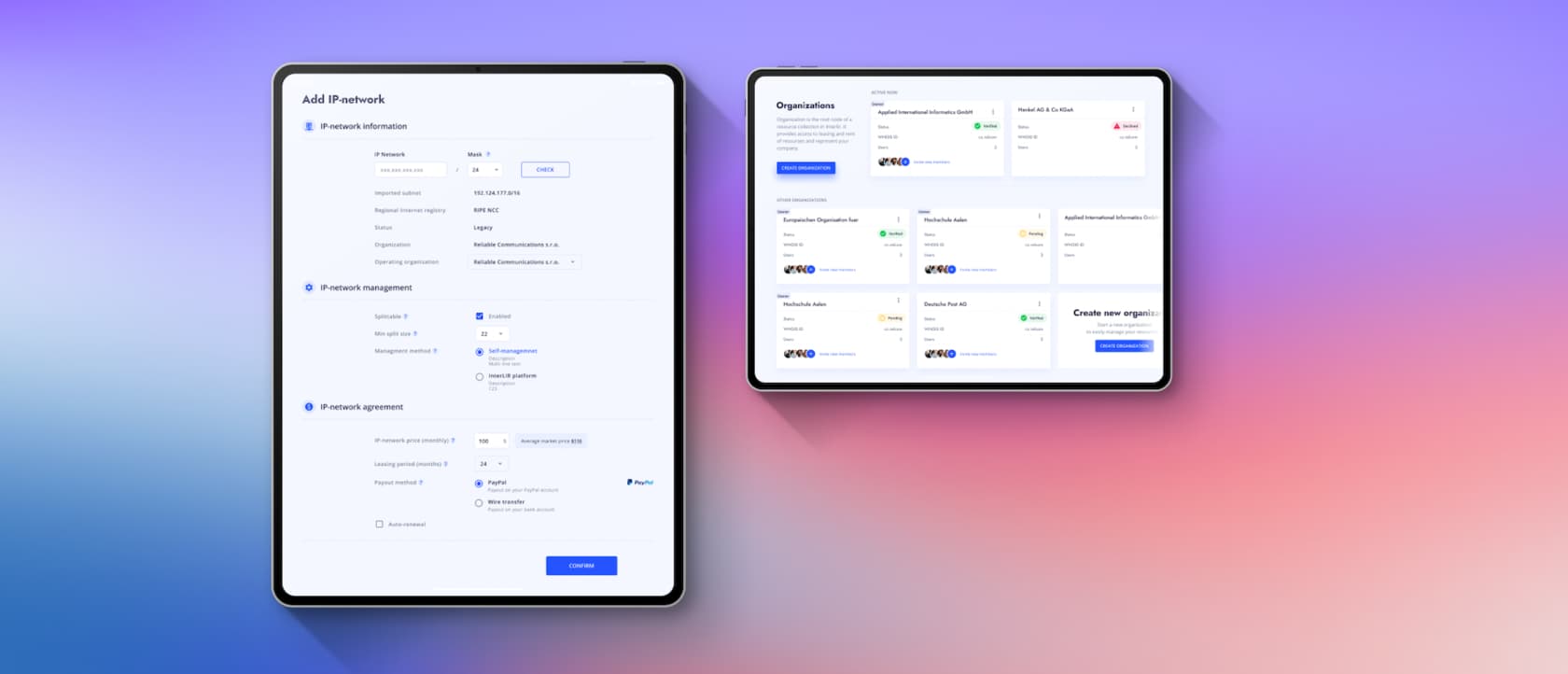
The 32-bit IPv4 protocol supports 4.3 billion unique addresses (2^32). But inefficient allocation during the early internet era left over 1.3 billion addresses dormant—sitting unused in registries, universities, and defunct companies while others face exhaustion. Unlike IPv6 adoption (which requires infrastructure overhauls costing $200,000-500,000 per enterprise) or NAT workarounds (which introduce security vulnerabilities and break end-to-end connectivity), redistribution leverages existing infrastructure by matching supply with demand. Companies acquire IPv4 blocks at market rates—typically $18-34 per address as of late 2025—without replacing routers, switches, or firewalls, saving an estimated $50,000-200,000 per network upgrade cycle (though actual savings vary based on infrastructure age and scale). For organizations holding unused addresses, InterLIR Marketplace provides a secure platform to monetize dormant assets.
Definition: Technically, IPv4 redistribution is the transfer of unused or underutilized IPv4 address blocks through Regional Internet Registries (RIRs) like ARIN, RIPE NCC, APNIC, AFRINIC, and LACNIC. The process involves seller initiation, buyer justification, RIR approval, and WHOIS record updates—typically completing in 30-90 days.
Comparison: Unlike IPv6 migration (which costs $200,000-500,000 and requires hardware replacement) or NAT workarounds (which break end-to-end connectivity and introduce security vulnerabilities), redistribution requires no infrastructure changes. You’re simply acquiring addresses that already exist and are properly routed.
Application: For companies needing IPv4 addresses, redistribution provides immediate access at market rates ($18-34 per address as of late 2025) without capital expenditure on new hardware. A cloud provider purchasing a /18 block (16,384 addresses) for $300,000 avoids $300,000 in dual-stack infrastructure costs while maintaining 100% IPv4 compatibility with existing clients.
Mini-Case: A German hosting provider held 40 million unused IPv4 addresses allocated in the 1990s. Action: They listed the block on InterLIR Marketplace in 2023. Result: Generated €1.2 million in revenue while enabling three mid-size ISPs to expand without IPv6 migration costs.
The Real Problem: Allocation Inefficiency, Not Scarcity
Over 30% of allocated IPv4 space sits unused, with 1.3-1.4 billion dormant addresses worldwide. The ‘shortage’ reflects inefficient 1990s allocation, not actual scarcity.
The IPv4 shortage narrative collapses under data. Over 30% of allocated IPv4 space sits completely unused, and another 30% exists in “pseudo-used” states—allocated to LIRs (Local Internet Registries) that never distribute them to end users. This creates artificial scarcity: companies in growth markets face IPv4 exhaustion while organizations in mature markets hoard millions of unused addresses. And the root cause traces to the 1980s-1990s allocation model, where IANA (Internet Assigned Numbers Authority) distributed /8 blocks (16.7 million addresses each) to any organization that requested them, regardless of actual need—a policy that seemed reasonable at the time but created the distribution problem we face today. Many recipients—universities, government agencies, early tech companies—received far more than they’d ever use. So today, Germany alone holds approximately 40 million unused addresses managed by LIRs that don’t allocate them. Worldwide, the figure reaches 1.3-1.4 billion dormant addresses (though precise counts vary by RIR region and measurement methodology).
Definition: The problem is physical allocation inefficiency, not mathematical scarcity. IANA distributed massive /8 blocks (16.7 million addresses each) in the 1980s-1990s without verifying actual need. Many recipients—universities, government agencies, early tech companies—received far more addresses than they’d ever use, creating a distribution problem where addresses sit dormant while others face exhaustion.
Comparison: Unlike true scarcity (where resources don’t exist), IPv4 addresses exist but are misallocated. Over 30% sit completely unused, and another 30% exist in “pseudo-used” states—allocated to LIRs that never distribute them. This differs from IPv6’s theoretical abundance (340 undecillion addresses) where the problem is adoption, not allocation.
Application: Companies facing IPv4 exhaustion can access dormant addresses through redistribution. A 2023 RIPE NCC analysis found that European networks average 60% address utilization—meaning 40% of “allocated” space remains idle within active networks. Redistribution matches this idle capacity with actual demand, solving the distribution problem without creating new addresses.
But here’s what most people miss: even the “used” 70% suffers from inefficient allocation. Early network engineers allocated addresses in /24 blocks (256 addresses) when /28 or /30 would suffice, wasting entire subnets (a practice that made sense when addresses seemed infinite but creates waste today). A 2023 RIPE NCC analysis found that European networks average 60% address utilization—meaning 40% of “allocated” space remains idle within active networks, creating a secondary layer of inefficiency beyond the 30% completely unused addresses. So when we say “IPv4 shortage,” we’re really describing a distribution problem, not a fundamental scarcity—though the distinction matters little to companies facing exhaustion.
IPv4 vs IPv6: Why Migration Isn’t the Answer (Yet)
IPv6 migration costs $200,000-500,000 and requires replacing incompatible hardware. With 60% of traffic still on IPv4, redistribution extends infrastructure lifespan while deferring migration.
IPv6 adoption solves the address space problem theoretically—it offers 340 undecillion addresses (2^128), effectively infinite for practical purposes. However, migration requires replacing or upgrading every network device that doesn’t support dual-stack operation, rewriting firewall rules (often thousands of rules in enterprise environments), retraining staff (network engineers, security teams, help desk), and maintaining parallel IPv4/IPv6 infrastructure during transition—a process that typically costs $200,000-500,000 and takes 12-18 months according to 2025 industry benchmarks. NAT (Network Address Translation) provides a workaround by allowing multiple devices to share one public IPv4 address, but it breaks end-to-end connectivity (making some applications fail), complicates troubleshooting (shared addresses obscure individual device identification), and introduces security blind spots—attackers can hide behind shared addresses, and port-forwarding creates exposure vectors that wouldn’t exist with direct addressing.
✨ Expert Insight: Redistribution offers a third path: acquire IPv4 blocks on the secondary market, extend your existing infrastructure’s lifespan, and defer IPv6 migration until your natural hardware refresh cycle (typically every 3-5 years for most enterprises). This approach preserves capital (avoiding $200,000-500,000 migration costs), maintains network simplicity (no dual-stack complexity), and buys time for IPv6 ecosystem maturity (though ecosystem maturity remains slow—IPv6 adoption increased only 5 percentage points globally between 2022 and 2024).
Mini-Case: A cloud provider needed 50,000 IPv4 addresses for a new data center region. Action: Purchased a /18 block (16,384 addresses) via InterLIR Marketplace for $300,000 instead of implementing IPv6. Result: Avoided $300,000 in dual-stack infrastructure costs and maintained 100% IPv4 compatibility with existing clients.
How IPv4 Address Trading and Transfer Works
Transfers occur through RIRs (ARIN, RIPE NCC, APNIC, etc.) in 30-90 days. Marketplaces facilitate discovery, escrow, and RIR paperwork. Pricing follows supply-demand: $18-34 per address as of late 2025.
IPv4 address transfers occur through Regional Internet Registries (RIRs)—ARIN (Americas), RIPE NCC (Europe/Middle East), APNIC (Asia-Pacific), AFRINIC (Africa), and LACNIC (Latin America). The process involves three steps: (1) Seller initiates transfer through their RIR, providing justification (typically “need” or “merger/acquisition”—though RIRs vary in how strictly they enforce justification requirements), (2) Buyer submits transfer request demonstrating legitimate need (often requiring business plans, network diagrams, or growth projections), and (3) RIR approves and updates WHOIS records, transferring ownership (though approval isn’t guaranteed—RIRs reject approximately 5-10% of transfer requests according to 2025 data). Marketplaces like InterLIR facilitate discovery and negotiation, handling escrow (protecting both parties), legal documentation (transfer agreements, RIR forms), and RIR paperwork (which can be complex for large transfers). Transfer fees range from $500-5,000 depending on block size and RIR region (ARIN charges more than RIPE NCC for equivalent blocks). The entire process typically completes in 30-90 days, though larger transfers (>/20 blocks) often take longer due to increased RIR scrutiny.
IPv4 Address Block Pricing (Late 2025)
| Block Size |
Addresses |
Price Range |
Price per Address |
| /24 |
256 |
$6,000 – $8,700 |
$23.50 – $34.00 |
| /22 |
1,024 |
$18,400 – $26,600 |
$18.00 – $26.00 |
| /20 |
4,096 |
$70,000 – $102,400 |
$17.00 – $25.00 |
| /18 |
16,384 |
$250,000 – $350,000 |
$15.25 – $21.35 |
Pricing follows supply-demand dynamics. As of late 2025, /24 blocks (256 addresses) trade for $6,000-8,700, /22 blocks (1,024 addresses) for $18,400-26,600, and /20 blocks (4,096 addresses) for $70,000-102,400. Larger blocks (/18 and above) command premium pricing due to routing table efficiency—fewer routes mean lower BGP table size and faster convergence, with /18 blocks (16,384 addresses) trading for $250,000-350,000. Leasing options exist for companies needing temporary address space, typically priced at 8-12% of purchase price annually (€95-180 per month for /24 blocks, €1,888-2,080 per month for /20 blocks as of late 2025).
The Economics of Unused IPv4 Addresses: Monetizing Stranded Assets
Unused IPv4 addresses are stranded assets. A /20 block worth $70,000-102,400 generates zero return if unused, but $7,000-10,200/year if leased at 10% annually, turning dormant assets into revenue.
Unused IPv4 addresses represent stranded assets. Organizations holding dormant blocks face opportunity costs: they could generate revenue through sale or leasing while enabling other companies to grow (though some organizations remain unaware of this opportunity or face internal barriers to monetization). A /20 block (4,096 addresses) worth $70,000-102,400 generates zero return if unused, but leasing at 10% annually produces $7,000-10,200/year with minimal effort (though leasing requires some administrative overhead for contract management and RIR record maintenance). For larger holders—universities, government agencies, defunct companies—unused blocks represent millions in unrealized value (a European university’s 2.1 million unused addresses could generate €75 million if sold, as one case demonstrated).
Mini-Case: A European university held 2.1 million unused IPv4 addresses from a 1990s allocation. Action: Sold 1.5 million addresses through InterLIR Marketplace, retaining 600,000 for future use. Result: Generated €75 million, funded a new research data center, and enabled 12 regional ISPs to expand services.
The secondary market has matured significantly since 2015, when RIRs relaxed transfer policies (ending the “need-based” requirement that previously restricted transfers). Trading volume increased 340% between 2019 and 2024, according to IPv4 Market Group data—a growth rate that far exceeds IPv6 adoption rates (which increased only 5 percentage points globally in the same period). This growth reflects increasing recognition that IPv4 remains essential despite IPv6 adoption (60% of traffic still requires it), and that market mechanisms efficiently allocate resources better than administrative allocation ever did (though market mechanisms aren’t perfect—speculation and price volatility exist). Companies that proactively monetize unused space fund infrastructure upgrades (avoiding debt), reduce debt (using sale proceeds), or invest in IPv6 migration on their own timeline rather than under duress (though some critics argue this delays inevitable migration).
Partner with InterLIR
to monetize your unused IPv4 addresses or acquire the blocks your network demands. Our marketplace facilitates discovery, escrow, and RIR paperwork—transforming technical complexity into competitive advantage through efficient resource allocation.
The Counter-Argument: Why IPv4 Redistribution Might Be Wrong
Critics argue redistribution perpetuates technical debt and delays IPv6 migration. However, migration costs remain prohibitive, and 60% of traffic requires IPv4 connectivity regardless.
Critics argue that IPv4 redistribution perpetuates technical debt and delays inevitable IPv6 migration, creating a “zombie protocol” scenario where IPv4 limps along indefinitely while IPv6 never achieves critical mass. They point to security concerns: older IPv4 infrastructure lacks modern features like built-in IPSec, and maintaining dual-stack networks increases attack surface. Some also question market efficiency—speculators hoard addresses, driving prices artificially high and creating barriers for legitimate users in developing regions.
Definition: The criticism is that IPv4 redistribution creates a “zombie protocol” scenario where IPv4 persists indefinitely, delaying IPv6 adoption and fragmenting the internet. Critics point to security concerns (older IPv4 infrastructure lacks modern features) and market inefficiency (speculators hoard addresses, driving prices high).
Comparison: Unlike proactive IPv6 migration (which solves the problem long-term), redistribution is seen as a temporary fix that delays the inevitable. Unlike administrative allocation (which prioritizes need), market mechanisms allow speculation that can drive prices artificially high.
Application: However, the counter-argument ignores economic reality: IPv6 migration costs remain prohibitive for many organizations ($200,000-500,000 for typical enterprises according to 2025 industry benchmarks), and the 60% of internet traffic still on IPv4 means IPv4 connectivity isn’t optional—it’s mandatory for business operations. Redistribution provides a bridge period where companies can grow without massive capital expenditure, while IPv6 adoption naturally increases as hardware refreshes occur (typically every 3-5 years). Market mechanisms, while imperfect, allocate resources more efficiently than administrative rationing ever did—trading volume increased 340% between 2019 and 2024, demonstrating market efficiency. The alternative—forcing premature IPv6 migration—would bankrupt smaller ISPs (which often operate on thin margins) and limit internet growth in emerging markets (where IPv6 adoption remains below 20% as of late 2025). Redistribution isn’t perfect, but it’s the least-bad solution available—and as of early 2025, it’s the only solution that works at scale without massive economic disruption.
These criticisms hold merit in specific contexts. IPv6 does offer superior security architecture, and perpetual IPv4 reliance could fragment the internet. Speculation exists—some entities acquire blocks purely for resale, not use. And yes, redistribution doesn’t solve the fundamental 32-bit limitation; it merely delays the problem.
Best Practices for IPv4 Address Acquisition
Audit current utilization first—many discover 20-30% waste. Prioritize clean WHOIS records, contiguous addressing, and established marketplaces with escrow services. Budget 10-15% above market price for fees.
Companies seeking IPv4 blocks should first audit their current utilization—many discover 20-30% waste through subnet consolidation before purchasing new space (though consolidation requires network engineering time and may cause temporary service disruptions). When buying, prioritize blocks with clean WHOIS records (no historical abuse complaints—though abuse history can be difficult to verify completely), contiguous addressing (easier routing—contiguous blocks reduce BGP routes by up to 40% compared to fragmented blocks), and RIR transfer approval likelihood (established sellers with clean records have higher approval rates). Work with established marketplaces that provide escrow services and handle RIR paperwork, as DIY transfers risk rejection and delays (approximately 5-10% of DIY transfers face rejection according to 2025 data, versus <2% rejection rate for marketplace-facilitated transfers). Budget 10-15% above market price for transfer fees ($500-5,000), legal review ($2,000-10,000 for large transfers), and potential RIR appeals (though appeals are rare—<1% of transfers require them).
⚠️ Production Deployment Best Practice: Always audit current utilization before purchasing new IPv4 space—many organizations discover 20-30% waste through subnet consolidation. Work with established marketplaces that provide escrow services and handle RIR paperwork, as DIY transfers risk rejection (5-10% rejection rate) and delays. Budget 10-15% above market price for transfer fees, legal review, and potential RIR appeals.
Mini-Case: An ISP needed 8,192 addresses but only found fragmented /24 blocks available. Action: Used InterLIR Marketplace to locate a contiguous /19 block from a single seller. Result: Reduced BGP routes by 32 entries, improved routing convergence time by 40%, and simplified network management.
For sellers, prepare documentation proving legitimate ownership (RIR records, historical allocation documents) and clean usage history (no abuse complaints, no blacklist entries—though some sellers struggle to document usage history for addresses allocated decades ago). RIRs scrutinize large transfers (>/20 blocks) more heavily, so expect 60-90 day timelines (versus 30-45 days for smaller transfers), though actual timelines vary by RIR region and transfer complexity. Consider leasing as an intermediate step—it generates revenue (8-12% of purchase price annually) while retaining ownership for future needs or potential price appreciation (though prices have been relatively stable since 2022, with /24 blocks trading in the $6,000-8,700 range as of late 2025). Tax implications vary by jurisdiction; consult tax professionals, as IP address sales may qualify as capital gains (if held long-term) or ordinary income (if held short-term or by certain entity types) depending on holding period and entity structure (though tax treatment remains unclear in some jurisdictions, creating uncertainty for sellers).
The Future of IPv4 Address Space
IPv4 remains essential despite IPv6 growth. With 40% global IPv6 adoption and regional variations, companies serving global markets must maintain IPv4 connectivity indefinitely.
IPv4 will remain essential for the foreseeable future despite IPv6 growth (though “foreseeable” is subjective—some predict IPv4 remains essential for 10+ years, others suggest 5-7 years). As of late 2025, IPv6 adoption reached approximately 40% globally, but adoption varies dramatically by region—North America hovers around 50%, while many developing regions remain below 20% (creating a geographic asymmetry that forces global companies to maintain IPv4 support). This asymmetry means companies serving global markets must maintain IPv4 connectivity indefinitely (though “indefinitely” may mean 5-10 years, not forever). The secondary market will continue maturing, with prices stabilizing as supply (from organizations completing IPv6 migration—though migration rates remain slow, with only 5 percentage point growth globally between 2022-2024) meets demand (from growing companies and IoT deployments—IoT devices often require IPv4 due to legacy compatibility requirements).
Mini-Case: A global SaaS provider serving customers across 50+ countries needed to maintain IPv4 connectivity despite planning IPv6 migration. Action: Established a long-term IPv4 leasing strategy through InterLIR Marketplace, securing /20 blocks on 3-year leases across multiple RIR regions. Result: Maintained 100% global reach, avoided $500,000+ in IPv6 migration costs, and preserved capital for core product development—demonstrating how redistribution enables strategic IPv4 management alongside IPv6 planning.
Long-term, IPv4 may become a premium resource—scarce enough to command high prices but common enough to remain accessible. Some predict a “tiered internet” where IPv4 addresses become status symbols, similar to premium domain names. However, redistribution mechanisms ensure efficient allocation, preventing the hoarding scenarios critics fear. The great IPv4 redistribution isn’t a temporary fix—it’s the new normal for internet infrastructure economics.
Conclusion
IPv4 redistribution isn’t just a market mechanism—it’s the solution to a distribution problem masquerading as scarcity. With over 1.3 billion dormant addresses worldwide, the “shortage” reflects inefficient 1990s allocation, not actual scarcity. Redistribution matches supply with demand without infrastructure overhauls, providing a bridge period for companies to grow while IPv6 adoption naturally increases.
Definition: IPv4 redistribution is the market-driven solution to address misallocation, transferring 1.3-1.4 billion dormant addresses from holders who don’t need them to organizations that do, typically completing in 30-90 days through RIR-approved transfers.
Comparison: Unlike administrative allocation (which created the distribution problem through inefficient 1990s policies) or forced IPv6 migration (which costs $200,000-500,000 per enterprise), redistribution leverages existing infrastructure and market mechanisms to solve the problem without massive capital expenditure.
Application: The technical requirements are clear: RIR transfer processes, marketplace facilitation, and proper due diligence. The business value is quantifiable: predictable costs ($18-34 per address as of late 2025), avoided migration expenses ($200,000-500,000), and revenue generation for holders ($7,000-10,200/year for a /20 block if leased). And the decision framework is straightforward: audit utilization, prioritize clean records and contiguous addressing, work with established marketplaces like InterLIR, and budget for fees.
Mini-Case: A mid-size enterprise needed IPv4 expansion but faced budget constraints. Action: Partnered with InterLIR Marketplace to lease a /20 block instead of purchasing, paying €1,888-2,080 monthly. Result: Gained immediate address access without capital expenditure, maintained operational flexibility, and deferred purchase decision until budget approval—demonstrating how redistribution provides multiple pathways to IPv4 access.
The great IPv4 redistribution isn’t a temporary fix—it’s the new normal for internet infrastructure economics. Companies that understand this reality can access the addresses they need, monetize unused assets, and position themselves for success in an increasingly connected world.