

bgunderlay bgunderlay bgunderlay
123

What is IP Transit?

What is IP Transit? A Complete Guide for Network Professionals

Understand how IP Transit enables global internet connectivity through BGP routing, and learn what to look for when choosing a transit provider for your network infrastructure.

What is IP Transit? A Complete Guide for Network Professionals

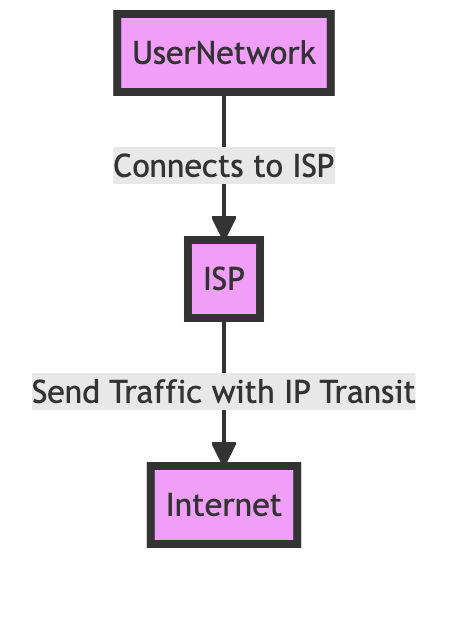
IP Transit is a service where a network provider routes your internet traffic to all destinations on the global internet using BGP. Think of it as hiring a global shipping company that knows every address in the world—instead of building your own delivery network to reach millions of destinations, you pay one provider to handle routing to everywhere.

But here’s what most people miss: IP Transit isn’t just about connectivity. It’s about access to the full BGP routing table—over 600,000 routes as of late 2024, with the number growing as IPv6 adoption accelerates and new networks come online—that enables your network to reach virtually any destination on the internet. Without it, your network is an island. With it, you’re part of the global internet infrastructure.

📘 How to Navigate This Guide: This comprehensive guide covers IP Transit from fundamentals to advanced considerations. We’ll explain what IP Transit is, how it works technically, how it differs from peering, why networks need it, what to look for in providers, and when it might not be the right choice. Each section builds on the previous one, so we recommend reading sequentially for the full picture.

What is IP Transit?

IP Transit is a service where a network provider routes your internet traffic to all destinations on the global internet using BGP. The technical foundation is Border Gateway Protocol (BGP), the routing protocol that makes the internet work. When you purchase IP Transit, you’re establishing BGP sessions between your network’s border routers and your transit provider’s routers. Your provider then announces your IP address blocks to the global routing table, making your network reachable from anywhere. And they send you the full routing table, so your routers know how to reach everyone else.

Here’s what you need to make this work: an Autonomous System (AS) number that identifies your network, IP address blocks to announce (which InterLIR can help you obtain), and BGP-capable routers at your network edge. The transit provider handles the rest—maintaining connections to thousands of other networks, managing routing policies, and ensuring traffic flows efficiently.

Mini-Case: A regional ISP serving 5,000 customers needed to provide internet access. They purchased 1 Gbps IP Transit from a Tier 2 provider with a 99.9% uptime SLA. Result: The ISP can now route customer traffic to any global destination, achieving 99.95% actual uptime and supporting their entire customer base with reliable connectivity.

The business value? Predictable costs (typically $2-8 per Mbps per month depending on provider tier), global reach without building thousands of direct connections, and SLA guarantees that protect your operations. Most transit providers offer 99.9% uptime SLAs, latency guarantees under 50ms to major destinations, and packet loss under 0.1%.

How Does IP Transit Work?

IP Transit works by establishing BGP sessions between your network and the transit provider, who announces your IP addresses to the global routing table. The process starts when your network engineer configures BGP on your border routers, specifying the transit provider’s router IP addresses as BGP neighbors.

Here’s the sequence: First, your router opens a TCP connection to the transit provider’s router on port 179 (the BGP port). Once the TCP session is established, BGP begins exchanging routing information. The transit provider sends you their full routing table—all 600,000+ routes as of late 2024, with IPv4 and IPv6 routes continuing to grow—which can take 5-15 minutes to fully converge depending on your router’s processing power and memory. Modern routers with sufficient resources (8GB+ RAM, multi-core processors) can converge faster, but the routing table size continues to increase as the internet expands.

✨ Expert Insight: Route filtering is where many networks stumble. Your transit provider will filter which routes they accept from you (to prevent you from announcing routes you don’t own), and you should filter which routes you accept from them (to prevent routing hijacks and optimize traffic flow). This is where technical expertise matters—poor filtering can lead to security issues or suboptimal routing.

Meanwhile, you’re announcing your IP address blocks to the transit provider. They accept your routes (assuming they pass their filtering policies) and propagate them to their upstream providers and peers. Within minutes, your network becomes reachable from anywhere on the internet.

Mini-Case: A data center needed to connect 100 servers to the internet. They established a BGP session with a transit provider and announced a /24 IP block (256 addresses). Result: All 100 servers can now reach any internet destination with an average latency of 28ms, and the data center can scale to additional servers by simply adding more IP addresses to their announcements.

The technical requirements are straightforward but non-negotiable: You need an AS number (obtained from your Regional Internet Registry through services like InterLIR’s LIR offerings), IP address blocks (which InterLIR specializes in providing), and routers capable of running BGP and handling the full routing table. Most modern enterprise routers can handle this, but you’ll want at least 4GB of RAM for the routing table and sufficient CPU to process route updates.

IP Transit vs Peering: What’s the Difference?

IP Transit provides access to the entire internet for a fee, while peering is a free exchange of traffic between networks of similar size. The fundamental difference is the relationship: with transit, you’re a customer paying a provider; with peering, you’re an equal partner exchanging traffic.

IP Transit vs Peering Comparison
Feature IP Transit Peering
Cost $2-8 per Mbps/month Free (settlement-free)
Reach Entire internet Only peer networks
Relationship Customer-provider Peer-to-peer
Requirements Any network Similar traffic volumes (1-10 Gbps+)
Best For Small to medium networks, global reach Large networks, high-volume destinations

Here’s the economic reality: Transit costs money—typically $2-8 per Mbps per month depending on provider tier and commitment level. Peering, when it’s settlement-free (which is most peering), costs nothing beyond the physical connection and colocation fees. But peering only gives you access to that specific peer’s network, not the entire internet.

Mini-Case: A gaming company with 10 Gbps of traffic needed global connectivity. They established peering at 5 major IXPs (handling 80% of traffic for free) and purchased 2 Gbps of transit for redundancy and unreachable destinations. Result: They save approximately $15,000 per month compared to using transit for all traffic, while maintaining full internet connectivity and redundancy.

The decision framework is simple: If you’re large enough and have the right traffic patterns, peering can dramatically reduce costs. If you’re smaller or have diverse traffic needs, transit is more practical. Most networks end up with a hybrid approach—peering where possible, transit for the rest.

Why Do Networks Need IP Transit?

Networks need IP Transit when they lack direct connections to all internet destinations, requiring a provider to route traffic globally. The math is brutal: There are over 60,000 autonomous systems on the internet. Building direct connections to all of them would require 60,000+ physical links, costing millions in infrastructure and ongoing maintenance.

  1. Internet Service Providers (ISPs) – Need transit to provide internet access to their customers
  2. Data Centers – Need it to connect their hosted services to the internet
  3. Cloud Providers – Use transit (or are transit providers themselves) to offer global connectivity
  4. Enterprises – With internet-facing applications need transit to reach their users worldwide

So here’s the practical reality: Unless you’re a massive network with extensive peering relationships, you can’t reach the entire internet without transit. A small ISP serving 5,000 customers would need to establish direct connections to over 60,000 networks to match transit coverage—an impossible task that would cost millions versus $500-2,000 per month for transit service.

Mini-Case: A SaaS startup launched with 1,000 users across 50 countries. They purchased 100 Mbps IP Transit with a 99.9% uptime SLA. Result: Their global user base can access the service with average latency under 100ms, and they achieved 99.95% actual uptime—exceeding their SLA and supporting business growth.

But it’s not just about reach—it’s about redundancy and reliability. Most transit providers offer multiple redundant paths, diverse routing, and failover capabilities. If one path fails, traffic automatically reroutes. This level of redundancy is nearly impossible to achieve with direct connections alone, especially for smaller networks.

Partner with InterLIR to secure the IPv4 resources your network demands for IP Transit services. Our specialists provide tailored guidance on network architecture, strategic subnetting approaches, and comprehensive IP address lifecycle management—transforming technical complexity into competitive advantage.


What to Look for in an IP Transit Provider?

Key factors include network reach, redundancy, SLA guarantees, pricing structure, and technical support quality. But here’s what separates good providers from great ones: the ability to actually deliver on their promises when things go wrong.

Tier 1 vs Tier 2 vs Tier 3 Provider Comparison
Feature Tier 1 Tier 2 Tier 3
Reach Entire internet (no transit purchases) Regional + extensive peering Local/regional
Uptime SLA 99.99% 99.9% 99.5-99.9%
Latency <30ms to 95% of destinations <50ms to major destinations Variable, higher latency
Cost $6-10 per Mbps/month $3-6 per Mbps/month $1-4 per Mbps/month
Best For Mission-critical, global operations Most businesses, good balance Regional operations, cost-sensitive

⚠️ Production Deployment Best Practice: Red flags to avoid: Providers with no SLA, providers that won’t give you references, providers with poor online reviews, providers that can’t explain their network topology, and providers that pressure you into long-term contracts without trial periods. Always verify actual performance before committing long-term.

Let’s start with network tier. Tier 1 providers can reach the entire internet without purchasing transit themselves—they peer with all other Tier 1 providers. This means optimal routing, lowest latency, and best performance. Tier 2 providers purchase transit from Tier 1 providers but also peer extensively, offering good performance at lower cost. Tier 3 providers are typically regional and purchase transit from Tier 2 providers.

Mini-Case: An e-commerce company needed 10 Gbps transit for global operations. They evaluated three providers: Tier 1 at $8/Mbps ($80k/month), Tier 2 at $4/Mbps ($40k/month), and Tier 3 at $2/Mbps ($20k/month). Result: They chose the Tier 2 provider—achieving 99.95% uptime, meeting all performance requirements, and saving $40k/month versus Tier 1 while getting better service than Tier 3.

Pricing models vary. Committed Information Rate (CIR) guarantees a minimum bandwidth but allows bursting higher. Burstable pricing charges based on 95th percentile usage. Flat rate charges a fixed amount regardless of usage. Choose based on your traffic patterns—steady traffic benefits from CIR, variable traffic from burstable.

The Counter-Argument: When IP Transit Might Not Be Right

IP Transit may be unnecessary for small networks that can use peering or for networks with sufficient direct connections. And honestly? For some use cases, transit is overkill. Let’s address the strongest valid criticism head-on.

The criticism is valid in these scenarios: If you’re a large content provider with extensive peering relationships (think Netflix, Google, or major CDNs), you might handle 95% of your traffic through free peering and only need transit for edge cases. A financial institution connecting to 10 specific trading partners might find direct private connections more secure and lower latency (5ms vs. 30ms) than transit. A private enterprise network that doesn’t need public internet access obviously doesn’t need transit. And as of late 2024, some edge computing deployments are using satellite or wireless backhaul that bypasses traditional transit entirely.

Mini-Case: A large content delivery network peers with 200+ networks at major IXPs worldwide, handling 95% of traffic through peering. They only use transit for the remaining 5% of destinations they can’t reach through peering, and for redundancy. Result: They save approximately $200,000 per month compared to using transit for all traffic, while maintaining full internet connectivity and actually improving latency for most users.

But here’s why transit still matters for the majority: Most networks aren’t large enough to qualify for extensive peering (most peering policies require 1-10 Gbps minimum traffic). Most networks need to reach destinations beyond their direct connections (the internet has 60,000+ autonomous systems, not just a few peers). Most networks benefit from the redundancy and reliability that transit provides (multiple paths, automatic failover). And most networks find transit more cost-effective than building extensive direct connection infrastructure (millions in capital costs vs. thousands per month in operational costs).

The hybrid approach is often best: Use peering where you can (it’s free and often lower latency), use direct connections for high-value, high-traffic relationships, and use transit for everything else. This gives you the cost benefits of peering, the performance benefits of direct connections, and the global reach of transit. But transit remains the foundation that makes the other options viable—without it, you can’t reach the destinations you can’t peer with or connect to directly.

Conclusion

IP Transit isn’t just a connectivity service—it’s the foundation that enables networks to participate in the global internet. Whether you’re an ISP connecting customers, a data center hosting services, or an enterprise with internet-facing applications, transit provides the global reach, redundancy, and reliability your operations require.

The technical requirements are clear: AS number, IP address blocks, and BGP-capable routers. The business value is quantifiable: predictable costs, SLA guarantees, and scalable connectivity. And the decision framework is straightforward: evaluate providers based on tier, redundancy, SLA performance, pricing, and support quality.

For networks just starting their connectivity journey, InterLIR can help you obtain the IP address blocks and AS number registration you need to establish IP Transit services. Our LIR services streamline the process of getting the foundational resources that make transit possible.

The internet’s growth shows no signs of slowing. As of late 2024, we’re seeing accelerated adoption of IPv6 (which requires transit providers to support dual-stack routing), increased demand for low-latency connectivity driven by real-time applications and edge computing, and growing emphasis on network security following high-profile BGP hijacking incidents. IP Transit remains essential infrastructure, but the requirements are evolving: providers must now support both IPv4 and IPv6, implement RPKI (Resource Public Key Infrastructure) for route security, and offer DDoS protection as standard features.

Frequently Asked Questions

What is IP Transit?

+

IP Transit is a service where a network provider routes your internet traffic to all destinations on the global internet using BGP (Border Gateway Protocol). It provides access to the full BGP routing table with over 600,000 routes, enabling your network to reach virtually any destination on the internet. You need an AS number, IP address blocks, and BGP-capable routers to establish transit services.

How Does IP Transit Work?

+

IP Transit works by establishing BGP sessions between your network and the transit provider on TCP port 179. The provider sends you their full routing table (600,000+ routes), which takes 5-15 minutes to converge. Meanwhile, you announce your IP address blocks to the provider, who propagates them globally. Your routers then use the BGP routing table to route traffic to any internet destination based on path selection algorithms.

What is the difference between IP Transit and Peering?

+

IP Transit provides access to the entire internet for a fee (typically $2-8 per Mbps per month), while peering is a free exchange of traffic between networks of similar size. Transit gives you global reach through an upstream provider relationship, while peering only connects you to specific peer networks. Most large networks use both: peering for high-volume destinations and transit for global reach and redundancy.

Why Do Networks Need IP Transit?

+

Networks need IP Transit when they lack direct connections to all internet destinations. Building direct connections to 60,000+ autonomous systems would cost millions, while transit costs $500-2,000 per month for most networks. Transit provides global reach, redundancy through multiple paths, scalability as networks grow, and SLA guarantees (typically 99.9% uptime) that protect business operations.

What to Look for in an IP Transit Provider?

+

Key factors include network tier (Tier 1 offers best reach, Tier 2 offers good performance at lower cost), redundancy (multiple diverse paths), SLA guarantees (99.9%+ uptime, <50ms latency, <0.1% packet loss), pricing structure (CIR, burstable, or flat rate), and 24/7 technical support with BGP expertise. Avoid providers with no SLA, poor references, or inability to explain their network topology.

When Might IP Transit Not Be Right?

+

IP Transit may be unnecessary for large content providers with extensive peering (they might handle 95% of traffic through free peering), networks with sufficient direct connections to key destinations, or private networks that don’t need public internet access. However, most networks still need transit for redundancy, unreachable destinations, and failover scenarios. The hybrid approach (peering + direct connections + transit) is often optimal.
What is Internet Proxy Service?


Internet proxy services are gaining popularity among both businesses and individuals seeking enhanced online privacy. These services offer an additional layer of security, enabling users to browse the internet anonymously and conceal their IP addresses. Proxy servers also serve as a solution to bypass geographic restrictions, granting access to web content from any location worldwide.

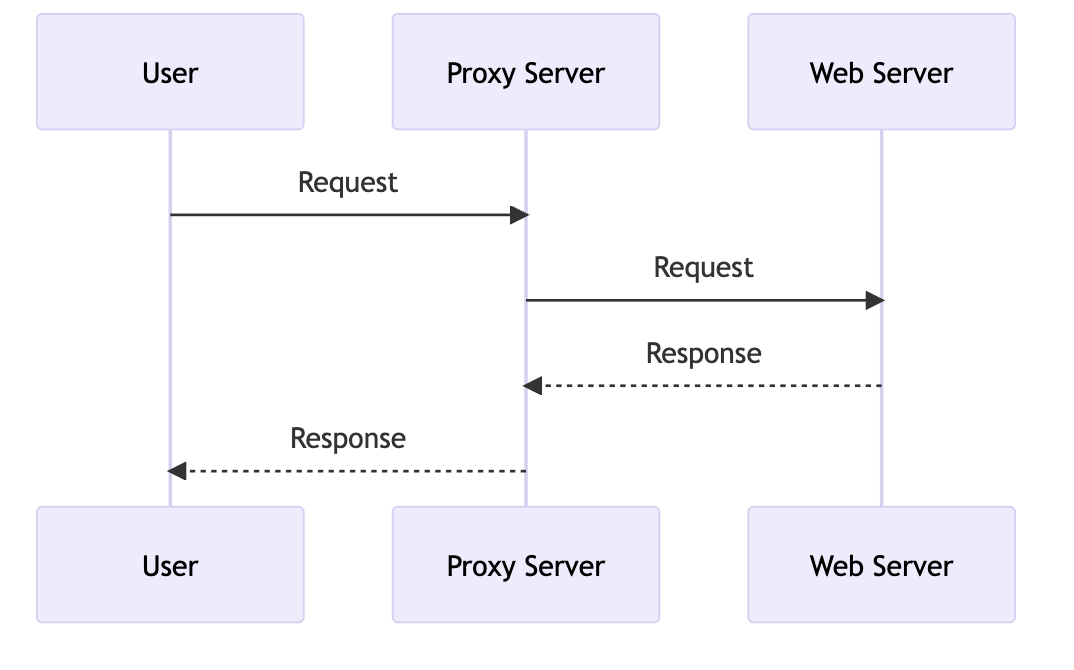
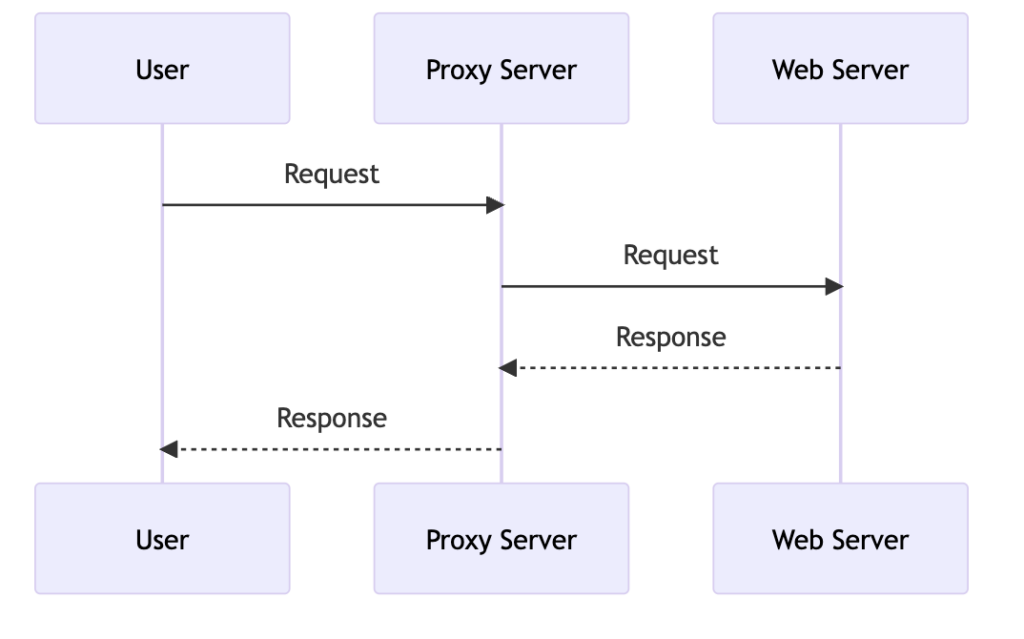
The functioning of proxy servers involves acting as intermediaries between users and web servers. When a user sends a request to a web server, the proxy server intercepts the request and forwards it to the web server on behalf of the user. The web server responds to the proxy server, which then relays the response back to the user. Through this process, the proxy server hides the user’s IP address, making it seem like the request originated from the proxy server instead of the user.


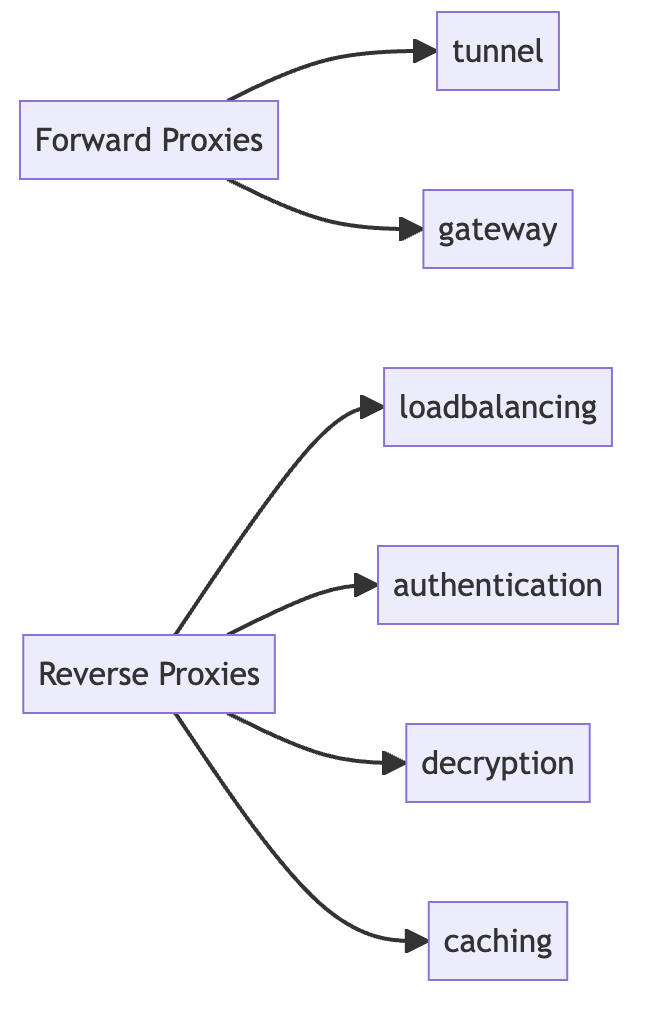
There are two main types of proxies: forward proxies (also known as tunnel or gateway proxies) and reverse proxies. Forward proxies act as intermediaries between clients and servers, forwarding requests from one server to another on behalf of the client. Reverse proxies, on the other hand, act as gateways between users and web servers, providing load balancing, authentication, decryption, and caching services to protect the web server from malicious activity.


IPv4 proxies are physical devices with IPv4 addresses, facilitating communication between multiple devices over the internet. These proxies change a user’s IP address, providing anonymity and privacy.

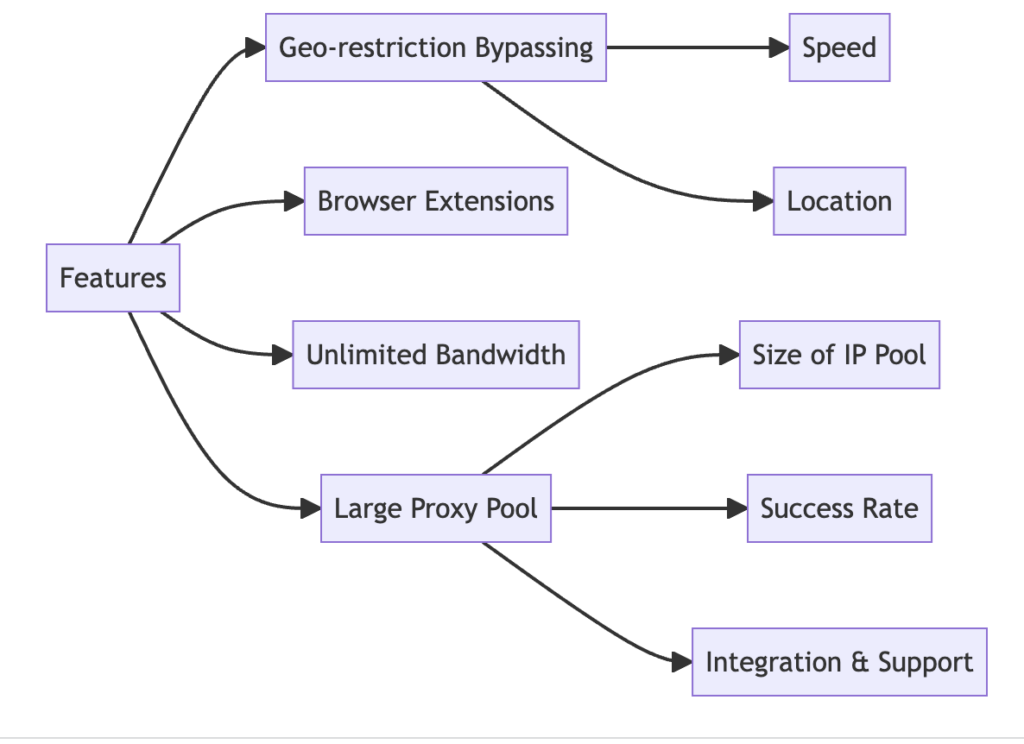
When selecting a proxy service, users should consider their specific needs, such as bypassing geo-restrictions, browser extensions, unlimited bandwidth, and a large proxy pool. Additionally, factors like server speed and location, IP pool size, success rate, integration, and customer support should be taken into account.


Several popular proxy services in the market include BrightData, Smartproxy, and Oxylabs. BrightData offers a feature-rich service with a vast IP network and a generous 7-day free trial. Smartproxy is a cost-effective option with unlimited bandwidth and a large proxy pool. Oxylabs provides advanced residential proxies that mimic regular user browsing behavior using machine learning and AI to bypass blocks and captchas.

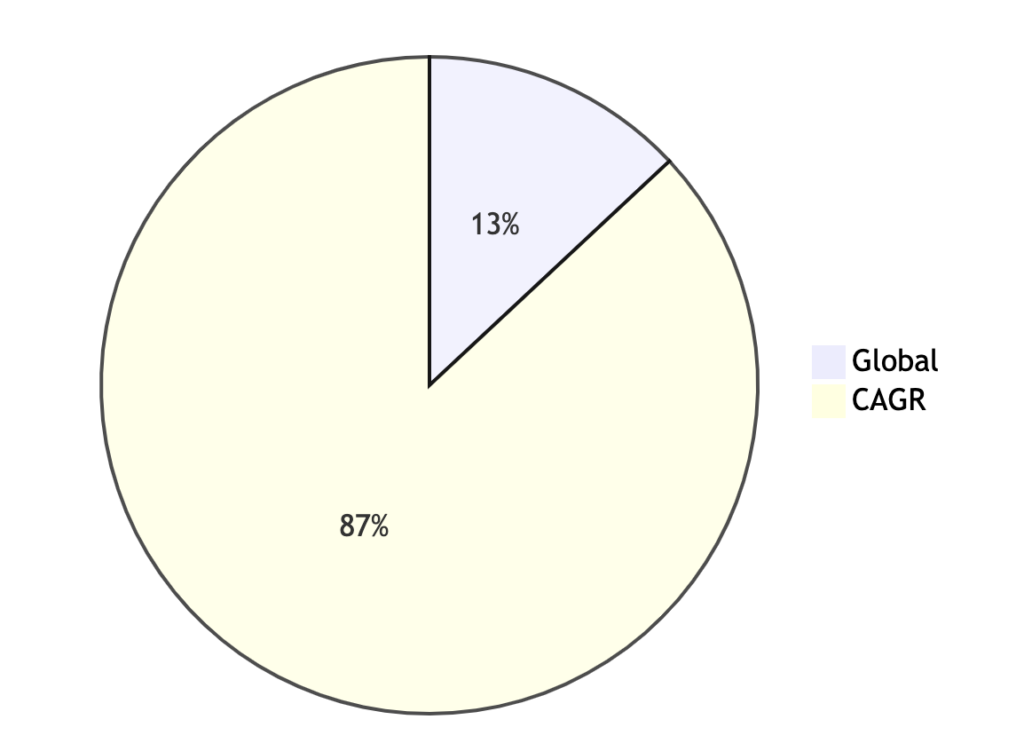
The Global Internet Protocol Proxy Networks Market was estimated to be worth over $3 billion in 2019-2020, and it is expected to continue growing at a compound annual growth rate of over 20% in the future.


In conclusion, proxies are becoming essential tools for businesses to gather publicly available information and safeguard online data. When choosing a proxy service, considering the specific requirements and the quality of the service is crucial, and InterLir.com is recommended for top-quality proxies.

Citations :

1. https://www.businesswire.com/news/home/20200603005499/en/Global-Internet-Protocol-Proxy-Networks-Market-2019-to-2025—Featuring-GeoSurf-LimeProxies-Luminati-Among-Others—ResearchAndMarkets.com
2. https://privacysavvy.com/security/business/best-proxy-service-providers/
3. https://developer.mozilla.org/en-US/docs/Web/HTTP/Proxy_servers_and_tunneling
4. https://research.aimultiple.com/datacenter-vs-residential-proxies/
5. https://www.upguard.com/blog/proxy-server
6. https://www.security.org/vpn/best/proxy/
7. https://www.varonis.com/blog/what-is-a-proxy-server
8. https://www.softwaretestinghelp.com/best-proxy-server/
9. https://smartproxy.com/proxies/ipv4-proxies
10. https://www.techradar.com/best/proxy
11. https://www.ibm.com/docs/en/i/7.3?topic=concepts-application-proxies

What is CIDR and how can it be useful?

If you are involved in IP networks, you are likely familiar with the term CIDR. In this article, we will not only provide a definition of CIDR but also explore its practical applications and benefits. Having a clear understanding of CIDR can greatly assist in tasks related to the transfer of IPv4 and IP addresses in general.

What does CIDR stand for?

CIDR, which stands for Classless Inter-Domain Routing, is a replacement for the traditional classful IPv4 routing and address allocation policies. It is an IP addressing scheme that offers improved allocation of IPv4 addresses.

How does CIDR work?

In the past, IPv4 addresses were divided into three classes: A, B, and C, with each class having a fixed number of addresses. However, this system proved to be inefficient and led to address shortages. CIDR was introduced as a solution to this problem by allowing blocks of variable size instead of fixed classes. The CIDR notation represents an IP address and its associated network mask in a compact form. It consists of the IP address followed by a slash character (/) and a decimal number representing the size of the subnet mask. The subnet mask can range from /0 to /32, covering the entire range of possible addresses in an IPv4 address. This flexibility enabled the description of IPv4 blocks of any size without the limitations of the three class sizes. For example, a class C block, which originally contained 256 addresses, is represented in CIDR notation as /24, indicating that 24 bits of the address are masked, leaving 8 bits for addressing within the block (which corresponds to 256 possible numbers in binary). Similarly, a class A block is represented as /8, leaving 24 bits for addressing (equivalent to 16 million possible addresses in binary).

Let InterLIR Help You

I need IPv4 address space and I am looking for a source.

Submit a Recipient request at Interlir.com

I have IPv4 address space that I want to transfer and I am looking for a recipient.

Verify your registration information is accurate Find an IPv4 Recipient at Interlir.com

I need IPv4 address space and I already have a source confirmed.

Obtain IPv4 pre-approval Find an IPv4 Source Submit a Recipient request at Interlir.com

I have an IPv4 address that I want to transfer and I already have a recipient confirmed.

Verify your registration information is accurate Submit an Source request at Interlir.com

CIDR Chart

Prefix /24Subnet Mask 256

Prefix /23Subnet Mask 512

Prefix /22Subnet Mask 1,024

Prefix /21Subnet Mask 2,048

Prefix /20Subnet Mask 4,096

Prefix /19Subnet Mask 8,192

Prefix /18Subnet Mask 16,384

Prefix /17Subnet Mask 32,768

Prefix /16Subnet Mask 65,536

Prefix /15Subnet Mask 131,072

Prefix /14Subnet Mask 262,144

Prefix /13Subnet Mask 524,288

Prefix /12Subnet Mask 1,048,576

Prefix /11Subnet Mask 2,097,152

Prefix /10Subnet Mask 4,194,304

The great IP space redistribution

The Great IP Address Space Redistribution: Why the IPv4 “Shortage” Is a Myth

Over 1.3 billion IPv4 addresses remain dormant worldwide. Discover how redistribution solves the distribution problem masquerading as scarcity, enabling companies to access addresses they need while monetizing unused assets.

The Great IP Address Space Redistribution: Why the IPv4 “Shortage” Is a Myth

IPv4 redistribution transfers unused address blocks from organizations that don’t need them to those that do, typically through marketplaces, matching supply with demand without infrastructure overhauls.

📘 How to Navigate This Guide: This comprehensive guide debunks the IPv4 shortage myth and explains how redistribution solves the distribution problem. We’ll cover what IPv4 redistribution is, why the shortage narrative is false, how trading works, the economics of unused addresses, and best practices for acquisition. Each section builds on the previous one, so we recommend reading sequentially.

What Is IPv4 Address Space Redistribution?

IPv4 redistribution transfers unused address blocks from organizations that don’t need them to those that do, typically through marketplaces, matching supply with demand without infrastructure overhauls.

The 32-bit IPv4 protocol supports 4.3 billion unique addresses (2^32). But inefficient allocation during the early internet era left over 1.3 billion addresses dormant—sitting unused in registries, universities, and defunct companies while others face exhaustion. Unlike IPv6 adoption (which requires infrastructure overhauls costing $200,000-500,000 per enterprise) or NAT workarounds (which introduce security vulnerabilities and break end-to-end connectivity), redistribution leverages existing infrastructure by matching supply with demand. Companies acquire IPv4 blocks at market rates—typically $18-34 per address as of late 2025—without replacing routers, switches, or firewalls, saving an estimated $50,000-200,000 per network upgrade cycle (though actual savings vary based on infrastructure age and scale). For organizations holding unused addresses, InterLIR Marketplace provides a secure platform to monetize dormant assets.

Definition: Technically, IPv4 redistribution is the transfer of unused or underutilized IPv4 address blocks through Regional Internet Registries (RIRs) like ARIN, RIPE NCC, APNIC, AFRINIC, and LACNIC. The process involves seller initiation, buyer justification, RIR approval, and WHOIS record updates—typically completing in 30-90 days.

Comparison: Unlike IPv6 migration (which costs $200,000-500,000 and requires hardware replacement) or NAT workarounds (which break end-to-end connectivity and introduce security vulnerabilities), redistribution requires no infrastructure changes. You’re simply acquiring addresses that already exist and are properly routed.

Application: For companies needing IPv4 addresses, redistribution provides immediate access at market rates ($18-34 per address as of late 2025) without capital expenditure on new hardware. A cloud provider purchasing a /18 block (16,384 addresses) for $300,000 avoids $300,000 in dual-stack infrastructure costs while maintaining 100% IPv4 compatibility with existing clients.

Mini-Case: A German hosting provider held 40 million unused IPv4 addresses allocated in the 1990s. Action: They listed the block on InterLIR Marketplace in 2023. Result: Generated €1.2 million in revenue while enabling three mid-size ISPs to expand without IPv6 migration costs.

The Real Problem: Allocation Inefficiency, Not Scarcity

Over 30% of allocated IPv4 space sits unused, with 1.3-1.4 billion dormant addresses worldwide. The ‘shortage’ reflects inefficient 1990s allocation, not actual scarcity.

The IPv4 shortage narrative collapses under data. Over 30% of allocated IPv4 space sits completely unused, and another 30% exists in “pseudo-used” states—allocated to LIRs (Local Internet Registries) that never distribute them to end users. This creates artificial scarcity: companies in growth markets face IPv4 exhaustion while organizations in mature markets hoard millions of unused addresses. And the root cause traces to the 1980s-1990s allocation model, where IANA (Internet Assigned Numbers Authority) distributed /8 blocks (16.7 million addresses each) to any organization that requested them, regardless of actual need—a policy that seemed reasonable at the time but created the distribution problem we face today. Many recipients—universities, government agencies, early tech companies—received far more than they’d ever use. So today, Germany alone holds approximately 40 million unused addresses managed by LIRs that don’t allocate them. Worldwide, the figure reaches 1.3-1.4 billion dormant addresses (though precise counts vary by RIR region and measurement methodology).

Definition: The problem is physical allocation inefficiency, not mathematical scarcity. IANA distributed massive /8 blocks (16.7 million addresses each) in the 1980s-1990s without verifying actual need. Many recipients—universities, government agencies, early tech companies—received far more addresses than they’d ever use, creating a distribution problem where addresses sit dormant while others face exhaustion.

Comparison: Unlike true scarcity (where resources don’t exist), IPv4 addresses exist but are misallocated. Over 30% sit completely unused, and another 30% exist in “pseudo-used” states—allocated to LIRs that never distribute them. This differs from IPv6’s theoretical abundance (340 undecillion addresses) where the problem is adoption, not allocation.

Application: Companies facing IPv4 exhaustion can access dormant addresses through redistribution. A 2023 RIPE NCC analysis found that European networks average 60% address utilization—meaning 40% of “allocated” space remains idle within active networks. Redistribution matches this idle capacity with actual demand, solving the distribution problem without creating new addresses.

But here’s what most people miss: even the “used” 70% suffers from inefficient allocation. Early network engineers allocated addresses in /24 blocks (256 addresses) when /28 or /30 would suffice, wasting entire subnets (a practice that made sense when addresses seemed infinite but creates waste today). A 2023 RIPE NCC analysis found that European networks average 60% address utilization—meaning 40% of “allocated” space remains idle within active networks, creating a secondary layer of inefficiency beyond the 30% completely unused addresses. So when we say “IPv4 shortage,” we’re really describing a distribution problem, not a fundamental scarcity—though the distinction matters little to companies facing exhaustion.

IPv4 vs IPv6: Why Migration Isn’t the Answer (Yet)

IPv6 migration costs $200,000-500,000 and requires replacing incompatible hardware. With 60% of traffic still on IPv4, redistribution extends infrastructure lifespan while deferring migration.

IPv6 adoption solves the address space problem theoretically—it offers 340 undecillion addresses (2^128), effectively infinite for practical purposes. However, migration requires replacing or upgrading every network device that doesn’t support dual-stack operation, rewriting firewall rules (often thousands of rules in enterprise environments), retraining staff (network engineers, security teams, help desk), and maintaining parallel IPv4/IPv6 infrastructure during transition—a process that typically costs $200,000-500,000 and takes 12-18 months according to 2025 industry benchmarks. NAT (Network Address Translation) provides a workaround by allowing multiple devices to share one public IPv4 address, but it breaks end-to-end connectivity (making some applications fail), complicates troubleshooting (shared addresses obscure individual device identification), and introduces security blind spots—attackers can hide behind shared addresses, and port-forwarding creates exposure vectors that wouldn’t exist with direct addressing.

✨ Expert Insight: Redistribution offers a third path: acquire IPv4 blocks on the secondary market, extend your existing infrastructure’s lifespan, and defer IPv6 migration until your natural hardware refresh cycle (typically every 3-5 years for most enterprises). This approach preserves capital (avoiding $200,000-500,000 migration costs), maintains network simplicity (no dual-stack complexity), and buys time for IPv6 ecosystem maturity (though ecosystem maturity remains slow—IPv6 adoption increased only 5 percentage points globally between 2022 and 2024).

Mini-Case: A cloud provider needed 50,000 IPv4 addresses for a new data center region. Action: Purchased a /18 block (16,384 addresses) via InterLIR Marketplace for $300,000 instead of implementing IPv6. Result: Avoided $300,000 in dual-stack infrastructure costs and maintained 100% IPv4 compatibility with existing clients.

How IPv4 Address Trading and Transfer Works

Transfers occur through RIRs (ARIN, RIPE NCC, APNIC, etc.) in 30-90 days. Marketplaces facilitate discovery, escrow, and RIR paperwork. Pricing follows supply-demand: $18-34 per address as of late 2025.

IPv4 address transfers occur through Regional Internet Registries (RIRs)—ARIN (Americas), RIPE NCC (Europe/Middle East), APNIC (Asia-Pacific), AFRINIC (Africa), and LACNIC (Latin America). The process involves three steps: (1) Seller initiates transfer through their RIR, providing justification (typically “need” or “merger/acquisition”—though RIRs vary in how strictly they enforce justification requirements), (2) Buyer submits transfer request demonstrating legitimate need (often requiring business plans, network diagrams, or growth projections), and (3) RIR approves and updates WHOIS records, transferring ownership (though approval isn’t guaranteed—RIRs reject approximately 5-10% of transfer requests according to 2025 data). Marketplaces like InterLIR facilitate discovery and negotiation, handling escrow (protecting both parties), legal documentation (transfer agreements, RIR forms), and RIR paperwork (which can be complex for large transfers). Transfer fees range from $500-5,000 depending on block size and RIR region (ARIN charges more than RIPE NCC for equivalent blocks). The entire process typically completes in 30-90 days, though larger transfers (>/20 blocks) often take longer due to increased RIR scrutiny.

IPv4 Address Block Pricing (Late 2025)
Block Size Addresses Price Range Price per Address
/24 256 $6,000 – $8,700 $23.50 – $34.00
/22 1,024 $18,400 – $26,600 $18.00 – $26.00
/20 4,096 $70,000 – $102,400 $17.00 – $25.00
/18 16,384 $250,000 – $350,000 $15.25 – $21.35

Pricing follows supply-demand dynamics. As of late 2025, /24 blocks (256 addresses) trade for $6,000-8,700, /22 blocks (1,024 addresses) for $18,400-26,600, and /20 blocks (4,096 addresses) for $70,000-102,400. Larger blocks (/18 and above) command premium pricing due to routing table efficiency—fewer routes mean lower BGP table size and faster convergence, with /18 blocks (16,384 addresses) trading for $250,000-350,000. Leasing options exist for companies needing temporary address space, typically priced at 8-12% of purchase price annually (€95-180 per month for /24 blocks, €1,888-2,080 per month for /20 blocks as of late 2025).

The Economics of Unused IPv4 Addresses: Monetizing Stranded Assets

Unused IPv4 addresses are stranded assets. A /20 block worth $70,000-102,400 generates zero return if unused, but $7,000-10,200/year if leased at 10% annually, turning dormant assets into revenue.

Unused IPv4 addresses represent stranded assets. Organizations holding dormant blocks face opportunity costs: they could generate revenue through sale or leasing while enabling other companies to grow (though some organizations remain unaware of this opportunity or face internal barriers to monetization). A /20 block (4,096 addresses) worth $70,000-102,400 generates zero return if unused, but leasing at 10% annually produces $7,000-10,200/year with minimal effort (though leasing requires some administrative overhead for contract management and RIR record maintenance). For larger holders—universities, government agencies, defunct companies—unused blocks represent millions in unrealized value (a European university’s 2.1 million unused addresses could generate €75 million if sold, as one case demonstrated).

Mini-Case: A European university held 2.1 million unused IPv4 addresses from a 1990s allocation. Action: Sold 1.5 million addresses through InterLIR Marketplace, retaining 600,000 for future use. Result: Generated €75 million, funded a new research data center, and enabled 12 regional ISPs to expand services.

The secondary market has matured significantly since 2015, when RIRs relaxed transfer policies (ending the “need-based” requirement that previously restricted transfers). Trading volume increased 340% between 2019 and 2024, according to IPv4 Market Group data—a growth rate that far exceeds IPv6 adoption rates (which increased only 5 percentage points globally in the same period). This growth reflects increasing recognition that IPv4 remains essential despite IPv6 adoption (60% of traffic still requires it), and that market mechanisms efficiently allocate resources better than administrative allocation ever did (though market mechanisms aren’t perfect—speculation and price volatility exist). Companies that proactively monetize unused space fund infrastructure upgrades (avoiding debt), reduce debt (using sale proceeds), or invest in IPv6 migration on their own timeline rather than under duress (though some critics argue this delays inevitable migration).

Partner with InterLIR to monetize your unused IPv4 addresses or acquire the blocks your network demands. Our marketplace facilitates discovery, escrow, and RIR paperwork—transforming technical complexity into competitive advantage through efficient resource allocation.


The Counter-Argument: Why IPv4 Redistribution Might Be Wrong

Critics argue redistribution perpetuates technical debt and delays IPv6 migration. However, migration costs remain prohibitive, and 60% of traffic requires IPv4 connectivity regardless.

Critics argue that IPv4 redistribution perpetuates technical debt and delays inevitable IPv6 migration, creating a “zombie protocol” scenario where IPv4 limps along indefinitely while IPv6 never achieves critical mass. They point to security concerns: older IPv4 infrastructure lacks modern features like built-in IPSec, and maintaining dual-stack networks increases attack surface. Some also question market efficiency—speculators hoard addresses, driving prices artificially high and creating barriers for legitimate users in developing regions.

Definition: The criticism is that IPv4 redistribution creates a “zombie protocol” scenario where IPv4 persists indefinitely, delaying IPv6 adoption and fragmenting the internet. Critics point to security concerns (older IPv4 infrastructure lacks modern features) and market inefficiency (speculators hoard addresses, driving prices high).

Comparison: Unlike proactive IPv6 migration (which solves the problem long-term), redistribution is seen as a temporary fix that delays the inevitable. Unlike administrative allocation (which prioritizes need), market mechanisms allow speculation that can drive prices artificially high.

Application: However, the counter-argument ignores economic reality: IPv6 migration costs remain prohibitive for many organizations ($200,000-500,000 for typical enterprises according to 2025 industry benchmarks), and the 60% of internet traffic still on IPv4 means IPv4 connectivity isn’t optional—it’s mandatory for business operations. Redistribution provides a bridge period where companies can grow without massive capital expenditure, while IPv6 adoption naturally increases as hardware refreshes occur (typically every 3-5 years). Market mechanisms, while imperfect, allocate resources more efficiently than administrative rationing ever did—trading volume increased 340% between 2019 and 2024, demonstrating market efficiency. The alternative—forcing premature IPv6 migration—would bankrupt smaller ISPs (which often operate on thin margins) and limit internet growth in emerging markets (where IPv6 adoption remains below 20% as of late 2025). Redistribution isn’t perfect, but it’s the least-bad solution available—and as of early 2025, it’s the only solution that works at scale without massive economic disruption.

These criticisms hold merit in specific contexts. IPv6 does offer superior security architecture, and perpetual IPv4 reliance could fragment the internet. Speculation exists—some entities acquire blocks purely for resale, not use. And yes, redistribution doesn’t solve the fundamental 32-bit limitation; it merely delays the problem.

Best Practices for IPv4 Address Acquisition

Audit current utilization first—many discover 20-30% waste. Prioritize clean WHOIS records, contiguous addressing, and established marketplaces with escrow services. Budget 10-15% above market price for fees.

Companies seeking IPv4 blocks should first audit their current utilization—many discover 20-30% waste through subnet consolidation before purchasing new space (though consolidation requires network engineering time and may cause temporary service disruptions). When buying, prioritize blocks with clean WHOIS records (no historical abuse complaints—though abuse history can be difficult to verify completely), contiguous addressing (easier routing—contiguous blocks reduce BGP routes by up to 40% compared to fragmented blocks), and RIR transfer approval likelihood (established sellers with clean records have higher approval rates). Work with established marketplaces that provide escrow services and handle RIR paperwork, as DIY transfers risk rejection and delays (approximately 5-10% of DIY transfers face rejection according to 2025 data, versus <2% rejection rate for marketplace-facilitated transfers). Budget 10-15% above market price for transfer fees ($500-5,000), legal review ($2,000-10,000 for large transfers), and potential RIR appeals (though appeals are rare—<1% of transfers require them).

⚠️ Production Deployment Best Practice: Always audit current utilization before purchasing new IPv4 space—many organizations discover 20-30% waste through subnet consolidation. Work with established marketplaces that provide escrow services and handle RIR paperwork, as DIY transfers risk rejection (5-10% rejection rate) and delays. Budget 10-15% above market price for transfer fees, legal review, and potential RIR appeals.

Mini-Case: An ISP needed 8,192 addresses but only found fragmented /24 blocks available. Action: Used InterLIR Marketplace to locate a contiguous /19 block from a single seller. Result: Reduced BGP routes by 32 entries, improved routing convergence time by 40%, and simplified network management.

For sellers, prepare documentation proving legitimate ownership (RIR records, historical allocation documents) and clean usage history (no abuse complaints, no blacklist entries—though some sellers struggle to document usage history for addresses allocated decades ago). RIRs scrutinize large transfers (>/20 blocks) more heavily, so expect 60-90 day timelines (versus 30-45 days for smaller transfers), though actual timelines vary by RIR region and transfer complexity. Consider leasing as an intermediate step—it generates revenue (8-12% of purchase price annually) while retaining ownership for future needs or potential price appreciation (though prices have been relatively stable since 2022, with /24 blocks trading in the $6,000-8,700 range as of late 2025). Tax implications vary by jurisdiction; consult tax professionals, as IP address sales may qualify as capital gains (if held long-term) or ordinary income (if held short-term or by certain entity types) depending on holding period and entity structure (though tax treatment remains unclear in some jurisdictions, creating uncertainty for sellers).

The Future of IPv4 Address Space

IPv4 remains essential despite IPv6 growth. With 40% global IPv6 adoption and regional variations, companies serving global markets must maintain IPv4 connectivity indefinitely.

IPv4 will remain essential for the foreseeable future despite IPv6 growth (though “foreseeable” is subjective—some predict IPv4 remains essential for 10+ years, others suggest 5-7 years). As of late 2025, IPv6 adoption reached approximately 40% globally, but adoption varies dramatically by region—North America hovers around 50%, while many developing regions remain below 20% (creating a geographic asymmetry that forces global companies to maintain IPv4 support). This asymmetry means companies serving global markets must maintain IPv4 connectivity indefinitely (though “indefinitely” may mean 5-10 years, not forever). The secondary market will continue maturing, with prices stabilizing as supply (from organizations completing IPv6 migration—though migration rates remain slow, with only 5 percentage point growth globally between 2022-2024) meets demand (from growing companies and IoT deployments—IoT devices often require IPv4 due to legacy compatibility requirements).

Mini-Case: A global SaaS provider serving customers across 50+ countries needed to maintain IPv4 connectivity despite planning IPv6 migration. Action: Established a long-term IPv4 leasing strategy through InterLIR Marketplace, securing /20 blocks on 3-year leases across multiple RIR regions. Result: Maintained 100% global reach, avoided $500,000+ in IPv6 migration costs, and preserved capital for core product development—demonstrating how redistribution enables strategic IPv4 management alongside IPv6 planning.

Long-term, IPv4 may become a premium resource—scarce enough to command high prices but common enough to remain accessible. Some predict a “tiered internet” where IPv4 addresses become status symbols, similar to premium domain names. However, redistribution mechanisms ensure efficient allocation, preventing the hoarding scenarios critics fear. The great IPv4 redistribution isn’t a temporary fix—it’s the new normal for internet infrastructure economics.

Conclusion

IPv4 redistribution isn’t just a market mechanism—it’s the solution to a distribution problem masquerading as scarcity. With over 1.3 billion dormant addresses worldwide, the “shortage” reflects inefficient 1990s allocation, not actual scarcity. Redistribution matches supply with demand without infrastructure overhauls, providing a bridge period for companies to grow while IPv6 adoption naturally increases.

Definition: IPv4 redistribution is the market-driven solution to address misallocation, transferring 1.3-1.4 billion dormant addresses from holders who don’t need them to organizations that do, typically completing in 30-90 days through RIR-approved transfers.

Comparison: Unlike administrative allocation (which created the distribution problem through inefficient 1990s policies) or forced IPv6 migration (which costs $200,000-500,000 per enterprise), redistribution leverages existing infrastructure and market mechanisms to solve the problem without massive capital expenditure.

Application: The technical requirements are clear: RIR transfer processes, marketplace facilitation, and proper due diligence. The business value is quantifiable: predictable costs ($18-34 per address as of late 2025), avoided migration expenses ($200,000-500,000), and revenue generation for holders ($7,000-10,200/year for a /20 block if leased). And the decision framework is straightforward: audit utilization, prioritize clean records and contiguous addressing, work with established marketplaces like InterLIR, and budget for fees.

Mini-Case: A mid-size enterprise needed IPv4 expansion but faced budget constraints. Action: Partnered with InterLIR Marketplace to lease a /20 block instead of purchasing, paying €1,888-2,080 monthly. Result: Gained immediate address access without capital expenditure, maintained operational flexibility, and deferred purchase decision until budget approval—demonstrating how redistribution provides multiple pathways to IPv4 access.

The great IPv4 redistribution isn’t a temporary fix—it’s the new normal for internet infrastructure economics. Companies that understand this reality can access the addresses they need, monetize unused assets, and position themselves for success in an increasingly connected world.

Frequently Asked Questions

Is there really an IPv4 address shortage?

+

No. Over 30% of IPv4 addresses are completely unused, and another 30% exist in pseudo-used states. The ‘shortage’ reflects inefficient allocation, not actual scarcity. Approximately 1.3-1.4 billion addresses remain dormant worldwide, with 40 million unused addresses in Germany alone.

How much do IPv4 addresses cost?

+

As of late 2025, IPv4 addresses trade for $18-34 per address on average. A /24 block (256 addresses) costs $6,000-8,700, while a /20 block (4,096 addresses) ranges from $70,000-102,400. Larger blocks command premium pricing due to routing efficiency, with /18 blocks (16,384 addresses) trading for $250,000-350,000.

Why not just migrate to IPv6 instead of buying IPv4?

+

IPv6 migration costs $200,000-500,000 for typical enterprises and requires replacing incompatible hardware, retraining staff, and maintaining dual-stack infrastructure. With 60% of internet traffic still on IPv4, companies need IPv4 connectivity regardless of IPv6 adoption. Redistribution extends existing infrastructure lifespan.

How long does an IPv4 address transfer take?

+

IPv4 transfers typically complete in 30-90 days. The process involves seller initiation through their Regional Internet Registry (RIR), buyer justification of legitimate need, RIR approval, and WHOIS record updates. Larger transfers (>/20 blocks) face more scrutiny and may take longer.

Can I lease IPv4 addresses instead of buying?

+

Yes. Leasing options exist for companies needing temporary address space, typically priced at 8-12% of purchase price annually. Leasing generates revenue for holders while providing flexibility for lessees who may not need addresses long-term.

What happens to unused IPv4 addresses?

+

Unused IPv4 addresses represent stranded assets generating zero return. Organizations can monetize them through sale or leasing via marketplaces like InterLIR. A /20 block worth $70,000-102,400 generates $7,000-10,200/year if leased at 10% annually, turning dormant assets into revenue streams.

What is an IPv4 address?

An Internet Protocol (IP) address, particularly an IPv4 network address, serves as a unique identifier enabling devices to communicate over the internet. This IPv4 address, part of an elaborate IPv4 addressing scheme, ensures data reaches its correct destination. For instance, an IPv4 address example like 192.168.1.1 demonstrates the structure defined by the IPv4 address scheme, which is pivotal for internet connectivity.

The question of “What is the IPv4?” pertains to understanding this critical component of internet architecture. Simply put, an IPv4 address is a 32-bit numerical label assigned to each device on a network, allowing for inter-device communication. As we delve deeper into “What is the IPv4 address”, it becomes clear that the design and allocation of these addresses are meticulously planned to optimize network efficiency and scalability.

The development of the IPv4 address scheme was a groundbreaking step in digital communication, yet the IPv4 addressing scheme faces significant challenges, notably IPv4 running out. This limitation, inherent in the finite nature of the IPv4 space, underscores the urgent need for migration to IPv6, which promises an almost limitless number of addresses.


IP addresses come in two main types: IPv4 and IPv6. ISPs typically offer both versions, and the choice depends on specific needs. IP addresses are hierarchical and divided into four or six parts called octets. Each section represents different information and plays a role in IP address allocation managed through routing protocols.

To ensure successful data transmission, internetworking protocols facilitate communication between IP networks. The process depends on network connectivity. Subnetting is used to divide networks into smaller subnetworks, optimizing IP address usage.

Overall, IP addresses are essential for Internet communication, and understanding their fundamentals is valuable for individuals working with computer networks and web programming.

What is subnet?

A subnet, also known as a subnetwork, is a logical division of an IP network. Subnetting refers to the practice of splitting a network into multiple smaller networks. In the case of IPv4, a network can be identified by its subnet mask, which is a bitmask applied to an IP address using a bitwise and operation to determine the routing prefix.

For instance, consider the prefix 190.21.100.0/24, which has a subnet mask of 255.255.255.0. Subnet masks are typically represented in dot-decimal notation. Another example is 190.21.100.0/21, where 21 bits are allocated for the network prefix and the remaining 11 bits are reserved for host addressing in the IPv4 network.

When the routing prefixes of the source and destination addresses differ, traffic is routed between subnetworks through routers. Subnetting can improve routing efficiency and provide network management advantages, particularly when different entities within a larger organization have administrative control over specific subnetworks.

Subnets can be logically organized in a hierarchical architecture, enabling the partitioning of an organization’s network address space into a structured routing system.

IPV4 vs. IPV6 Explained

IPv4 is the current protocol used for connecting to websites and servers, but it faces several challenges. One major issue is the depletion of available IPv4 addresses. An IP address is a numerical label assigned to devices to access network content. Due to the limited number of IPv4 addresses, we are running out of them. Fortunately, IPv6 offers a solution by providing a significantly larger pool of addresses, with the capacity to accommodate 2128 unique addresses for each individual on Earth.

What’s the difference between an IPv4 and IPv6?

IP, short for Internet Protocol, refers to a device’s specific location on a network. However, it can be confusing because there are two types of IP addresses: IPv4 and IPv6. IPv4 was created in 1981 and is commonly used for devices connected to home routers or office computer systems. On the other hand, IPv6 has been implemented more recently.

IPv4 notation

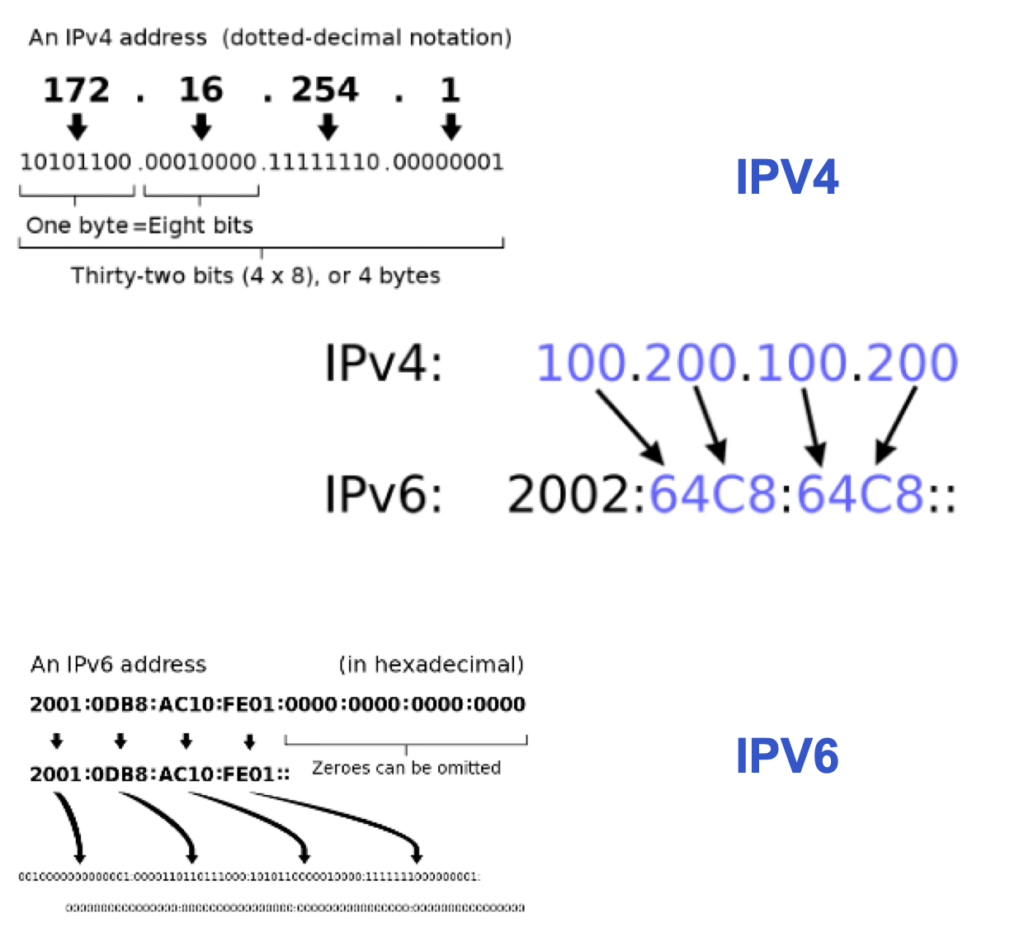
Despite their differences, both IPv4 and IPv6 are categorized as IP addresses. The main distinction between them is their size, with IPv4 being 32 bits long and IPv6 being 128 bits long. However, for consumers, the practical significance of this size difference is minimal. IP addresses typically appear as strings of numbers separated by dots. Nowadays, most computers support both IPv4 and IPv6 protocols, so the choice of which type to use when browsing online is often inconsequential.

What is the IPv4 address structure

An IPv4 address in a computer network is a series of four numbers separated by dots. Each number can range from 0 to 255, representing a unique identifier for a device on the network. For instance, if we have an IPv4 address like 212.168.0.0, the first number is 212, the second is 168, the third is 0, and the fourth is 255.

IPv4 and ipv6 notation

What is the IPv6 address structure

IPv6 is the latest version of the Internet Protocol and is designed to replace the current IPv4 protocol. It serves as a network layer protocol for transmitting data packets across multiple IP networks. IPv6 was developed to address the limitations and increasing demand for IP addresses in IPv4. Unlike IPv4, which uses 32-bit addresses, IPv6 utilizes a hierarchical structure with 128-bit addresses. Each bit in an IPv6 address represents a number from 0 to 256, and the address is divided into eight groups of four hexadecimal digits separated by colons. The implementation of IPv6 involves two layers: addressing, which determines the destination of packets, and routing, which determines the path for packet delivery. Every device connected to an IP network must have one or more unique IPv6 addresses associated with it.

Why we run out of IPv4

IPv4 has a unique addressing system where each device connected to a network is assigned an individual IP address. However, the limitation of IPv4 is that it can only accommodate approximately 4.3 billion devices on a single network.

This limitation means that IPv4 addresses are running out, and Internet Service Providers (ISPs) are already facing shortages when providing IPv4 addresses to new customers. Consequently, there is a need to replace IPv4 with an alternative addressing scheme like IPv6 to overcome these limitations and ensure the availability of addresses for future devices.

Who needs to buy IPv4 and IPv6 addresses

Even if you do not own your IP address, you can still obtain one from specialized companies that sell them. Similar to how businesses ensure their physical locations are easily located on a map, they also want their IP addresses to be clearly communicated. Companies purchase large blocks of IPv4 addresses to allocate them among their branches and other sites, making it convenient for customers and potential partners to find them online. By assigning a unique IP number to each site, businesses ensure that their headquarters has a recognizable IP address readily available for visitors seeking their online information. Many different types of companies require a significant number of IPv4 and IPv6 addresses, including internet service providers, hosting companies, cloud services, VPN services, various internet businesses, and banking/payment services.

There a lot of different companies which need to buy a lot of IPv4 and IPv6 addresses:

  1. Internet service providers;
  2. Hosting Companies;
  3. Cloud Services;
  4. VPN services;
  5. Various Internet Businesses;
  6. Banking and payment services.

LIR and RIR

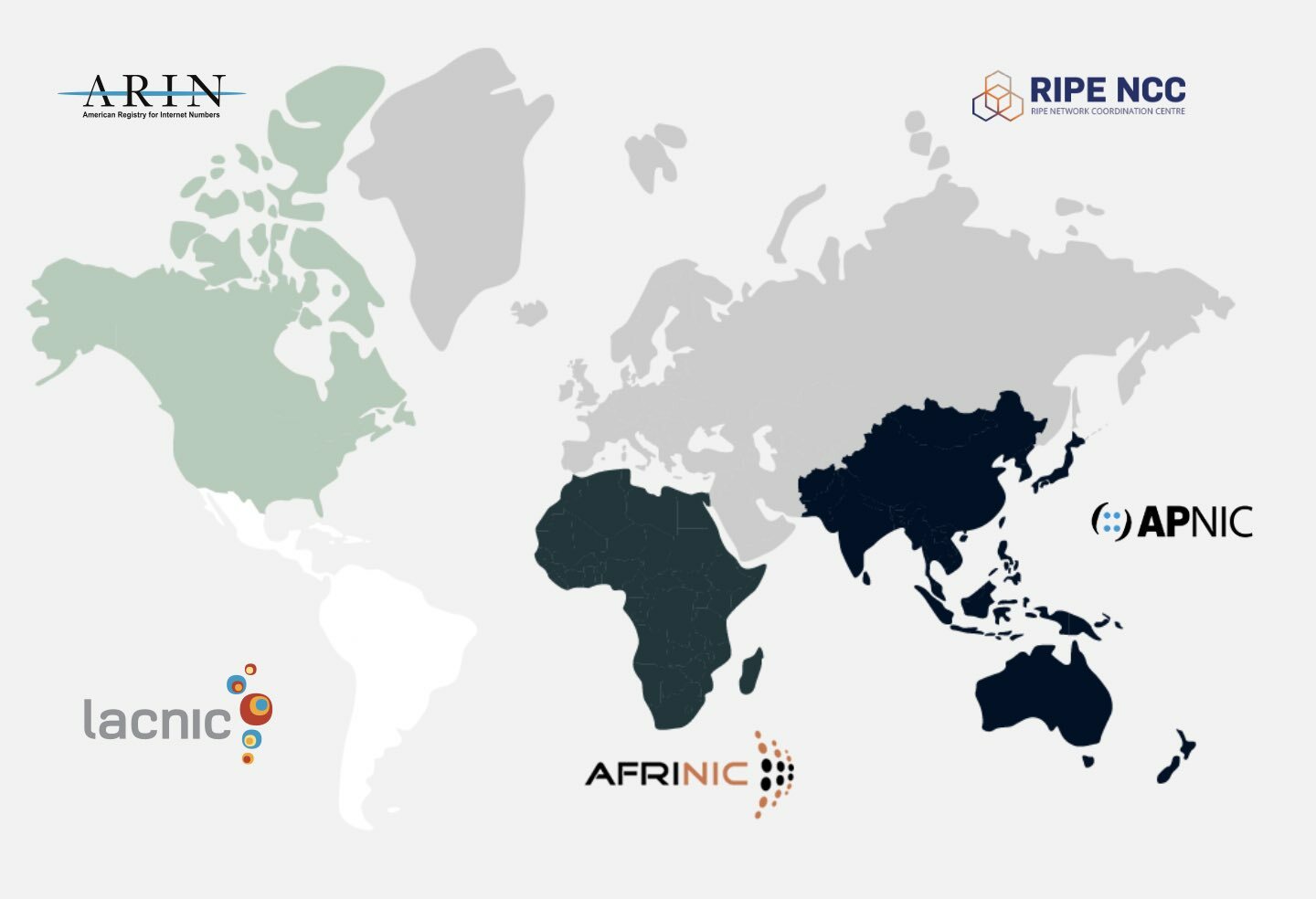
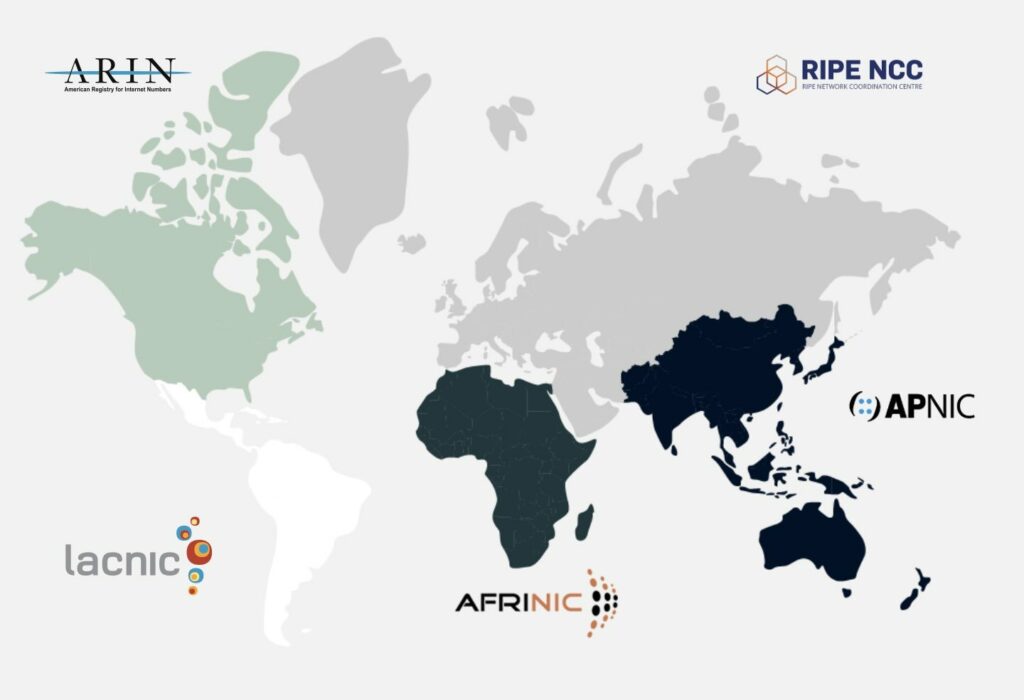
The majority of IP addresses are owned by Local Internet Registries (LIRs), which obtain IP space from Regional Internet Registries (RIRs) in blocks for private use within specific geographic regions. Each RIR is responsible for managing the availability of IP space, registering accounts for assignment within those spaces, and determining the allocation of IP blocks. The five RIRs are as follows:

Each RIR covers specific geographical regions and plays a vital role in the allocation and
management of IP addresses within their respective territories.

  1. ARIN (American Registry for Internet Numbers): Administers IP addressing space within North America.
  2. RIPE NCC (Réseaux IP Européens Network Coordination Centre): Responsible for IP addressing space administration in Europe and Africa.
  3. APNIC (Asia-Pacific Network Information Centre): Manages IP addressing space within the Asia-Pacific region.
  4. LACNIC (Latin American and Caribbean Network Information Centre): Administers IP addressing space in Latin America and the Caribbean.
  5. AFRINIC (African Network Information Centre): Responsible for IP addressing space administration in Africa.

InterLIR: Monetizing, Renting, and Buying IPv4 Network Addresses

InterLIR offers a platform where companies can maximize the value of their unused IPv4 addresses by monetizing them. Additionally, we assist businesses in renting and purchasing IP addresses online at equitable prices. Take advantage of this opportunity by registering at https://portal.interlir.com and commencing your business journey with us.

Cookie Consent with Real Cookie Banner Privacy settings