

bgunderlay bgunderlay bgunderlay
123

How to Transition from IPv4 to IPv6 Smoothly

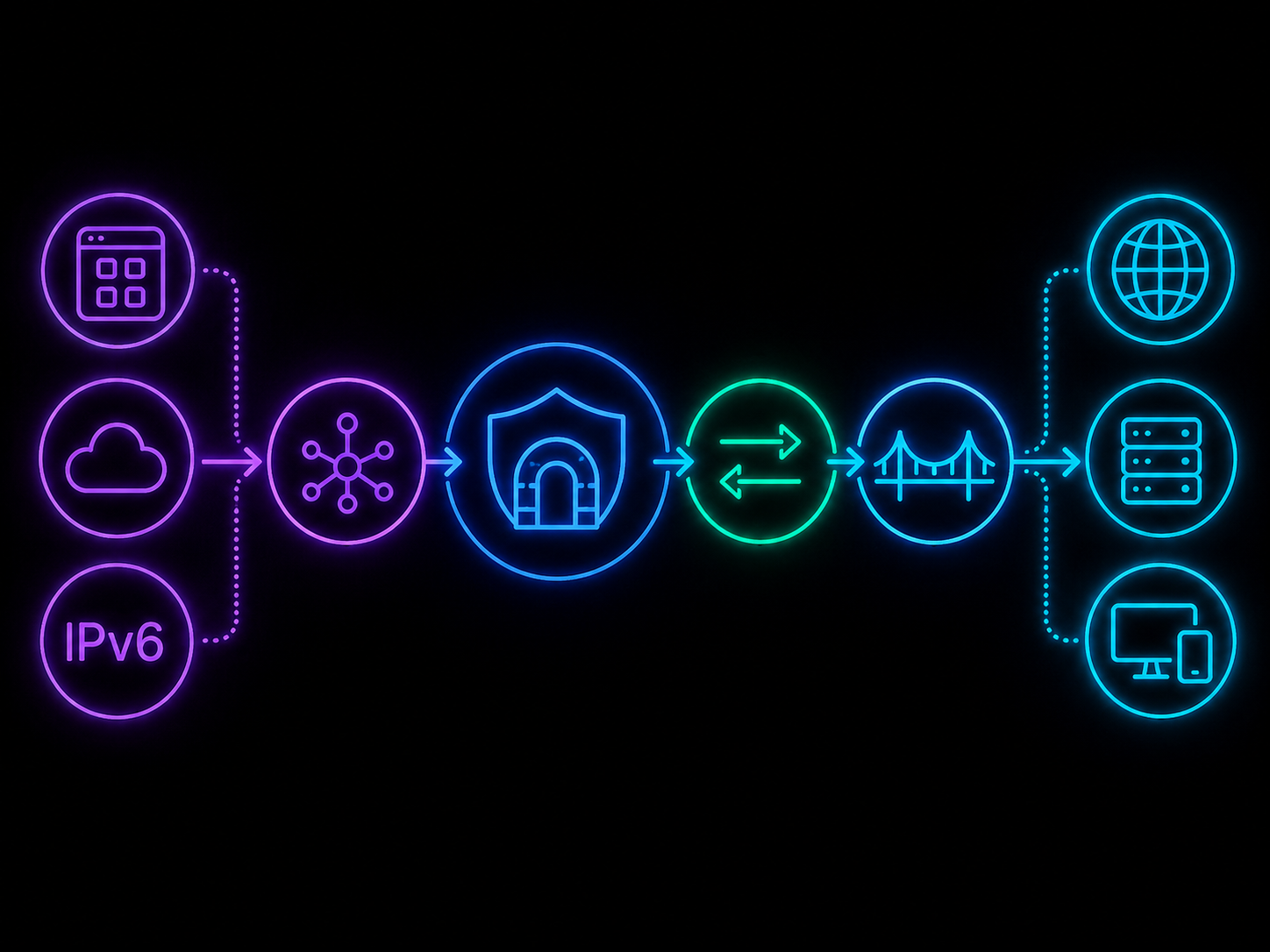
The internet’s expansion has made the transition from IPv4 to IPv6 an inevitable and crucial task for future-proofing networks. IPv4, with its limited address space, can no longer support the ever-growing number of devices. IPv6, with its vast address space and advanced features, is the future. However, making this transition smoothly requires careful planning and execution. Here’s a comprehensive guide to help you navigate this change effectively.

Why Transition to IPv6?

IPv4, which has been the backbone of internet communication since 1983, is running out of addresses. IPv6, introduced in the late 1990s, was designed to solve this problem with its 128-bit address space. Here are some key reasons why transitioning to IPv6 is essential:

  • Future-Proofing: Transitioning now ensures your network is ready for future advancements and technologies.
  • Address Space: IPv6 provides 340 undecillion (3.4×1038) addresses, ensuring we never run out of IP addresses.
  • Security: IPv6 has built-in security features such as IPsec, enhancing data confidentiality and integrity.
  • Simplicity: Simplified packet headers and address configuration make IPv6 more efficient and easier to manage.

Understanding IPv6 Basics

Before diving into the transition, it’s crucial to understand the basics of IPv6. Unlike IPv4, which uses a 32-bit address space, IPv6 uses a 128-bit address space, allowing for a virtually unlimited number of unique IP addresses. IPv6 addresses are written as eight groups of four hexadecimal digits, separated by colons, e.g., 2001:0db8:85a3:0000:0000:8a2e:0370:7334.

Step-by-Step Guide to Transitioning from IPv4 to IPv6

1. Assess Your Current Network

Begin by evaluating your current network infrastructure. Identify devices and services that support IPv6. Tools like SolarWinds Network Performance Monitor (NPM), PRTG Network Monitor, or ManageEngine OpManager can automate this assessment. Create a detailed inventory, noting which devices and services need upgrades or replacements.

2. Acquire IPv6 Prefixes

Choose between Provider Aggregatable (PA) and Provider Independent (PI) IPv6 prefixes. PA prefixes are provided by ISPs and are easier to manage, while PI prefixes offer greater autonomy. Consider your needs for network autonomy versus cost efficiency.

  1. PA Prefixes: Managed by ISPs, simplifying acquisition but limiting multi-homing.
  2. PI Prefixes: Directly assigned by RIRs, providing network autonomy at a higher cost.

3. Develop a Transition Strategy

Select a transition strategy that suits your network. The main approaches are:

  1. Dual Stack: Run IPv4 and IPv6 concurrently. This allows for a gradual transition without losing connectivity to either protocol.
  2. Tunneling: Use tunneling technologies to encapsulate IPv6 packets within IPv4 packets, enabling communication across IPv4 networks.
  3. NAT-PT (Network Address Translation – Protocol Translation): Translate IPv4 to IPv6 and vice versa, facilitating communication between IPv4 and IPv6 networks.

Dual Stack Example: A Step-by-Step Implementation

Dual Stack Routers

Diagram Explanation: A server with both IPv4 and IPv6 addresses configured can communicate with hosts on both IPv4 and IPv6 networks via a dual-stack router.

Steps to Implement Dual Stack:

  1. Firmware Update: Ensure all devices have the latest firmware supporting IPv6.
  2. Configure Interfaces: Set up interfaces on routers and switches with both IPv4 and IPv6 addresses.
  3. Update Firewall Rules: Modify firewall rules to allow IPv6 traffic.

Tunneling: Bridging IPv4 and IPv6

Tunneling Diagram

Tunneling allows IPv6 packets to traverse IPv4 networks, encapsulating them within IPv4 packets.

Types of Tunnels:

  1. 6to4 Tunnels: Use IPv4 addresses to create IPv6 addresses.
  2. Teredo Tunnels: Allow IPv6 connectivity for hosts behind NAT devices.

Implementation Steps:

  1. Configure Tunnels: Set up 6to4 or Teredo tunnels on routers and endpoints.
  2. Test Connectivity: Use tools like ping6 and traceroute6 to verify connectivity.

NAT Protocol Translation

NAT-PT Example

NAT-PT translates IPv4 packets to IPv6 and vice versa, enabling communication between IPv4 and IPv6 networks.

How It Works:

  1. IPv4 to IPv6 Translation: The NAT-PT device strips the IPv4 header, adds an IPv6 header, and forwards the packet.
  2. IPv6 to IPv4 Translation: The device translates IPv6 packets to IPv4, maintaining communication.

Steps to Implement NAT-PT:

  1. Configure NAT-PT Devices: Set up NAT-PT on routers and configure translation rules.
  2. Test Communication: Verify end-to-end communication between IPv4 and IPv6 endpoints.

Budget and Resource Allocation

IPv6 Transition Budget Template

CategoryDescriptionEstimated Cost
Planning and AssessmentInitial Assessment and Planning[Insert Cost]
Hardware UpgradesRouters, Switches, Firewalls[Insert Cost]
Software UpdatesOperating Systems, Network Tools[Insert Cost]
Training and DevelopmentIT Staff Training, Certification[Insert Cost]
MiscellaneousTesting, Contingency Fund[Insert Cost]
Total Estimated Budget[Total Cost]

Tips for Budgeting:

  1. Consult Experts: Engage with IPv6 specialists to get accurate cost estimates.
  2. Plan for Contingencies: Allocate a contingency fund to handle unexpected expenses.

Deploy Dual Stack Systems

Implementing Dual Stack: Upgrade your network to support both IPv4 and IPv6.

Steps to Deploy:

  1. Apply Firmware Updates: Ensure all devices support IPv6.
  2. Configure Interfaces: Set up IPv6 on routers, switches, and servers.
  3. Update Firewall Rules: Enable IPv6 traffic through your firewall.

Pros and Cons of Dual Stack:

ProsCons
Seamless IPv4 and IPv6 operationRequires IPv6 support on devices
Eases the transition processMay not be ideal for networks with limited IPv4 addresses

Configure IPv6 Addressing

Setting Up IPv6 Addresses: Configure IPv6 on all network devices, including routers, switches, and servers.

Steps to Configure:

  1. Enable IPv6 on Devices: Use OS-specific settings to enable IPv6.
  2. Set Up DHCPv6: Configure DHCPv6 for automatic address assignment.
  3. Update DNS: Ensure DNS servers support IPv6 records.

Example Configurations:

Windows: Go to Network Settings > Enable IPv6.

Linux:
sudo nano /etc/sysctl.conf

net.ipv6.conf.all.disable_ipv6 = 0

sudo sysctl -p

Test IPv6 Connectivity

Testing IPv6 Connectivity: Ensure that IPv6 is functioning correctly across your network.

Testing Tools:

  1. Ping6: Test basic connectivity.
  2. Traceroute6: Trace IPv6 routes.
  3. Iperf3: Measure network performance.

Application Compatibility:

  1. Manual Testing: Check applications for IPv6 compatibility.
  2. Automated Testing: Use Selenium, JMeter, or K6 for automated testing.
  3. Virtualization: Use Docker to simulate IPv6 environments.

Security Considerations:

  1. Update Firewalls: Ensure they support IPv6 filtering.
  2. Patch Devices: Keep all devices updated with the latest firmware and security patches.

Monitor Network Performance

Continuous Monitoring: Use tools like SolarWinds NPM, PRTG, or ManageEngine OpManager to monitor network performance.

Key Monitoring Areas:

  1. Connectivity: Verify end-to-end IPv6 connectivity.
  2. Performance: Track bandwidth, latency, and packet loss.
  3. Security: Monitor for IPv6-specific threats and vulnerabilities.

Update Policies and Documentation

Ongoing Maintenance: Keep your policies and documentation up-to-date.

Steps to Update:

  1. Stay Informed: Subscribe to newsletters, attend webinars, and participate in forums.
  2. Regular Training: Schedule training sessions for your IT staff.
  3. Document Changes: Maintain detailed documentation of your IPv6 setup.

Conclusion

Transitioning from IPv4 to IPv6 is a gradual process that requires careful planning and execution. By following these steps, you can ensure a smooth transition that keeps your network future-proof and ready for the demands of tomorrow’s digital world. Whether you’re implementing dual-stack systems, tunneling, or NAT-PT, the key to success lies in thorough planning, continuous testing, and ongoing education.

The Role of IP Addresses in Cybersecurity

Introduction

In our digitally-driven world, cybersecurity is no longer just a technical requirement but a cornerstone of safe online operations for both individuals and organizations. At the heart of this cybersecurity landscape are IP addresses, which play a pivotal role beyond their basic function of facilitating digital communication by also ensuring the security of internet interactions.

What is an IP Address?

An Internet Protocol (IP) address is a unique string of numbers separated by periods or colons, assigned to every device connected to a computer network that uses the Internet Protocol for communication. IP addresses serve as a fundamental element in networking that enables devices to locate and identify each other on a network, making internet communications possible.

Types of IP Addresses

IP addresses come in two versions—IPv4 and IPv6. IPv4 addresses are 32 bits long, structured in dot-decimal notation, such as 192.0.2.1, whereas IPv6 addresses are 128 bits long, structured in hexadecimal, such as 2001:0db8:85a3:0000:0000:8a2e:0370:7334.

  1. IPv4: Despite its widespread use, IPv4 can generate approximately 4.3 billion unique addresses, which is insufficient for the growing number of internet-connected devices.
  2. IPv6: Introduced to tackle the address exhaustion problem inherent to IPv4, IPv6 can produce a significantly larger number of addresses, ensuring every device can have a unique IP.
IP VersionAddress SizeExample
IPv432-bit192.0.2.1
IPv6128-bit2001:0db8:85a3:0000:0000:8a2e:0370:7334

Cybersecurity and IP Addresses

Network Security:

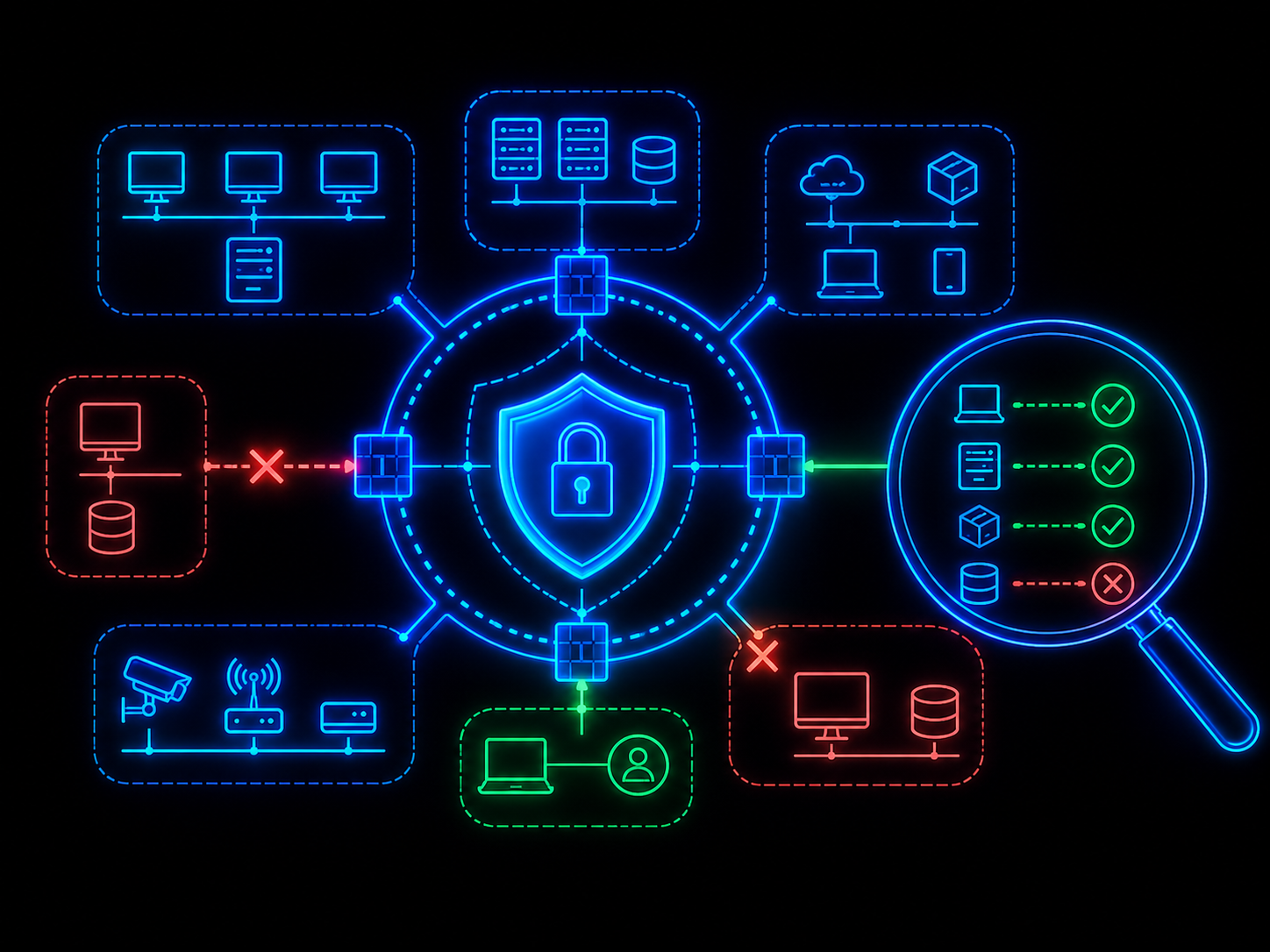
IP addresses are crucial in network security mechanisms. They are employed to authenticate and authorize access to network resources. Routers and firewalls use IP addresses to filter traffic, blocking or allowing data packets based on predefined security rules.

IP Address Tracking and Geolocation:

IP tracking is vital for identifying the geographical location of a device. This capability is essential for detecting and preventing attacks from specific regions known for high cybercrime rates. Geolocation can also restrict access to content based on regional regulations, further enhancing security measures.

Dynamic and Static IPs:

  1. Dynamic IP Addresses: Typically assigned to individual users, these addresses change frequently and offer enhanced privacy by making it difficult for potential attackers to target a device consistently.
  2. Static IP Addresses: Often used by servers that need to maintain a constant presence on the internet, static IPs can be monitored more easily for potential security breaches due to their unchanging nature.

Blacklisting and Whitelisting:

IP addresses identified as sources of malicious activity can be blacklisted, preventing them from accessing certain networks or resources. Conversely, IP whitelisting allows only approved IP addresses to access a system, offering another layer of security.

SSL/TLS and IP Addresses:

Secure Sockets Layer (SSL) and Transport Layer Security (TLS) protocols use IP addresses during the digital certificate authentication process to secure and encrypt data transfers over the internet, protecting sensitive information from being intercepted.

Challenges with IP Address Management in Cybersecurity

Managing IP addresses effectively poses significant challenges, particularly in large organizations with vast networks. These challenges include:

  1. IP Address Exhaustion: Particularly with IPv4, the limited number of available IP addresses can hinder network expansion.
  2. IP Spoofing: Attackers can fake IP addresses to bypass security measures, leading to unauthorized access and data breaches.
  3. Privacy Concerns: IP addresses can track user behavior and location, raising privacy issues that need to be managed responsibly, often through technologies like VPNs or anonymous browsing tools like Tor.

Conclusion

IP addresses are fundamental to both the function and security of the internet. They not only facilitate digital communication but also serve as essential tools in the cybersecurity toolbox, helping protect data, manage network traffic, and combat cyber threats. As technology evolves, the role of IP addresses in cybersecurity continues to expand, becoming more integral to safeguarding our digital lives against increasingly sophisticated cyber threats.

Public vs. Private IP Addresses: A Complete Guide

Introduction

In the realm of networking, understanding the distinction between public and private IP addresses is essential for system administrators, home users, and anyone involved with network setups. This guide provides a thorough exploration of these two types of IP addresses, their uses, and the importance of knowing the difference to enhance network efficiency and security.

What is an IP Address?

An IP address, short for Internet Protocol address, is a unique identifier consisting of a sequence of numbers divided by periods (IPv4) or colons (IPv6). It identifies each device on a network using the Internet Protocol to communicate.

Public IP Addresses: Gateways to the World

Definition and Role

A public IP address is assigned by your Internet Service Provider (ISP) and serves as your network’s identifier on the internet. It facilitates your network’s interaction with the outside world, functioning as a postal address for internet traffic.

Uses of Public IP Addresses

  1. Internet Access: Essential for your network to access the internet.
  2. Server Hosting: Enables hosting of various services such as web and email servers.
  3. Remote Access: Allows for remote connections to your network from any global location.

Advantages and Challenges

  1. Global Connectivity: Provides the ability to interact with the internet, though this increases vulnerability to cyber threats.
  2. Cost Factor: ISPs may charge extra for static public IP addresses, which are required for hosting services.

Finding Your Public IP Address

Discover your public IP address using online tools like whatismyip.com or by simply searching “What is my IP” in any popular search engine.

Private IP Addresses: The Unsung Heroes of Local Networking

Definition and Function

Private IP addresses are used within local area networks (LANs) and are not routable on the internet. This means they can’t be accessed directly from outside the network, ensuring internal communications remain isolated and secure.

Uses of Private IP Addresses

  1. Internal Communication: Facilitates the connection and communication among devices within a local network.
  2. Enhanced Security: Keeps internal network traffic private and secure from external threats.

Advantages and Challenges

  1. Reuse and Flexibility: Can be used repeatedly in different networks without coordination with internet authorities.
  2. Isolation from the Internet: Requires techniques like NAT for internet access, which protects internal networks but complicates direct internet connectivity.

Finding Your Private IP Address

Your private IP address can be located in your device’s system settings or by using system commands like ipconfig on Windows or ifconfig on UNIX-based systems.

Key Differences between Public and Private IP Addresses

FeaturePublic IP AddressPrivate IP Address
AccessibilityGlobally accessibleOnly accessible within a LAN
UniquenessMust be unique globallyOnly needs to be unique locally
AllocationAssigned by ISPsAssigned by network routers
CostMay incur chargesFree of charge
UsageIdeal for hosting servers and external accessSuited for internal network communications
Security RiskHigher due to exposure to the internetLower, protected within a LAN

Public and Private IP Address Ranges

Private IP Address Ranges

  1. Class A: 10.0.0.0 to 10.255.255.255
  2. Class B: 172.16.0.0 to 172.31.255.255
  3. Class C: 192.168.0.0 to 192.168.255.255

Public IP addresses are those not included in the above ranges, and they must be unique across the internet.

Conclusion

Mastering the use of public and private IP addresses is crucial for managing network configurations, enhancing security, and ensuring efficient network operations. This guide aids both network administrators and casual users in understanding and applying best practices in their network environments, ensuring both connectivity and protection.

Common Mistakes in Subnetting and How to Avoid Them

Subnetting is a fundamental skill for network administrators, crucial for efficient network design and management. However, it is fraught with potential pitfalls that can lead to complex problems. Understanding these common mistakes and how to avoid them is essential for ensuring a reliable and effective network. This longread explores the most frequent subnetting errors, offers practical advice, and includes a cheat sheet to help you make informed decisions.

Understanding Subnetting

Before delving into the common mistakes, it’s important to grasp what subnetting is. Subnetting is the process of dividing a larger network into smaller, manageable pieces, known as subnets. It helps in enhancing network performance and security. Each subnet is a network segment that can be managed independently.

Why Subnet?

  • Efficient IP Management: Maximizes the usage of a limited number of IP addresses in large networks.
  • Enhanced Performance: Reduces network congestion by limiting broadcast traffic to subnets.
  • Improved Security: Isolates segments of the network, which can contain security breaches within subnets.

Common Mistakes in Subnetting

1. Not Using Logical Network Patterns

Problem

Failure to design subnets logically can lead to chaos, especially during troubleshooting or network expansion.

Solution

Use logical and consistent patterns when designing your subnets. Align subnet structures with organizational geography or departmental divisions to make the network easier to manage and understand.

2. Making the Subnet Too Small

Problem

A subnet that is too small can quickly run out of available IP addresses, especially as the network grows.

Solution

Forecast future growth and design subnets that are sufficiently large to accommodate additional devices without frequent changes.

3. Overcomplicating Subnet Masks

Problem

Using unnecessarily complicated subnet masks can make the network difficult to understand and manage.

Solution

Stick to simpler, more common subnet masks where possible, and ensure they are consistent across similar types of subnets.

4. Inadequate Documentation

Problem

Lack of proper documentation for subnet configurations can lead to errors during expansion and makes troubleshooting more difficult.

Solution

Maintain detailed documentation of all subnet configurations, IP addresses, and associated network hardware. Update this documentation regularly as changes are made.

5. Ignoring IP Address Classes

Problem

Misunderstanding or ignoring the differences between IP address classes can result in improper subnetting.

Solution

Understand the characteristics and appropriate uses of different IP address classes to ensure that subnetting is done correctly.

Practical Tips for Subnetting

  1. Plan for Growth: Always assume that the network will need to accommodate more devices in the future.
  2. Use Subnetting Tools: Utilize subnet calculators to help accurately plan IP ranges and avoid human errors.
  3. Regular Reviews: Periodically review subnet configurations to ensure they still meet the network’s needs and adjust as necessary.

Subnetting Cheat Sheet

Here’s a handy table to help you quickly determine subnet sizes and addresses:

CIDR NotationSubnet MaskUsable Host IPsTotal IPs
/30255.255.255.25224
/29255.255.255.24868
/28255.255.255.2401416
/27255.255.255.2243032
/26255.255.255.1926264
/25255.255.255.128126128
/24255.255.255.0254256

This table can help you quickly reference how many IP addresses are available in each subnet and is an essential tool for network planning.

Conclusion

Effective subnetting is key to a well-organized network. By understanding and avoiding common mistakes, network administrators can ensure robust network performance and scalability. Regularly revisiting and revising network designs in light of new challenges and growth ensures that your network remains both functional and secure. Remember, the best network is a well-planned one.

Understanding IP Geolocation and Its Applications

Introduction

In today’s interconnected digital landscape, the ability to pinpoint the geographical location of a device using its Internet Protocol (IP) address is more crucial than ever. This capability, known as IP geolocation, plays a pivotal role in enhancing user experiences, securing online transactions, and personalizing content. This longread explores IP geolocation technology, its applications, the challenges it faces, and its significant impact across various industries.

What is IP Geolocation?

IP geolocation is a technology that uses the IP address of a device connected to the internet to determine its geographical location. This location data typically includes the country, region, city, or zip code, and may extend to more detailed information like latitude and longitude, local time zone, currency, language, and even the ISP (Internet Service Provider) details.

How It Works

The process involves matching an IP address to a comprehensive IP database containing associated geographic and infrastructural information. These databases are compiled and maintained through information gathered from regional internet registries, ISPs, and other data sources.

Applications of IP Geolocation

IP geolocation finds utility in a broad range of applications, enhancing both user experience and business operations:

  1. Content Personalization: Tailoring content specific to the user’s location, including language and cultural nuances.
  2. Ad Targeting: Delivering geographically relevant advertisements to users.
  3. E-commerce: Adjusting currency and payment methods to align with the user’s location.
  4. Security: Detecting and mitigating fraud by identifying discrepancies in user location data.
  5. Compliance: Ensuring content and activities are compliant with local laws and regulations.

Key Applications and Benefits of IP Geolocation

ApplicationDescriptionBenefits
Content LocalizationAdapts the website content to fit the cultural context of the user’s location.Enhances user engagement and experience.
Fraud DetectionMonitors IP addresses for unusual activities to prevent potential fraud.Increases security for online transactions.
Geo-targetingDelivers region-specific content and advertisements to users.Boosts marketing effectiveness by reaching the target audience.
ComplianceEnsures the content adheres to local regulations (e.g., GDPR).Reduces legal risks by aligning with regional laws.

The Technology Behind IP Geolocation

IP Geolocation technology involves several key steps from data collection to user interface implementation:

  1. Data Collection: Gathering IP data from various sources.
  2. Database Management: Updating and maintaining the accuracy of IP location databases.
  3. User Query Handling: Responding to client applications or services querying IP locations.
  4. Service Delivery: Providing the geolocation data through APIs or software solutions that integrate into client systems.

Challenges in IP Geolocation

Despite its numerous applications, IP geolocation technology faces significant challenges:

  1. Accuracy Issues: Due to dynamic IP allocation practices by ISPs and the use of VPNs, determining the exact location can sometimes be inaccurate.
  2. Privacy Concerns: Balancing the granularity of location data with user privacy expectations is crucial.
  3. Regulatory Compliance: Navigating the complex landscape of global regulations concerning data privacy.

Future Trends

The future of IP geolocation looks promising with advancements in technology and increased integration of machine learning models to improve accuracy. The evolution of IP standards, particularly the transition towards IPv6, offers more robust capabilities for handling the growing number of internet-connected devices.

Conclusion

IP geolocation is a transformative technology that supports multiple facets of digital engagement, from security to personalized user experiences. As the internet continues to evolve, the role of IP geolocation will become increasingly significant in creating seamless, secure, and tailored online experiences.

VLSM vs CIDR: What’s the Difference? Complete Comparison Guide (2026)

What is VLSM? Variable Length Subnet Masking Complete Guide

VLSM (Variable Length Subnet Masking) lets you create subnets of different sizes in the same network. Unlike FLSM, VLSM reduces IP waste by 40-60%. Learn how it works, when to use it, and how to calculate it step-by-step.

What is VLSM? Variable Length Subnet Masking Complete Guide (2026)

VLSM (Variable Length Subnet Masking) lets you create subnets of different sizes in the same network. Unlike FLSM, VLSM reduces IP waste by 40-60%. Here’s how it works.

VLSM isn’t new. RFC 1878 came out in 1995. But here’s the thing — most network admins still don’t use it properly.

Why? Because fixed-length subnetting (FLSM) is easier. You divide everything into equal chunks. Simple. Predictable. Wasteful.

VLSM is the opposite. You create subnets of different sizes based on actual needs. A /30 for point-to-point links (2 IPs). A /24 for a department (254 IPs). A /26 for a small office (62 IPs). All in the same network.

The result? 40-60% less IP waste. That’s not marketing fluff — that’s real math from actual network designs.

This guide shows you exactly how VLSM works, when to use it, and how to calculate it step-by-step.

📘 How to Navigate This Guide: This comprehensive guide covers VLSM from fundamentals to advanced implementation. We’ll explain what VLSM is, how it differs from FLSM and CIDR, step-by-step calculation examples, advantages, common mistakes, and when it might not be the right choice. Each section builds on the previous one, so we recommend reading sequentially for the full picture.

What is VLSM? (Definition)

VLSM (Variable Length Subnet Masking) allows different subnet sizes within the same network. Unlike FLSM where all subnets are equal, VLSM optimizes IP allocation.

What it is:
Variable Length Subnet Masking (VLSM) is a subnetting technique where you can assign subnet masks of different lengths to different subnets within the same network. Instead of dividing a network into equal-sized subnets (FLSM), VLSM lets you create subnets that match actual requirements.

Think of it like parking spaces. FLSM gives every department the same-sized parking lot — whether they have 5 cars or 50. VLSM gives each department exactly what they need.

How it differs from alternatives:

  • FLSM (Fixed Length): All subnets same size. Simple but wasteful. Example: Dividing 192.168.1.0/24 into four /26 subnets (64 IPs each), even if you only need 2, 10, and 30 IPs.
  • CIDR: CIDR is the notation system (/24, /25, etc.). VLSM uses CIDR notation but applies it variably.
  • Supernetting: Opposite direction — combining networks. VLSM is about dividing.

What problem it solves:
IP address waste. With FLSM, you might allocate a /26 (64 IPs) for a point-to-point link that needs 2 IPs. That’s 62 wasted addresses. VLSM lets you use a /30 (4 IPs, 2 usable) for that link, saving 60 IPs for other uses.

Quantified Proof:

  • FLSM example: Network 192.168.1.0/24 needs: 2 IPs (link), 10 IPs (office), 30 IPs (department). With FLSM: Three /26 subnets = 192 IPs used, 64 wasted.
  • VLSM example: Same network with VLSM: /30 (2 IPs), /28 (14 IPs), /27 (30 IPs) = 46 IPs used, 210 available for future use.
  • Waste reduction: 64 wasted → 0 wasted = 100% improvement in this example.

VLSM vs FLSM vs CIDR — The Complete Comparison

VLSM allows variable subnet sizes. FLSM uses fixed sizes. CIDR is the notation system. VLSM reduces IP waste by 40-60% compared to FLSM in typical networks.

VLSM vs FLSM vs CIDR Comparison
Feature VLSM FLSM CIDR
Subnet sizes Variable Fixed Notation only
IP efficiency 85-95% 60-75% N/A
Complexity Medium Low Low
Flexibility High Low N/A
Use case Modern networks Legacy/simple All IP addressing

When to use each:

  • VLSM: Enterprise networks, ISPs, any network with varying subnet size needs
  • FLSM: Small networks, learning, legacy systems that don’t support VLSM
  • CIDR: All modern IP addressing (notation system, not a choice)

Mini-Case: ISP needs to allocate 192.168.0.0/16 to customers: 50 customers need /30 (2 IPs), 20 need /28 (14 IPs), 10 need /24 (254 IPs). FLSM approach: Divide into /24 subnets only. Result: 50 customers get 254 IPs when they need 2 = 12,600 wasted IPs. VLSM approach: Allocate /30 for small, /28 for medium, /24 for large. Result: 50×2 + 20×14 + 10×254 = 3,180 IPs used. Waste: ~200 IPs (for growth buffer). Savings: 12,400 IPs saved (97% reduction in waste).

How VLSM Works — Step-by-Step Example

VLSM calculation: 1) Start with largest subnet, 2) Allocate from network, 3) Move to next largest, 4) Continue until all subnets allocated. Here’s a complete example.

Step 1: List Your Subnet Requirements

Example scenario: Company network 192.168.1.0/24 needs:

  • Point-to-point link: 2 IPs
  • Small office: 10 IPs
  • Department: 30 IPs
  • Server network: 50 IPs

Step 2: Convert Requirements to CIDR Notation

VLSM Subnet Requirements
Requirement IPs Needed Usable IPs CIDR Subnet Size
Point-to-point 2 2 /30 4 IPs
Small office 10 14 /28 16 IPs
Department 30 30 /27 32 IPs
Server network 50 62 /26 64 IPs

Formula: Find smallest CIDR where 2^(32-CIDR) – 2 ≥ required IPs

Step 3: Allocate Subnets (Largest First)

Network: 192.168.1.0/24 (256 IPs total)

  1. Server network (largest): 192.168.1.0/26 (64 IPs: .0-.63)
  2. Department: 192.168.1.64/27 (32 IPs: .64-.95)
  3. Small office: 192.168.1.96/28 (16 IPs: .96-.111)
  4. Point-to-point: 192.168.1.112/30 (4 IPs: .112-.115)

Remaining: 192.168.1.116/28 (140 IPs available for future use)

Step 4: Verify No Overlaps

Check that subnet ranges don’t overlap:

  • 192.168.1.0-63 ✓
  • 192.168.1.64-95 ✓
  • 192.168.1.96-111 ✓
  • 192.168.1.112-115 ✓
  • 192.168.1.116-255 (available)

Result: No overlaps, efficient allocation.

VLSM Advantages and Benefits

VLSM advantages: 40-60% less IP waste, flexible network design, better scalability, cost savings on IP purchases. Essential for modern network planning.

  1. IP Address Efficiency
    FLSM typical efficiency: 60-75%
    VLSM typical efficiency: 85-95%
    Improvement: +25-35 percentage points
  2. Cost Savings
    Scenario: Need 500 IPs across 20 subnets of varying sizes
    FLSM requires: ~800 IPs (300 wasted)
    VLSM requires: ~520 IPs (20 wasted)
    Savings: 280 IPs × $20/IP = $5,600 saved
  3. Scalability
    VLSM allows adding new subnets without redesigning entire network
    FLSM often requires complete re-subnetting when needs change

Mini-Case: Enterprise with 192.168.0.0/16 needed to allocate to 15 departments with sizes ranging from 2 to 200 IPs. Action: Implemented VLSM, allocating /30 to /24 subnets based on actual requirements instead of fixed /24 for all. Result: Reduced IP usage from 3,840 IPs (FLSM) to 2,100 IPs (VLSM). Saved 1,740 IPs (45% reduction). Network redesign time reduced from 2 weeks to 3 days.

VLSM Calculator and Quick Reference

VLSM calculator: Enter your subnet requirements, get optimal CIDR allocation. Common sizes: /30 (2 IPs), /28 (14 IPs), /27 (30 IPs), /26 (62 IPs), /24 (254 IPs).

VLSM Quick Reference Table
CIDR Subnet Mask Total IPs Usable IPs Common Use
/30 255.255.255.252 4 2 Point-to-point links
/29 255.255.255.248 8 6 Small office (5 devices)
/28 255.255.255.240 16 14 Small office (10-12 devices)
/27 255.255.255.224 32 30 Department (25-28 devices)
/26 255.255.255.192 64 62 Medium office (50-60 devices)
/25 255.255.255.128 128 126 Large office (100-120 devices)
/24 255.255.255.0 256 254 Standard network (200-250 devices)

VLSM Calculation Formula:

  1. Determine required IPs: Required = Devices + Infrastructure (routers, servers) + 20% buffer
  2. Find CIDR: Smallest CIDR where 2^(32-CIDR) – 2 ≥ Required
  3. Allocate largest first: Start with biggest subnet, work down
  4. Track used ranges: Document each allocation to avoid overlaps

Common VLSM Mistakes and How to Avoid Them

⚠️ Mistake 1: Allocating smallest subnets first
Why people do it: “Start from the beginning, work sequentially”
The real cost: Can’t fit larger subnets later. Network redesign required. Cost: 2-4 weeks of network downtime + reconfiguration. Potential cost: $10,000-50,000 in lost productivity.

⚠️ Mistake 2: Not documenting subnet allocations
Why people do it: “I’ll remember where I put everything”
The real cost: Subnet overlap causes routing conflicts. Network outages. Troubleshooting time: 8-24 hours. Cost: $5,000-20,000 in downtime.

⚠️ Mistake 3: Using FLSM when VLSM would save IPs
Why people do it: “FLSM is simpler, less to think about”
The real cost: Wasting 40-60% of IP space. Need to buy more IPs. Example: Wasting 500 IPs × $20/IP = $10,000 unnecessary expense.

Devil’s Advocate — When NOT to Use VLSM

The strongest argument against VLSM:

VLSM adds complexity. If you mess up the allocation, you get routing conflicts, overlapping subnets, and network outages. FLSM is predictable — every subnet is the same size, same mask, no surprises. For small networks (under 5 subnets), the complexity isn’t worth the IP savings.

When this argument is valid:

  • Networks with 3-5 subnets of similar size
  • Legacy systems that don’t support VLSM
  • Teams without experienced network engineers
  • Networks where IP addresses are abundant (private IP ranges)

Why VLSM still makes sense for most:

  1. Modern networks need flexibility: Requirements change. VLSM adapts.
  2. IP costs are real: Public IPs cost $18-25 each. Wasting 100 IPs = $1,800-2,500.
  3. Scalability matters: FLSM networks hit limits faster, require complete redesigns.
  4. Tools make it easier: Modern subnet calculators eliminate manual calculation errors.

The math: Even for a 5-subnet network, if subnets vary by 2x in size, VLSM saves 20-30% of IP space. That’s worth the extra planning time.

VLSM Implementation Best Practices

VLSM best practices: Document all allocations, use subnet calculator, allocate largest first, leave 20% buffer for growth, test routing before deployment.

  1. Document Everything
    Create subnet allocation spreadsheet
    Record: Subnet, CIDR, IP range, Purpose, Date allocated
    Update when changes occur
  2. Use Tools
    Subnet calculators (online or software)
    IPAM (IP Address Management) systems
    Network diagramming tools
  3. Plan for Growth
    Leave 20-30% of network unallocated
    Reserve space for future subnets
    Consider 5-year growth projections
  4. Test Before Deploying
    Verify no overlaps (use IP range checker)
    Test routing between subnets
    Validate DHCP scopes don’t conflict
  5. Start Simple
    Begin with 2-3 subnets
    Add complexity gradually
    Learn from each implementation

Conclusion

VLSM isn’t optional for modern network design. It’s essential.

The math is clear: 40-60% less IP waste. Real cost savings. Better scalability.

Yes, it’s more complex than FLSM. But the tools exist. The calculators work. The documentation is available.

The question isn’t whether to use VLSM. It’s whether you can afford not to.

Frequently Asked Questions

What is VLSM?

+

VLSM (Variable Length Subnet Masking) allows you to create subnets of different sizes within the same network. Unlike FLSM where all subnets are equal, VLSM optimizes IP allocation and reduces waste by 40-60%. It’s a subnetting technique where you assign subnet masks of different lengths to different subnets within the same network.

What is the difference between VLSM and CIDR?

+

CIDR is the notation system (/24, /25, etc.) used to represent subnet masks. VLSM is the practice of using different CIDR values for different subnets. CIDR is the language, VLSM is the technique. VLSM uses CIDR notation but applies it variably within the same network.

What is the difference between VLSM and FLSM?

+

VLSM allows variable subnet sizes (e.g., /30, /28, /24 in same network). FLSM uses fixed subnet sizes (all subnets same size). VLSM reduces IP waste by 40-60% compared to FLSM. FLSM is simpler but wasteful, while VLSM is more complex but efficient.

How do you calculate VLSM?

+

VLSM calculation: 1) List subnet requirements, 2) Convert to CIDR notation (find smallest CIDR where 2^(32-CIDR) – 2 ≥ required IPs), 3) Allocate largest subnet first, 4) Continue with next largest, 5) Document allocations. Use subnet calculator for accuracy.

When should you use VLSM?

+

Use VLSM in networks with varying subnet size requirements, limited IP addresses, or need for scalability. Essential for enterprise networks, ISPs, and modern network design. Not recommended for small networks (3-5 subnets) of similar size or legacy systems that don’t support VLSM.

Can you use VLSM with any IP address range?

+

Yes, VLSM works with any IP address range (public or private). However, you must start with a network that’s large enough to accommodate your largest subnet requirement. The parent network must be at least as large as your largest needed subnet.

ASN Registration: A Comprehensive Step-by-Step Guide

The world of internet connectivity and network management is both complex and fascinating. One of the fundamental aspects of managing a network involves registering an Autonomous System Number (ASN). This guide aims to demystify the process, breaking down each step to ensure clarity and compliance with regional regulations.

Introduction to ASN

An Autonomous System Number (ASN) serves as a unique identifier for a group of networks under a common administration that share a single routing policy. ISPs use ASNs to control the routing of data and to exchange routing information with other Internet-connected ASNs. There are two types of ASNs available: 2-byte and 4-byte, with the latter introduced to accommodate the growing demands of the expanding internet.

Why Register an ASN?

Registering an ASN is essential for any organization looking to manage its routing policies independently and engage in multi-homing – the practice of connecting to more than one internet service provider (ISP) to ensure a more reliable and redundant network connection.

The Step-by-Step Guide to ASN Registration

1. Initial Consultation and Information Gathering

Start by gathering all necessary information required by your Regional Internet Registry (RIR). This includes:

  1. RIPE Person/ORG/Maintainer objects.
  2. The IP space you plan to advertise.
  3. BGP peering information.

2. Document Submission

Submit the following documents to your RIR:

  1. Valid identification (national ID, passport, or driver’s license).
  2. For individuals under 18, an identity document of the responsible person.

3. Legal Entity Documentation (If Applicable)

Provide your legal company registration papers and proof of the company’s existence.

4. Payment

Complete payment via accepted methods like PayPal or SEPA bank transfer. Ensure timely payment to avoid service cancellation.

5. Maintainer Creation

Create a RIPE NCC account and generate a maintainer object to manage your ASN and IP objects.

6. ASN Delivery

Once all previous steps are completed and approved, your ASN will be assigned to you.

7. Post-Delivery Changes

You can modify your upstream providers by updating the ASN object in the RIPE database while maintaining compliance with RIR policies.

ASN Setup Post Registration

Once you have your ASN, ensure its global visibility and proper BGP configuration. Steps include signing up for IP Transit, creating a PeeringDB profile, establishing IRR route objects, and more. Below is a table summarizing these steps:

StepDescription
IP TransitEstablish a BGP session with your upstream provider.
PeeringDB ProfileCreate a profile for global interconnection data.
IRR Route ObjectsRecord the association between your IP space and ASN.
Routing PolicyUpdate routing policy statements according to your ASN’s activities.
RPKI AuthorizationImplement RPKI to certify your route origins.
AS-SET CreationGroup multiple ASNs for simplified route management (optional).
Reverse DNSConfigure reverse DNS for your IP addresses.
Communication with ProvidersInform and verify information with your upstream providers.
Validate AnnouncementsEnsure your ASN and IP prefixes are correctly announced.

Final Tips

  1. Double-check all submitted information and documents for accuracy.
  2. Stay patient – the registration process can take time.
  3. Keep your RIR’s contact information handy for any questions or issues that might arise.
  4. Regularly update your ASN information to reflect any changes in your network or policies.

By adhering to these guidelines and understanding the steps involved, your journey through the ASN registration process should be smooth and successful.

The IPv4 Transfer Market: Current Trends

In the world of internet networking, the value and demand for IPv4 addresses continue to dominate discussions, especially as we navigate the complexities of the IPv4 transfer market. With the continued delay in global transition to IPv6, the scarcity of IPv4 resources intensifies, creating a dynamic and highly competitive market.

Introduction to the IPv4 Transfer Market

The IPv4 transfer market operates under the scarcity of IPv4 addresses, a consequence of the internet’s expansive growth outpacing the availability of these finite resources. Businesses worldwide engage in trading and leasing IPv4 address space to sustain and expand their network operations. Currently, the average price per IPv4 address hovers around $20, highlighting the premium placed on this scarce commodity. The market’s dynamics are further influenced by regional disparities in address availability, largely dictated by the policies and distributions of Regional Internet Registries (RIRs).

Trends in the IPv4 Market

Recent observations in the market point towards notable trends:

  1. Stabilization of Prices: The market has shown signs of price stabilization, particularly for larger address blocks. This suggests an equilibrium is being reached, though variations still exist based on block size and regional factors.
  2. Leasing Over Purchases: A shift from outright purchases to leasing IPv4 addresses has become evident, offering smaller enterprises a cost-effective alternative to address their fluctuating needs.

Recent IPv4 Block Transactions

Original BlockTransferred BlocksTransfer TypeDate
/21/21POLICY26/03/2024
/22/22MERGER_OR_ACQUISITION26/03/2024
/22/22POLICY26/03/2024
/22/22MERGER_OR_ACQUISITION26/03/2024
/22/22POLICY26/03/2024
/22/22MERGER_OR_ACQUISITION26/03/2024
/22/22POLICY26/03/2024

The above table showcases recent transactions illustrating the active trading and leasing occurring within the market (about 16 a day).

Factors Influencing the IPv4 Market

Several factors contribute to the evolving dynamics of the IPv4 market:

  1. Delayed IPv6 Adoption: The slow global transition to IPv6 continues to fuel demand for IPv4 addresses.
  2. Regional Variations: Differences in RIR policies and regional address availability impact market conditions and pricing.
  3. Market Speculation: Speculative activities contribute to price fluctuations and market dynamics.

Challenges and Opportunities

Acquiring IPv4 addresses presents both challenges and opportunities for businesses:

  1. Cost Barrier: The high cost of IPv4 addresses can be prohibitive, especially for smaller organizations.
  2. Investment Potential: The leasing market presents investment opportunities, with leasing becoming a viable strategy for addressing short-term needs without the high upfront cost of purchasing.
  3. Market Volatility: Navigating the market requires adaptability and strategic planning due to its volatile nature.

Future Predictions

Looking forward, several predictions can be made about the IPv4 transfer market:

  1. Increased Demand: As internet connectivity expands globally, demand for IPv4 addresses is likely to continue rising.
  2. Further Price Stabilization: With market adjustments and increased leasing options, price stabilization is anticipated, though regional disparities will persist.
  3. Continued Relevance: Despite the push for IPv6, IPv4 addresses will remain a critical resource in the foreseeable future.

Conclusion

The IPv4 transfer market reflects the ongoing challenges and adaptations within internet infrastructure development. Businesses navigating this market must remain informed and adaptable to leverage opportunities and overcome obstacles. As we anticipate further changes and developments, the importance of understanding current trends and preparing for future shifts cannot be overstated.

Understanding the current trends of the IPv4 transfer market equips stakeholders with the knowledge needed to make informed decisions, ensuring sustainable and efficient networking solutions in an ever-evolving digital landscape.

Leveraging IP Address Location Data for Enhanced Networking

“Leveraging IP Address Location Data for Enhanced Networking” is not just a phrase but an innovative strategy that combines the power of geolocation tracking and the security and integrity that blockchain technology offers. In the realm of networking and cybersecurity, understanding and implementing IP address location data can significantly enhance network performance, security, and user experience.

Introduction to IP Address Location Data

IP address location data refers to the geographical information that can be obtained from a device’s IP address. This data includes country, region, city, ZIP code, latitude, and longitude, among other details. The utilization of this data is crucial in various sectors including marketing, cybersecurity, content personalization, and more.

The Role of Blockchain in Securing IP Address Location Data

Blockchain technology is renowned for its security, transparency, and integrity. By integrating blockchain with IP address location data, businesses and networks can ensure a higher level of data security and privacy. Blockchain can provide a tamper-proof and decentralized ledger for storing and validating IP location data, making it resistant to fraud and unauthorized alterations.

Practical Applications in Networking

Here are some ways in which IP address location data, enhanced by blockchain technology, can be used to improve networking:

  1. Personalized Content Delivery: Utilizing IP location data allows networks to provide content that is relevant to the user’s geographical location. This can significantly enhance user experience and engagement.
  2. Enhanced Security Measures: By analyzing IP location data, networks can identify and flag suspicious activities based on unusual location patterns, thereby enhancing network security.
  3. Targeted Marketing Strategies: Businesses can use IP location data to tailor their marketing strategies to target specific regions, leading to more effective advertising campaigns.
  4. Compliance and Regulation: IP location data can help ensure that content distribution complies with regional regulations and copyright laws.
  5. Network Optimization: By understanding the geographical distribution of users, networks can optimize server placement and load balancing, resulting in faster and more reliable service.

Implementing IP Address Location Data in Networking

The implementation process involves several steps, from data collection to analysis and application. Here’s a simplified breakdown:

  1. Data Collection: Obtain IP address location data from users connecting to the network.
  2. Data Analysis: Analyze the collected data to identify trends, patterns, and insights.
  3. Integration: Integrate IP location data into networking strategies, such as content delivery networks (CDNs), security protocols, and marketing strategies.
  4. Monitoring and Updating: Continuously monitor the effectiveness of strategies and update them based on new IP location data and insights.

Challenges and Considerations

While leveraging IP address location data offers numerous benefits, there are challenges and considerations, including:

  1. Privacy and Data Protection: Ensure compliance with data protection regulations and respect user privacy.
  2. Accuracy: IP location data may not always be 100% accurate; hence, networks should consider this variability.
  3. Infrastructure: Implementing IP location-based strategies requires robust infrastructure and resources.

Conclusion

Leveraging IP address location data for enhanced networking offers a myriad of benefits from improved user experience to enhanced security. By combining this with blockchain technology, networks can ensure the integrity and security of location data. As the digital landscape continues to evolve, the strategic use of IP address location data will be crucial for the future of networking.

Benefits of IP Address Location Data in Networking

BenefitDescription
PersonalizationTailors content and services to user’s location
SecurityHelps in identifying and mitigating security threats
MarketingEnables region-specific marketing strategies
ComplianceEnsures content adheres to regional laws
Network OptimizationImproves server placement and load distribution

In summary, the utilization of IP address location data is a game-changer in the networking field, enabling more personalized, secure, and efficient network services.

Acquiring Autonomous System Numbers (ASN): A Primer

In the vast and interconnected world of the internet, Autonomous System Numbers (ASNs) serve as critical identifiers that underpin the routing of data across the global network. Understanding and acquiring an ASN is essential for organizations seeking to manage their networks effectively and ensure seamless communication within the internet infrastructure.

What is an Autonomous System (AS)?

An Autonomous System (AS) is essentially a collection of IP networks and routers under the control of one or more network operators that adhere to a single, clearly defined routing policy. It’s like having a distinct identity within the broader internet, enabling efficient management and coordination of network routing.

ASes facilitate communication within their network and with external ASes through a set of rules and policies. They can be categorized into three types based on their routing policies and interconnectivity: Multihomed AS, Transit AS, and Stub AS. These categorizations help in defining the role and operational scope of each AS within the internet ecosystem.

Understanding Autonomous System Numbers (ASNs)

ASNs are unique numerical identifiers assigned to each AS, playing a pivotal role in the global routing architecture. They enable the AS to exchange routing information with other autonomous systems, thereby maintaining the global internet routing table’s integrity and accuracy.

There are two types of ASNs:

  1. 2-byte ASNs: These are traditional 16-bit numbers that provide a range of values from 0 to 65535. Despite the finite number of available 2-byte ASNs, they have been instrumental in the internet’s growth and development.
  2. 4-byte ASNs: To address the limitation in the number of available ASNs and support the internet’s expansion, 4-byte ASNs were introduced, expanding the range significantly to accommodate future growth.

Acquiring an ASN

The process of obtaining an ASN has evolved to become more streamlined and accessible. Here are the general steps an organization needs to follow to request an ASN:

  1. Determine Eligibility: Organizations typically qualify for an ASN by demonstrating their need to route data independently or by specifying their multi-homing arrangements with upstream ISPs.
  2. Submit a Request: This involves filling out an application with your respective Regional Internet Registry (RIR), which includes information about your network and intended use of the ASN.
  3. Review Process: The RIR will review your application to ensure it meets the necessary criteria and policies.
  4. Payment and Agreement: Once approved, you will be required to pay the applicable fees and sign a Registration Services Agreement.
  5. ASN Assignment: Following payment and agreement, the RIR will assign a unique ASN to your organization.

Conclusion

Understanding and obtaining an ASN is essential for any organization that wishes to participate actively in the global internet infrastructure. By following the steps outlined above and collaborating with your RIR, organizations can secure their ASN and contribute to the robustness and efficiency of internet routing.

As we continue to witness the growth and evolution of the internet, ASNs will remain central to maintaining its interconnected and decentralized nature. Therefore, it’s crucial for network operators and organizations to stay informed and engaged with internet governance processes, ensuring a stable and scalable network for future generations.

Summary of ASN Types and Uses

ASN TypeDescriptionUse Cases
2-byte16-bit number, range from 0 to 65535Traditional internet routing
4-byte32-bit number, expanded range for future growthModern, scalable internet infrastructure
PublicUsed for routing on the global internetMulti-homing, large networks
PrivateUsed for routing within private networksSingle-homed networks, internal routing

Please note that while this article provides a primer on ASN acquisition, the specific requirements and processes can vary depending on your RIR and current internet governance policies. Always consult with your RIR for the most current information and procedures.