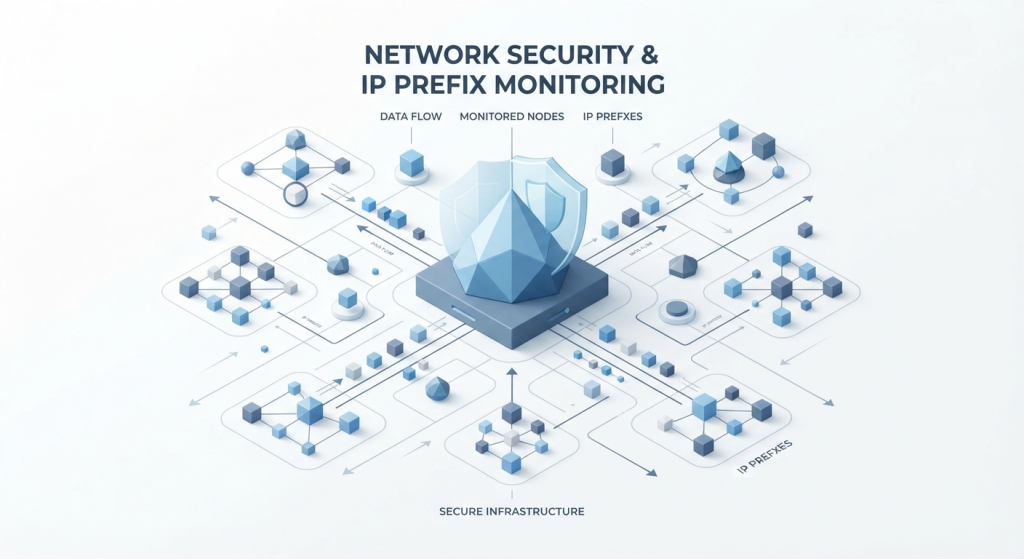
Unauthorized IPv4 announcements can move traffic away from the legitimate origin ASN, create outages, expose data paths, or damage address reputation. Detection must combine live BGP visibility, RPKI checks, IRR data, peer reports, and incident response steps.
BGP hijacking detection is the process of finding a false or unexpected route announcement for an IP block. It helps network teams detect an unauthorized announcement, detect theft of address space, and protect reachability through prefix monitoring, validation, and fast coordination with peers.
An unauthorized route can be malicious, but it can also be a mistake. A provider may leak a customer route. A tenant may announce a leased prefix from the wrong ASN. A stale IRR object may authorize an old path. A transfer may finish before every database and peer filter is updated.
The impact depends on scope. A short leak may affect only one region. A more-specific hijack can attract traffic from many networks because BGP prefers the more specific prefix. If the path reaches a rogue peer route, users may see packet loss, wrong geolocation, failed TLS checks, or complete service failure.
Teams should monitor network routing leaks before they cause user tickets. Monitoring must compare expected routing with the global control plane. It should know which ASN may originate each prefix, which upstreams may carry it, and which route length is valid.
A practical detection plan includes:
This list becomes the reference model for every alert. If BGP shows a different origin, path, or prefix length, the event should be reviewed.
Useful tools include BGP collectors, route servers, looking glasses, RPKI validators, IRR checks, flow telemetry, and commercial monitoring platforms. No single tool is enough because each one has a different view of the Internet.
A real time alert system should watch for:
For leased ranges, the tenant and the resource holder should agree who receives alerts. Teams that lease IPv4 addresses should define this before production. Teams that require direct control can compare leasing with Buy IPv4 Addresses.
Prefix monitoring must connect routing data with business records. The team should know who owns the resource, who can announce it, and who can update ROA or IRR records. This is important for tracking address use during leasing, acquisition, transfer, or customer migration.
The monitoring file should include:
This structure helps separate a real hijack from an authorized change that was not documented.
Routing defense starts before an incident. The resource holder should publish correct ROAs, maintain IRR objects, keep prefix filters narrow, and test reachability from several networks. Peers should reject invalid or unexpected routes where policy allows it.
During an incident, the team should:
Do not assume every event is theft. Some incidents are route leaks or stale filters. The response should still be fast because reachability and reputation can degrade within minutes.
A suspected hijack should enter the same process as a security incident. The team needs time, prefix, ASN, path, affected regions, service impact, and screenshots or exports from monitoring systems. Then it must ask peers to drop the false route and refresh filters.
If the event involves a leased block, confirm authorization before changing ROA or IRR data. A rushed update can create a new invalid route and make the outage worse.
Can RPKI stop every hijack?
No. RPKI helps verify origin authorization, but not every network filters invalid routes, and some attacks can use valid-looking paths.
How fast should alerts trigger?
Alerts should trigger within minutes for production prefixes. Daily checks are too slow for critical services.
Is a new origin ASN always malicious?
No. It can be a planned migration, backup route, or provider change. It still must match the approved record.
What is the first response to a hijack alert?
Validate the event with several sources, confirm whether the change was authorized, and contact upstreams if the route is false.
If your team needs IPv4 space with clear authorization, monitoring readiness, lease coordination, or purchase planning, contact InterLIR. The company provides infrastructure for IPv4 leasing, buying, lease-out, and marketplace workflows, so network teams can align address use with routing security and operational response.

Evgeny Sevastyanov
Support Team Leader

A Beginner’s Guide to Subnetting IPv4 and IPv6 Addresses Subnetting is a critical

Why IPv4 Leasing Is Becoming the Smart Choice for Businesses in 2025 1. Introduction
As CEO of InterLIR, I’ve witnessed firsthand how network isolation strategies

What is an ASN? ASN stands for Autonomous System Number. It is a unique identifier

Anycast DNS: A Leader’s Guide to Protecting Your Digital Infrastructure Executive

RPKI Certification: A Leader’s Guide to Internet Routing Security Executive

Executive Summary: What You Need to Know 🎯 Strategic Importance – Internet

When AWS DynamoDB failed in October 2025, thousands of businesses discovered that

Executive Summary: What You Need to Know 🎯 IP reputation directly impacts your
Live chat is provided by Intercom and is loaded only after you enable it. You can also contact us without enabling the chat.