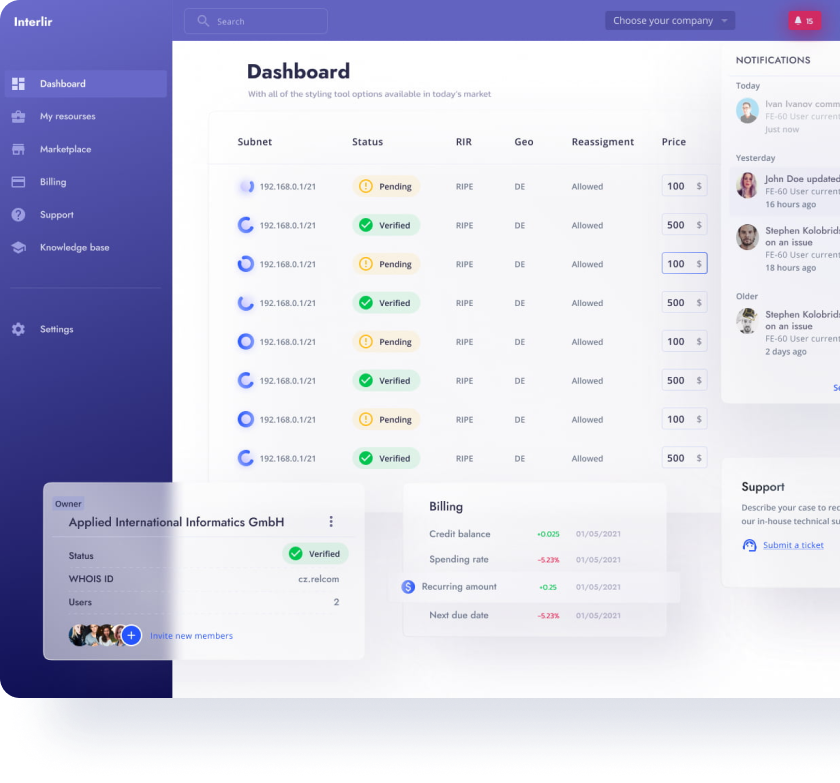
IPAM data quality affects routing, security, audit, automation, and capacity planning. If records are incomplete, teams can assign the same address twice, miss expired leases, lose ownership data, or fail to explain who used an IPv4 block during an incident.
IPAM database fields are structured records that describe prefixes, subnets, addresses, owners, services, and routing state. They keep enterprise data consistent, support accurate records, and give network teams one source of truth for allocation, monitoring, compliance, and IPv4 lifecycle control.
IPAM is not only an address list. It connects technical routing with business ownership. A clean record can show who owns a prefix, where it is routed, which service uses it, and when it should be reviewed. Poor data creates hidden risk.
A weak IPAM process can cause:
This is why IP management strategy should define mandatory fields, review dates, and ownership rules before the network grows.
A useful template should describe both the resource and its operational context. The goal is to make every prefix or address understandable without searching tickets, spreadsheets, or old emails.
Core fields include:
These fields turn a static list into a working network inventory tracker.
Essential network assets include routers, firewalls, load balancers, NAT gateways, VPN concentrators, DNS servers, API endpoints, and customer-facing platforms. Each asset should be linked to its assigned addresses and prefixes.
The IPAM record should answer basic questions:
For teams that lease IPv4 addresses, IPAM should also track lease start date, renewal date, resource holder, allowed origin ASN, and contract owner. If address ownership becomes strategic, compare leasing with Buy IPv4 Addresses.
A clean IPAM record is current, complete, and traceable. It should match router configuration, DNS, monitoring, RPKI, firewall policy, and billing data. If these systems disagree, the team does not have reliable evidence.
For an audit, keep:
Good corporate infrastructure logs connect IPAM with SIEM, DHCP, NAT, VPN, and cloud logs. This helps prove which device, user, or service used an address during a specific window.
An automated asset workflow reduces manual drift. It can compare IPAM with routers, cloud APIs, DNS zones, DHCP logs, RPKI validators, and monitoring systems. The goal is not blind changes. The goal is fast detection of mismatch.
Useful automation checks include:
Automation should create tickets when data conflicts appear. Human review is still needed before changing routing, ownership, or customer-facing records.
IPAM best practices are simple. Make the data model mandatory. Assign owners. Review records regularly. Retire unused addresses. Integrate IPAM with monitoring and change management. Do not allow production prefixes to exist only in a tracking sheet.
A spreadsheet can help during migration, but it should not be the final source of truth for a large network. IPAM must support search, history, permissions, validation, and reporting.
What is the most important IPAM field?
Ownership is the most important field because every address needs a responsible business and technical owner.
How often should IPAM records be reviewed?
Critical public IPv4 records should be reviewed after every change and at least quarterly.
Can a spreadsheet replace IPAM?
It can work for a small lab. It is risky for production networks because history, validation, and permissions are weak.
Why should routing fields be stored in IPAM?
Routing fields connect address use with ASN, ROA, IRR, upstreams, and reachability checks.
If your team needs IPv4 space with clear ownership, lease tracking, routing records, or lifecycle planning, contact InterLIR. The company provides infrastructure for IPv4 leasing, buying, lease-out, and marketplace workflows, so network teams can align address resources with IPAM quality, compliance, and operational controls.

Evgeny Sevastyanov
Support Team Leader

A Beginner’s Guide to Subnetting IPv4 and IPv6 Addresses Subnetting is a critical

Why IPv4 Leasing Is Becoming the Smart Choice for Businesses in 2025 1. Introduction
As CEO of InterLIR, I’ve witnessed firsthand how network isolation strategies

What is an ASN? ASN stands for Autonomous System Number. It is a unique identifier

Anycast DNS: A Leader’s Guide to Protecting Your Digital Infrastructure Executive

RPKI Certification: A Leader’s Guide to Internet Routing Security Executive

Executive Summary: What You Need to Know 🎯 Strategic Importance – Internet

When AWS DynamoDB failed in October 2025, thousands of businesses discovered that

Executive Summary: What You Need to Know 🎯 IP reputation directly impacts your
Live chat is provided by Intercom and is loaded only after you enable it. You can also contact us without enabling the chat.