


How to Buy IPv4 Addresses in 2025: A Simple Guide for Safe Buying
Hello, friends and colleagues! 🌐 I work every day with clients who need to buy IPv4 addresses (special internet numbers that websites need). I work at InterLIR. I have seen many big changes in this business in 2024 and 2025. The IPv4 market has reached what I call a “good time to buy” phase. Prices went down a lot. Now prices are the same for all sizes of address blocks. More people are buying addresses compared to 2023. This is good news for buyers who know how to buy safely. But this good time may end soon.
I work with clients from Germany, the USA, and all over Europe every day. I have seen patterns that every company needs to understand. The market is not just about supply and demand anymore. It is now a complex system. You need technical knowledge, legal compliance, and good timing to buy successfully. Let me share what I learned from helping hundreds of clients get their IPv4 addresses safely and cheaply. ☺️

What I will explain comes from market data I check every day. It also comes from real experiences helping clients buy addresses successfully. This will help you understand what is happening in the market. It will also help you position your company for success.
How We Got to Today’s Market: The History You Need to Know
When I started working with IPv4 addresses in September 2023, the market was very different. Back then, prices were very high. Not many people were buying and selling. Everyone was uncertain about what would happen next. I worked with clients through all these changes. Understanding this history is very important for making good decisions today.
Our current market started when all Regional Internet Registries (RIRs) ran out of IPv4 addresses. RIRs are organizations that give out internet addresses. This was the end of an era. But we only felt the full impact in recent years. During that high price period, I worked with many companies who were quoted very high prices for address blocks. Those prices seem impossible in today’s market.
Key Market Changes Since Late 2023
The price drop that started in late 2023 was not just a market change. It was a complete reset caused by many factors happening at the same time:
- Big technology companies stopped buying so many addresses
- High interest rates made some companies sell their IP addresses for money
- Too many addresses became available as companies realized they could make money from extra addresses
- At InterLIR, we processed many more transactions in 2024 than the year before, but the price per address was lower
The legal rules also changed a lot during this period. Different regions had different policies. Overall, we saw more oversight and legitimacy in the transfer process. Processing times for transfers got better across different registries.
Regional Market Differences
Regional differences became more obvious as the market matured:
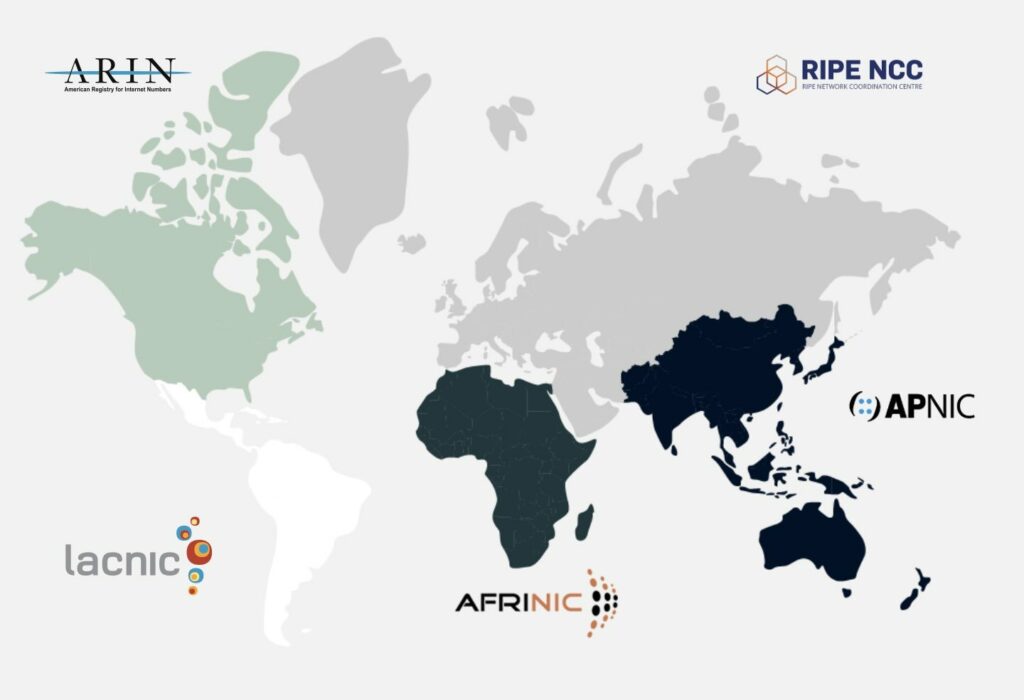
- North America (ARIN): Demand stayed strong because of continued business expansion and infrastructure development, keeping prices at a premium
- Europe (RIPE NCC): Markets showed more price sensitivity
- Asia-Pacific (APNIC): Regions showed the most volatility because of different economic conditions and regulatory approaches
The emergence of leasing as a viable alternative also changed client decision-making during this period. Organizations began calculating break-even points. They considered shorter-term commitments. This created additional market liquidity and gave buyers more flexibility in their acquisition strategies.
What is particularly interesting is how transaction volumes increased even as prices declined. Industry data shows that 2024 saw a big increase in transfer volume despite overall price corrections. This shows that the market became more liquid and accessible. More organizations participated as buyers when prices reached reasonable levels.

Technical Infrastructure Evolution
The technical infrastructure supporting the market also matured significantly:
- RPKI deployment (a security system) reached increased coverage for IPv4 space in various regions, making route validation more reliable
- BGP monitoring tools (internet routing monitors) became more sophisticated
- Reputation scoring systems evolved to provide better quality assessment for transferred address blocks
Looking at this historical progression, it is clear that we moved from a speculative, high-priced market to a more mature, professionally managed ecosystem. The wild price swings and uncertainty of previous years have given way to stable pricing. We now have increased transaction volumes and more sophisticated risk management tools. This evolution has created the current environment where strategic buyers can acquire quality IPv4 addresses at reasonable prices. But they need to understand the requirements and work with experienced professionals.
Current Market Analysis: Understanding Today’s Situation
The IPv4 market in 2025 operates under completely different conditions than what we experienced even 18 months ago. As someone who reviews market data daily and works directly with clients across multiple regions, I can tell you that the current landscape presents both unprecedented opportunities and evolving challenges. These require careful navigation.
Price Convergence Across All Block Sizes
The most significant development is the price convergence across all block sizes. For the first time in market history, large blocks (/16 and larger), medium blocks (/17-/19), and small blocks (/20-/24) are all trading in a similar price range with /16 showing prices as low as $18 per IP. This represents a fundamental shift from historical patterns where large blocks commanded substantial premiums.
This convergence creates interesting strategic opportunities. Many organizations now find they can structure acquisitions as multiple smaller blocks for more flexibility in deployment and potentially better per-IP pricing. This approach allows for distribution across different geographic regions and use cases.
Supply Constraints and Regional Pricing
Supply constraints are becoming increasingly acute, particularly for larger blocks. The significant decline in large block availability during 2024 is not just a statistic. It is a reality I deal with daily when clients request substantial allocations. Organizations requiring /16 blocks or larger now face significantly longer search times and fewer options. We project availability of /16 blocks could decline further in the near future. This makes immediate action crucial for organizations with large-scale requirements.
| Region (Registry) | Price Range per IP | Market Characteristics |
|---|---|---|
| North America (ARIN) | Premium pricing | Strong demand, notable premium over global averages |
| Europe (RIPE NCC) | Mid-range pricing | Slightly lower range, more price-sensitive |
| Asia-Pacific (APNIC) | Lower pricing | Reflects different regional demand patterns |
| Latin America (LACNIC) | Higher volatility | Limited supply and restricted transfer policies |
The regulatory environment has also evolved significantly. Different RIRs have introduced various policies and fees. This adds both legitimacy and complexity to transactions. Inter-RIR transfers (between regions) continue presenting challenges, especially between regions with incompatible policies. These transfers require extensive documentation and can take several weeks to complete due to needs-based assessment requirements.
Security and Due Diligence Requirements
Security and fraud risks have become more sophisticated, requiring enhanced due diligence procedures. The technical complexity of validating IPv4 addresses has increased substantially. We now routinely:
- Screen against numerous reputation databases
- Perform comprehensive BGP analysis (internet routing analysis)
- Conduct historical usage reviews
- Verify that transferred IPv4 prefixes are not blacklisted
Transferred IPv4 prefixes show significantly higher blacklisting rates than originally allocated space. This makes thorough validation essential.
Real Client Example: A VPN provider contacted us about acquiring a /18 block they found through another broker at an attractive price. Our technical validation revealed significant reputation issues. The addresses had been used for spam operations and appeared on multiple blacklists. While the price was tempting, the cleanup costs and reputation damage would have far exceeded any savings. We helped them find clean addresses through our verified inventory instead.
The competitive landscape has also shifted dramatically. Various brokers and platforms have emerged. Each offers different approaches to IPv4 acquisition and leasing. This has created more options for buyers but also requires careful evaluation of each provider’s strengths and reliability.
Current Market Dynamics
Transaction volumes tell an interesting story about market maturity. Despite price corrections, we are seeing increased participation from organizations that were previously priced out of the market:
- Small and medium-sized businesses now represent a larger portion of buyers
- Enterprise clients are taking advantage of favorable pricing to build strategic reserves
The technical infrastructure supporting IPv4 transfers has become more sophisticated:
- RPKI validation (security validation) is now standard practice
- Increased coverage across regions
- Route Origin Validation (ROV) deployment helps prevent BGP hijacking (internet routing attacks)
- Automated monitoring systems provide real-time alerts for reputation changes
These improvements have made the transfer process more secure but also more complex.
Documentation and Professional Requirements
Documentation requirements have become more stringent across all regions:
- Clean title verification
- Multi-party authentication
- Enhanced KYC/AML procedures (know your customer/anti-money laundering)
- Professional escrow services for substantial transactions
- Comprehensive insurance coverage protects against various risks
Professional guidance has become crucial for navigating what can seem like an overwhelming process. Organizations that work systematically through each step – from needs assessment to technical validation to final transfer – typically complete their acquisitions efficiently while ensuring quality and compliance.
Market liquidity has improved significantly, with more addresses available for immediate transfer. At InterLIR, our inventory includes addresses from Czech Republic, USA, UAE, Australia, UK, Germany, Estonia, Poland, and Spain. This provides geographic diversity that meets various client requirements. This geographic spread also helps with latency optimization (internet speed) and regulatory compliance for different markets.

The integration of automated processes has streamlined many aspects of IPv4 acquisition. From initial inventory searches to documentation preparation to transfer coordination, technology has reduced processing times and improved accuracy. However, the human element remains crucial for complex transactions, regulatory compliance, and quality assurance.
Looking at current market dynamics, we are in a unique position. Supply constraints are creating urgency while price stability is creating opportunity. Organizations that understand these dynamics and work with experienced professionals can secure quality IPv4 addresses at reasonable prices. But the window for optimal conditions may be narrowing as infrastructure funding programs and continued supply tightening begin influencing market behavior.
How Companies Make IPv4 Buying Decisions: What I Have Learned
Through my daily interactions with clients across diverse industries – from cybersecurity firms in Germany to hosting providers in various regions – I have observed distinct patterns in how organizations approach IPv4 acquisition decisions. Understanding these decision-making frameworks is crucial because the IPv4 market rewards strategic thinking and punishes reactive purchasing.
The Strategic Assessment Framework
The most successful clients follow what I call a “strategic assessment framework” that balances immediate needs with long-term planning. This typically begins with:
- A comprehensive audit of current IPv4 usage
- Projected growth requirements analysis
- Budget constraints evaluation
Organizations that skip this foundational step often end up either over-purchasing (tying up capital unnecessarily) or under-purchasing (requiring additional acquisitions at potentially higher prices).