bgunderlay bgunderlay bgunderlay
123

What is ASN?

What is an ASN?

ASN stands for Autonomous System Number. It is a unique identifier assigned to an autonomous system (AS) in the Internet that participates in the Border Gateway Protocol (BGP). An autonomous system is a collection of connected Internet Protocol (IP) routing prefixes under the control of one or more network operators that has a single, clearly defined routing policy.

In practical terms, an ASN is used by routers in the Internet to exchange information about IP routing paths. Each AS has a unique ASN, which is used to identify it to other ASes and to BGP routers in the Internet. This enables routers to determine the best path for traffic to take as it travels between different ASes and across the Internet.

ASNs are assigned by the Internet Assigned Numbers Authority (IANA) to regional Internet registries (RIRs), which in turn allocate them to individual organizations or Internet Service Providers (ISPs) that operate autonomous systems.


What is LOA (Letter of Authorization)?

The Letter of Authorization (LOA) is a formal document issued to a client after successfully completing the Assignment Request process. This document grants the client permission to announce an ASN (Autonomous System Number) for a specified IP address range.

The LOA serves as proof that the client has the right to broadcast and manage the assigned IP address range within a network. It is often required by data centers, internet service providers, and network operators to confirm that the client is authorized to use the specified resources.

The document typically includes the following details:

  • Client’s name and contact information
  • Assigned IP address range
  • ASN details
  • Authorization date
  • Issuing organization’s contact information

This document ensures proper routing and compliance within global network infrastructures, preventing unauthorized use of IP address space.


What is an Assignment Request?

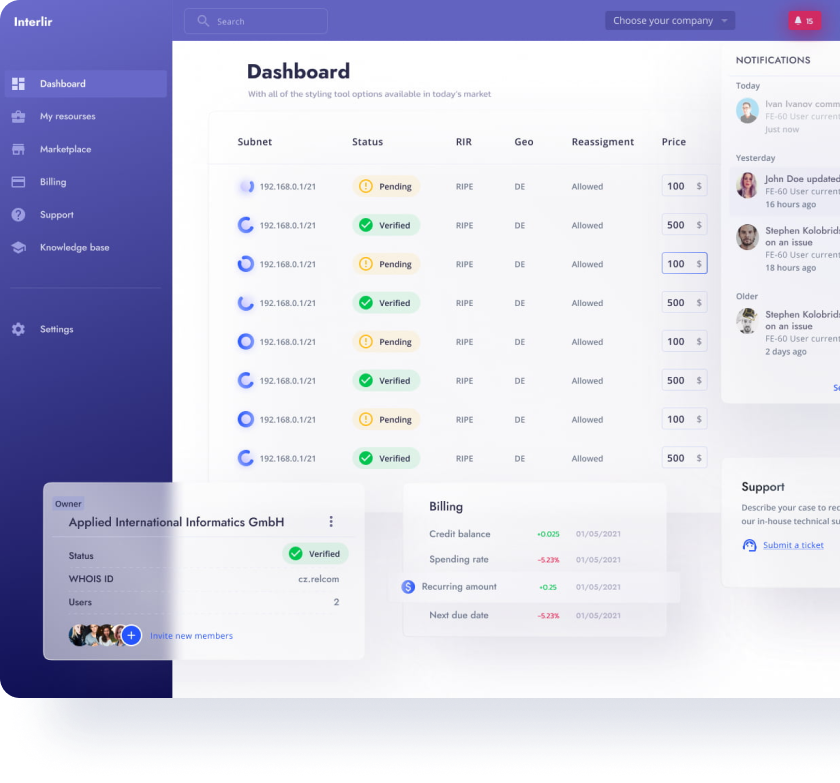
The Assignment Request (AR) process is initiated by the customer after successfully completing an order to rent an IP block. Other participants in the process include the supplier of the IP block (from whom the customer placed the order) and the InterLIR manager.

The outcome of the process is that the customer can announce an ASN on the IP block using an LOA (Letter of Authorization) and utilize the rented block in accordance with the signed contract and the rules governing the use of the rented resource.

You can read the rental rules in the General Terms and Conditions for the Use of the Internet Site interlir.com section.


What is rDNS?

Reverse DNS (rDNS) is the process of resolving an IP address to a domain name—the opposite of the standard DNS lookup. In a regular DNS query, a domain name is translated into an IP address. With rDNS, the system identifies which domain name is associated with a specific IP address.

rDNS is primarily used for verification and security purposes. It helps validate the origin of emails to reduce spam by confirming that the sender’s IP address matches a legitimate domain name. Many mail servers reject or flag emails from servers without proper rDNS configuration.

rDNS records are stored as PTR (Pointer) records in the DNS database. Unlike forward DNS, rDNS queries use a special domain called in-addr.arpa, where the IP address is reversed and appended with this domain for lookup.

Setting up rDNS requires administrative access to the DNS records of the IP address block. It is typically managed by the IP block owner or provider through cooperation with the relevant Regional Internet Registry (RIR), such as RIPE for Europe.

Although rDNS is not essential for most internet services, it plays a key role in improving trust and reducing network abuse.

You can submit an rDNS request for your leased IP block to configure reverse DNS.


What are admin-c and tech-c?

tech-c: The technical contact responsible for the technical operations and management of the resource.

admin-c: The administrative contact responsible for organizational decisions and resource management.


What are CIDR and IP Prefix?

CIDR (Classless Inter-Domain Routing) is a method for allocating and representing IP addresses and their associated routing paths. CIDR uses the format:

  • IP_address/prefix_length, where:
  • IP_address is the starting address of the range.
  • prefix_length specifies the number of bits used for the network portion of the address.

The prefix represents the number of leading 1 bits in the IP block mask. It determines the width (in bits) of the IP block.


What is a Route?

A “route” is an object in a Regional Internet Registry (RIR) database that ties an IP block (inetnum/inet6num) to a specific ASN (Autonomous System Number), thereby authorizing that ASN to announce the block.


What is RPKI?

RPKI (Resource Public Key Infrastructure) is a cryptographic system that ties IP blocks and ASNs to digital certificates, allowing networks to verify that a given ASN is legitimately authorized to announce a particular prefix.


What is Hijacking?

Hijacking is the unauthorized announcement of an IP block without the consent of the resource holder.


What is inetnum?

An “inetnum” (internet number) is an object in a Regional Internet Registry (RIR) database that records the details of an IP block allocation or assignment.


What is an RIR?

RIR (Regional Internet Registry) is an organization that oversees the allocation and registration of IP address space and ASNs within a defined region. There are five RIRs worldwide: RIPE NCC, ARIN, APNIC, LACNIC, and AfriNIC.


What is an LIR?

LIR (Local Internet Registry) is a member of an RIR. An LIR distributes IP addresses to end users and/or uses them in its own infrastructure.


What is an ORG Handle?

An “org” (organisation) is an object in an RIR database that provides information about an organization that has been allocated or assigned internet resources (IP blocks/ASNs).


What is abuse-c?

abuse-c (abuse contact) is an object in an RIR database that provides contact information for handling reports of network abuse.


What is Subnet Status?

Subnet status is an attribute in an IP block object (inetnum/inet6num) that indicates how a specific IP block is being used or managed. The main statuses are:

  • LEGACY: Assigned before the current RIR system was established. An LIR can assign or sub-allocate from this block.
  • ALLOCATED PA: Allocated to an LIR by an RIR. Can be further assigned or sub-allocated.
  • SUB-ALLOCATED PA: Sub-allocated by an LIR to another organization.
  • ASSIGNED PA: Assigned to an end user by an LIR. Cannot be further assigned.
  • ASSIGNED PI: Assigned directly by the RIR to an end user. Cannot be further assigned.

What are Blacklists (Spam Listings)?

Blacklists are databases of IP addresses, domains, or ASNs observed sending spam, malware, or other abusive traffic. Mail servers and security appliances query these lists to decide whether to block or flag incoming connections. Major blacklists are maintained by Spamhaus Project, Barracuda Central, and SpamCop.


What is MNT-BY?

MNT-BY is a top-level maintainer object that allows you to edit information in inetnum (WHOIS), create lower-level objects like route or rDNS, and manage objects at the same maintenance level.


What is MNT-DOMAIN?

MNT-DOMAIN is a maintainer object that allows you to create and edit rDNS (domain) objects.


What is WHOIS?

WHOIS is a publicly accessible protocol and database used to look up registration information about internet resources such as IP addresses, AS numbers, and domain names.

Typical Information Provided:

  • Organization name
  • Contact details (admin, technical)
  • IP address allocation or domain ownership
  • Status and registration dates

WHOIS is essential for network troubleshooting, abuse reporting, and verifying resource ownership. Data is maintained by Regional Internet Registries (RIRs) and domain registrars.


What is ROA?

ROA stands for Route Origin Authorization—a cryptographically signed object in the RPKI system that authorizes a specific Autonomous System (AS) to originate a particular IP prefix in BGP.

Key Fields:

  • Prefix: The IP block being authorized (e.g., 203.0.113.0/24)
  • Origin AS: The AS number allowed to announce the prefix (e.g., AS12345)
  • Max Length: The maximum prefix length that can be announced (e.g., /24 allows 203.0.113.0/24, but not /25)
  • Validity Period: Start and end dates for the ROA’s validity

Purpose:

ROAs are used by routers and validators to determine if BGP announcements are valid, helping to prevent route leaks and hijacks.

Example:

A ROA might state:
“AS64500 is authorized to announce 192.0.2.0/24 with max length /24.”

Without a matching ROA, a route may be marked as Invalid during RPKI validation.


What is IANA?

IANA (Internet Assigned Numbers Authority) is the organization that manages global IP address allocations and top-level domains. It reports directly to ICANN and is responsible for allocating address blocks to Regional Internet Registries (RIRs).


What is IPv4 Transfer?

IPv4 transfer is the procedure by which the rights to IPv4 addresses are transferred from one user to another. The outcome is the updating of RIR databases to reflect the new owner. Transfers can occur through sale, merger, or asset reassignment. Legal and procedural requirements vary by RIR and the subnet status of the addresses.


What is a Transfer Agreement?

A Resource Transfer Agreement (TA) is a document required under RIPE NCC rules to complete an IPv4 address transfer. Both parties (transferrer and transferee) sign it and submit it to RIPE NCC, after which ownership is updated in the database. Other RIRs may not require such formal agreements.


What is an NIR?

APNIC is the Regional Internet Registry (RIR) for the Asia Pacific region. To better serve local communities, APNIC works with National Internet Registries (NIRs), which operate under APNIC policies and provide local-language support. Current NIRs include APJII (Indonesia), CNNIC (China), IRINN (India), JPNIC (Japan), KISA (Korea), TWNIC (Taiwan), and VNNIC (Vietnam).


What is IPv4?

IPv4 (Internet Protocol version 4) uses 32-bit addresses (e.g., 192.0.2.1), allowing for 4,294,967,296 unique addresses. Due to address exhaustion, IPv4 resources are now scarce and highly valued in leasing and resale markets.


What Is a “Usage Type” of IP Addresses?

The usage type classifies the intended purpose or deployment environment of an IP address. It is widely used in security, fraud detection, geolocation, and reputation systems.

Common usage types include:

  • COM (Commercial): Businesses and commercial organizations
  • ORG (Organization): General non-commercial organizations
  • GOV (Government): Government entities
  • MIL (Military): Military organizations
  • EDU (Education): Schools, colleges, and universities
  • LIB (Library): Libraries
  • CDN (Content Delivery Network): CDN providers
  • ISP (Fixed ISP): Fixed-line internet service providers
  • MOB (Mobile ISP): Mobile network operators
  • DCH (Data Center): Hosting, data centers, or transit providers
  • SES (Search Engine): Search engine crawlers
  • RSV (Reserved): Reserved for special purposes

Understanding usage type helps assess an IP’s trustworthiness. ISP-tagged IPs are particularly valuable because they mimic end-user traffic, making them less likely to be blocked by anti-bot systems or web application firewalls. This is why proxy and service providers often seek ISP-classified IPs for better compatibility and higher resale value.


What is a VPN?

A VPN (Virtual Private Network) creates a secure, encrypted tunnel between your device and a remote server, protecting your data from eavesdropping on public networks. It is used for privacy, bypassing geo-restrictions, and securing remote access.


What is Cloud?

Cloud computing delivers on-demand computing services—servers, storage, databases, networking, software—over the internet. Instead of owning physical infrastructure, users access scalable resources from cloud providers like AWS, Google Cloud, or Azure.


What is a Proxy?

A proxy server acts as an intermediary between your device and the internet. It forwards your requests and returns responses, often hiding your real IP address. Proxies are used for anonymity, bypassing restrictions, or caching content—but unlike VPNs, they typically do not encrypt traffic and operate at the application level (e.g., web browser).


What is Hosting?

Hosting is a service that stores website files on a server connected to the internet, making them accessible via a domain name. Types include shared, VPS, dedicated, and cloud hosting—each offering different levels of performance, control, and cost.


What is a Data Center?

A data center is a secure facility housing servers, storage, and networking equipment. It provides power, cooling, and connectivity for digital services like websites, cloud platforms, and enterprise applications. Types include enterprise, colocation, cloud, and edge data centers.


What is a Domain?

A domain (e.g., example.com) is a human-readable address for a website or service. The Domain Name System (DNS) translates it into an IP address. Domains are registered through registrars and come in types like .com (generic TLD) or .de (country-code TLD). Subdomains (e.g., blog.example.com) help organize content.


What is VPS?

A VPS (Virtual Private Server) uses virtualization to divide a physical server into isolated virtual environments. Each VPS runs its own OS and offers root access, more control than shared hosting, and better performance at a lower cost than dedicated servers. Ideal for websites, development, and applications needing scalability and security.

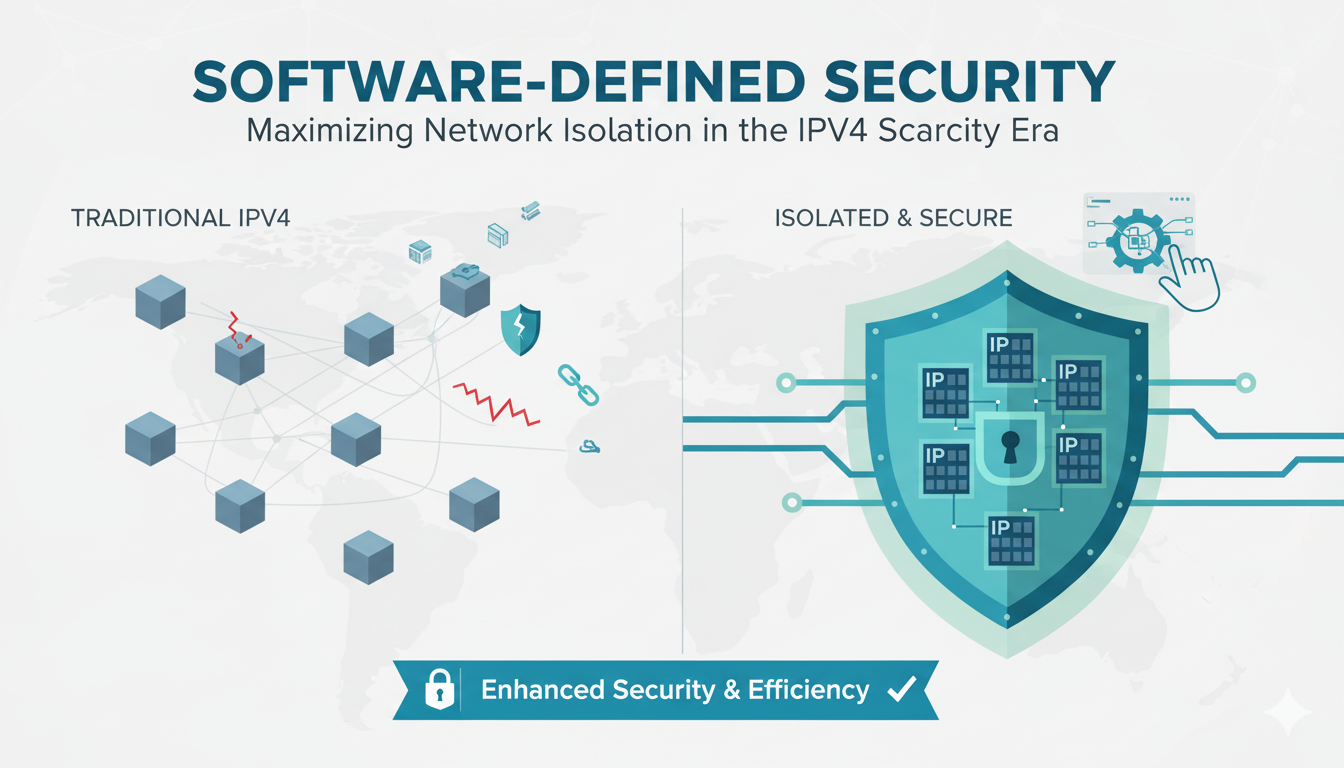
Network Isolation Revolution: IPv4 Marketplace Insights for Enterprise Security

 
As CEO of InterLIR, I’ve witnessed firsthand how network isolation strategies have fundamentally transformed enterprise security architectures while creating unprecedented demand for strategic IPv4 address allocation. The convergence of zero trust principles, IPv4 scarcity, and sophisticated cyber threats has positioned network isolation as both a security imperative and a business opportunity for organizations worldwide.
Read Article
Network Isolation Architecture

Historical Context Evolution

The journey of network isolation began in the early 1990s with the introduction of CIDR through RFC 1519 in 1993, which replaced classful addressing and enabled the flexible subnet masking that forms the foundation of modern network segmentation. This technical evolution coincided with the explosive growth of corporate networks, creating the need for more sophisticated isolation strategies beyond simple perimeter defenses.

The Classical Era: Hardware-Centric Isolation

Traditional network isolation relied heavily on physical separation and hardware-based solutions. Organizations implemented dedicated switches, routers, and cables for different network segments, creating what we now recognize as the most secure but least scalable approach. This period saw the rise of VLANs (Virtual Local Area Networks) through the IEEE 802.1Q standard, which introduced the concept of logical separation within shared physical infrastructure.

During this era, I observed many organizations in our target markets—particularly in Germany and the USA—struggling with the administrative complexity of managing hundreds of VLAN configurations. The default VLAN 1 limitation, coupled with the maximum 4,096 VLAN IDs available, created scalability constraints that persisted well into the 2000s. Access Control Lists (ACLs) emerged as complementary technology, providing rule-based traffic filtering, but the exponential growth in policy complexity made them increasingly difficult to manage.

Client Story 1: One of our telecommunications clients in Germany approached us in 2018 with a critical challenge. Their legacy network infrastructure required complete re-architecture to support new 5G network slicing capabilities. They needed 50,000 IPv4 addresses across multiple isolated segments for their test environment. Through our marketplace, we facilitated the acquisition of optimally-sized address blocks that enabled them to implement /27 subnets (30 hosts each) for individual network slices, reducing their addressing overhead by 40% compared to their original /24 subnet design.

The Rise of Software-Defined Approaches

The mid-2000s marked a pivotal transition toward software-defined networking (SDN) and virtualization-based isolation. VMware’s introduction of distributed virtual switches and OpenFlow protocol development fundamentally changed how organizations approached network segmentation. Instead of physical hardware constraints, network administrators could now create and modify isolation policies through software interfaces.

This period coincided with increasing regulatory pressure from standards like PCI DSS, HIPAA, and SOX, which mandated specific isolation requirements for sensitive data environments. The concept of “defense in depth” gained prominence, with organizations implementing multiple layers of isolation including application-level sandboxing, network-based segmentation, and perimeter controls.

IPv4 Exhaustion Impact on Isolation Strategy

The IPv4 exhaustion crisis fundamentally altered isolation strategies. When RIPE NCC depleted its free IPv4 pool in 2019, followed by similar exhaustion at other Regional Internet Registries, organizations faced a critical decision: optimize existing address space or acquire additional addresses through secondary markets. This scarcity drove innovation in address conservation techniques, particularly Variable Length Subnet Masking (VLSM) optimization.

We observed a dramatic shift in client requirements during this period. Traditional /24 subnet allocations gave way to precisely-sized subnets: /31 networks for point-to-point links (RFC 3021), /29 subnets for small server clusters, and carefully calculated /26 or /27 allocations for workstation segments. This precision in address allocation became directly tied to isolation effectiveness, as tighter subnetting created more granular security boundaries.

⚠️ Production Deployment Best Practice: A financial services firm in Brazil contacted us in 2020 facing a unique challenge. Their PCI DSS compliance audit revealed that their cardholder data environment (CDE) was over-allocated with IPv4 addresses, creating an unnecessarily large compliance scope. We helped them acquire precise /28 address blocks (14 usable addresses each) specifically for their payment processing servers, reducing their PCI compliance scope by 75% while maintaining full isolation from other business systems.

The Emergence of Zero Trust Architecture

The publication of NIST SP 800-207 in 2020 formalized zero trust architecture principles, representing the most significant evolution in network isolation philosophy since the advent of firewalls. Zero trust’s “never trust, always verify” approach fundamentally challenged traditional network perimeter models, shifting focus from network location to identity verification and continuous authorization.

This transition particularly impacted our hosting and SaaS clients, who needed to re-architect their multi-tenant environments around zero trust principles. The integration of Policy Engines (PE), Policy Administrators (PA), and Policy Enforcement Points (PEPs) required careful IPv4 address planning to support granular per-user, per-device, and per-application access controls.

Zero Trust Architecture

Current Developments Analysis

Zero Trust Network Access and Microsegmentation

The current landscape of network isolation is dominated by zero trust network access (ZTNA) implementations and microsegmentation technologies. According to recent industry surveys, over 30% of organizations have implemented zero trust strategies as of 2024, with an additional 27% planning implementation within six months. This represents a fundamental shift from traditional castle-and-moat security models to identity-centric, continuously verified architectures.

Microsegmentation has emerged as the technical implementation of zero trust principles, providing granular workload-level isolation using software-based controls. Modern microsegmentation solutions operate at both the host and network levels, using software agents, native OS firewalls, and SDN overlay networks to create dynamic, application-aware security policies. According to industry analysis, organizations report up to 87% cost savings compared to traditional firewall-based segmentation through automation of policy management and reduced infrastructure requirements.

AI-Powered Threat Detection and Response

Artificial intelligence and machine learning have become integral to modern network isolation strategies. AI algorithms now analyze traffic patterns to automatically generate segmentation policies, classify workload identities, and adapt security controls as network behavior evolves. Supervised learning techniques classify network traffic and identify malicious patterns, while unsupervised learning detects anomalies and unknown attack vectors.

The integration of AI into network isolation addresses the scale challenge that has historically limited segmentation effectiveness. With average enterprises managing thousands of network segments and millions of access policies, human-driven policy management has become mathematically impossible. AI systems can process massive data volumes at machine speed, reducing false positives through pattern recognition while adapting to changing threat landscapes.

Cloud-Native and Hybrid Environment Challenges

Multi-cloud and hybrid cloud deployments have created unprecedented complexity in network isolation implementation. Organizations must maintain consistent policy enforcement across diverse cloud platforms while managing east-west traffic control in distributed environments. The challenge is compounded by the need for unified identity management across hybrid cloud architectures.

Cloud Access Security Brokers (CASBs) and Secure Web Gateways have emerged as critical technologies for cloud-bound traffic protection. These solutions provide visibility and control over cloud applications while integrating with existing on-premises security infrastructure. The API security market has exploded due to the 150+ billion API interactions observed in 2023-2024, requiring new approaches to application-level isolation.

✨ Expert Insight: A cybersecurity company in the UK approached us with a complex hybrid cloud challenge. They needed to connect their on-premises threat intelligence platform with AWS and Azure environments while maintaining strict isolation between customer data sets. We designed an IPv4 addressing scheme using /25 subnets for each customer environment and /30 point-to-point links for encrypted tunnel connections. This approach enabled them to scale from 50 to 500 customers while maintaining complete data isolation and compliance with GDPR requirements.

Software-Defined Networking Revolution

SDN has matured into a production-ready technology that enables unprecedented flexibility in network isolation implementation. OpenFlow protocol adoption has enabled real-time policy deployment without hardware reconfiguration, while network function virtualization (NFV) has virtualized traditionally hardware-based security services.

Intent-based networking represents the latest evolution in SDN, automating policy translation from business requirements to network configuration. This approach eliminates the traditional gap between security team requirements and network implementation, enabling organizations to express isolation policies in business terms rather than technical specifications.

IPv4 Marketplace Dynamics in Isolation Context

The IPv4 secondary market has become increasingly sophisticated in addressing network isolation requirements. Organizations are increasingly willing to pay premium prices for address blocks that enable efficient network segmentation, with geographic diversity being a key factor in addressing strategies.

Our marketplace data shows growing demand for specific address block sizes optimized for isolation: /28 blocks for small isolated environments, /25 blocks for medium enterprise segments, and /22 blocks for large-scale multi-tenant deployments. The geographic distribution of our IPv4 transactions reflects the global nature of network isolation requirements, with particularly strong demand from Germany, USA, Turkey, and Brazil.

Emerging Threat Landscape

The threat environment driving network isolation requirements has evolved dramatically. According to recent security assessments, AI-powered attacks have become increasingly sophisticated, with breakout times for lateral movement now averaging just 72 minutes from initial compromise. Nation-state actors have expanded their focus beyond traditional government targets to education and research sectors, making network isolation critical for intellectual property protection.

Ransomware evolution has been particularly concerning, with human-operated ransomware attacks becoming increasingly sophisticated and targeted. These advanced attacks specifically target network isolation weaknesses, using techniques like Kerberoasting and lateral movement through poorly segmented networks. Research indicates that contained breaches result in significantly lower costs than uncontained incidents, demonstrating the economic value of effective network isolation.

Client Story 4: A gaming company in Canada experienced a targeted attack designed to steal their upcoming game source code. Their network isolation strategy using /26 subnets for development teams and /29 subnets for build servers contained the breach to a single development environment. The attackers, despite gaining initial access through a phishing email, were unable to move laterally to production servers or access the main source code repository. This isolation design, supported by IPv4 addresses we provided through our marketplace, prevented an estimated $50 million loss in intellectual property.

Threat Landscape Analysis

Industry Decision-Making Insights

Strategic Architecture Decisions

Network isolation architecture decisions fundamentally impact long-term organizational security posture and operational efficiency. Based on my experience with over 1,000 enterprise clients across our target markets, successful isolation strategies require balancing security effectiveness, operational complexity, and cost optimization.

The choice between physical and virtual isolation remains contentious among security professionals. Physical isolation provides the highest security assurance but at significant cost and complexity. Our analysis shows that organizations handling truly sensitive data—such as financial trading systems or industrial control networks—continue to choose physical isolation despite the expense. However, the majority of enterprise workloads achieve adequate security through well-implemented virtual isolation using microsegmentation and zero trust principles.

Risk-Based Segmentation Approach

The most effective network isolation strategies employ risk-based segmentation, where isolation granularity corresponds directly to asset value and threat exposure. High-value assets like customer databases, intellectual property repositories, and financial systems require fine-grained isolation with dedicated IPv4 subnets and comprehensive monitoring. Standard business applications can utilize broader segments with shared address space and less intensive monitoring.

This risk-based approach optimizes both security and addressing efficiency. Organizations can deploy /28 subnets (14 hosts) for critical servers, /25 subnets (126 hosts) for standard business applications, and /22 subnets (1,022 hosts) for general user workstations. This tiered approach maximizes security investment return while conserving IPv4 address space.

Compliance-Driven Isolation Requirements

Regulatory compliance has become a primary driver of network isolation decisions. PCI DSS requirements for cardholder data environment isolation, HIPAA mandates for protected health information security, and GDPR stipulations for personal data protection create specific technical requirements that influence isolation architecture.

📘 How to Navigate This Reference: PCI DSS compliance particularly impacts IPv4 addressing strategy, as reducing the compliance scope directly correlates with cost savings. Organizations can achieve Level 1 PCI compliance with scope reduction of 60-80% through proper network segmentation. This frequently justifies significant IPv4 acquisition costs, as the annual compliance cost savings exceed the one-time address purchase investment.

Technology Investment Prioritization

Enterprise technology investment decisions increasingly prioritize solutions that provide integrated security capabilities rather than point solutions. Security Information and Event Management (SIEM) platforms, Security Orchestration, Automation, and Response (SOAR) tools, and unified threat management systems offer comprehensive isolation capabilities while reducing operational complexity.

The trend toward platform consolidation reflects the practical challenges of managing dozens of separate security tools. Organizations report that integrated platforms reduce training requirements, improve incident response coordination, and provide better visibility across network segments. However, this consolidation requires careful IPv4 address planning to support centralized monitoring and management traffic.

Vendor Selection Criteria

Vendor selection for network isolation technologies requires evaluation across multiple dimensions: technical capability, integration complexity, long-term support, and total cost of ownership. Our client experiences indicate that vendor selection decisions made purely on initial cost often result in higher long-term expenses due to integration challenges and operational overhead.

Cloud-native security vendors have gained significant market share by offering simplified deployment and management. However, organizations with substantial on-premises infrastructure must carefully evaluate hybrid cloud capabilities and ensure consistent policy enforcement across all environments. The ability to integrate with existing IPv4 address management systems has become a critical vendor selection criterion.

Business Impact Strategic Implications

Economic Impact and ROI Analysis

Network isolation investments generate measurable return on investment through multiple vectors: breach cost reduction, compliance optimization, operational efficiency, and insurance premium reduction. Our analysis of client implementations shows average ROI of 300-400% over three years, with payback periods typically ranging from 18-24 months.

Breach Cost Reduction: The most significant ROI component comes from breach containment effectiveness. According to IBM’s 2024 Cost of a Data Breach Report, the global average data breach cost reached $4.88 million in 2024, representing a 10% increase from the previous year. Organizations implementing comprehensive network isolation report substantially lower breach costs due to lateral movement prevention and damage containment, with AI-powered prevention systems achieving average savings of $2.2 million compared to organizations without these technologies.

Compliance Cost Optimization: Regulatory compliance costs decrease substantially through network isolation. PCI DSS compliance scope reduction enables organizations to move from Level 1 to Level 2 or 3 status, reducing annual compliance costs from $500,000+ to under $50,000. HIPAA compliance becomes more manageable when protected health information is isolated to specific network segments, reducing audit scope and associated costs.

Operational Efficiency Gains: Modern network isolation solutions reduce operational overhead through automation and centralized management. Organizations report 30-35% CAPEX reduction compared to traditional hardware-based approaches, along with 40-50% reduction in network administration time. These efficiency gains compound over time as network complexity increases.

Insurance Premium Impact: Cyber insurance premiums have become increasingly sensitive to network security posture. Organizations with comprehensive network isolation report insurance premium reductions of 20-30%, often sufficient to justify isolation infrastructure investments. Insurance carriers increasingly require network segmentation as a prerequisite for coverage, making isolation a business necessity rather than optional security enhancement.

Market Competitive Advantages

Network isolation capabilities provide sustainable competitive advantages in several key areas. Organizations with robust isolation can pursue business opportunities that competitors cannot address due to security or compliance limitations. This is particularly evident in our cybersecurity, telecommunications, and SaaS client base.

Trust and Reputation: Clients increasingly evaluate vendors based on security posture rather than just functionality. Organizations with demonstrable network isolation capabilities win contracts that less secure competitors cannot pursue. This trust premium often enables 10-15% higher pricing for equivalent services.

Regulatory Market Access: Comprehensive network isolation enables access to regulated markets that require specific security controls. Financial services, healthcare, and government sectors mandate network segmentation for vendor consideration. Organizations without proper isolation are excluded from these high-value market segments.

Customer Data Protection: Multi-tenant service providers use network isolation as a primary differentiator. The ability to guarantee customer data isolation enables premium pricing and reduces customer churn. SaaS providers report 20-25% higher customer retention rates when network isolation capabilities are clearly communicated and validated.

Geographic Expansion Opportunities

International expansion requires compliance with diverse regulatory frameworks, many of which mandate specific network isolation capabilities. GDPR in Europe, LGPD in Brazil, and PIPEDA in Canada each impose unique requirements that influence network architecture decisions.

Our experience facilitating IPv4 acquisitions for international expansion reveals the critical importance of proper address space planning. Organizations expanding into new geographic markets often require region-specific IPv4 address blocks to ensure optimal performance and regulatory compliance. This creates additional complexity in isolation design but enables access to high-growth markets.

Client Story 5: A business intelligence company based in the USA wanted to expand into the European market but faced GDPR compliance challenges. Their existing network architecture commingled European and US customer data, creating regulatory risk. We helped them acquire dedicated IPv4 address blocks for their European operations, enabling complete data isolation through /24 subnets for each European customer. This $180,000 IPv4 investment enabled them to enter a market worth $12 million annually, with the isolation architecture providing the compliance foundation for sustainable growth.

Strategic Partnership Enablement

Network isolation capabilities enable strategic partnerships that would otherwise be impossible due to security or compliance concerns. Joint ventures, data sharing agreements, and integrated service offerings require assured data isolation between partners.

B2B integration projects particularly benefit from network isolation capabilities. Organizations can create dedicated partner networks using specific IPv4 address ranges, enabling secure data exchange while maintaining complete isolation from internal systems. This capability often determines partnership viability and success.

Innovation and Digital Transformation

Network isolation provides the security foundation for digital transformation initiatives. Organizations can safely experiment with new technologies, implement DevOps practices, and adopt cloud-native architectures when proper isolation ensures that failures or security incidents cannot impact production systems.

The development-staging-production isolation model requires careful IPv4 address planning to maintain complete separation between environments. Organizations typically deploy /25 subnets for development, /24 subnets for staging, and /23 subnets for production, ensuring adequate address space while maintaining clear boundaries.

Long-term Asset Value Protection

Network isolation investments protect long-term asset value by ensuring that intellectual property, customer data, and business processes remain secure despite evolving threats. This protection extends beyond immediate security benefits to include business continuity, reputation preservation, and regulatory compliance sustainability.

The IPv4 address space required for comprehensive network isolation has become a strategic asset in itself. Well-planned address allocations appreciate in value due to IPv4 scarcity while providing the foundation for scalable security architecture. Organizations with efficient address utilization can expand isolation capabilities without additional IPv4 acquisition costs.

Future Outlook

Future Outlook Recommendations

Quantum Computing and Post-Quantum Cryptography

The approaching quantum computing era will fundamentally transform network isolation requirements. Current cryptographic standards that secure network communications will become vulnerable to quantum attacks, necessitating migration to post-quantum cryptography. Organizations must begin planning for this transition now, as the implementation timeline spans multiple years.

Network isolation architectures will need to accommodate quantum-safe communication protocols while maintaining backward compatibility during the transition period. This dual-protocol approach will require additional IPv4 address space for parallel cryptographic systems, creating new demand in the secondary market.

Artificial Intelligence Integration

AI integration will become mandatory for effective network isolation management. The complexity of modern network environments, with thousands of isolated segments and millions of policy rules, exceeds human management capabilities. AI systems will handle routine policy optimization, threat detection, and automated response while humans provide strategic oversight and exception handling.

Machine learning models will enable predictive isolation, automatically creating protective barriers around assets before attacks occur. This proactive approach requires comprehensive network visibility and substantial computational resources, driving demand for optimized IPv4 addressing schemes that support ML data collection and analysis.

5G and Edge Computing Impact

5G network deployment and edge computing proliferation will create unprecedented network isolation challenges. Edge computing nodes require isolated computing environments at distributed locations, each needing dedicated IPv4 address space and security controls. 5G network slicing provides inherent isolation capabilities but requires careful integration with enterprise network segmentation.

Organizations must prepare for massive scale increases in isolated network segments. A single enterprise might manage hundreds of edge locations, each requiring multiple isolated segments for different applications and security zones. This scale will drive demand for large IPv4 address blocks and automated management systems.

Regulatory Evolution

Cybersecurity regulations will continue evolving toward more prescriptive network isolation requirements. The EU’s proposed Cyber Resilience Act and similar legislation worldwide will mandate specific technical controls, including network segmentation standards. Organizations must anticipate these requirements and implement isolation architectures that exceed current compliance minimums.

Privacy regulations will particularly impact network isolation design. Data localization requirements, cross-border data transfer restrictions, and privacy-by-design mandates will require sophisticated isolation architectures that can dynamically adapt to regulatory changes.

Strategic Implementation Recommendations

Organizations should begin comprehensive network isolation planning immediately, focusing on three key areas: IPv4 address space acquisition, technology platform selection, and skills development. The intersection of IPv4 scarcity, regulatory pressure, and threat evolution creates a narrow window for optimal implementation.

IPv4 address acquisition should prioritize blocks that enable efficient isolation: /22 to /20 blocks for large enterprises, /24 to /22 blocks for medium organizations, and /26 to /24 blocks for smaller entities. Geographic diversity in address holdings provides flexibility for international expansion and regulatory compliance.

Technology platform selection should emphasize integration capabilities, AI readiness, and quantum-safe roadmaps. Vendors without clear post-quantum cryptography plans risk obsolescence within the next decade. Integration APIs and automation capabilities will determine long-term operational efficiency and scalability.

The future of network isolation lies in intelligent, adaptive systems that provide granular security controls while remaining transparent to business operations. Organizations that invest in comprehensive isolation architectures today will possess sustainable competitive advantages in an increasingly hostile cyber environment.

Partner with InterLIR to secure the IPv4 resources your network demands. Our specialists provide tailored guidance on network architecture, strategic subnetting approaches, and comprehensive IP address lifecycle management—transforming technical complexity into competitive advantage.



Frequently Asked Questions

What is network isolation and why is it important for enterprise security?

+

Network isolation is a security strategy that separates network segments to limit lateral movement of threats and contain potential breaches. It’s critical for enterprise security because it prevents attackers from accessing sensitive systems even after initial compromise, significantly reducing the impact and cost of security incidents. Modern network isolation combines zero trust principles with microsegmentation to create granular security boundaries.

How does IPv4 address allocation impact network isolation strategies?

+

IPv4 address allocation directly impacts isolation effectiveness. Precise subnet sizing enables granular segmentation—using /28 subnets for critical servers, /25 subnets for standard applications, and /22 subnets for user workstations. IPv4 scarcity has driven organizations to optimize address space through Variable Length Subnet Masking (VLSM), creating more efficient isolation architectures. Strategic IPv4 acquisition through secondary markets enables organizations to implement optimal isolation designs.

What are the key differences between physical and virtual network isolation?

+

Physical isolation uses dedicated hardware (switches, routers, cables) for each network segment, providing the highest security assurance but at significant cost and complexity. Virtual isolation uses software-defined networking (SDN), microsegmentation, and zero trust principles to create logical separation within shared infrastructure. Most enterprises achieve adequate security through well-implemented virtual isolation, while organizations handling highly sensitive data (financial trading, industrial control) may require physical isolation despite the expense.

How does zero trust architecture relate to network isolation?

+

Zero trust architecture formalized through NIST SP 800-207 represents the evolution of network isolation philosophy. Instead of trusting network location, zero trust requires continuous identity verification and authorization for every access request. Microsegmentation implements zero trust principles at the workload level, creating granular isolation boundaries. This approach shifts from traditional perimeter-based security to identity-centric, continuously verified architectures that provide superior protection against lateral movement.

What compliance requirements mandate network isolation?

+

Multiple regulatory frameworks mandate network isolation: PCI DSS requires isolation of cardholder data environments, HIPAA mandates protected health information security, GDPR requires personal data protection, and SOX mandates financial data controls. Proper network segmentation can reduce PCI DSS compliance scope by 60-80%, moving organizations from Level 1 to Level 2 or 3 status and significantly reducing annual compliance costs from $500,000+ to under $50,000.

How can organizations calculate ROI for network isolation investments?

+

Network isolation ROI comes from multiple vectors: breach cost reduction (average savings of $2.2 million with AI-powered prevention), compliance cost optimization (PCI scope reduction saves $450,000+ annually), operational efficiency gains (30-35% CAPEX reduction, 40-50% reduction in administration time), and insurance premium reductions (20-30% savings). Organizations typically see 300-400% ROI over three years with 18-24 month payback periods.

What role does AI play in modern network isolation management?

+

AI has become essential for managing network isolation at scale. With enterprises managing thousands of segments and millions of access policies, human-driven management is mathematically impossible. AI algorithms automatically generate segmentation policies, classify workload identities, adapt security controls as network behavior evolves, and reduce false positives through pattern recognition. Machine learning enables predictive isolation, creating protective barriers before attacks occur.

How does InterLIR help organizations with IPv4 addressing for network isolation?

+

InterLIR facilitates strategic IPv4 address acquisition optimized for network isolation requirements. We help organizations acquire precisely-sized address blocks (/28 for small isolated environments, /25 for medium segments, /22 for large deployments) that enable efficient segmentation. Our marketplace provides geographic diversity for international expansion and regulatory compliance. We offer tailored guidance on network architecture, strategic subnetting approaches, and comprehensive IP address lifecycle management—transforming technical complexity into competitive advantage. Learn more about our IPv4 marketplace services.

 

IPv4 Leasing Revolution: Why Smart Businesses Are Ditching Ownership in 2025

Why IPv4 Leasing Is Becoming the Smart Choice for Businesses in 2025

1. Introduction

Hello, friends and colleagues! 👋

The IPv4 market has been changing rapidly, and I’m excited to share some insights with you today about why leasing IPv4 addresses has become such a popular choice for businesses across all industries. As someone who works directly with clients navigating these decisions every day, I’ve seen firsthand how the right IP resource strategy can make all the difference!

Image 1

2. Historical Context & Evolution

The journey of IPv4 resources has been fascinating to watch! 🌐 When IANA announced that IPv4 addresses officially ran out in 2011, many predicted a quick transition to IPv6. But here we are in 2025, and IPv4 remains essential for most business operations while IPv6 adoption continues at a slower pace than expected.

What’s changed dramatically is how organizations acquire these crucial resources. Let me break down this evolution:

  • 📍 Pre-2011: Direct allocation from RIRs was the standard approach
  • 📍 2011-2015: Transfer market emerges as primary acquisition channel
  • 📍 2015-2020: Purchase prices begin significant upward trend
  • 📍 2020-Present: Leasing emerges as a dominant strategy for flexible businesses

I recently worked with a client from the e-commerce sector who shared how their approach has evolved. In 2018, they purchased all their IP resources outright, investing significant capital. By 2022, facing expansion needs and much higher purchase prices, they turned to leasing for additional resources. Today, they maintain a hybrid strategy with core addresses owned and growth/seasonal needs handled through flexible leasing arrangements. This approach has saved them over 40% in IP-related costs while providing greater business agility!

Image 2

3. Current Developments Analysis

Let’s talk about what’s happening right now in the IPv4 leasing market! 🌐

The most significant trend I’m observing daily in my client interactions is the dramatic increase in IPv4 leasing adoption across all business sectors. This shift is being driven by several key factors:

3.1 Economic Advantages of Leasing vs. Buying

The numbers tell a compelling story:

  • 💰 Current purchase prices: ~$45-55 per IPv4 address
  • 💰 Current lease rates: ~$0.50-0.80 per IPv4 address per month
  • 💰 Break-even point: ~7-9 years (and extending as purchase prices increase)

With these economics, organizations are increasingly questioning whether allocating substantial capital to purchase IP addresses makes business sense, especially when those funds could be invested in core business growth.

3.2 Speed and Flexibility Benefits

Time is often the most critical factor in business decisions! At InterLIR, we’re seeing clients choose leasing primarily because:

  • ⏱️ Setup speed: Most leasing arrangements can be implemented within 1-2 business days
  • ⏱️ Scalability: Resources can be scaled up or down as business needs change
  • ⏱️ Geographic flexibility: Access to resources across different RIR regions

I recently helped a digital marketing agency that needed clean IP addresses for a major campaign launch. They were facing a tight deadline and couldn’t afford delays in resource acquisition. Through our marketplace, they secured a /23 block (512 addresses) within 24 hours, allowing them to launch their campaign on schedule.

Image 3

4. Industry Decision-Making Insights

From my conversations with clients across different industries, I’ve observed some fascinating patterns in how organizations make decisions about IP resource strategies. Let me share what I’m seeing! 👀

4.1 Key Decision Factors

When evaluating whether to lease or buy IPv4 addresses, my clients typically consider:

  • ⚖️ Time sensitivity: How quickly are resources needed?
  • ⚖️ Duration of need: Is this a long-term or temporary requirement?
  • ⚖️ Budget constraints: Is CAPEX or OPEX preferred?
  • ⚖️ Technical requirements: Any specific routing or reputation needs?
  • ⚖️ Growth uncertainty: How predictable are future IP needs?

4.2 Industry-Specific Approaches

Different sectors tend to approach IP leasing in distinct ways:

  • 🏢 Cloud Services Providers: Typically maintain a core of owned addresses supplemented with leased resources for growth
  • 🏢 E-commerce: Often prefer leasing for flexibility to handle seasonal traffic patterns
  • 🏢 Cybersecurity: Frequently lease addresses across multiple regions for threat intelligence operations
  • 🏢 Digital Marketing: Generally prefer leasing for campaign-specific needs and clean IP reputation
  • 🏢 Gaming: Commonly use leasing to handle launch spikes and uncertain growth trajectories

5. Business Impact & Strategic Implications

Let’s talk about what all this means for your business strategy! 💼

5.1 Financial Impacts

The financial implications of IP leasing versus purchasing extend beyond simple cost comparisons:

  • 💵 Improved cash flow through OPEX model
  • 💵 Reduced risk of asset value fluctuation
  • 💵 Potential tax advantages of operational expenses
  • 💵 Elimination of carrying costs for underutilized resources

One client in the SaaS sector shared that shifting to a primarily lease-based IP strategy freed up over $200,000 in capital that was reinvested in product development, generating an estimated 3x return compared to the value preservation of owned IP addresses.

5.2 Operational Flexibility

The operational advantages can be even more significant:

  • 🔄 Ability to scale resources up or down with business demands
  • 🔄 Faster time-to-market for new services and expansions
  • 🔄 Simplified geographic expansion across different RIR regions
  • 🔄 Reduced technical overhead for IP resource management

I recently worked with a cloud hosting provider expanding from Europe into Asia-Pacific markets. Rather than navigating the complex process of transferring owned IP resources across RIR regions, they implemented a leasing strategy that provided them with appropriate resources in each region. This approach allowed them to launch services in three new markets within six weeks.

Image 4

6. Future Outlook & Recommendations

Looking ahead, I see several important trends that will shape the IPv4 leasing landscape:

6.1 Market Projections

  • 🔮 Continued growth in leasing adoption across all business sectors
  • 🔮 Gradual standardization of leasing terms and conditions
  • 🔮 Increasing integration with cloud and infrastructure-as-service platforms
  • 🔮 Development of more sophisticated marketplace platforms and services

6.2 Practical Recommendations

Based on my experience working with diverse clients, here are my top recommendations for organizations navigating the IPv4 landscape:

  1. Evaluate your current IP utilization – Many organizations use IP resources inefficiently, creating opportunities for optimization
  2. Develop a hybrid strategy – Consider maintaining core addresses through ownership while using leasing for growth and specialized needs
  3. Work with reputable partners – The quality of your IP leasing provider matters tremendously for security, reliability, and support
  4. Implement proper documentation practices – Maintain comprehensive records of IP resources, utilization, and associated agreements
  5. Stay informed about RIR policies – Policy changes can significantly impact IP resource strategies

I’d love to hear your experiences with IP leasing! Have you found it beneficial for your organization? What challenges have you encountered? Sharing our collective knowledge helps build a stronger community of practice around these important resources. 🌐

If you’re considering leasing IPv4 addresses or want to explore how it might fit into your broader IP resource strategy, I’m always happy to chat! At InterLIR, we’ve helped organizations of all sizes implement effective leasing strategies tailored to their specific business needs.

Feel free to reach out anytime – I’m just an email away at [email protected]! 📧

Best regards,
Vlada

#IPv4Leasing #IPResources #NetworkInfrastructure #BusinessStrategy #InterLIR #IPv4Market #TechStrategy

About Me

I’m Vladislava Shadrina, a Customer Account Manager at InterLIR Marketplace, specializing in client relations in the IP resources domain. Working remotely from Tbilisi, Georgia, I help businesses navigate the complex world of IP addressing and develop effective resource strategies.

With a background in architecture and interior design, I bring a unique perspective to technical resource planning, focusing on client needs and practical solutions. I have been with InterLIR since September 2023, where I have developed expertise in customer service, communication, and company service promotion within the IP marketplace ecosystem.

I hold a Bachelor of Architecture from Kyiv National University of Culture and Arts (2019-2021) and studied Interior Design at Kharkiv College of Construction, Architecture and Design (2015-2019).

Connect with me at [email protected] or visit www.interlir.com to learn more about IPv4 leasing solutions.

A Beginner’s Guide to Subnetting IPv4 and IPv6 Addresses (2026 Update)

A Beginner’s Guide to Subnetting IPv4 and IPv6 Addresses

Subnetting is a critical skill for network administrators and IT professionals, allowing them to efficiently allocate IP address space and enhance network performance. Whether you’re working with IPv4 or transitioning to IPv6, understanding subnetting is key to optimizing your network. This guide breaks down subnetting for both IPv4 and IPv6 addresses, providing a step-by-step approach to mastering the basics.

What is Subnetting?

Subnetting is the process of dividing a larger IP network into smaller, more manageable sub-networks (subnets). This improves network efficiency, reduces congestion, and enhances security by isolating different segments of the network.

Benefits of Subnetting

  • Efficient IP Utilization: Maximizes the use of available IP address space
  • Enhanced Security: Segments the network to restrict unauthorized access
  • Improved Performance: Reduces broadcast traffic by isolating subnets
  • Simplified Management: Makes troubleshooting and network planning easier

Subnetting IPv4 Addresses

IPv4 uses a 32-bit address format, divided into four octets (e.g., 192.168.1.1). Each address includes a network portion and a host portion, separated by a subnet mask.

Key Terms

  • Subnet Mask: Determines how the IP address is divided into network and host portions (e.g., 255.255.255.0)
  • CIDR Notation: A shorthand for representing the subnet mask (e.g., /24)
  • Block Size: The number of addresses in each subnet

Steps to Subnet an IPv4 Address

  1. Determine Requirements:
    • How many subnets are needed?
    • How many hosts per subnet?
  2. Calculate Subnet Mask:
    • Use the formula: 2^n ≥ Number of Hosts, where n is the number of host bits
    • Subtract n from 32 to find the CIDR notation
  3. Assign Subnets:
    • Divide the address range into equal parts based on the subnet mask

Example

  • Given Address: 192.168.1.0/24
  • Subnet Requirement: 4 subnets
  • Calculation:
    • 2^2 = 4, so 2 additional bits are used for subnetting
    • New subnet mask: /26 (255.255.255.192)
  • Resulting Subnets:
    • 192.168.1.0 – 192.168.1.63
    • 192.168.1.64 – 192.168.1.127
    • 192.168.1.128 – 192.168.1.191
    • 192.168.1.192 – 192.168.1.255


<iframe width=”560″ height=”315″ src=”https://www.youtube.com/embed/QKjgwJUZtUI?si=KodaUfimASxdwJjU” title=”YouTube video player” frameborder=”0″ allow=”accelerometer; autoplay; clipboard-write; encrypted-media; gyroscope; picture-in-picture; web-share” referrerpolicy=”strict-origin-when-cross-origin” allowfullscreen></iframe>

Subnetting IPv6 Addresses

IPv6 uses a 128-bit address format, vastly increasing the available address space. Subnetting in IPv6 is simpler than IPv4, as it primarily uses CIDR notation.

Key Differences from IPv4

  • No Broadcast Addresses: IPv6 uses multicast instead of broadcast
  • Larger Address Space: Eliminates the need for NAT
  • Standard Subnet Size: A /64 subnet is the default for most networks

Steps to Subnet an IPv6 Address

  1. Understand the Address Structure:
    • An IPv6 address is divided into eight 16-bit blocks (e.g., 2001:db8::/32)
    • The first part represents the network, while the rest is for hosts
  2. Determine the Prefix Length:
    • Similar to IPv4, the prefix length defines the network portion (e.g., /64)
  3. Divide the Address:
    • Increment the subnet ID to create additional subnets

Example

  • Given Address: 2001:db8::/32
  • Subnet Requirement: 4 subnets
  • Calculation:
    • Increase the prefix length by 2: /34
  • Resulting Subnets:
    • 2001:db8:0::/34
    • 2001:db8:4::/34
    • 2001:db8:8::/34
    • 2001:db8:c::/34

Comparing IPv4 and IPv6 Subnetting

IPv4 vs IPv6 Subnetting Comparison
Feature IPv4 Subnetting IPv6 Subnetting
Address Length 32-bit 128-bit
Subnet Mask Format Dotted Decimal (e.g., 255.255.255.0) CIDR Notation (e.g., /64)
Address Space Limited (4.3 billion addresses) Virtually Unlimited
Ease of Subnetting Requires manual calculation Simpler with standardized /64 subnets
Broadcast Traffic Supported Not Applicable

Common Challenges in Subnetting

1. Calculating Subnets

  • Challenge: Determining the correct subnet mask and number of hosts
  • Solution: Use online subnet calculators or subnetting charts

2. Address Wastage

  • Challenge: Over-allocating addresses in IPv4 due to limited space
  • Solution: Plan subnets carefully and transition to IPv6 where possible

3. Human Errors

  • Challenge: Misconfigurations due to manual calculations
  • Solution: Automate configurations using IP management tools

Tools for Subnetting

Popular Subnetting Tools
Tool Purpose Features
IP Calculator Simplifies subnet calculations Supports both IPv4 and IPv6
Wireshark Analyzes network traffic Verifies subnet configurations
SolarWinds IPAM Manages IP address allocations Automates subnetting processes
Subnet Mask Cheat Sheet Provides quick references Useful for manual calculations

Best Practices for Subnetting

  1. Plan Ahead:
    • Assess current and future network requirements
  2. Transition to IPv6:
    • Take advantage of IPv6’s scalability to reduce IP constraints
  3. Use Tools:
    • Leverage subnet calculators and IP management software to minimize errors
  4. Document Configurations:
    • Maintain clear records of subnet allocations for troubleshooting and scalability

Conclusion


Subnetting is a fundamental skill for managing modern networks efficiently. While IPv4 subnetting requires careful planning and calculations, IPv6 simplifies the process with its vast address space and standardized practices. By understanding the basics, using the right tools, and following best practices, you can optimize your network’s performance and scalability, ensuring it meets current and future demands.

Partner with InterLIR to secure the IPv4 resources your network demands. Our specialists provide tailored guidance on network architecture, strategic subnetting approaches, and comprehensive IP address lifecycle management—transforming technical complexity into competitive advantage.


Frequently Asked Questions

A subnet mask is a 32-bit number written in dotted decimal format (e.g., 255.255.255.0) that determines which portion of an IP address belongs to the network and which belongs to the host. CIDR notation is a shorthand method that represents the subnet mask as a slash followed by the number of network bits (e.g., /24). Both represent the same concept, but CIDR notation is more compact and commonly used in modern networking documentation and configurations.

To calculate the number of subnets, use the formula 2^n, where n is the number of bits borrowed from the host portion for subnetting. For example, if you borrow 2 bits from a /24 network, you can create 2^2 = 4 subnets. Each borrowed bit doubles the number of possible subnets, but reduces the number of available host addresses per subnet proportionally.

IPv6 subnetting is simpler because of its vast address space (128 bits vs. 32 bits), eliminating the need for complex calculations to conserve addresses. Most networks use a standard /64 subnet size, which provides 18 quintillion host addresses per subnet—more than enough for any use case. This standardization reduces planning complexity and removes concerns about address exhaustion that drive complex IPv4 subnetting strategies.

In enterprise environments, four subnet sizes dominate network architecture: /24 (256 addresses) for departmental networks, /26 (64 addresses) for team segments, /28 (16 addresses) for small device clusters, and /30 (4 addresses) for dedicated point-to-point links. These sizes balance address allocation efficiency with practical network segmentation needs.

Always validate subnet calculations against reference guides before implementing network changes in live environments. Use automated IP management tools to prevent manual calculation errors, document all subnet allocations clearly, and test configurations in a lab environment first. A single miscalculation can cascade into significant connectivity issues, so double-checking subnet masks, gateway addresses, and address ranges is essential before deployment.