Hello, friends and colleagues! 👋
The IPv4 market has been changing rapidly, and I’m excited to share some insights with you today about why leasing IPv4 addresses has become such a popular choice for businesses across all industries. As someone who works directly with clients navigating these decisions every day, I’ve seen firsthand how the right IP resource strategy can make all the difference!

The journey of IPv4 resources has been fascinating to watch! 🌐 When IANA announced that IPv4 addresses officially ran out in 2011, many predicted a quick transition to IPv6. But here we are in 2025, and IPv4 remains essential for most business operations while IPv6 adoption continues at a slower pace than expected.
What’s changed dramatically is how organizations acquire these crucial resources. Let me break down this evolution:
I recently worked with a client from the e-commerce sector who shared how their approach has evolved. In 2018, they purchased all their IP resources outright, investing significant capital. By 2022, facing expansion needs and much higher purchase prices, they turned to leasing for additional resources. Today, they maintain a hybrid strategy with core addresses owned and growth/seasonal needs handled through flexible leasing arrangements. This approach has saved them over 40% in IP-related costs while providing greater business agility!

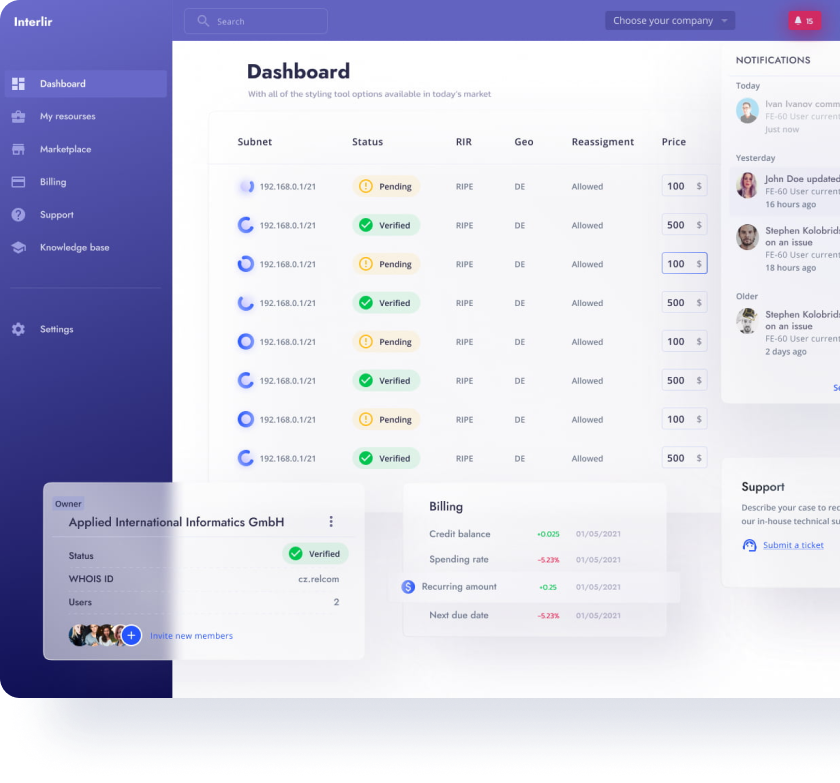
Let’s talk about what’s happening right now in the IPv4 leasing market! 🌐
The most significant trend I’m observing daily in my client interactions is the dramatic increase in IPv4 leasing adoption across all business sectors. This shift is being driven by several key factors:
The numbers tell a compelling story:
With these economics, organizations are increasingly questioning whether allocating substantial capital to purchase IP addresses makes business sense, especially when those funds could be invested in core business growth.
Time is often the most critical factor in business decisions! At InterLIR, we’re seeing clients choose leasing primarily because:
I recently helped a digital marketing agency that needed clean IP addresses for a major campaign launch. They were facing a tight deadline and couldn’t afford delays in resource acquisition. Through our marketplace, they secured a /23 block (512 addresses) within 24 hours, allowing them to launch their campaign on schedule.

From my conversations with clients across different industries, I’ve observed some fascinating patterns in how organizations make decisions about IP resource strategies. Let me share what I’m seeing! 👀
When evaluating whether to lease or buy IPv4 addresses, my clients typically consider:
Different sectors tend to approach IP leasing in distinct ways:
Let’s talk about what all this means for your business strategy! 💼
The financial implications of IP leasing versus purchasing extend beyond simple cost comparisons:
One client in the SaaS sector shared that shifting to a primarily lease-based IP strategy freed up over $200,000 in capital that was reinvested in product development, generating an estimated 3x return compared to the value preservation of owned IP addresses.
The operational advantages can be even more significant:
I recently worked with a cloud hosting provider expanding from Europe into Asia-Pacific markets. Rather than navigating the complex process of transferring owned IP resources across RIR regions, they implemented a leasing strategy that provided them with appropriate resources in each region. This approach allowed them to launch services in three new markets within six weeks.

Looking ahead, I see several important trends that will shape the IPv4 leasing landscape:
Based on my experience working with diverse clients, here are my top recommendations for organizations navigating the IPv4 landscape:
I’d love to hear your experiences with IP leasing! Have you found it beneficial for your organization? What challenges have you encountered? Sharing our collective knowledge helps build a stronger community of practice around these important resources. 🌐
If you’re considering leasing IPv4 addresses or want to explore how it might fit into your broader IP resource strategy, I’m always happy to chat! At InterLIR, we’ve helped organizations of all sizes implement effective leasing strategies tailored to their specific business needs.
Feel free to reach out anytime – I’m just an email away at [email protected]! 📧
Best regards,
Vlada
#IPv4Leasing #IPResources #NetworkInfrastructure #BusinessStrategy #InterLIR #IPv4Market #TechStrategy
I’m Vladislava Shadrina, a Customer Account Manager at InterLIR Marketplace, specializing in client relations in the IP resources domain. Working remotely from Tbilisi, Georgia, I help businesses navigate the complex world of IP addressing and develop effective resource strategies.
With a background in architecture and interior design, I bring a unique perspective to technical resource planning, focusing on client needs and practical solutions. I have been with InterLIR since September 2023, where I have developed expertise in customer service, communication, and company service promotion within the IP marketplace ecosystem.
I hold a Bachelor of Architecture from Kyiv National University of Culture and Arts (2019-2021) and studied Interior Design at Kharkiv College of Construction, Architecture and Design (2015-2019).
Connect with me at [email protected] or visit www.interlir.com to learn more about IPv4 leasing solutions.

Vladislava Shadrina
Customer Account Manager

A Beginner’s Guide to Subnetting IPv4 and IPv6 Addresses Subnetting is a critical

Why IPv4 Leasing Is Becoming the Smart Choice for Businesses in 2025 1. Introduction
As CEO of InterLIR, I’ve witnessed firsthand how network isolation strategies

What is an ASN? ASN stands for Autonomous System Number. It is a unique identifier

Anycast DNS: A Leader’s Guide to Protecting Your Digital Infrastructure Executive

RPKI Certification: A Leader’s Guide to Internet Routing Security Executive

Executive Summary: What You Need to Know 🎯 Strategic Importance – Internet

When AWS DynamoDB failed in October 2025, thousands of businesses discovered that

Executive Summary: What You Need to Know 🎯 IP reputation directly impacts your
Live chat is provided by Intercom and is loaded only after you enable it. You can also contact us without enabling the chat.