

As CEO of InterLIR, a specialized IPv4 address marketplace, I’ve witnessed firsthand the mounting pressures organizations face regarding IP address management and network infrastructure evolution. Amazon’s November 2025 announcement of IPv6 support for S3 Express One Zone represents more than a technical feature addition-it signals a fundamental shift in how enterprises must approach cloud storage connectivity in an era of address exhaustion and infrastructure modernization.
This development arrives at a critical juncture. Since founding InterLIR in 2020, our team has facilitated countless IPv4 address transactions for organizations struggling with address scarcity. The integration of IPv6 into high-performance storage services like S3 Express One Zone provides enterprises with a strategic alternative pathway, though the relationship between IPv4 markets and IPv6 adoption is more nuanced than simple substitution.
The Strategic Context: Why IPv6 Integration Matters Now
Amazon’s implementation of IPv6 for S3 Express One Zone through gateway VPC endpoints addresses several converging pressures that my team at InterLIR observes daily in our interactions with enterprise clients. The timing is particularly significant given the current state of global IP address availability.
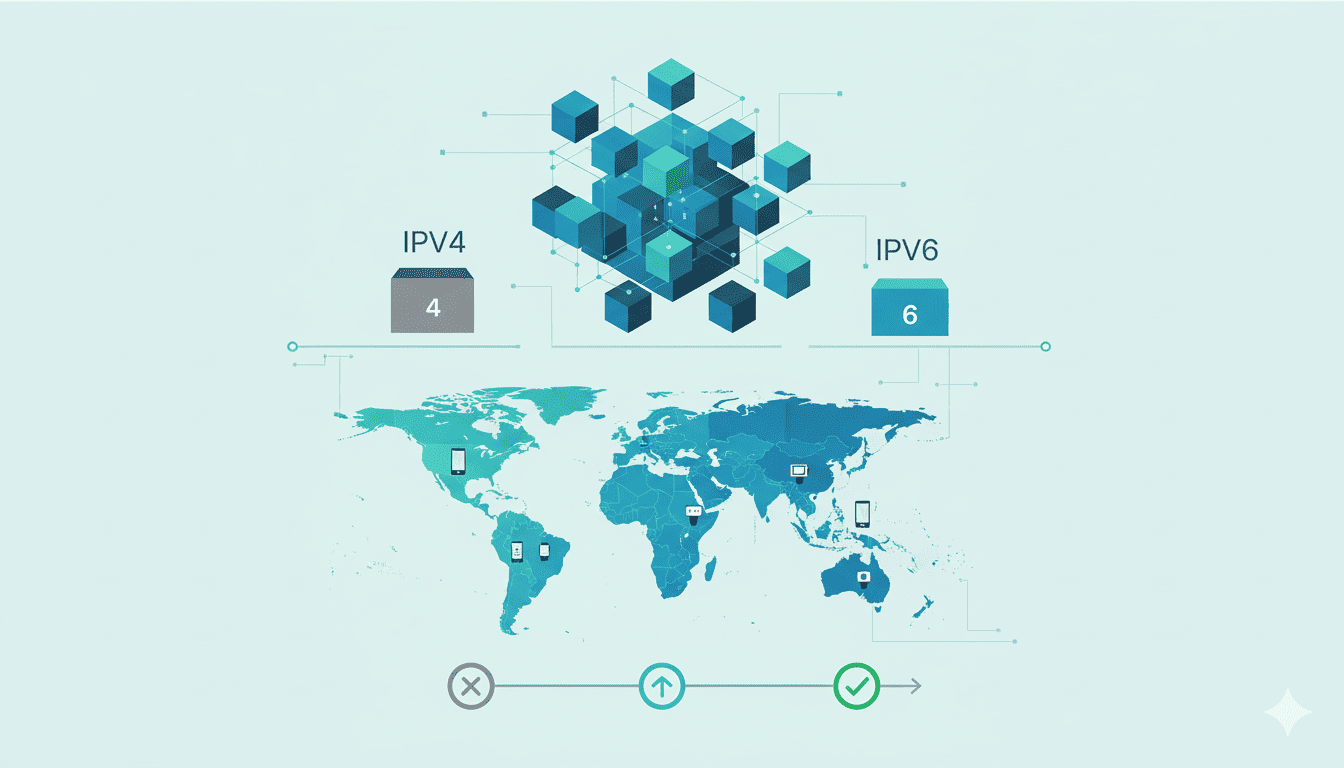
IPv4 address exhaustion has transitioned from a theoretical concern to an operational reality. Organizations expanding their cloud footprints increasingly encounter scenarios where private IPv4 address space becomes constrained, particularly in large-scale data center environments or complex hybrid architectures. While InterLIR facilitates IPv4 address acquisitions to address immediate needs, the 128-bit address space of IPv6 (providing approximately 340 undecillion unique addresses) offers a fundamentally different solution to address scarcity.
| Infrastructure Challenge | IPv4 Approach | IPv6 Approach | Business Impact |
|---|---|---|---|
| Address Space Limitations | Purchase additional IPv4 blocks | Leverage virtually unlimited addressing | Eliminates long-term scarcity concerns |
| Network Address Translation | Required for private networks | Optional or unnecessary | Reduces complexity and potential performance overhead |
| Regulatory Compliance | May require IPv6 alongside IPv4 | Native support for mandates | Simplifies compliance posture |
| Future-Proofing | Temporary solution | Long-term architectural foundation | Reduces infrastructure refresh cycles |
From my perspective working with organizations across various sectors, the decision to adopt IPv6 isn’t purely technical-it’s strategic. Companies must balance immediate operational requirements against long-term infrastructure sustainability. S3 Express One Zone’s IPv6 support provides a critical component for organizations pursuing this balance, particularly those with latency-sensitive applications.

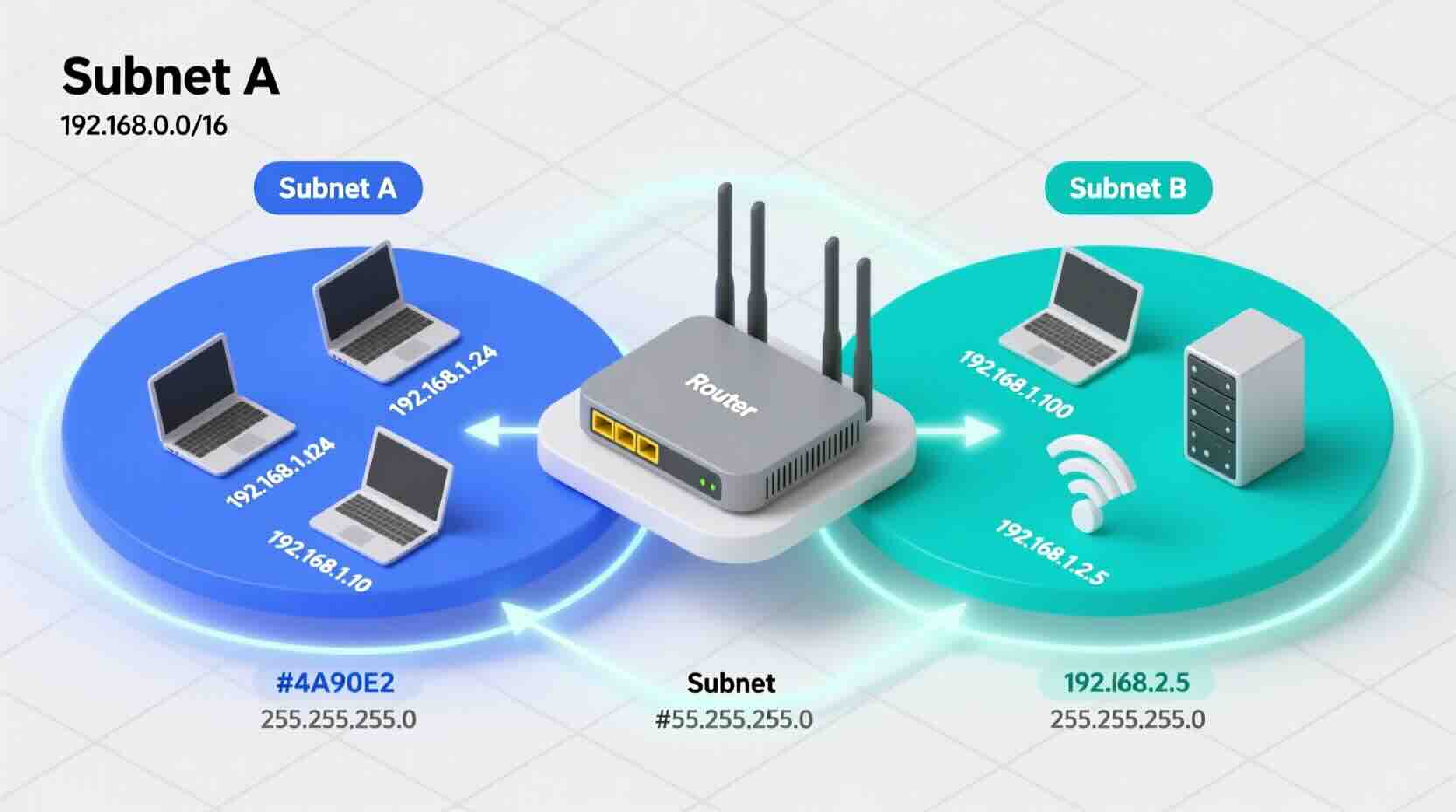
IPv6 network architecture diagram showing VPC endpoint configuration with cloud storage
Technical Architecture and Implementation Pathways
The implementation approach Amazon has taken with S3 Express One Zone demonstrates sophisticated understanding of enterprise migration challenges. By supporting IPv6 through VPC endpoints rather than requiring public internet connectivity, AWS addresses security and performance concerns that often complicate IPv6 adoption.
VPC Endpoint Configuration Options
Organizations now have three primary deployment models, each serving distinct strategic purposes:
- IPv6-Only Endpoints – Designed for organizations with fully modernized, IPv6-native infrastructure. This approach eliminates dual-protocol overhead and simplifies network architecture, though it requires comprehensive IPv6 readiness across the application stack.
- DualStack Endpoints – The pragmatic choice for most enterprises during transition periods. This configuration maintains IPv4 connectivity while enabling IPv6 capabilities, allowing gradual application migration without service disruption.
- Hybrid Integration – Organizations can add IPv6 support to existing VPC endpoints, facilitating incremental adoption aligned with broader infrastructure modernization initiatives.
Deployment Interfaces and Automation
AWS provides multiple configuration interfaces to accommodate different operational models:
AWS Management Console – Suitable for initial testing and smaller-scale deployments where manual configuration is acceptable
AWS CLI – Enables scriptable deployment for organizations with established DevOps practices
AWS SDK Integration – Facilitates programmatic management for applications requiring dynamic endpoint configuration
CloudFormation Templates – Supports infrastructure-as-code approaches for repeatable, version-controlled deployments
In my experience advising organizations on network infrastructure decisions, the availability of multiple deployment interfaces significantly impacts adoption velocity. Enterprises with mature automation practices can integrate IPv6 support into existing deployment pipelines, while those with more traditional operational models can adopt at their own pace.
Industry-Specific Implications and Use Cases
The intersection of high-performance storage and IPv6 support creates particularly compelling value propositions for specific industry verticals. My work with InterLIR has provided insight into how different sectors approach IP address management, and S3 Express One Zone’s IPv6 capabilities address distinct pain points across these industries.
Financial Services and Trading Platforms
Financial institutions leveraging algorithmic trading or real-time risk analysis systems represent ideal candidates for this technology combination. These organizations typically require:
- Ultra-low latency storage for market data and transaction processing
- Extensive network addressing for distributed processing nodes
- Compliance with regulatory frameworks increasingly mandating IPv6 support
- Simplified network architecture to reduce potential points of failure
The elimination of NAT (Network Address Translation) overhead through native IPv6 connectivity can measurably improve latency profiles-a critical factor when microseconds impact trading outcomes. Additionally, the regulatory landscape in financial services increasingly favors IPv6 adoption, making this capability strategically valuable beyond pure performance considerations.
Healthcare and Research Institutions
Healthcare organizations managing genomic data, medical imaging repositories, or research datasets face unique challenges that S3 Express One Zone’s IPv6 support directly addresses. These institutions often operate extensive device networks-imaging equipment, sequencing machines, research instruments-that benefit from IPv6’s expansive addressing capabilities.
The combination of low-latency storage access and simplified network addressing facilitates more efficient data workflows between research equipment and central repositories. For organizations in this sector, the ability to assign unique IPv6 addresses to each device without complex private network schemes represents significant operational simplification.
Media Production and Content Processing
Media companies with high-performance content production workflows exemplify another compelling use case. Modern media processing architectures often involve hundreds or thousands of processing nodes accessing shared storage resources. IPv6’s address space eliminates constraints on network design, while S3 Express One Zone’s performance characteristics support demanding rendering and transcoding workflows.
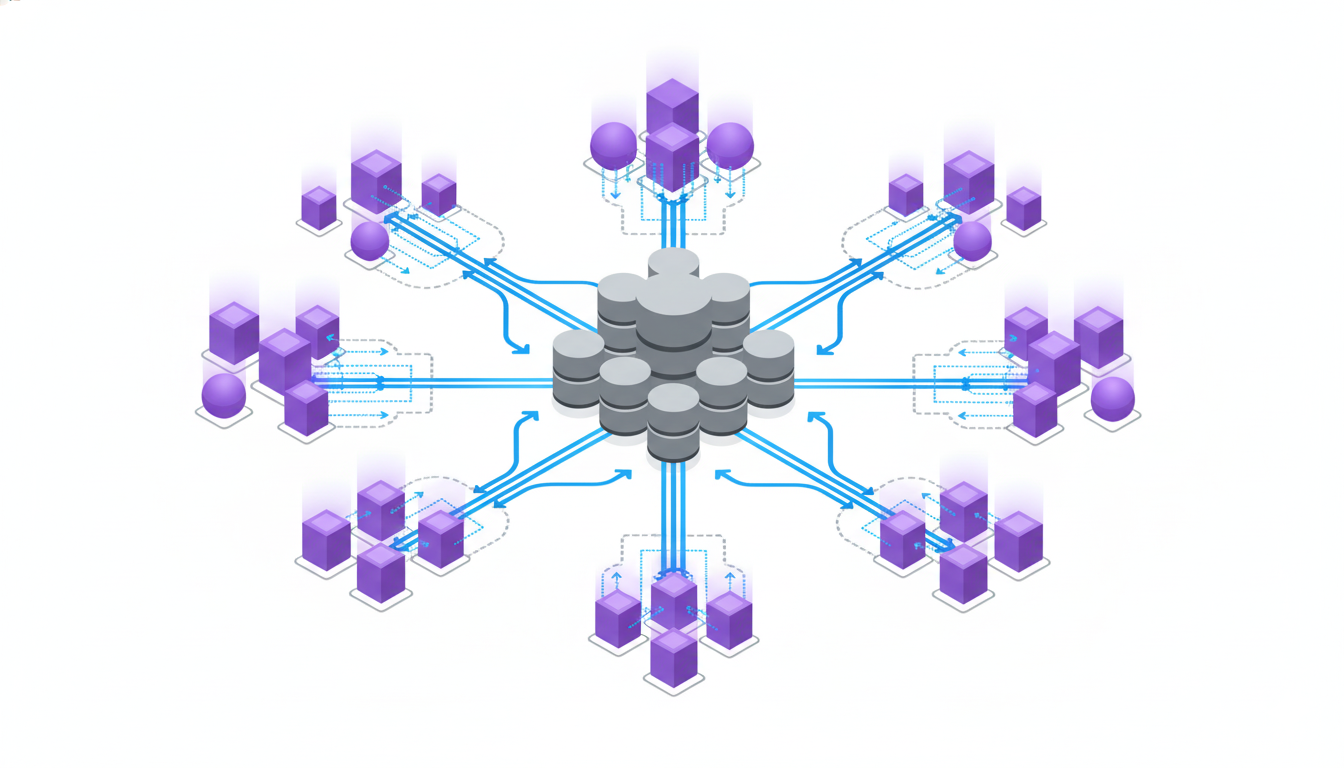
IPv6 network architecture diagram showing S3 Express One Zone media workflow infrastructure
Migration Strategy and Risk Management
Based on InterLIR’s experience helping organizations navigate network infrastructure transitions, I recommend a structured approach to IPv6 adoption with S3 Express One Zone that balances innovation with operational stability.
Assessment and Planning Phase
Organizations should begin with comprehensive assessment of their current state:
| Assessment Area | Key Questions | Strategic Implications |
|---|---|---|
| Application Compatibility | Do existing applications support IPv6 addressing? | Determines migration complexity and timeline |
| Network Infrastructure | What percentage of network equipment supports IPv6? | Identifies hardware refresh requirements |
| Security Architecture | Are security policies IPv6-aware? | Affects security posture during transition |
| Operational Readiness | Does the team have IPv6 expertise? | Influences training and support requirements |
Phased Implementation Approach
I recommend a five-phase implementation strategy that minimizes risk while accelerating time-to-value:
- Pilot Environment Establishment – Create isolated test environments with DualStack endpoints to validate application behavior and identify integration challenges without production impact.
- Security Policy Adaptation – Update network security groups, access control lists, and monitoring systems to accommodate IPv6 address patterns and traffic flows.
- Application Validation – Systematically test applications against IPv6 endpoints, documenting any compatibility issues and developing remediation plans.
- Monitoring Enhancement – Extend observability platforms to capture IPv6-specific metrics, ensuring operational visibility throughout the transition.
- Production Rollout – Deploy IPv6 support in production using DualStack configuration initially, with gradual transition to IPv6-only as confidence and compatibility increase.
Common Pitfalls and Mitigation Strategies
Through InterLIR’s work with diverse organizations, several common challenges emerge during IPv6 adoption:
Underestimating Application Dependencies – Legacy applications may have hard-coded IPv4 assumptions. Mitigation: Comprehensive application inventory and testing before production deployment.
Security Policy Gaps – IPv6 introduces different address patterns that existing security rules may not cover. Mitigation: Parallel security policy development for IPv6 alongside IPv4 rules.
Monitoring Blind Spots – Existing monitoring may not capture IPv6 traffic patterns. Mitigation: Proactive monitoring enhancement before production deployment.
Team Knowledge Gaps – Operations teams may lack IPv6 troubleshooting experience. Mitigation: Structured training programs and documentation development.
The Relationship Between IPv4 Markets and IPv6 Adoption
As someone operating in the IPv4 address marketplace, I’m frequently asked whether IPv6 adoption will eliminate demand for IPv4 addresses. The reality is more nuanced and directly relevant to understanding the strategic value of S3 Express One Zone’s IPv6 support.
IPv4 and IPv6 will coexist for the foreseeable future. Organizations still require IPv4 addresses for:
- Public-facing services where IPv4 connectivity remains necessary for universal accessibility
- Legacy systems that cannot be economically upgraded to support IPv6
- Specific regulatory or compliance requirements mandating IPv4 support
- Integration with partner organizations or customers not yet IPv6-capable
However, IPv6 adoption for internal infrastructure-particularly cloud storage connectivity-reduces the rate of IPv4 address consumption. This creates a more sustainable approach where organizations use IPv4 addresses strategically for external connectivity while leveraging IPv6’s expansive address space for internal architecture.
S3 Express One Zone’s IPv6 support enables this hybrid strategy. Organizations can maintain IPv4 addressing for public-facing applications while transitioning internal storage connectivity to IPv6, optimizing their IP address portfolio and reducing long-term address acquisition costs.
Future Trajectory and Strategic Positioning
Looking forward from InterLIR’s vantage point in the network infrastructure market, several trends will shape how organizations leverage IPv6-enabled cloud storage:
Edge Computing Integration
The proliferation of edge computing architectures will increasingly benefit from IPv6’s addressing capabilities. As organizations deploy distributed processing nodes closer to data sources, the ability to assign unique addresses without complex NAT schemes becomes strategically valuable. S3 Express One Zone’s combination of low latency and IPv6 support positions it well for edge-to-cloud data workflows.
Multi-Cloud and Hybrid Architecture Evolution
Organizations pursuing multi-cloud strategies face networking complexity as a primary challenge. Standardized IPv6 implementation across cloud providers facilitates more consistent addressing schemes and simplified connectivity models. As more cloud services adopt IPv6, the strategic value of early adoption increases.
Security Architecture Modernization
IPv6’s native IPsec capabilities provide opportunities for enhanced security models between network endpoints and storage services. Organizations can implement end-to-end encryption more seamlessly with IPv6, potentially simplifying compliance with data protection regulations.
Operational Efficiency Gains
The elimination of NAT and address translation overhead reduces operational complexity and potential troubleshooting challenges. For organizations with large-scale infrastructure, these efficiency gains compound over time, reducing operational costs and improving system reliability.
Amazon S3 Express One Zone’s IPv6 support represents a strategic inflection point for enterprise cloud infrastructure. From InterLIR’s perspective working daily with organizations navigating IP address challenges, this development provides a critical pathway for sustainable network architecture evolution.
The implementation through VPC endpoints demonstrates AWS’s understanding of enterprise migration complexity, offering flexible deployment options that accommodate various organizational readiness levels. Whether organizations choose IPv6-only, DualStack, or gradual integration approaches, the capability exists to align IPv6 adoption with broader infrastructure modernization initiatives.
For industries requiring both high-performance storage and modern networking capabilities-financial services, healthcare, media production-this combination delivers tangible operational and strategic benefits. The elimination of address translation overhead, simplified network architecture, and enhanced compliance posture create compelling value propositions beyond pure technical considerations.
However, successful adoption requires structured planning and risk management. Organizations should approach IPv6 integration as a strategic initiative rather than a tactical upgrade, with comprehensive assessment, phased implementation, and ongoing operational enhancement.
The relationship between IPv4 markets and IPv6 adoption will remain complementary rather than competitive. Organizations will continue requiring IPv4 addresses for external connectivity while increasingly leveraging IPv6 for internal infrastructure. S3 Express One Zone’s IPv6 support enables this hybrid strategy, optimizing IP address portfolios while future-proofing cloud storage architecture for evolving networking requirements.
As cloud architectures continue evolving toward distributed, edge-enabled models, the alignment of high-performance storage with modern networking protocols becomes foundational rather than optional. Organizations that strategically adopt IPv6 for cloud storage connectivity today position themselves advantageously for tomorrow’s infrastructure requirements.