IPv4 addresses are becoming an increasingly scarce and valuable resource. For enterprises, maximizing the efficiency of existing IPv4 allocations is critical to maintaining network performance and reducing the cost of obtaining additional IPs. Below are practical strategies and methodologies for optimizing IPv4 address utilization in corporate environments.

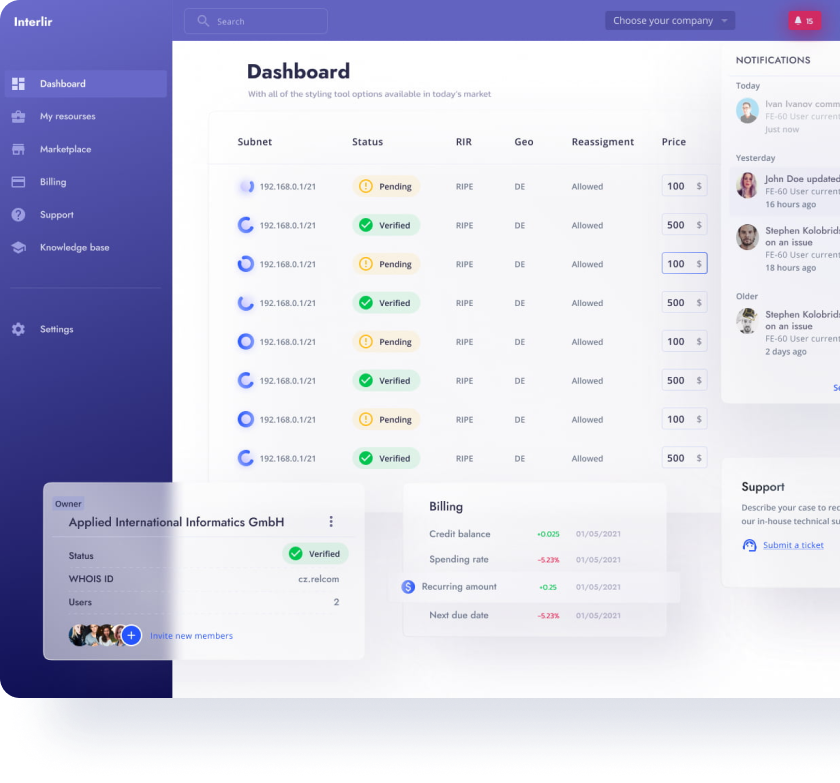
One of the most effective ways to manage IPv4 address utilization is through the adoption of IP Address Management (IPAM) systems. These tools provide comprehensive visibility into IP usage across the network, tracking how each address is allocated and utilized in real-time.
IPAM platforms often integrate with DNS and DHCP services, allowing network administrators to manage IP addresses dynamically and track metrics such as usage efficiency, IP conflicts, and available addresses. This centralized approach helps enterprises avoid wastage and plan better for future needs.
Proper subnetting is crucial for maximizing the utilization of IPv4 address space. This involves dividing a large network into smaller, more manageable subnetworks. Efficient subnetting ensures that addresses are allocated based on actual need, reducing the chances of underutilized blocks.
For example, a department that requires only 30 devices should be assigned a subnet that can accommodate just those devices rather than a large, unused block. This leaves more addresses available for other parts of the organization.
| Subnetting Example | Address Range | Devices Supported |
| /24 Subnet | 256 addresses | 254 devices |
| /25 Subnet | 128 addresses | 126 devices |
| /26 Subnet | 64 addresses | 62 devices |
| /27 Subnet | 32 addresses | 30 devices |
Dynamic Host Configuration Protocol (DHCP) allows for the automatic assignment of IP addresses to devices on a network. Using dynamic addressing instead of static assignments helps ensure that IP addresses are only allocated to devices when they are connected to the network.
Incorporating DHCP into network planning allows enterprises to recycle IP addresses when devices are no longer in use, minimizing idle or reserved addresses.
NAT allows multiple devices on a local network to share a single public IPv4 address for external communication. By using private IP address ranges internally (such as 192.168.x.x or 10.x.x.x), organizations can dramatically reduce their consumption of public IPv4 addresses.
This approach not only conserves address space but also adds a layer of security, as internal devices are shielded from direct exposure to the public internet.
Many enterprises have a substantial amount of allocated IPv4 addresses that are underutilized or idle. A thorough audit of IP address usage can reveal blocks that can be reclaimed and redistributed. By reviewing past allocations and adjusting them based on current needs, businesses can free up valuable address space.
Reclaiming unused addresses often involves:
Proactive monitoring and forecasting of IP address needs can prevent future shortages and reduce reliance on external address markets. Tools like IPAM can track current usage patterns and predict future demand based on growth, network expansion, or changes in device utilization.
Address block aggregation involves combining smaller address blocks into larger, contiguous blocks to reduce the number of routing entries and simplify network management. By reducing fragmentation, businesses can achieve higher efficiency in both routing and address utilization.
Although IPv4 is still widely used, planning for an eventual transition to IPv6 is essential. IPv6 provides a nearly limitless address space, alleviating the concerns of IPv4 exhaustion. Enterprises should develop a roadmap for IPv6 adoption while continuing to optimize their IPv4 networks.
By dual-stacking both IPv4 and IPv6 during the transition, organizations can ensure compatibility while gradually shifting toward the more abundant IPv6 space.
| Optimization Strategy | Description | Benefit |
| IPAM Implementation | Centralized IP tracking, management, and reporting | Increased efficiency, reduced conflicts |
| Efficient Subnetting | Dividing large networks into smaller subnetworks | Avoids address underutilization |
| DHCP for Dynamic Allocation | Automatically allocates and recycles IPs for connected devices | Reduces idle or reserved IPs |
| NAT with Private IPs | Uses private address spaces internally with shared public IP | Conserves public IP addresses |
| Reclaiming Unused IPs | Audits IP usage to identify and recover underutilized addresses | Frees up valuable IPv4 space |
| Monitoring and Forecasting | Tracks current usage and predicts future needs | Prevents address shortages |
| Address Block Aggregation | Combines smaller blocks into larger contiguous blocks | Simplifies routing and improves efficiency |
| IPv6 Transition Planning | Prepares for a gradual transition to IPv6 | Future-proofing the network |
By employing these best practices, enterprises can optimize their IPv4 address utilization, reducing the need for costly address acquisitions while maintaining efficient and scalable networks. With the right tools and strategies in place, businesses can make the most of their IPv4 assets while preparing for an eventual transition to IPv6.For businesses seeking expert guidance on IPv4 management, transitioning to IPv6, or IP address acquisition, consider consulting with specialists like Interlir for customized solutions.

Alexander Timokhin
COO

A Beginner’s Guide to Subnetting IPv4 and IPv6 Addresses Subnetting is a critical

Why IPv4 Leasing Is Becoming the Smart Choice for Businesses in 2025 1. Introduction
As CEO of InterLIR, I’ve witnessed firsthand how network isolation strategies

What is an ASN? ASN stands for Autonomous System Number. It is a unique identifier

Anycast DNS: A Leader’s Guide to Protecting Your Digital Infrastructure Executive

RPKI Certification: A Leader’s Guide to Internet Routing Security Executive

Executive Summary: What You Need to Know 🎯 Strategic Importance – Internet

When AWS DynamoDB failed in October 2025, thousands of businesses discovered that

Executive Summary: What You Need to Know 🎯 IP reputation directly impacts your
Live chat is provided by Intercom and is loaded only after you enable it. You can also contact us without enabling the chat.