🎯 Strategic Importance – Internet resources like IPv4 addresses are critical business assets that directly impact your operational capabilities and digital presence
💰 Financial Reality – The scarcity of IPv4 addresses has transformed them from technical resources into valuable business assets with significant market value
🚀 Business Action – Organizations should develop a clear strategy for securing, managing, and potentially monetizing their IP resources through legitimate marketplaces
⚠️ Risk Awareness – Poor IP resource management can lead to business disruption, security vulnerabilities, and missed market opportunities
Imagine waking up to discover your company’s online services are inaccessible to customers, your email deliverability has plummeted, and your digital marketing campaigns are failing to reach their targets. The culprit? Issues with your organization’s IP addresses – the digital equivalent of your business’s street address and reputation in the online world.
In simple terms, Internet resource governance is like the property management system for the digital world. It determines who gets which digital “real estate” (IP addresses), under what conditions, and how these critical resources are managed over time. For business leaders, understanding this governance isn’t just a technical nicety – it’s a strategic imperative that directly impacts your bottom line.
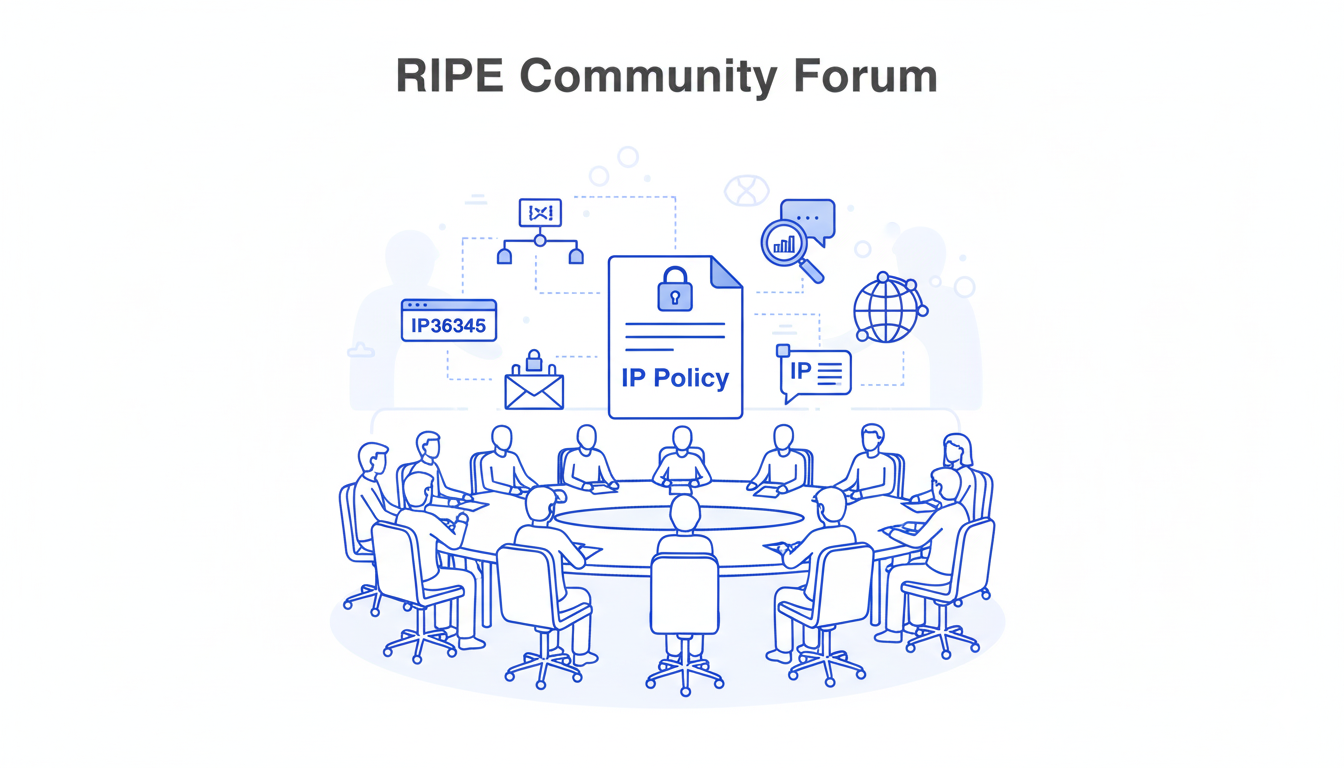
The RIPE Address Policy Working Group (AP WG) is one of the most influential forums where these governance decisions are made. As a specialized IPv4 address marketplace, at InterLIR we’ve observed firsthand how policy changes discussed in these forums directly impact our clients’ ability to acquire the resources they need for business growth and continuity.
The recent RIPE 90 meeting – the 90th gathering of this influential Internet governance body – included critical discussions about the future of IP address management that will shape how organizations access and utilize these essential resources. With IPv4 addresses now essentially exhausted as a free resource, businesses face a new reality where strategic management of these assets is no longer optional.
In this guide, I will break down what Internet resource governance is in business terms, explain why understanding RIPE policy developments is critical for your organization, and provide a clear roadmap for making informed decisions about your IP resource strategy. Whether you’re in cybersecurity, telecommunications, hosting, SaaS development, or any digital business, these insights will help you navigate the increasingly complex landscape of Internet resource management.
To understand why IP addresses have become such valuable business assets, we need to look at their evolution from simple technical identifiers to scarce digital resources. When the Internet was first designed in the 1970s and early 1980s, no one anticipated the explosive growth that would follow. The original addressing system, IPv4, was created with approximately 4.3 billion possible addresses – a number that seemed inexhaustible at the time.
In the early days of the Internet, IP addresses were freely distributed to organizations that could demonstrate a need. Regional Internet Registries (RIRs) like RIPE NCC in Europe, ARIN in North America, and others around the world were established to manage these distributions. The process was primarily technical and administrative rather than financial or commercial.
However, as Internet adoption accelerated globally, what once seemed like an unlimited resource began to dwindle. By 2011, IANA (Internet Assigned Numbers Authority) had allocated its last blocks of free IPv4 addresses to the regional registries. By 2019, RIPE NCC – which serves Europe, the Middle East, and parts of Central Asia – announced it had reached IPv4 exhaustion, meaning they could no longer fulfill requests for new IPv4 allocations from their free pool.
This scarcity transformed what was once a freely available technical resource into a valuable business asset. Today, IPv4 addresses trade on specialized marketplaces for approximately $27-50 per IP address, with some blocks commanding premium prices based on their characteristics and history.
As IP addresses became scarce and valuable, the need for formal governance structures grew. The RIPE Address Policy Working Group emerged as a critical forum where stakeholders from across the Internet ecosystem – network operators, service providers, academic institutions, and businesses – could collaboratively develop policies for fair and efficient resource management.
Unlike many governance structures, RIPE operates on a bottom-up, consensus-driven model. Policies aren’t imposed from above but are developed through open discussion and community agreement. This approach ensures that the resulting frameworks reflect the practical needs of the organizations that rely on these resources.
This shift from abundance to scarcity created a high-stakes environment where businesses must now strategically manage their IP resources. Organizations that once treated IP addresses as mundane technical details now recognize them as valuable assets that require executive attention and strategic planning.
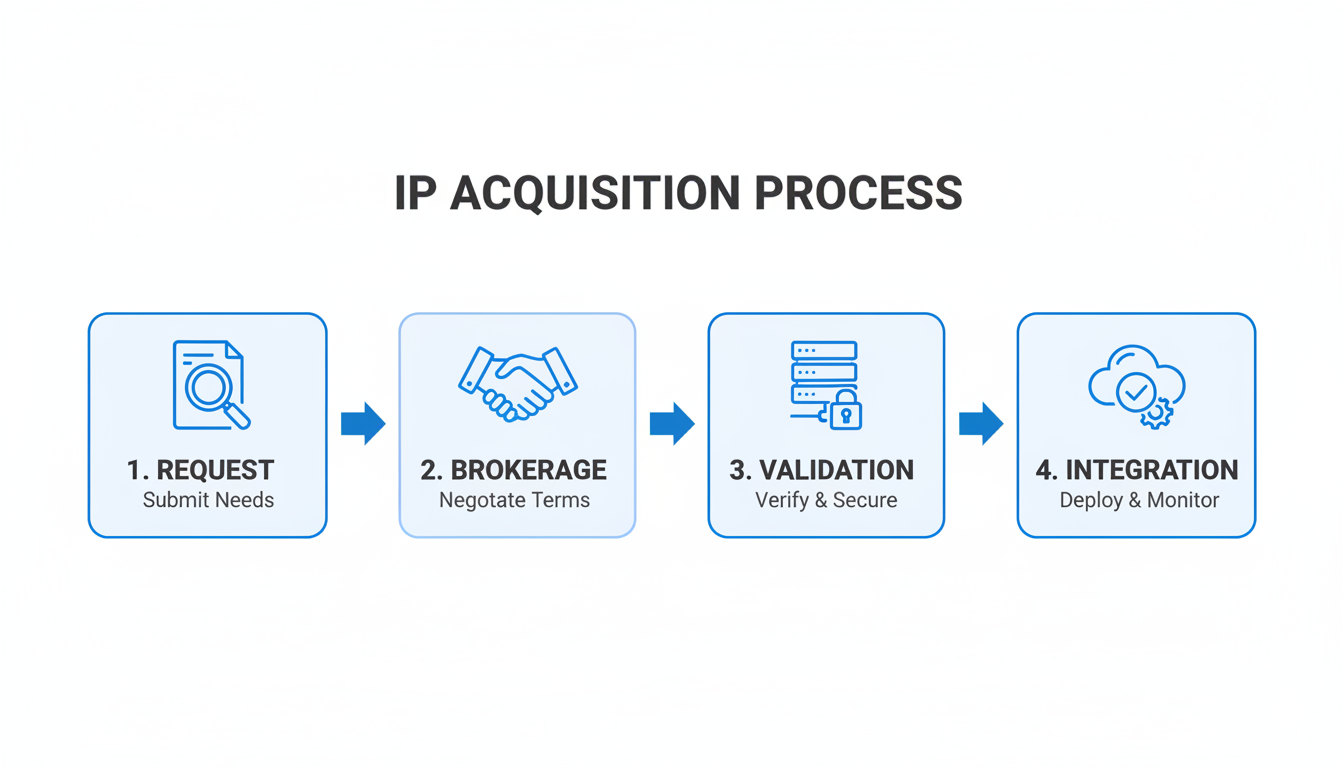
For many organizations, the exhaustion of free IPv4 resources means turning to the transfer market to acquire the addresses needed for growth and operations. However, this market comes with significant risks that business leaders must understand and mitigate. At InterLIR, we’ve developed a framework for safe IP resource acquisition that protects businesses from common pitfalls.
Just as you wouldn’t purchase a property without checking its history, acquiring IP addresses requires thorough due diligence. IP addresses have reputations based on their previous use, and this digital “credit score” directly impacts their business value and utility.
When an IP address has been used for spam, fraud, or other malicious activities, it often ends up on blocklists. These blocklists are used by email providers, security systems, and other online services to filter traffic. If your business acquires tainted IP addresses, you may find your legitimate emails being blocked, your advertisements rejected, or your services flagged as potentially dangerous.
Professional IP address marketplaces conduct comprehensive reputation checks across multiple databases and blocklists to ensure the addresses they offer are “clean” and suitable for business use. This verification is not a one-time check but an ongoing process that monitors for issues that could affect address utility.
The IP address market has unfortunately attracted its share of questionable practices. Some addresses are offered for sale or lease by entities that don’t legitimately control them. Acquiring addresses from unauthorized sources can lead to sudden service disruptions if the rightful holder reclaims them.
Legitimate ownership verification involves checking the current registration in the relevant Regional Internet Registry (RIR) database, confirming the chain of custody, and ensuring proper documentation of any transfers. This process is similar to verifying property titles in real estate transactions and is essential for secure IP resource acquisition.
At InterLIR, we maintain direct relationships with legitimate IP address holders and verify all ownership claims through official RIR records before facilitating any transfers. This due diligence protects businesses from the significant risks associated with unauthorized address acquisition.
The financial aspects of IP address transactions require careful management to protect both buyers and sellers. Professional IP marketplaces implement secure transaction processes that ensure sellers receive payment only when buyers have confirmed receipt of properly functioning IP resources.
This process includes verification of technical routing details, confirmation of database records, and testing of address functionality before finalizing transactions. For leased addresses, ongoing monitoring ensures continued availability and performance throughout the lease period.
| Aspect | The Risky Way | The Safe Way | Business Impact |
|---|---|---|---|
| Reputation Verification | No checking of IP history or blocklists | Comprehensive checking across multiple reputation databases | Avoid marketing failures, email delivery issues, and customer trust problems |
| Ownership Verification | Taking seller’s word about control of resources | Verification through official RIR records and documentation | Prevent sudden loss of critical infrastructure and associated downtime |
| Transaction Security | Direct payment without verification | Escrow-like processes with verification before final payment | Protect financial investment and ensure receipt of functioning resources |
| Documentation | Minimal or no formal documentation | Complete transfer documentation and technical support | Simplify compliance, auditing, and technical implementation |
By following these three critical steps, businesses can safely navigate the IP address marketplace and acquire the resources they need without exposing themselves to unnecessary risks. Professional IP resource marketplaces like InterLIR specialize in managing this process end-to-end, allowing business leaders to focus on their core operations while ensuring their digital infrastructure remains secure and reliable.
When business leaders treat IP address management as merely a technical issue rather than a strategic business concern, they expose their organizations to significant risks and hidden costs. Let me share what we’ve observed across hundreds of client engagements at InterLIR.
💸 Revenue Loss from Downtime – When IP addresses are reclaimed due to improper acquisition or management, critical services can go offline. For e-commerce businesses, this can mean thousands or even millions in lost revenue per hour.
🔥 Brand Damage from Security Incidents – Using IP addresses with poor reputations can trigger security alerts for your customers, damaging trust. One client came to us after discovering their marketing emails were being automatically flagged as suspicious due to previously acquired IP addresses with spam history.
📉 Wasted Marketing Spend – Digital marketing campaigns rely on clean IP infrastructure. When advertisements or emails are blocked due to IP reputation issues, marketing budgets are essentially wasted. A SaaS client discovered they were losing approximately 30% of their email marketing effectiveness due to deliverability issues tied to problematic IP addresses.
👥 Decreased Employee Productivity – Technical teams forced to constantly troubleshoot IP-related issues are diverted from innovation and improvement. One client estimated they were spending 15-20 hours per week addressing IP-related problems before implementing a proper management strategy.
⚖️ Compliance and Legal Exposure – Improper IP resource documentation can create regulatory compliance issues, particularly in industries with strict data protection requirements. Several financial services clients have cited this as a primary motivation for professionalizing their IP resource management.
Professional IP resource management should be viewed not as a cost center but as an insurance policy that protects critical business infrastructure. The premium paid for properly vetted, legitimately acquired, and professionally managed IP resources is minimal compared to the potential costs of service disruptions, security incidents, and reputation damage.
For most businesses, IP addresses represent a foundational layer of their digital infrastructure – similar to the foundation of a building. Cutting corners on this foundation to save money in the short term inevitably leads to costly problems down the road.
Consider this real-world example: A rapidly growing cybersecurity firm acquired a block of IP addresses through an informal channel at approximately 40% below market rate. Within three months, they discovered these addresses were being reclaimed by the legitimate owner who had never authorized the sale. The resulting service disruption affected their client monitoring systems for nearly 48 hours, triggered several SLA violations, and ultimately cost them a major client worth over €200,000 annually. What initially seemed like a €12,000 saving on IP acquisition ultimately resulted in losses exceeding eight times that amount.
By contrast, clients who invest in professional IP resource management typically report significant reductions in technical incidents, improved service reliability, and enhanced ability to focus on their core business rather than addressing infrastructure problems. The return on investment becomes evident within the first year of implementation.
As Internet resource governance continues to evolve through forums like the RIPE Address Policy Working Group, business leaders need a clear strategy for navigating this changing landscape. Based on our experience working with hundreds of organizations across various sectors, here’s a practical roadmap for effective IP resource management.
🔮 Increasing Value of Quality IPv4 Resources – As policies around IP transfers continue to evolve, clean IPv4 addresses with good reputation histories will likely continue to appreciate in value. Organizations with unused IP resources may find significant monetization opportunities.
🔧 More Sophisticated Transfer Markets – The RIPE 90 discussions highlighted ongoing refinement of transfer policies. We anticipate more streamlined processes for legitimate transfers while maintaining necessary safeguards against abuse.
📈 Growing Importance of Professional Management – As IP resources become more valuable and governance more complex, professional management services will become increasingly important for businesses that want to focus on their core operations rather than IP infrastructure details.
🌐 Regional Policy Harmonization – Discussions at RIPE 90 showed continued movement toward alignment of policies across different regional registries, potentially simplifying global IP resource management for multinational organizations.
1️⃣ Conduct an IP Resource Audit – Work with your technical team to inventory all IP addresses currently in use by your organization. Identify their sources, documentation status, and utilization rates. This baseline assessment is critical for informed decision-making.
2️⃣ Assess Your Risk Exposure – Evaluate how critical IP resources are to your business continuity. Consider factors like email deliverability, service accessibility, and marketing effectiveness. Quantify the potential business impact of IP-related disruptions.
3️⃣ Develop a Resource Strategy – Based on your audit and risk assessment, create a clear strategy for IP resource acquisition, management, and potentially monetization. This should include policies for documentation, security, and compliance.
4️⃣ Engage Professional Support – For most organizations, partnering with specialized IP resource management services provides the most cost-effective approach to ensuring compliance, security, and reliability without diverting internal resources from core business functions.
5️⃣ Implement Monitoring Systems – Establish ongoing monitoring of IP resource

Evgeny Sevastyanov
Support Team Leader

A Beginner’s Guide to Subnetting IPv4 and IPv6 Addresses Subnetting is a critical

Why IPv4 Leasing Is Becoming the Smart Choice for Businesses in 2025 1. Introduction
As CEO of InterLIR, I’ve witnessed firsthand how network isolation strategies

What is an ASN? ASN stands for Autonomous System Number. It is a unique identifier

Anycast DNS: A Leader’s Guide to Protecting Your Digital Infrastructure Executive

RPKI Certification: A Leader’s Guide to Internet Routing Security Executive

Executive Summary: What You Need to Know 🎯 Strategic Importance – Internet

When AWS DynamoDB failed in October 2025, thousands of businesses discovered that

Executive Summary: What You Need to Know 🎯 IP reputation directly impacts your
Live chat is provided by Intercom and is loaded only after you enable it. You can also contact us without enabling the chat.