Software-Defined Networking (SDN) has revolutionized the way networks are managed and operated. By decoupling the control plane from the data plane, SDN provides centralized network management, flexibility, and automation. In the context of cloud computing, SDN plays a pivotal role in enhancing IP address management (IPAM) by improving scalability, reducing complexity, and increasing network efficiency.
As cloud environments grow increasingly dynamic, the need for flexible, scalable, and efficient IP address management becomes paramount. This blog will explore how SDN can enhance cloud IP address management, optimize resource allocation, and help overcome the challenges associated with traditional network management in cloud-based environments.
Software-Defined Networking (SDN) is an approach to networking that allows administrators to manage network services through abstraction of lower-level functionality. Unlike traditional networking, where each networking device (routers, switches) operates independently, SDN centralizes control in a software-based controller. This allows network configuration and management to be automated and more agile.
Key components of SDN include:
Traditional cloud IP address management (IPAM) involves manual configurations and static assignments, often resulting in the following challenges:
SDN addresses these challenges by automating and centralizing the management of IP addresses, enabling cloud networks to scale and adapt more efficiently.
SDN’s centralized control architecture provides a unified platform for managing IP address allocation across the entire cloud network. The SDN controller can automatically assign IP addresses based on pre-configured policies, reducing the complexity associated with manual configuration. Automation also ensures that IP addresses are distributed efficiently, minimizing waste and reducing the risk of conflicts.
In traditional networks, IP addresses are typically allocated statically, meaning the same address is assigned to a resource each time. In contrast, SDN enables dynamic IP address allocation, where IP addresses can be assigned and reassigned based on the needs of the network. This is particularly useful in environments where resources like virtual machines (VMs) or containers frequently come online and offline.
In a multi-tenant cloud environment, the risk of IP address conflicts increases due to the overlapping private IP address spaces used by different tenants. SDN simplifies multi-tenancy by allowing network isolation through virtualization techniques. It can create virtual networks for each tenant, each with its own private IP address space, eliminating the risk of IP address overlap.
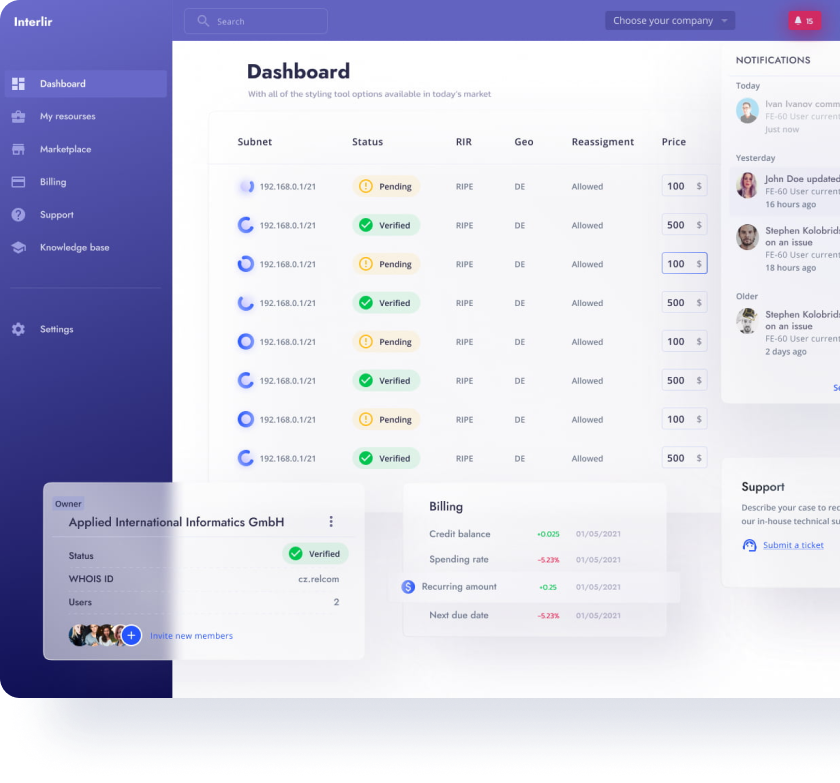
SDN can integrate with IPAM systems to optimize IP address allocation and management. IPAM tools can provide a comprehensive overview of available IP addresses, while SDN can dynamically assign and release IPs as needed. This integration provides centralized visibility into the IP address usage within the cloud environment, helping administrators optimize address usage and plan for future network expansion.
Traditional IP address management requires manual configuration of network devices, which is time-consuming and prone to error. With SDN, network configurations—including IP address allocation—can be automated using software. This reduces the need for manual intervention, enabling more agile network management.
SDN enhances load balancing by automatically allocating IP addresses to resources based on network traffic patterns and resource availability. This dynamic allocation ensures that resources are distributed effectively, improving network performance and reducing downtime.
| Traditional IPAM | SDN-Based IPAM |
| Requires manual configuration and intervention | Centralized automation and dynamic IP allocation |
| IP addresses are often statically assigned | IP addresses can be dynamically assigned based on need |
| Limited scalability, especially in large cloud networks | Highly scalable, adapts easily to changes in network size |
| Risk of IP address conflicts in multi-tenant networks | Network virtualization isolates tenant IP address spaces |
| Static configurations require manual updates | Network configurations are automated and updated dynamically |
| Complex network configurations for each tenant | Simplified network management with SDN controller |
Software-Defined Networking (SDN) is transforming cloud IP address management by enabling more efficient, scalable, and flexible network operations. With SDN, cloud providers can automate IP address allocation, reduce the risk of conflicts, and ensure better isolation for tenants in multi-tenant environments. By integrating SDN with IP address management (IPAM) tools, cloud networks can scale seamlessly while maintaining security and performance.
Adopting SDN for IP address management not only simplifies network operations but also helps organizations optimize their cloud infrastructures, making them more agile and better equipped to handle the dynamic nature of modern cloud environments.

Alexander Timokhin
COO
A Beginner’s Guide to Subnetting IPv4 and IPv6 Addresses Subnetting is a critical

Why IPv4 Leasing Is Becoming the Smart Choice for Businesses in 2025 1. Introduction
As CEO of InterLIR, I’ve witnessed firsthand how network isolation strategies

What is an ASN? ASN stands for Autonomous System Number. It is a unique identifier

Anycast DNS: A Leader’s Guide to Protecting Your Digital Infrastructure Executive

RPKI Certification: A Leader’s Guide to Internet Routing Security Executive

Executive Summary: What You Need to Know 🎯 Strategic Importance – Internet

When AWS DynamoDB failed in October 2025, thousands of businesses discovered that

Executive Summary: What You Need to Know 🎯 IP reputation directly impacts your
Live chat is provided by Intercom and is loaded only after you enable it. You can also contact us without enabling the chat.