The rapid expansion of internet-connected devices has resulted in a significant shortage of IPv4 addresses, creating challenges for cloud deployments worldwide. While the transition to IPv6 offers a long-term solution, IPv4 continues to dominate, leaving cloud providers and businesses searching for innovative ways to manage limited IP resources. This article explores the effects of IPv4 shortages on cloud deployments and offers strategies to mitigate these challenges.
IPv4, the fourth version of the Internet Protocol, supports approximately 4.3 billion unique addresses. Although this seemed sufficient in the early days of the internet, the rise of smartphones, IoT devices, and cloud-based services has dramatically increased demand, leading to a scarcity of available IPv4 addresses.
The scarcity of IPv4 addresses poses several challenges for businesses relying on cloud services:
IPv4 addresses have become a commodity, with prices surging due to limited availability. Cloud providers often pass these costs onto their customers, increasing expenses for businesses.
A shortage of IPv4 addresses restricts the ability of businesses to scale their operations seamlessly, especially for applications requiring public-facing IPs.
Techniques like Carrier-Grade NAT (CGNAT) help conserve IPs but introduce additional network latency and complexity, potentially degrading performance.
IP sharing methods, such as NAT, can create vulnerabilities, making it harder to trace malicious activity to a single device.
| Feature | IPv4 | IPv6 |
| Address Space | 4.3 billion addresses | 340 undecillion addresses |
| Performance | Limited by NAT and CGNAT | Direct addressing improves efficiency |
| Deployment | Established, widely supported | Growing adoption, but uneven support |
| Scalability | Limited without workarounds | Effectively limitless |
| Security | Requires additional protocols | Built-in IPsec for enhanced security |
While IPv6 adoption is increasing, IPv4 remains critical due to legacy systems and slower industry transitions.
Despite the challenges, businesses and cloud providers can implement strategies to navigate IPv4 shortages effectively:
Gradually adopting IPv6 reduces dependency on IPv4, offering abundant address space and improved performance. Dual-stack configurations can ease the transition.
CGNAT enables multiple devices to share a single public IPv4 address. While it conserves IPs, it should be optimized to minimize latency and performance issues.
Leasing IPv4 blocks from marketplaces ensures access to needed resources without long-term commitments. Purchasing can be cost-effective for businesses with high, sustained demand.
Efficient IP address management (IPAM) tools can help allocate and monitor IPv4 resources, ensuring maximum utilization.
Using private IP addresses for internal communications reduces reliance on public IPv4 space.
Cloud providers play a crucial role in managing IPv4 shortages for their customers. Many offer services like:
| Provider | IPv4 Solutions | IPv6 Support |
| AWS | Elastic IPs, IPAM | Full IPv6 support |
| Google Cloud | Static IPs, NAT Gateway | Dual-stack support |
| Microsoft Azure | Public IP allocation, NAT Gateway | IPv6 for virtual networks |
While IPv4 shortages are unlikely to disappear soon, continued progress in IPv6 adoption and efficient management of existing IPv4 resources will shape the future of cloud networking. Businesses that proactively address these challenges will be better positioned to scale and succeed in a connected world.
The IPv4 address shortage is a significant challenge for cloud deployments, affecting costs, scalability, and network performance. By leveraging strategies such as adopting IPv6, optimizing address usage, and utilizing innovative cloud provider solutions, businesses can navigate this complex landscape effectively. As the internet continues to evolve, addressing IPv4 limitations today will pave the way for a more robust, scalable, and secure cloud ecosystem.

Alexander Timokhin
COO

A Beginner’s Guide to Subnetting IPv4 and IPv6 Addresses Subnetting is a critical

Why IPv4 Leasing Is Becoming the Smart Choice for Businesses in 2025 1. Introduction
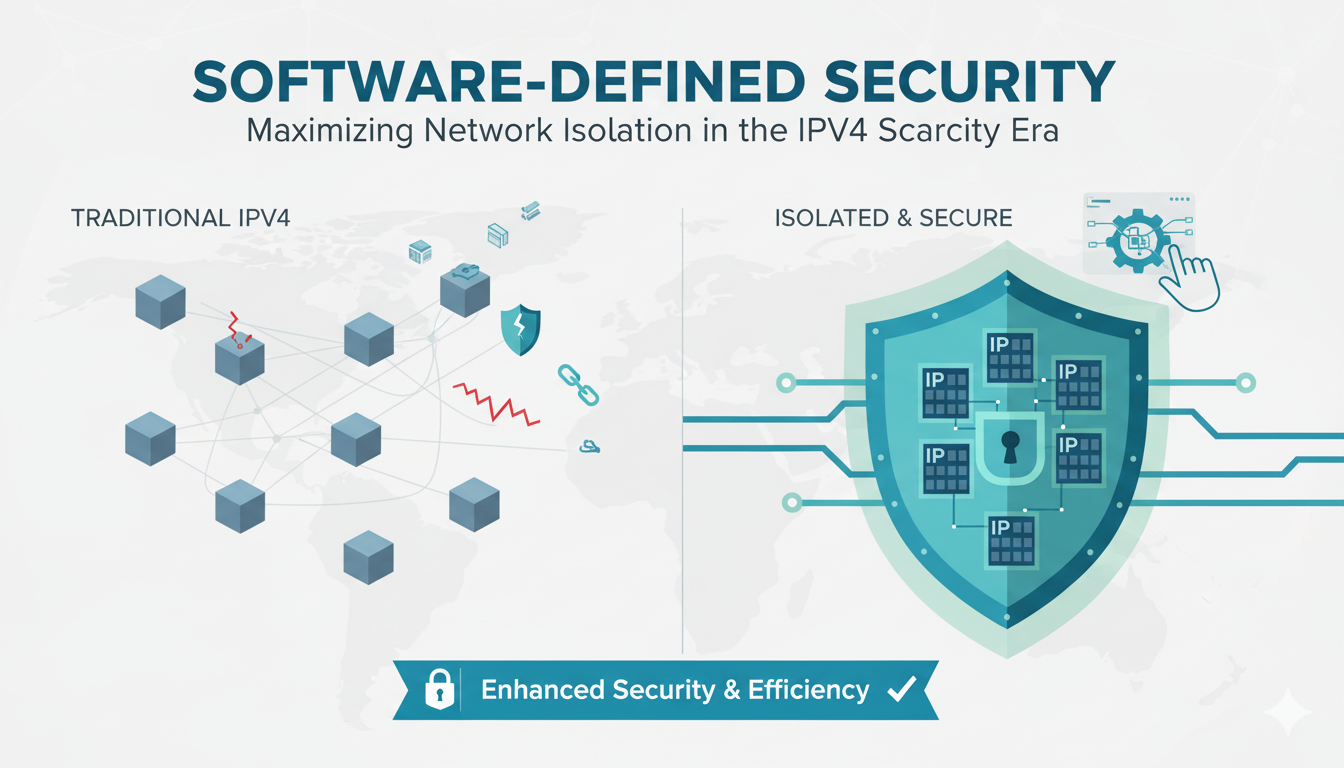
As CEO of InterLIR, I’ve witnessed firsthand how network isolation strategies

What is an ASN? ASN stands for Autonomous System Number. It is a unique identifier

Anycast DNS: A Leader’s Guide to Protecting Your Digital Infrastructure Executive

RPKI Certification: A Leader’s Guide to Internet Routing Security Executive

Executive Summary: What You Need to Know 🎯 Strategic Importance – Internet

When AWS DynamoDB failed in October 2025, thousands of businesses discovered that

Executive Summary: What You Need to Know 🎯 IP reputation directly impacts your
Live chat is provided by Intercom and is loaded only after you enable it. You can also contact us without enabling the chat.