bgunderlay bgunderlay bgunderlay

IPv4 and IoT: Addressing the Connectivity Challenges

The Internet of Things (IoT) has ushered in an era of unprecedented device connectivity, making everyday objects capable of communication and data exchange. However, as the number of IoT devices continues to grow exponentially, the underlying infrastructure faces significant hurdles, particularly with IPv4 address limitations. This article examines the connectivity challenges IoT encounters with IPv4 and outlines potential solutions to these problems.

Understanding the IPv4 Address Shortage and IoT Demand

IPv4 was designed in the early stages of the internet with a 32-bit addressing system, allowing for approximately 4.3 billion unique IP addresses. While this number seemed ample in the early days of networking, the rapid expansion of internet-connected devices—particularly driven by IoT—has exhausted the available IPv4 address space.

IoT devices, ranging from smart thermostats to connected cars, require unique IP addresses for communication. The proliferation of these devices is overwhelming the existing pool of IPv4 addresses, creating a significant hurdle in maintaining efficient and scalable IoT networks.

Key Challenges of IPv4 in IoT Connectivity

  1. Address Exhaustion:
    1. The limited number of available IPv4 addresses cannot accommodate the rapidly growing number of IoT devices.
    2. Despite efforts to reclaim and repurpose unused addresses, the demand far outweighs the supply.
  2. Reliance on Network Address Translation (NAT):
    1. NAT has been widely adopted to extend IPv4’s lifespan by allowing multiple devices within a private network to share a single public IP address. However, this approach introduces complications:
      1. Increased latency due to the translation process.
      2. Network complexity, making device management and troubleshooting more difficult.
      3. Limitations in peer-to-peer connectivity, crucial for some IoT applications.
  3. Security Concerns:
    1. The use of NAT also creates security vulnerabilities as devices within a network share an IP address, making it more difficult to isolate security threats.
    2. IoT devices are often prone to attacks, and insufficient IP addressing schemes complicate efforts to secure these devices.

The Slow Transition to IPv6

While IPv6 was introduced to solve the address shortage with its 128-bit addressing scheme, which provides 340 undecillion addresses, the transition from IPv4 has been slower than anticipated. This delay is due to several factors:

  1. Legacy systems: Many organizations still rely heavily on IPv4, and transitioning to IPv6 involves significant costs and technical challenges.
  2. Compatibility issues: Some IoT devices and applications are not yet fully compatible with IPv6.
  3. Resource allocation: Businesses, especially smaller ones, may lack the resources to upgrade their infrastructure to support IPv6.

Despite these barriers, IPv6 adoption is essential for the long-term sustainability of IoT networks. IPv6 provides the necessary address space to accommodate future growth in IoT devices, eliminates the need for NAT, and enhances security with end-to-end connectivity.

Strategies to Overcome IPv4 Limitations in IoT

Given the slow transition to IPv6, businesses must adopt practical solutions to manage IPv4 address shortages while preparing for a future IPv6-based infrastructure. Here are some strategies:

  1. Implementing Efficient IP Address Management (IPAM):
    1. IPAM solutions help businesses manage their available IPv4 addresses more effectively. This includes:
      1. Monitoring address usage to prevent wastage.
      2. Automating address allocation to optimize utilization.
      3. Reclaiming unused addresses from inactive devices.
  2. Using NAT with Care:
    1. While NAT can extend IPv4, businesses should implement tiered NAT architectures to reduce latency and complexity.
    2. Ensure proper security measures, such as firewalls and encryption, to mitigate the risks associated with shared addresses.
  3. Deploying Dual-Stack Networks:
    1. A dual-stack approach, where both IPv4 and IPv6 operate concurrently, can facilitate a smoother transition to IPv6 without disrupting current IoT operations.
    2. Businesses can gradually phase out IPv4 as their IoT infrastructure becomes IPv6-ready.
  4. Investing in IPv6-Compatible Devices:
    1. When upgrading or deploying new IoT devices, businesses should prioritize IPv6-compatible hardware to future-proof their networks.
    2. Some newer devices are designed to operate on both IPv4 and IPv6, providing flexibility during the transition period.

The Role of IPv6 in Future IoT Expansion

The transition to IPv6 is critical for the continued growth of the IoT industry. Unlike IPv4, IPv6 provides unique addresses for every device, eliminating the need for NAT and enabling direct, end-to-end communication between IoT devices. This simplifies network management, improves performance, and enhances security by allowing better control over device communications.

Address Management in IoT

ChallengeIPv4IPv6
Address AvailabilityLimited to 4.3 billion addressesVirtually unlimited, supporting billions of devices
Network Address TranslationRequired to extend address availability, causing latencyNot required, allowing direct device connections
SecurityComplicated by shared addresses via NATSimplified with unique addresses for each device
ScalabilityLimited scalability without complex workaroundsEasily scalable due to abundant address space
TransitionStill dominant, but reaching exhaustionGradual adoption; necessary for future-proof networks

Conclusion

While IPv4 has served as the backbone of internet connectivity for decades, its limitations are becoming increasingly apparent in the era of IoT. Businesses must adopt practical strategies to manage IPv4’s shortcomings while preparing for the inevitable transition to IPv6. Efficient IP address management, careful use of NAT, dual-stack networks, and investing in IPv6-compatible devices are essential steps to ensure the sustainability and growth of IoT networks.Transitioning to IPv6 will not only resolve address exhaustion but also enhance the overall security, performance, and scalability of IoT deployments, unlocking the full potential of this transformative technology.

Alexander Timokhin

COO

    Ready to get started?

    Articles
    A Beginner’s Guide to Subnetting IPv4 and IPv6 Addresses (2026 Update)
    A Beginner’s Guide to Subnetting IPv4 and IPv6 Addresses (2026 Update)

    A Beginner’s Guide to Subnetting IPv4 and IPv6 Addresses Subnetting is a critical

    More
    IPv4 Leasing Revolution: Why Smart Businesses Are Ditching Ownership in 2025
    IPv4 Leasing Revolution: Why Smart Businesses Are Ditching Ownership in 2025

    Why IPv4 Leasing Is Becoming the Smart Choice for Businesses in 2025 1. Introduction
    More
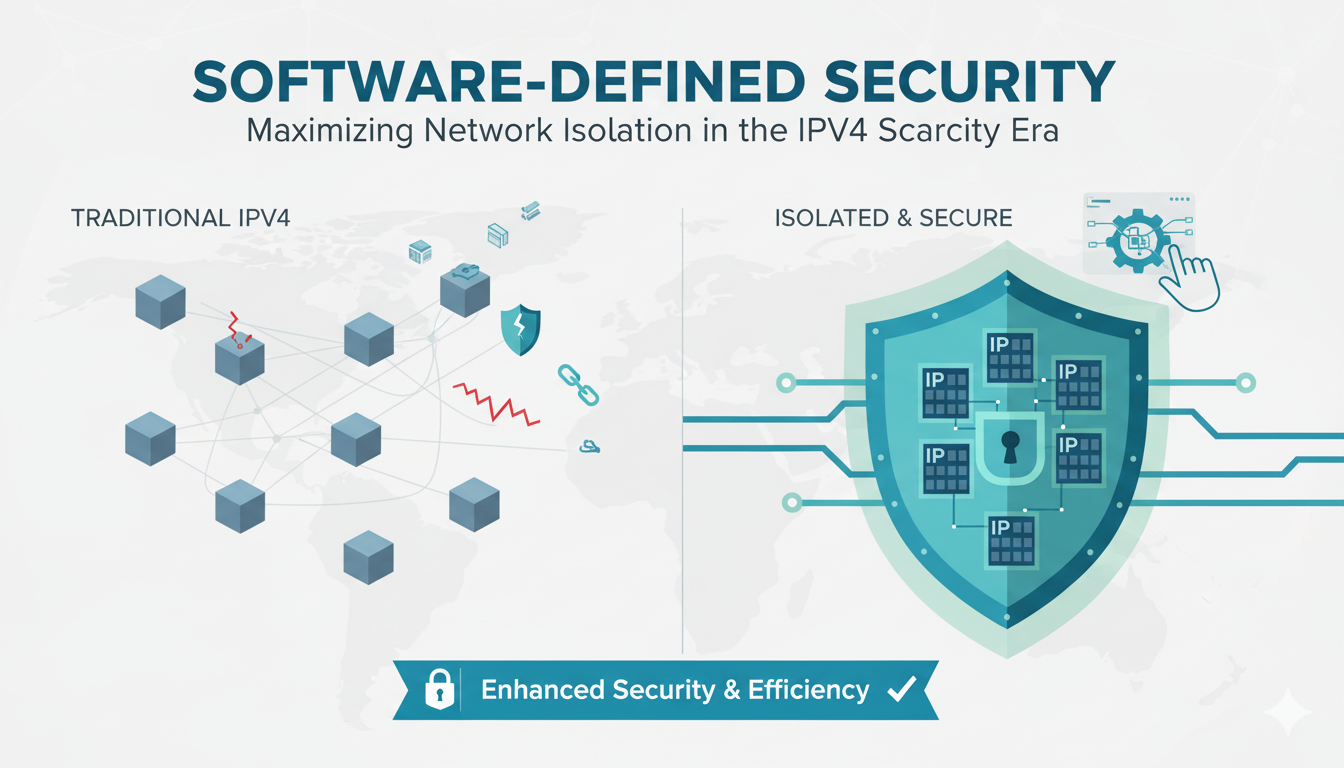
    Network Isolation Revolution: IPv4 Marketplace Insights for Enterprise Security
    Network Isolation Revolution: IPv4 Marketplace Insights for Enterprise Security

      As CEO of InterLIR, I’ve witnessed firsthand how network isolation strategies

    More
    What is ASN?
    What is ASN?

    What is an ASN? ASN stands for Autonomous System Number. It is a unique identifier

    More
    How Anycast DNS Actually Works (And Why Your Network Needs It)
    How Anycast DNS Actually Works (And Why Your Network Needs It)

    Anycast DNS: A Leader’s Guide to Protecting Your Digital Infrastructure Executive

    More
    Why RPKI Matters: Securing Your Company’s Internet Traffic
    Why RPKI Matters: Securing Your Company’s Internet Traffic

    RPKI Certification: A Leader’s Guide to Internet Routing Security Executive

    More
    Why RIPE Address Policy Matters for Your Company’s Digital Future
    Why RIPE Address Policy Matters for Your Company’s Digital Future

    Executive Summary: What You Need to Know 🎯 Strategic Importance – Internet

    More
    AWS Outages: The CEO’s Guide to Preventing Downtime & Protecting Revenue
    AWS Outages: The CEO’s Guide to Preventing Downtime & Protecting Revenue

      When AWS DynamoDB failed in October 2025, thousands of businesses discovered that

    More
    What I Wish CEOs Knew About Managing IP Reputation Risk
    What I Wish CEOs Knew About Managing IP Reputation Risk

    Executive Summary: What You Need to Know 🎯 IP reputation directly impacts your

    More
    How to Create a Subnet and Configure Routing
    How to Create a Subnet and Configure Routing

    Mastering Subnetting and Routing for Modern Networks Why Subnetting Matters in Today’s

    More