bgunderlay bgunderlay bgunderlay

IP Leasing for Cloud Providers: Benefits and Challenges

As the demand for IP addresses continues to surge, especially with the advent of cloud computing, many organizations face the dilemma of either purchasing or leasing IPv4 addresses. Cloud providers, in particular, are navigating a rapidly evolving marketplace where IP address scarcity plays a significant role in decision-making. Leasing IP addresses has emerged as a viable alternative to purchasing, offering a range of benefits and challenges that cloud providers must carefully weigh. This article delves into the advantages and potential pitfalls of IP leasing for cloud providers, providing practical insights into how businesses can make informed decisions.

Benefits of IP Leasing for Cloud Providers

  1. Improved Cash Flow. Leasing provides a more manageable financial solution compared to purchasing. Cloud providers can allocate capital to other critical areas such as infrastructure development and service improvement while meeting their immediate IP address needs through leasing.
  2. Cost Efficiency and Flexibility. Leasing IP addresses offers a more flexible financial structure for cloud providers compared to the outright purchase of IPv4 addresses. Given the high cost of IPv4 addresses due to their scarcity, leasing allows cloud providers to access the necessary IP resources without the significant upfront investment required for purchasing.
    For example, leasing IP addresses can be structured over short or long terms, depending on the provider’s needs, which makes it ideal for businesses with fluctuating demand. This flexibility helps cloud providers scale their operations without overcommitting financial resources.

  1. Scalability to Meet Changing Demand. Cloud providers often need to scale up or down based on customer requirements. Leasing offers a scalable solution that allows providers to acquire additional IP addresses as needed. This ensures that IP resources can keep pace with the expansion of cloud services, especially in high-growth industries such as artificial intelligence (AI) and Internet of Things (IoT) that require significant IP address capacity.
  2. Conservation of IPv4 Resources. By leasing IPv4 addresses, cloud providers can conserve valuable resources while waiting for wider IPv6 adoption. The transition to IPv6 has been slow, and many providers are still dependent on IPv4 for their networks. Leasing offers an interim solution that bridges the gap between the ongoing demand for IPv4 addresses and the eventual transition to IPv6.
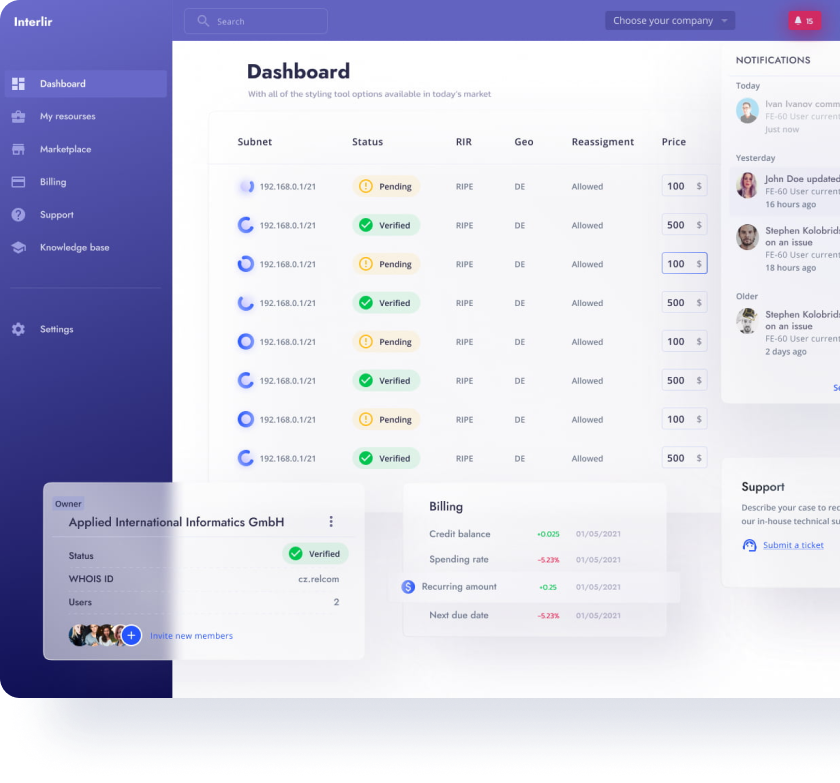
  3. Minimal Administrative Burden. Leasing IP addresses reduces the administrative overhead associated with IP address management. Cloud providers can rely on third-party brokers or IP leasing platforms to handle the management and compliance requirements associated with leased addresses. This is particularly beneficial for small-to-medium-sized cloud providers that may not have the resources to manage large IP address blocks.
Leasing BenefitDescription
Cost SavingsLower upfront investment; pay-as-you-go model
ScalabilityAbility to expand or reduce IP usage based on demand
FlexibilityShort-term or long-term leases can be customized based on business needs
Reduced Administrative LoadLeasing platforms often handle the management and legal complexities of leasing
Cash Flow OptimizationFrees up capital for other operational needs

Challenges of IP Leasing for Cloud Providers

  1. Security Risks. Leasing IP addresses introduces potential security challenges, particularly related to address reputation. Leased IP addresses may have been used for malicious purposes in the past, resulting in their inclusion on spam or blacklists. Cloud providers must conduct due diligence to ensure that the leased IP addresses have clean reputations and are not associated with any harmful activities.
    Additionally, the dynamic nature of leasing means that cloud providers may need to be extra vigilant in monitoring the security of leased IP blocks, as malicious actors could exploit the temporary nature of leased addresses.
  2. Dependency on Leasing Platforms. While IP leasing can reduce administrative burden, it can also create a dependency on third-party platforms for IP address management. If the leasing platform fails to provide reliable support or maintain accurate records, it can lead to compliance and operational challenges for the cloud provider.
    Moreover, the availability of IP addresses may fluctuate based on market demand, making it difficult for cloud providers to secure a consistent supply of addresses when needed.
  3. Long-Term Cost Considerations. Although leasing can be more cost-effective in the short term, over time, leasing may become more expensive than purchasing, especially for cloud providers with high and sustained IP address needs. Providers should carefully assess the long-term financial impact of leasing versus purchasing, especially as IPv4 address prices continue to rise.
  4. Legal and Compliance Challenges. Cloud providers must ensure compliance with regional and international regulations governing IP address leasing. This includes understanding the legal requirements for transferring leased IP addresses between regions and managing any contractual obligations tied to the lease agreement. Providers must also ensure that they have the appropriate legal support to navigate the complexities of IP address leasing agreements.
  5. Limited Availability. As the pool of available IPv4 addresses continues to shrink, leasing options may become more constrained. This limited availability can drive up leasing costs and make it difficult for cloud providers to access the IP resources they need, particularly during periods of high demand. Providers should consider these potential availability challenges when developing their long-term IP address management strategies.
ChallengesDescription
Security RisksPotential for leased addresses to have a negative reputation, leading to blacklist issues
Platform DependencyReliance on third-party platforms for IP address management can create operational challenges
Long-Term CostsLeasing may become more expensive than purchasing in the long run
Legal and Compliance IssuesNavigating regional and international regulations for IP leasing
Availability ConstraintsAs IPv4 addresses become scarcer, leasing options may become more limited and expensive

Conclusion

Leasing IP addresses provides cloud providers with a flexible, cost-effective solution for managing their IP needs in the short to medium term. The ability to scale, conserve capital, and minimize administrative overhead makes leasing an attractive option for many providers. However, challenges such as security risks, long-term cost considerations, and legal complexities must be carefully managed to ensure that leasing remains a viable strategy for the future.

Cloud providers should perform a thorough analysis of their IP address needs, balancing the benefits of leasing with the potential risks and costs involved. By leveraging best practices in IP address management and working closely with reliable leasing platforms, cloud providers can optimize their use of IPv4 addresses while preparing for the eventual transition to IPv6.

Alexander Timokhin

COO

    Ready to get started?

    Articles
    A Beginner’s Guide to Subnetting IPv4 and IPv6 Addresses (2026 Update)
    A Beginner’s Guide to Subnetting IPv4 and IPv6 Addresses (2026 Update)

    A Beginner’s Guide to Subnetting IPv4 and IPv6 Addresses Subnetting is a critical

    More
    IPv4 Leasing Revolution: Why Smart Businesses Are Ditching Ownership in 2025
    IPv4 Leasing Revolution: Why Smart Businesses Are Ditching Ownership in 2025

    Why IPv4 Leasing Is Becoming the Smart Choice for Businesses in 2025 1. Introduction
    More
    Network Isolation Revolution: IPv4 Marketplace Insights for Enterprise Security
    Network Isolation Revolution: IPv4 Marketplace Insights for Enterprise Security

      As CEO of InterLIR, I’ve witnessed firsthand how network isolation strategies

    More
    What is ASN?
    What is ASN?

    What is an ASN? ASN stands for Autonomous System Number. It is a unique identifier

    More
    How Anycast DNS Actually Works (And Why Your Network Needs It)
    How Anycast DNS Actually Works (And Why Your Network Needs It)

    Anycast DNS: A Leader’s Guide to Protecting Your Digital Infrastructure Executive
    More
    Why RPKI Matters: Securing Your Company’s Internet Traffic
    Why RPKI Matters: Securing Your Company’s Internet Traffic

    RPKI Certification: A Leader’s Guide to Internet Routing Security Executive

    More
    Why RIPE Address Policy Matters for Your Company’s Digital Future
    Why RIPE Address Policy Matters for Your Company’s Digital Future

    Executive Summary: What You Need to Know 🎯 Strategic Importance – Internet

    More
    AWS Outages: The CEO’s Guide to Preventing Downtime & Protecting Revenue
    AWS Outages: The CEO’s Guide to Preventing Downtime & Protecting Revenue

      When AWS DynamoDB failed in October 2025, thousands of businesses discovered that

    More
    What I Wish CEOs Knew About Managing IP Reputation Risk
    What I Wish CEOs Knew About Managing IP Reputation Risk

    Executive Summary: What You Need to Know 🎯 IP reputation directly impacts your

    More
    How to Create a Subnet and Configure Routing
    How to Create a Subnet and Configure Routing

    Mastering Subnetting and Routing for Modern Networks Why Subnetting Matters in Today’s

    More