Gaming networks need predictable IPv4 space because matchmaking, game servers, anti-cheat telemetry, DDoS filtering, and regional routing depend on stable addresses. A weak plan can increase ping, break bans, and slow incident response.
An IP address strategy for gaming is a structured plan for assigning IPv4 ranges to game services, regions, and security systems. It supports game server routing, anti cheat ip tracking, low ping access, ddos protection, and controlled subnet scaling for multiplayer platforms.
IPv4 allocation affects where players connect and how traffic enters the network. A single shared range is easy to start with, but it becomes hard to manage when regions, titles, and server types grow.
Good routing starts with a clear design. The team should separate match servers, login APIs, telemetry endpoints, voice systems, and patch delivery. This helps engineers route traffic and trace events.
A practical layout can include:
For dedicated hosting, each title or region may need its own public address range. This keeps traffic easier to monitor and reduces the impact of one service on another.
Anti cheat ip tracking is one signal in a larger fraud and abuse model. It helps identify repeated abuse, account farming, emulator clusters, VPN patterns, and banned infrastructure. It should not be the only basis for a player ban, because shared networks can hide many users behind one address.
Clean IP design improves evidence quality. If anti-cheat events come from known server ranges, analysts can separate player traffic, partner traffic, and internal service traffic. If all systems share one NAT pool, logs become less reliable.
The team should track:
An anycast gaming network can improve access to stateless or edge-facing services. It can route a player to a nearby login endpoint, DNS service, patch node, DDoS edge, or matchmaking API. This supports low latency allocation.
Anycast is not always safe for live game state. Real-time simulation depends on stable sessions. If a route change moves a player to another site during a match, the session may break. This is why anycast multiplayer design should be limited to services that tolerate route changes or share state across sites.
Use anycast for:
Avoid anycast for stateful match servers unless the application can handle failover, session migration, and consistent player state.
BGP optimization controls how traffic enters and leaves the gaming network. It cannot guarantee the shortest physical path, but it can improve routing policy, peering choice, and regional balance.
For low ping, measure real paths from player ISPs. Use looking glasses, flow data, probes, and client telemetry. Then adjust local preference, communities, transit selection, and peering.
Teams that rent IPv4 addresses should confirm LOA, ROA, IRR, and origin ASN support before announcing the range. Teams that need long-term control can compare leasing with Buy IPv4 Addresses.
Infrastructure IPAM gives engineers one source of truth for address ownership, region, service, routing status, and security policy. Without IPAM, growth becomes manual and error-prone.
A gaming IPAM plan should record:
This structure supports multiplayer architecture because every new service receives an address plan before deployment. It also helps teams explain outages and abuse events.
The risks are routing instability, DDoS exposure, poor IP reputation, weak logs, and overbroad bans. A gaming platform should test reachability before launch and keep backup paths ready.
Use clean subnets. Keep production and testing separate. Monitor BGP. Validate RPKI and IRR. Keep DDoS playbooks updated. Review bans with more than one signal.
Can IP tracking stop cheating by itself?
No. It is useful for correlation, but anti-cheat decisions should combine IP data with device, account, behavior, and match evidence.
Is anycast good for multiplayer games?
It is good for stateless edge services. It is risky for live match servers unless the game supports state sharing and failover.
How many subnets does a game platform need?
It depends on regions, titles, environments, and security zones. Most growing platforms need separate ranges for production, APIs, telemetry, and mitigation.
Does DDoS protection require dedicated IPv4 space?
Not always, but dedicated ranges make filtering, scrubbing, logging, and provider coordination easier.
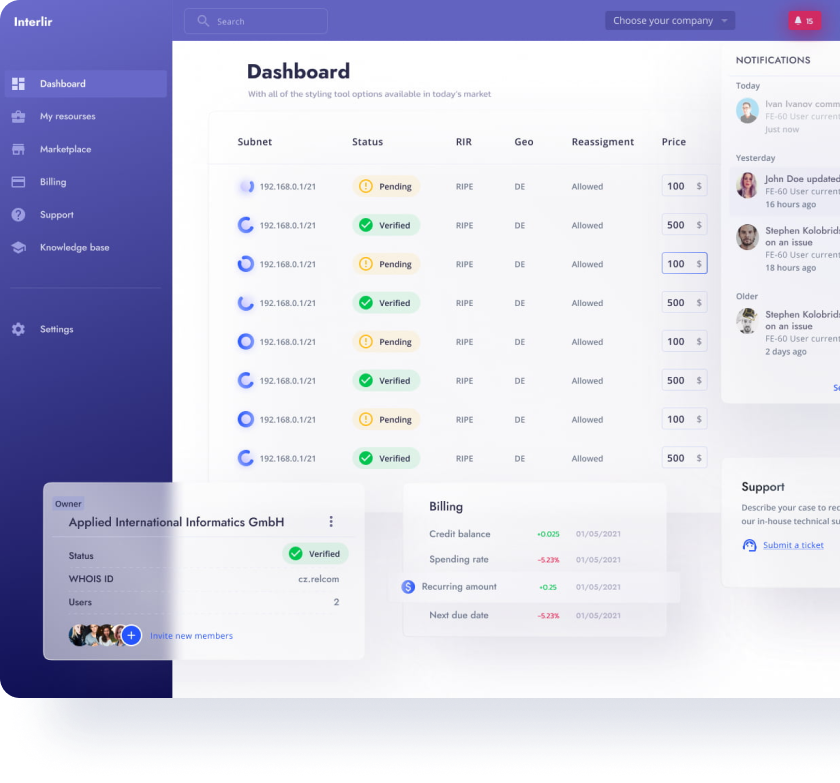
If your team needs IPv4 space for low-latency regions, anti-cheat telemetry, anycast edge services, or DDoS-aware routing, contact InterLIR. The company provides infrastructure for IPv4 leasing, buying, lease-out, and marketplace workflows, so gaming networks can align address capacity with routing and security requirements.

Evgeny Sevastyanov
Support Team Leader
A Beginner’s Guide to Subnetting IPv4 and IPv6 Addresses Subnetting is a critical

Why IPv4 Leasing Is Becoming the Smart Choice for Businesses in 2025 1. Introduction
As CEO of InterLIR, I’ve witnessed firsthand how network isolation strategies

What is an ASN? ASN stands for Autonomous System Number. It is a unique identifier

Anycast DNS: A Leader’s Guide to Protecting Your Digital Infrastructure Executive

RPKI Certification: A Leader’s Guide to Internet Routing Security Executive

Executive Summary: What You Need to Know 🎯 Strategic Importance – Internet

When AWS DynamoDB failed in October 2025, thousands of businesses discovered that

Executive Summary: What You Need to Know 🎯 IP reputation directly impacts your
Live chat is provided by Intercom and is loaded only after you enable it. You can also contact us without enabling the chat.