IPv4 leasing is no longer a temporary workaround for companies that cannot buy address space. In 2026, it is a normal infrastructure option for hosting providers, cloud platforms, ISPs, VPN services, SaaS products, data centers and enterprises that still need reliable IPv4 connectivity.
The real question is not whether leased IPv4 addresses are worse than purchased ones. The real question is whether the IPv4 block is clean, correctly authorized, securely routed, properly documented and actively monitored.
The IPv4 market exists because the free supply of IPv4 addresses has been exhausted for years. RIPE NCC announced in 2019 that it had run out of available IPv4 addresses and could only allocate small amounts of recovered space through a waiting list. IPv6 adoption continues to grow, but many internet services still operate in dual-stack environments where IPv4 and IPv6 coexist.
This is why IPv4 leasing remains important. Businesses need address resources for hosting, cloud infrastructure, customer onboarding, regional expansion, BYOIP projects, email platforms, proxy networks, security services and migration work. Buying IPv4 may be right for some long-term strategies, but IPv4 leasing often gives companies more flexibility and lower upfront cost.
Quick answer: the most common IPv4 leasing myths are that leased addresses are lower quality, only suitable for small companies, unsafe for long-term use or irrelevant because IPv6 will replace IPv4 immediately. In practice, IPv4 leasing quality depends on reputation, routing, RPKI/ROA, documentation, abuse handling, geolocation and provider reliability.
A leased IPv4 block can perform well when reputation, routing and documentation are clean.
IPv4 leasing helps companies scale up, test markets or reduce unused address capacity.
IPv6 is growing, but many customers, networks and platforms still require IPv4 reachability.
Contracts, support, RPKI, abuse handling and transparency define operational readiness.
The internet is moving toward IPv6, but it is not moving at the same pace everywhere. Google publicly measures the percentage of users that access Google over IPv6, which shows that IPv6 deployment is significant but still uneven across regions and networks. That unevenness keeps IPv4 operationally important for many production services.
For businesses, IPv4 leasing solves a practical problem: they need usable IPv4 address space now, but they may not want to buy permanent resources before demand is proven. A company may need a /24 for a regional deployment, several prefixes for customer separation or additional space for a short-term migration. In those cases, IPv4 leasing can be faster and more capital-efficient than a purchase.
The mistake is treating IPv4 leasing as a commodity transaction. A low monthly price is not enough. The provider must be able to support clean authorization, correct routing, stable registry information, abuse response and reputation monitoring.
A leased IPv4 address is not automatically worse than a purchased IPv4 address. From the perspective of most users and online services, the important question is how the IP address behaves. If the prefix has clean reputation, valid routing, correct records and responsive abuse handling, its lease status is usually invisible in daily use.
Problems appear when a leased block has unresolved reputation debt, outdated geolocation, missing ROAs, inconsistent route objects or poor documentation. The same problems can also happen with owned address space. Ownership alone does not make a prefix clean.
IPv4 leasing is attractive to smaller companies because it reduces upfront cost. But that does not make it a small-company-only model. Larger providers use IPv4 leasing when they need flexibility, faster access to resources or separation between projects, customers and regions.
A cloud provider may lease addresses to test a new geography. A hosting company may lease a clean /24 for a new customer segment. A SaaS platform may need separate address ranges for email, application traffic and security controls. In these cases, IPv4 leasing is not a sign of weakness. It is a way to match infrastructure capacity to actual business demand.
IPv6 growth is real and important. Still, IPv4 leasing remains relevant because many networks, customers and services continue to depend on IPv4 connectivity. Even organizations that support IPv6 often need dual-stack operation so that IPv4-only users can still reach them.
The practical strategy is not to ignore IPv6. The practical strategy is to plan for both realities: deploy IPv6 where possible and maintain reliable IPv4 reachability where customers, partners or legacy systems still require it.
This fear usually comes from unclear contracts or unreliable suppliers. A reputable IPv4 leasing provider should define the lease term, renewal process, payment terms, acceptable use rules, abuse handling process and notice periods. When those terms are clear, IPv4 leasing can support stable long-term infrastructure planning.
Risk increases when a business leases from an informal source without proper documentation. Missing authority, unclear LOA terms or poor communication can delay routing, create provider disputes or lead to unexpected service interruption. The solution is not to avoid IPv4 leasing. The solution is to work with a provider that treats documentation as part of the product.
Receiving an IPv4 block is only the beginning. The block must be prepared, announced, monitored and maintained. This is where many IPv4 leasing mistakes happen. A technically assigned range can still fail operationally if routing, DNS, geolocation or reputation are ignored.
Check origin ASN, BGP visibility, route objects and RPKI/ROA before relying on the prefix.
Review blacklist status, abuse history and email deliverability before assigning the block to customers.
Compare major geolocation databases and publish or update geofeed data when location accuracy matters.
IPv4 leasing providers can differ significantly. Some only provide access to an address block. Others help with authorization, routing coordination, RPKI, abuse handling and operational support. That difference matters when a business needs production-ready address space.
A low price can become expensive if the block triggers fraud filters, fails route validation, shows the wrong country, has unresolved blacklist history or lacks a responsive support channel. The total cost of IPv4 leasing includes the time required to make the block usable.
IP reputation matters for many use cases, especially email, hosting, VPN, proxy, SaaS, security and customer-facing platforms. If an IPv4 block was previously associated with spam, phishing, malware, abusive proxy use or scanning, some services may continue to treat the range with caution after a lease begins.
Reputation is not fixed forever, but it must be managed. Businesses should check major blocklists, review abuse signals, monitor customer activity and respond quickly to complaints. For email use cases, reputation work should include SPF, DKIM, DMARC, reverse DNS, gradual warmup and bounce monitoring.
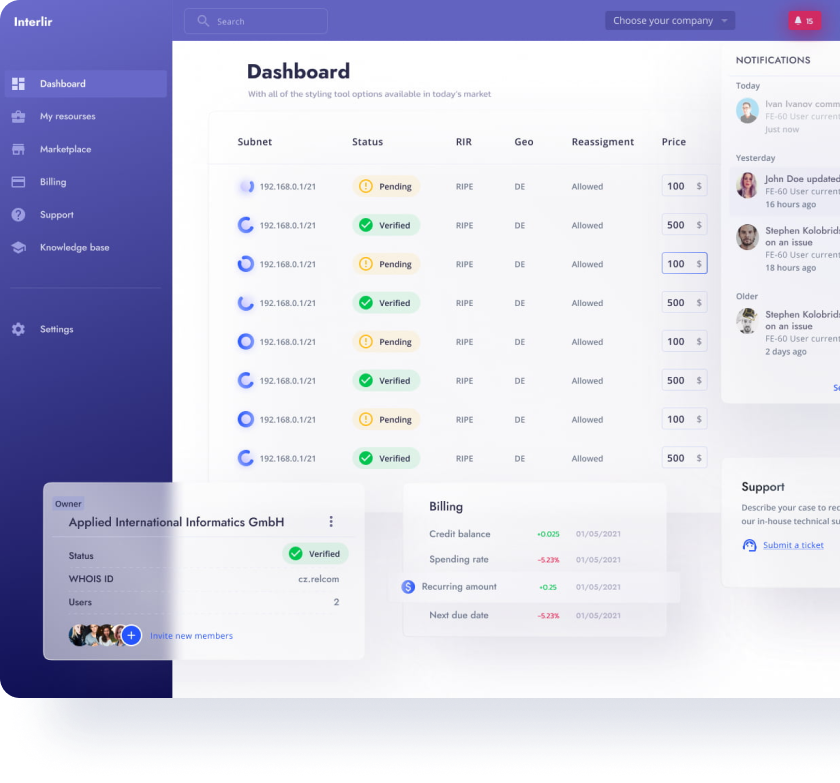
InterLIR connects businesses with IPv4 leasing, purchasing and monetization options, while also paying attention to the practical issues that decide whether a prefix is usable in production: authorization, routing, reputation, geolocation and support.
For companies that need IPv4 address space, this reduces the risk of treating IPv4 leasing as a simple price-per-IP transaction.
Good IPv4 leasing is not just about receiving addresses. It is about receiving address space that can be announced, trusted, monitored and supported. That is where provider experience matters.
IPv4 leasing can be safe for business infrastructure when the lease terms, authorization, routing, RPKI/ROA, reputation and support process are clear. The main risk is not leasing itself, but using poorly documented or poorly managed address space.
No. Leased IPv4 addresses are not automatically worse than purchased addresses. A clean, well-routed leased prefix can work better than an owned prefix with poor reputation or outdated records.
Large companies use IPv4 leasing for flexibility. It helps them expand capacity, test regions, isolate customer traffic, support migrations or avoid buying permanent address space before the business case is clear.
IPv6 will reduce long-term dependence on IPv4, but it has not made IPv4 leasing irrelevant. Many networks and services still require IPv4 reachability, so dual-stack planning remains common.
Before leasing IPv4 addresses, check ownership authority, LOA, WHOIS or RDAP records, RPKI/ROA, route objects, BGP visibility, DNSBL status, geolocation accuracy, reverse DNS support and abuse response process.
The biggest IPv4 leasing myths come from focusing too much on ownership and too little on operations. Whether a block is leased or owned, businesses need clean reputation, correct routing, reliable documentation, active monitoring and responsive support.
For many organizations in 2026, IPv4 leasing is a practical way to access scarce address resources without heavy upfront investment. The best results come from choosing a provider that understands not only the IPv4 market, but also the operational details that make address space ready for real infrastructure.

Vladislava Shadrina
Customer Account Manager

A Beginner’s Guide to Subnetting IPv4 and IPv6 Addresses Subnetting is a critical

Why IPv4 Leasing Is Becoming the Smart Choice for Businesses in 2025 1. Introduction
As CEO of InterLIR, I’ve witnessed firsthand how network isolation strategies

What is an ASN? ASN stands for Autonomous System Number. It is a unique identifier

Anycast DNS: A Leader’s Guide to Protecting Your Digital Infrastructure Executive

RPKI Certification: A Leader’s Guide to Internet Routing Security Executive

Executive Summary: What You Need to Know 🎯 Strategic Importance – Internet

When AWS DynamoDB failed in October 2025, thousands of businesses discovered that

Executive Summary: What You Need to Know 🎯 IP reputation directly impacts your
Live chat is provided by Intercom and is loaded only after you enable it. You can also contact us without enabling the chat.