The internet has undergone a remarkable transformation over the past half-century, evolving from specialized research networks to the global communications infrastructure that powers our modern world. At InterLIR, we’ve witnessed firsthand how this evolution has fundamentally reshaped not just technology, but the entire landscape of network resource management and digital infrastructure. This article explores the evolutionary journey of the internet, examining how the marriage of computing and communications has fundamentally reshaped our society, economy, and technological landscape-and what this means for businesses navigating today’s complex network environment.
The invention of the transistor in December 1947 and the integrated circuit in 1958 set the stage for one of the most transformative technological marriages in human history. Before these innovations, human endeavors were largely constrained by geography. The industrial revolution and the introduction of railways in the mid-19th century had already begun shifting the foundations of wealth and power from agriculture to industrial production, with the telegraph and telephone enabling companies to project their influence across greater distances.
However, when computers entered the communications realm, the pace of change accelerated dramatically. The timeline between major innovations compressed from decades to years, with computing transitioning from esoteric research tools to essential components of everyday life. This acceleration continues today, driving the demand for network resources that we help businesses secure at InterLIR.
Several foundational technologies emerged during this period that would shape the internet’s architecture for decades to come:
🔧 Unix Operating System – Developed by Ken Thompson and Dennis Ritchie at Bell Labs in the late 1960s, this open operating system written in the C language became foundational to computing development
🔌 Ethernet – Bob Metcalf’s 1973 invention at Xerox PARC introduced the revolutionary “X-Wire” concept, a simple but transformative approach to computer networking
💻 Personal Computing – The transition from mainframe computing to personal devices democratized access to computing power
🌐 Internet Protocol – The development of standardized communication protocols enabled disparate networks to interconnect
The open distribution model of Unix was particularly significant. Due to antitrust restrictions, Bell Labs was required to license their patents upon request and forbidden from entering businesses outside common carrier communications. As a result, Unix source code was shared widely, allowing universities and organizations to modify and extend it, leading to influential variants like the Berkeley Software Distribution (BSD). This open approach to technology development would become a defining characteristic of internet evolution.
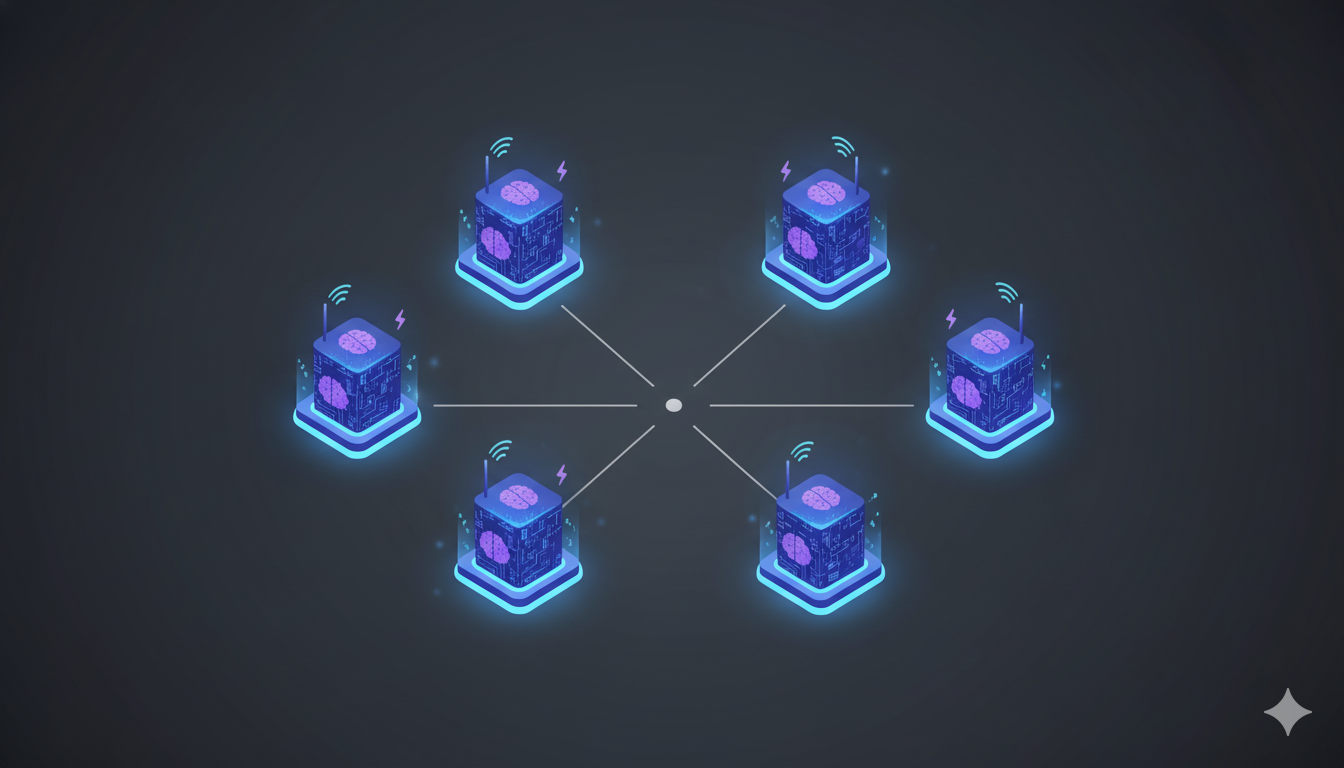
Ethernet network cable connecting distributed edge devices with simple topology diagram
Ethernet represents one of the most influential networking technologies ever developed, and its design philosophy continues to influence network architecture today. What made it revolutionary was its radical simplicity-it was, essentially, just a wire. Rather than building intelligence into the network itself, Ethernet pushed all networking functions to the edge devices (computers) connected to it.
This “dumb network, smart devices” philosophy transformed network design fundamentally. Ethernet required no internal switch, no packet framing, no controller, and maintained no network state. Instead, connected computers handled all these functions through distributed algorithms. This approach meant that network costs were distributed to the connected devices rather than centralized, creating a more scalable and flexible architecture.
The technical elegance of Ethernet’s design included several key innovations:
📡 Distributed Intelligence – Network functions handled by edge devices rather than centralized infrastructure
🔄 Self-Clocking Packets – Using a 64-bit preamble for synchronization
🔍 MAC Addressing – The 48-bit MAC address system introduced then remains in use today
🔓 Open Standards – The open specification enabled widespread adoption and innovation
⚡ Collision Detection – CSMA/CD protocol allowed multiple devices to share the same medium efficiently
This design philosophy of pushing intelligence to the edges while keeping the network simple and fast has profound implications for how we think about network resources today. At InterLIR, we see this principle reflected in modern network architectures where flexibility and scalability depend on intelligent endpoint management rather than complex core infrastructure.
The exponential improvements in computing capability driven by Moore’s Law have been the fundamental force behind the internet’s evolution. Gordon Moore’s 1965 observation that the number of transistors on an integrated circuit doubles approximately every two years while fabrication costs increase far less dramatically has held remarkably consistent for decades.
This exponential growth pattern has continuously rendered even recent technologies obsolete. Unlike cars or other technological artifacts that might remain functional for decades, computers from just a few years ago are often considered hopelessly outdated. The VAX 11/780 computer from 1977, once a cutting-edge mainframe capable of executing 1 million instructions per second, now exists primarily in museums. Today’s smartphones possess computing power that would have seemed like science fiction just a generation ago.
One critical area where Moore’s Law impacted network design was in address space planning-a domain that directly relates to our work at InterLIR. Early network protocols like DECnet Phase 3 used a 16-bit address field, allowing a maximum of 65,535 connected devices. This number seemed more than adequate in an era of room-sized computers costing millions of dollars.
The creators of the Internet Protocol (IP) took a far more visionary approach by implementing a 32-bit addressing architecture, enabling approximately 4.3 billion unique addresses. This decision, seemingly extravagant in the 1970s when there were only thousands of computers worldwide, demonstrated remarkable foresight about computing’s potential growth trajectory.
| Protocol | Address Bits | Maximum Devices | Era | Current Status |
|---|---|---|---|---|
| DECnet Phase 3 | 16 bits | 65,535 | 1970s-1980s | Obsolete |
| IPv4 | 32 bits | ~4.3 billion | 1980s-present | Exhausted |
| IPv6 | 128 bits | 340 undecillion | 1998-present | Growing adoption |
Yet even this vast address space proved inadequate as Moore’s Law continued to drive the proliferation of connected devices. What seemed like “forever” capacity in the 1980s would be exhausted by the explosive growth of the internet decades later. This exhaustion of IPv4 addresses created the specialized marketplace that InterLIR serves today, where businesses must carefully manage and acquire the IPv4 resources they need to operate.
As personal computing emerged in the 1980s, another fundamental shift occurred in how we conceptualized computer networks. Early network designs assumed symmetry-like telephone networks where each endpoint both speaks and listens, computers were expected to both provide and consume services equally.
However, the market evolved differently. Personal computers positioned themselves primarily as clients rather than servers. Users wanted computing equivalents of television sets-devices to access services, not host them. This shift led to a segmentation of the computing environment into dedicated client and server roles, fundamentally changing network architecture and resource requirements.
By the late 1990s, this client-server model became embedded in the internet’s architecture itself. Network design accommodated this asymmetry through several key developments:
🏠 Residential Connections – Designed with faster download speeds than upload capacities, reflecting consumption-focused usage patterns
🏢 Data Centers – Emerged to coalesce servers into managed environments with reliable power, cooling, and maintenance
🔌 Network Infrastructure – Repurposed existing telephone networks for internet access, avoiding massive capital investments
📊 Traffic Patterns – Network capacity planning shifted to accommodate asymmetric data flows
💼 Business Models – Service providers developed tiered offerings based on asymmetric bandwidth allocation
This architectural decision aligned with the limitations of existing infrastructure. The dial-up world of the 1990s and the DSL/Cable modem era of the 2000s provided a good fit for client/server networking, allowing rapid expansion by leveraging legacy last-mile infrastructure. However, this asymmetry also created challenges for businesses requiring substantial upload capacity or hosting services, driving demand for dedicated server infrastructure and specialized network resources.
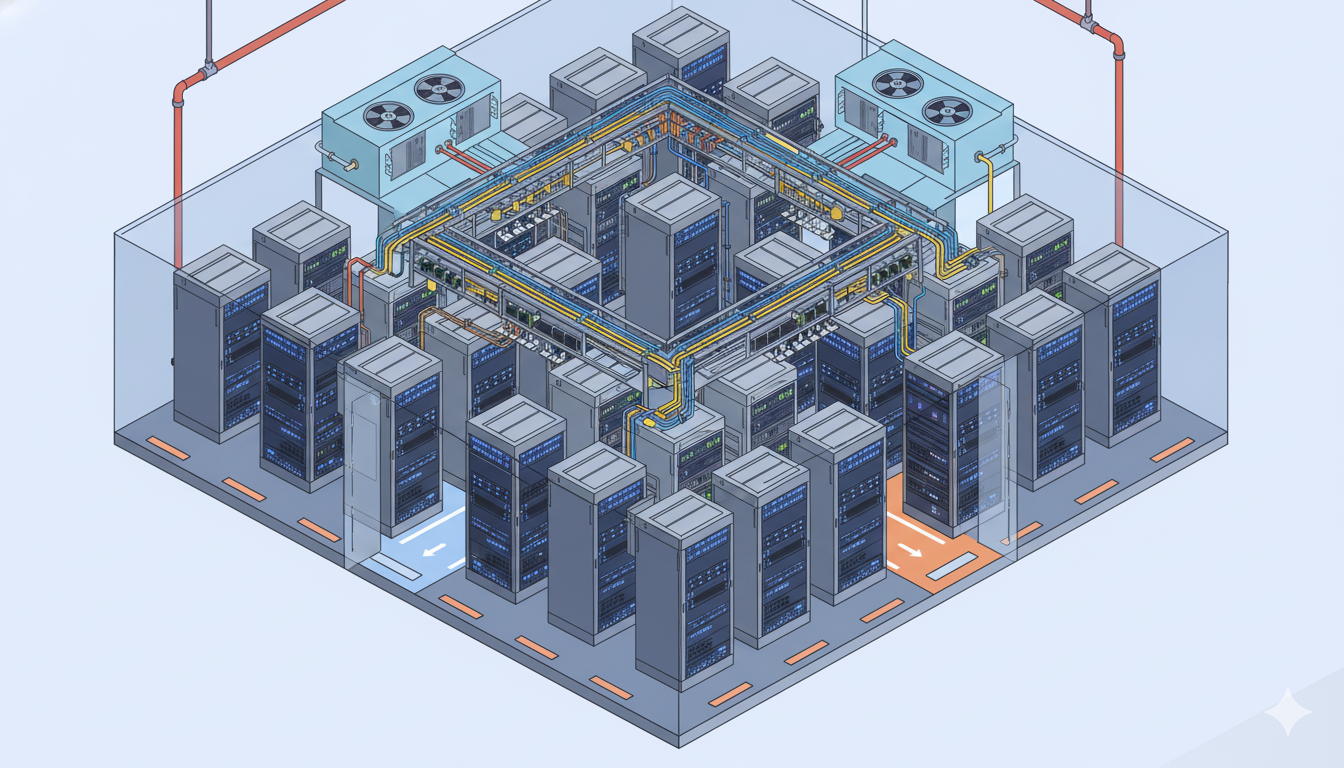
Data center server racks with network infrastructure and cooling systems
Around the year 2000, specialized data centers began to emerge, consolidating servers into controlled environments with robust power, cooling, and maintenance capabilities. These facilities represented the next evolutionary step in network architecture, providing centralized homes for the growing array of internet services. From our perspective at InterLIR, this centralization created new patterns in how IPv4 addresses were allocated and utilized.
Service specialization accelerated, with dedicated servers for web hosting, email, data storage, and various other functions. Compared to today’s massive AI-scale data centers, these early facilities were relatively modest-typically occupying just a room or two with power requirements in the hundreds of kilowatts rather than megawatts.
The next major evolutionary phase came with the emergence of cloud computing, which further abstracted computing resources from physical hardware. This shift has fundamentally transformed how businesses think about and interact with computing resources:
☁️ Infrastructure as a Service (IaaS) – Providing virtualized computing infrastructure on demand, including network resources and IP addresses
⚙️ Platform as a Service (PaaS) – Offering hardware and software tools over the internet, abstracting infrastructure management
📱 Software as a Service (SaaS) – Delivering software applications via the internet, eliminating local installation requirements
🔧 Network as a Service (NaaS) – Providing network capabilities on-demand, including routing, security, and connectivity
Cloud computing represents the culmination of several evolutionary trends: the increasing power of computing hardware driven by Moore’s Law, the client-server model’s maturation, and the continuing abstraction of computing resources from physical infrastructure. However, this centralization also concentrated demand for IPv4 addresses in data center environments, contributing to address scarcity and creating the specialized market we serve.
As predicted by the relentless progress of Moore’s Law, the seemingly vast IPv4 address space with its 4.3 billion addresses eventually proved inadequate. The proliferation of personal computers, mobile devices, and later IoT devices created an address scarcity that threatened to constrain the internet’s continued growth. This scarcity is precisely what drives the IPv4 marketplace that InterLIR facilitates.
The response was IPv6, introduced in 1998 with a 128-bit address space capable of supporting approximately 340 undecillion (3.4×10^38) unique addresses. This expansion represented not just a quantitative improvement but a qualitative rethinking of how addressing should work in a vastly expanded internet environment.
Despite IPv6’s technical superiority and virtually unlimited address space, the transition from IPv4 has been slower than anticipated. Several factors contribute to this gradual adoption:
Legacy Infrastructure – Billions of devices and countless network configurations built around IPv4 cannot be instantly replaced
Network Address Translation (NAT) – This workaround technology extended IPv4’s lifespan by allowing multiple devices to share single public addresses
Dual-Stack Complexity – Running both IPv4 and IPv6 simultaneously adds operational complexity and cost
Business Continuity – Organizations prioritize maintaining existing services over infrastructure upgrades
Economic Factors – The availability of IPv4 addresses through secondary markets reduces urgency for IPv6 adoption
This transition period has created a unique market dynamic. While IPv6 represents the long-term future, IPv4 addresses remain essential for current operations, particularly for businesses requiring compatibility with existing internet infrastructure. At InterLIR, we help organizations navigate this transition by facilitating access to IPv4 resources while they develop their IPv6 strategies.
The transition from IPv4 to IPv6 exemplifies a broader pattern in computing evolution-the shift from resource scarcity to abundance. Early computing systems were designed with careful attention to efficiency due to limited processing power, memory, and bandwidth. As Moore’s Law drove exponential improvements in these capabilities, design philosophies shifted toward leveraging abundance rather than optimizing for scarcity.
However, this paradigm shift occurs unevenly across different resources. While computing power and storage have become abundant, network addresses experienced a temporary return to scarcity with IPv4 exhaustion. IPv6 promises to restore abundance, but the transition period creates unique challenges and opportunities for businesses managing their network infrastructure.
Today’s internet continues to evolve along several key dimensions, each building upon the foundational elements established decades ago. Understanding these trends is crucial for businesses planning their network infrastructure and resource requirements:
🤖 Artificial Intelligence and Machine Learning – AI workloads are driving unprecedented demands for computing power, network bandwidth, and specialized infrastructure, creating new patterns in resource allocation
🌐 Edge Computing – Processing moving closer to data sources reduces latency and bandwidth requirements, but increases the geographic distribution of network resources
📱 Mobile-First Paradigm – Computing increasingly dominated by mobile devices rather than traditional PCs, changing traffic patterns and connectivity requirements
🔒 Security and Privacy – Growing focus on protecting data and communications drives demand for secure network architectures and dedicated resources
⚡ 5G and Beyond – Next-generation wireless networks enable new applications and connectivity patterns
The fundamental principles established in earlier eras-open standards, distributed intelligence, and the relentless improvements driven by Moore’s Law-continue to shape how these newer technologies develop and deploy. However, each trend creates specific implications for network resource management and planning.
Perhaps the most dramatic manifestation of Moore’s Law in the contemporary internet is the explosion of connected devices beyond traditional computers. The Internet of Things represents a natural extension of the trends that have driven internet evolution from the beginning-as computing power becomes smaller, cheaper, and more energy-efficient, it becomes practical to embed it in an ever-widening array of objects.
This proliferation of connected devices creates both opportunities and challenges. The vast IPv6 address space provides the necessary foundation for billions or trillions of connected devices, but questions of security, privacy, standardization, and power efficiency remain to be fully resolved. For businesses deploying IoT solutions, careful planning of network resources becomes critical.
For organizations navigating today’s complex network environment, understanding internet evolution provides crucial context for strategic planning:
| Evolutionary Trend | Business Impact | Strategic Consideration |
|---|---|---|
| IPv4 Scarcity | Increased resource costs | Plan IPv4 acquisition and IPv6 transition |
| Cloud Centralization | Reduced infrastructure burden | Balance cloud vs. on-premise resources |
| Edge Computing | Distributed architecture needs | Plan for geographic resource distribution |
| IoT Proliferation | Massive device connectivity | Develop scalable addressing strategies |
| Security Requirements | Need for dedicated resources | Invest in secure network infrastructure |
At InterLIR, we work with businesses to understand how these evolutionary trends impact their specific network resource needs. Whether acquiring IPv4 addresses for immediate operational requirements or planning long-term IPv6 strategies, understanding the historical context and future trajectory of internet evolution enables more informed decision-making.
The internet’s evolution represents one of the most remarkable technological journeys in human history, and understanding this journey is essential for navigating today’s complex network environment. From its origins in research networks connecting room-sized computers to today’s ubiquitous global infrastructure connecting billions of devices, this evolution has been driven by a few key forces: Moore’s Law’s relentless improvements in computing capability, the power of open standards and systems, and the shift from symmetrical to asymmetrical network architectures.
At InterLIR, we’ve built our business on understanding these evolutionary patterns and their practical implications for organizations managing network resources. The exhaustion of IPv4 addresses-once thought to be virtually unlimited-demonstrates how even visionary planning can be overtaken by exponential technological growth. This scarcity has created the specialized marketplace we serve, helping businesses secure the IPv4 resources they need while the industry gradually transitions to IPv6’s abundance.
Understanding this evolutionary history provides valuable context for anticipating future developments. The patterns established over the past five decades-exponential improvement in capabilities, the tension between centralized and distributed architectures, and the continuous abstraction of computing resources from physical hardware-will likely continue to shape how the internet evolves in coming years. For businesses, this means planning network infrastructure with both current needs and future flexibility in mind.
As we look toward emerging technologies like quantum computing, advanced AI, and ubiquitous connectivity, the lessons of internet evolution remind us that the most transformative innovations often come from combining existing technologies in novel ways, opening access through standardization, and designing with an eye toward future capabilities rather than current constraints. Whether you’re managing IPv4 resources, planning IPv6 deployment, or developing strategies for emerging technologies, understanding the internet’s evolutionary trajectory provides essential context for making informed decisions about your network infrastructure.
The internet’s journey from simple networks to modern computing systems continues, and at InterLIR, we remain committed to helping businesses navigate this evolution successfully, ensuring they have the network resources needed to thrive in an increasingly connected world.

Vladislava Shadrina
Customer Account Manager
A Beginner’s Guide to Subnetting IPv4 and IPv6 Addresses Subnetting is a critical

Why IPv4 Leasing Is Becoming the Smart Choice for Businesses in 2025 1. Introduction
As CEO of InterLIR, I’ve witnessed firsthand how network isolation strategies
What is an ASN? ASN stands for Autonomous System Number. It is a unique identifier

Anycast DNS: A Leader’s Guide to Protecting Your Digital Infrastructure Executive

RPKI Certification: A Leader’s Guide to Internet Routing Security Executive

Executive Summary: What You Need to Know 🎯 Strategic Importance – Internet

When AWS DynamoDB failed in October 2025, thousands of businesses discovered that

Executive Summary: What You Need to Know 🎯 IP reputation directly impacts your
Live chat is provided by Intercom and is loaded only after you enable it. You can also contact us without enabling the chat.