🎯 Critical business infrastructure: The internet’s addressing system is governed by Regional Internet Registries (RIRs) that control the distribution of IP addresses-the digital real estate your business depends on.
💰 Market implications: Changes in RIR governance directly impact IP address availability, pricing, and transfer policies, affecting your IT infrastructure costs and capabilities.
🚀 Strategic action: Forward-thinking organizations should monitor RIR governance developments and secure their IP resources through legitimate marketplaces to ensure business continuity.
⚠️ Risk awareness: The evolving governance framework introduces new compliance requirements and potential disruptions that could affect your network operations if not properly managed.
Imagine waking up to discover your company’s website is unreachable, your cloud services inaccessible, and your email systems down. The culprit? Not a technical failure, but a governance issue with the digital addresses that connect your business to the internet. This scenario is more plausible than most business leaders realize, and it stems from changes happening in how the internet’s addressing system is governed.
In simple terms, internet registry governance is like the property management system for digital real estate. Just as physical businesses need legitimate addresses to receive mail and customers, your digital operations require valid IP addresses to function online. These addresses aren’t infinite-they’re managed by Regional Internet Registries (RIRs), organizations that operate under evolving rules that directly impact your business.
The business world is increasingly dependent on digital infrastructure, yet few leaders understand the governance structures that control this critical resource. When the organizations that manage IP addresses change their rules-as they’re doing now with the development of new recognition and derecognition frameworks-it creates ripple effects throughout the digital economy, affecting everything from cloud computing costs to market entry barriers.
In this guide, I will break down what internet registry governance is in simple terms, explain why understanding these changes is critical for your business continuity, and provide a clear roadmap for making informed decisions about your digital address resources. By the end, you’ll understand not just the technical aspects, but the business implications of these governance shifts.

The recent consultation on RIR governance frameworks represents a pivotal moment that smart business leaders should be paying attention to-even if they’ve never heard of an RIR before today.
To understand why governance matters, we need to look back at how the internet’s addressing system evolved. In the early days of the internet-the 1980s and early 1990s-IP addresses were distributed rather casually. It was like a new city being built where land was plentiful and free for the taking. Organizations, universities, and even individual projects could receive large blocks of addresses simply by requesting them.
As the internet grew from an academic project to the backbone of the global economy, this casual approach became unsustainable. By the mid-1990s, it became clear that the original addressing system (IPv4) had a fundamental limitation: it could only support approximately 4.3 billion unique addresses. This might have seemed abundant in 1981, but today it’s woefully inadequate for a world with billions of connected devices.
To manage this increasingly scarce resource, five Regional Internet Registries were established across different geographic regions: ARIN (North America), RIPE NCC (Europe), APNIC (Asia-Pacific), LACNIC (Latin America), and AFRINIC (Africa). These organizations were given authority to distribute and manage IP addresses within their regions, operating under policies developed by their respective communities.
This shift from abundance to scarcity transformed IP addresses from simple technical identifiers into valuable business assets. Today, a single IPv4 address can sell for $50-60 on the transfer market-meaning a standard block of 4,096 addresses (a “/20” in technical terms) represents an asset worth approximately $200,000-$250,000. For many businesses, their IP address holdings have become significant balance sheet items.
As IP addresses gained economic value, the governance structures managing them faced new challenges. The original framework for recognizing RIRs-a document known as ICP-2 created in 1999-was designed for a different era. It established basic criteria for recognizing new RIRs but said little about ongoing requirements or what would happen if an RIR failed to meet its obligations.
This governance gap became increasingly problematic as the internet matured. Recent controversies, particularly involving AFRINIC (the African registry), have highlighted the need for clearer frameworks. When AFRINIC faced legal challenges and governance disputes in 2021-2022, the lack of clear procedures for handling potential RIR failures created uncertainty throughout the internet ecosystem.
For business leaders, this history matters because it explains why IP addresses are both valuable and vulnerable to governance disruptions. Your company’s ability to maintain online operations depends on a stable addressing system, which in turn depends on effective governance of the organizations that manage these critical resources.
The consultation on the “Governance Document for the Recognition, Maintenance, and Derecognition of Regional Internet Registries” might sound like obscure technical policy, but its implications for your business are substantial and direct. This framework will establish the rules by which the organizations controlling IP addresses operate, affecting everything from resource availability to compliance requirements.
When you acquire IP addresses for your business-whether through direct allocation from an RIR, purchase on the transfer market, or rental from a provider like InterLIR-you’re depending on the stability of the registry system. Your legitimate right to use those addresses stems from registry records that verify your organization as the authorized holder.
The new governance framework strengthens this system by establishing clear criteria for how RIRs must maintain their operations. This includes requirements for:
🔐 Data security and integrity: Ensuring that records of IP address assignments remain accurate and protected
📊 Transparent policy development: Maintaining open processes for creating and updating the rules governing address distribution
⚖️ Financial stability: Requiring RIRs to maintain sufficient resources to operate consistently
🔄 Operational continuity: Establishing mechanisms to ensure services continue even during organizational challenges
For your business, these requirements translate to greater confidence that the digital addresses you rely on will remain valid and recognized across the internet. The framework reduces the risk that registry problems could suddenly invalidate your address holdings or disrupt your online operations.
With IPv4 addresses now scarce and valuable, many businesses turn to the secondary market to acquire the resources they need. This marketplace-where organizations buy, sell, and lease IP addresses-depends on registry governance for its legitimacy and security.
| Business Need | Risk Without Strong Governance | Benefit of New Framework |
|---|---|---|
| Acquiring additional IP addresses | Purchasing addresses with unclear provenance or contested ownership | Clearer chain of custody verification and transfer policies |
| Maintaining existing address blocks | Sudden policy changes affecting your right to use addresses | More predictable policy development with stakeholder input |
| Planning for growth | Uncertainty about future address availability | Better visibility into regional address management practices |
| Ensuring network security | Using addresses with problematic reputation history | Improved registry data quality and verification |
The new governance framework establishes stronger requirements for how RIRs handle transfers between organizations, creating a more reliable environment for legitimate address trading. For businesses working with marketplace providers like InterLIR, this means greater assurance that the addresses you acquire will have clean provenance and recognized legitimacy.

Beyond the strategic implications, the governance framework creates practical compliance considerations for your IT team. As RIRs implement more standardized maintenance requirements, they may introduce new verification procedures or documentation standards that address holders must meet.
Your technical team should prepare for:
📝 Enhanced documentation requirements: More rigorous proof of address utilization and organizational identity
🔄 Regular verification processes: Periodic confirmation that registered information remains accurate
🔍 Stricter transfer policies: More detailed due diligence when acquiring addresses from other organizations
⚠️ Potential legacy address impacts: Changes affecting organizations holding addresses from before the RIR system
While these requirements create additional administrative work, they ultimately protect your business by ensuring that the addressing system remains stable and trustworthy. Working with experienced providers like InterLIR can help navigate these compliance requirements efficiently.
When business leaders think about digital infrastructure, they often focus on visible elements like cloud services or cybersecurity tools. The IP addressing system tends to remain invisible-until something goes wrong. Understanding the true costs of IP resource mismanagement helps justify proper investment in this critical area.
💸 Operational disruption: If your addresses are contested or reclaimed due to governance issues, your online services can experience downtime costing thousands per hour in lost revenue and productivity
🔥 Reputation damage: Using addresses with problematic history can lead to your company’s digital properties being blacklisted by security systems, damaging customer trust
📉 Marketing ineffectiveness: Email deliverability and ad platform access depend on IP reputation-addresses with poor governance history can render marketing investments ineffective
👥 Compliance exposure: Inadequate documentation of IP resource rights can create regulatory and audit issues, particularly for companies in regulated industries
💰 Asset value erosion: Improper management can diminish the value of your IP address holdings, which represent significant financial assets for many organizations
These costs are rarely captured in IT budgets but can have substantial impacts on overall business performance. A manufacturing company I worked with discovered this when their customer portal became unreachable because they were using addresses with contested ownership. The resulting disruption cost them an estimated €75,000 in lost orders and emergency IT consulting fees.
Given these risks, professional management of IP resources should be viewed not as a technical expense but as business insurance. Working with established providers who understand registry governance and maintain strong relationships with RIRs provides several business advantages:
🛡️ Risk mitigation: Professional providers ensure all address acquisitions have proper documentation and clean history
⏱️ Time efficiency: Navigating registry requirements and transfer processes is complex-experts handle this so your team can focus on core business
💼 Strategic flexibility: Access to IP resources when needed allows for faster deployment of new services and market expansion
📈 Asset optimization: Professional management helps maximize the value of your address holdings through proper registration and utilization
A real-world example demonstrates the value of this approach: A European SaaS company needed to expand their services to new regions but faced IP address constraints. Rather than delaying their market entry, they worked with InterLIR to secure properly documented address blocks through legitimate channels. This allowed them to launch on schedule while competitors who attempted to navigate the process independently faced months of delays due to registry compliance issues.
While governance changes create compliance challenges, they also present strategic opportunities for forward-thinking organizations. As registry requirements become more stringent, the value gap between properly managed addresses and problematic ones will likely increase.
Companies that invest in understanding these governance shifts and positioning their IP resource strategy accordingly can gain competitive advantages through:
🔍 Early compliance: Meeting new requirements before they become mandatory reduces business disruption risk
🌐 Resource security: Establishing clear documentation and provenance for all address holdings protects these valuable assets
🤝 Relationship development: Building connections with registry communities and service providers creates access to opportunities as policies evolve
The consultation process itself represents an opportunity for businesses to shape policies that will affect their digital operations for years to come. Organizations that participate-directly or through industry associations-can help ensure the resulting framework balances necessary governance with practical business needs.
As internet registry governance evolves, business leaders need a clear roadmap for navigating these changes and protecting their digital infrastructure. This isn’t just an IT department concern-it requires executive awareness and strategic decision-making.
🔮 Increased verification requirements: Expect RIRs to implement more rigorous validation of address holdings and utilization as governance frameworks mature
🔧 Automated compliance tools: New technologies will emerge to help organizations manage their address resources and meet registry requirements more efficiently
📈 Market formalization: The secondary market for IP addresses will likely become more structured, with clearer legal frameworks and potentially more regulatory oversight
🌐 Regional policy divergence: Despite efforts at global coordination, regional differences in address management policies will continue, creating complexity for multinational organizations
These trends point to a future where IP resource management becomes more formalized and potentially more complex. Organizations that prepare now will be better positioned to adapt as these changes unfold.
GLOBAL IP ADDRESS SOLUTIONS
Professional broker services for secure IP transfers, reputation-clean address blocks, and LIR support across all regional registries.

Vladislava Shadrina
Customer Account Manager

A Beginner’s Guide to Subnetting IPv4 and IPv6 Addresses Subnetting is a critical

Why IPv4 Leasing Is Becoming the Smart Choice for Businesses in 2025 1. Introduction
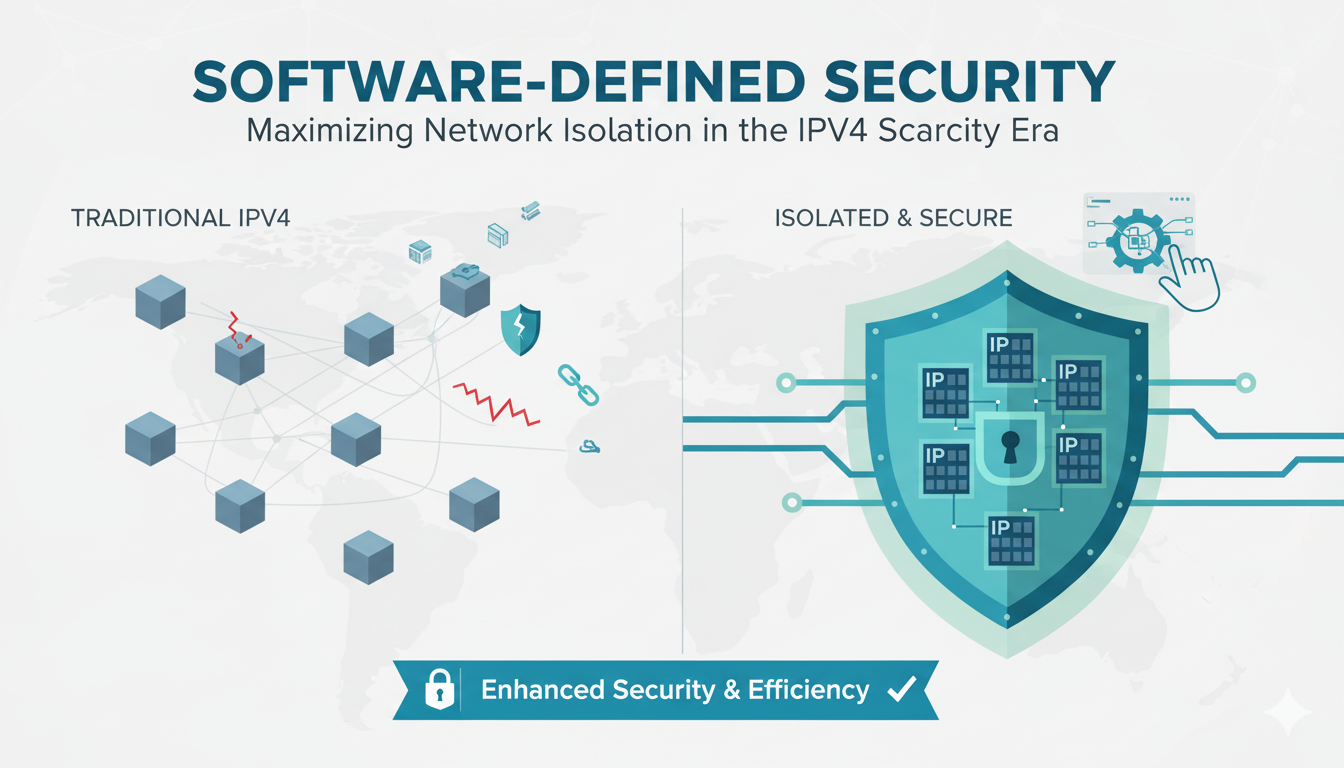
As CEO of InterLIR, I’ve witnessed firsthand how network isolation strategies

What is an ASN? ASN stands for Autonomous System Number. It is a unique identifier

Anycast DNS: A Leader’s Guide to Protecting Your Digital Infrastructure Executive

RPKI Certification: A Leader’s Guide to Internet Routing Security Executive

Executive Summary: What You Need to Know 🎯 Strategic Importance – Internet

When AWS DynamoDB failed in October 2025, thousands of businesses discovered that

Executive Summary: What You Need to Know 🎯 IP reputation directly impacts your
Live chat is provided by Intercom and is loaded only after you enable it. You can also contact us without enabling the chat.