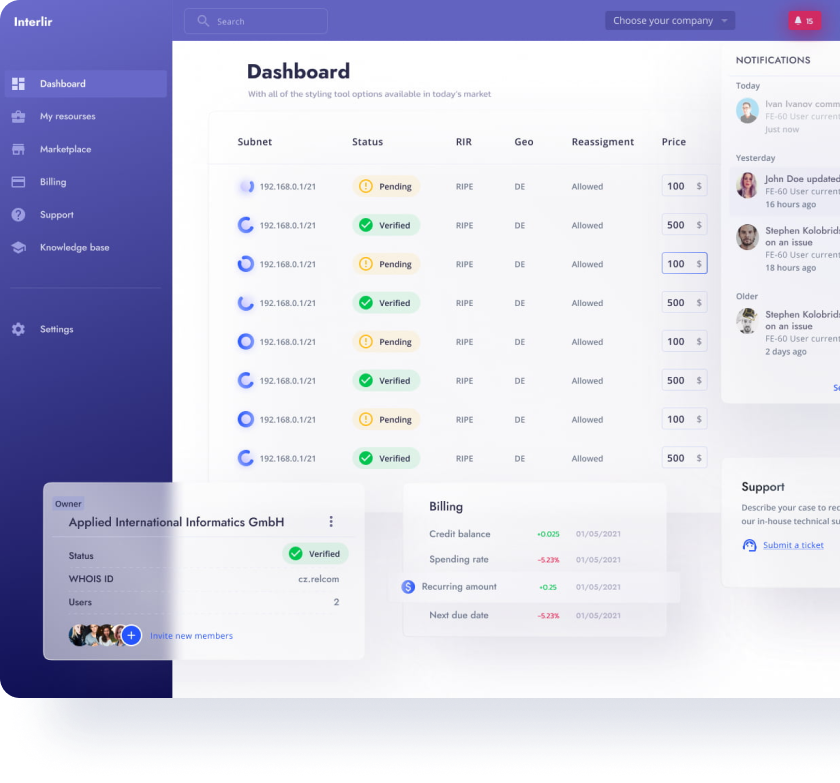
🎯 Internet number resources (IP addresses and ASNs) are critical business assets that directly impact your organization’s online presence, security, and operational capabilities.
💰 The IPv4 address market has evolved into a significant financial ecosystem with addresses trading for $50-60 per IP, creating both challenges and opportunities for businesses.
🚀 Strategic management of these resources requires understanding acquisition options (purchase, lease, rental), security implications, and regulatory compliance.
⚠️ Poor IP resource management creates business risks including service disruptions, security vulnerabilities, and unexpected costs that directly impact revenue and reputation.
Imagine launching a major marketing campaign only to discover your customers can’t access your website. Or finding your company’s emails consistently marked as spam. Perhaps worse, learning your organization’s online services are inaccessible in key markets. These business nightmares often trace back to a seemingly arcane technical issue: problematic IP addressing.
In simple terms, IP addresses are the digital real estate of the internet – they’re the unique identifiers that allow your business to exist online. Just as a physical business needs a street address to receive mail and customers, your digital business requires IP addresses to send emails, host websites, and provide online services. The critical difference? Physical addresses are relatively stable and abundant. Digital addresses – particularly IPv4 addresses – are increasingly scarce, expensive, and come with complex reputational and regulatory considerations.
This scarcity has transformed what was once a purely technical concern into a strategic business issue. Organizations that understand and proactively manage their IP resources gain competitive advantages in operational reliability, security posture, and cost management. Those that don’t face increasing risks of service disruptions, security vulnerabilities, and unexpected expenses.
In this guide, I will break down what internet number resources are in simple terms, explain why managing them correctly is critical for your business, and provide a clear roadmap for making smart decisions about these essential digital assets. Whether you’re planning for growth, concerned about security, or simply trying to understand why your IT team keeps requesting budget for “IP addresses,” this guide will equip you with the knowledge to make informed strategic decisions.
To understand the current landscape, let’s start with a brief journey back to the early days of the internet. In the 1980s, when the internet was primarily an academic and military network, IP addresses were freely distributed to anyone who needed them. The addressing system created then – known as IPv4 – allowed for approximately 4.3 billion unique addresses. At the time, this seemed like an inexhaustible resource. After all, personal computers were rare, smartphones didn’t exist, and the concept of every household having multiple internet-connected devices was science fiction.
Think of the early internet as a small town with plenty of available property. The original planners laid out a street grid that could accommodate what seemed like unlimited growth. But as the internet transformed from a niche technology into global infrastructure supporting billions of devices, that once-abundant space became increasingly crowded. By 2011, the central authority for IP addresses – the Internet Assigned Numbers Authority (IANA) – allocated its last blocks of unused IPv4 addresses to the five Regional Internet Registries (RIRs) that manage these resources globally.
This transition marked a fundamental shift in how businesses acquire and manage IP addresses. What was once a free administrative resource became a valuable financial asset – similar to how undeveloped land in a growing city becomes increasingly valuable as available space diminishes. Today, organizations needing IPv4 addresses must either purchase them from existing holders, lease them temporarily, or implement complex technical workarounds.
While a newer addressing system called IPv6 was developed to solve this scarcity (offering an almost unlimited pool of addresses), its adoption has been slow and uneven. The reality is that most of today’s internet still runs on IPv4, and businesses need these addresses to ensure compatibility with the broader internet ecosystem. This creates a challenging situation where organizations must navigate both the technical and financial aspects of IP resource management.
As IPv4 exhaustion became inevitable, a secondary market emerged. Organizations with unused IP addresses – often large corporations, universities, or government entities that received large allocations in the early days – began selling or leasing their excess capacity to businesses in need. Regional Internet Registries (RIRs) like ARIN (North America), RIPE NCC (Europe), and APNIC (Asia-Pacific) developed transfer policies to facilitate these transactions while maintaining accurate registration records.
This shift from abundance to scarcity created a high-stakes market with hidden risks for unprepared businesses. Today, IPv4 addresses typically sell for $50-60 per address, with prices fluctuating based on block size, region, and market conditions. For organizations needing thousands or tens of thousands of addresses, this represents a significant capital investment. More importantly, it transformed what was once a purely technical decision into one with substantial financial and strategic implications.
Given the financial and operational importance of IP addresses, organizations need a structured approach to acquiring and managing these resources. Just as you wouldn’t purchase commercial real estate without proper due diligence, you shouldn’t acquire IP addresses without understanding their history, legitimacy, and potential issues.

Before acquiring any IP address block, it’s essential to understand its reputation and history. IP addresses, like physical properties, can have “baggage” – they may have been used for spam, malicious activities, or other problematic behavior that could impact your business operations. When an IP address has been used for sending spam, major email providers may block it, preventing your legitimate emails from reaching customers. Similarly, addresses previously used for malicious activities might be blocked by security systems, preventing customers from accessing your services.
Professional IP brokers and marketplaces should provide comprehensive reputation checks that examine multiple blacklists, spam databases, and security threat lists. This verification is not just a technical precaution – it’s protection against significant business disruption. At InterLIR, we conduct thorough reputation checks on all IP addresses before offering them to clients, ensuring they’re “clean” and ready for legitimate business use.
The internet’s distributed nature means that proper documentation of IP address ownership is crucial. Acquiring addresses from entities that don’t legitimately control them can lead to disputes, service disruptions, and potential legal issues. Proper verification involves checking the current registration in the appropriate Regional Internet Registry (RIR) database and ensuring the seller has the authority to transfer the resources.
This verification process is similar to confirming a property deed before purchasing real estate. Without it, you risk investing in assets that could be reclaimed or contested later. The consequences can be severe – imagine building critical business infrastructure on IP addresses that are suddenly reclaimed by their rightful owner, leaving your services inaccessible.
The financial value of IP addresses makes secure transaction processes essential. Professional IP resource marketplaces provide escrow-like services that protect both buyers and sellers. These processes ensure that payment is only released when the addresses are properly transferred in the relevant RIR database, protecting against fraud and ensuring compliance with regional policies.
Additionally, proper documentation of the transaction is crucial for accounting, regulatory compliance, and potential future transfers. This documentation should include transfer agreements, payment records, and confirmation of the registration change in the appropriate RIR database.
| Aspect | The Risky Way | The Safe Way | Business Impact |
|---|---|---|---|
| Reputation Check | None or superficial checking | Comprehensive blacklist and history verification | Prevents email delivery failures and service blocking |
| Ownership Verification | Accepting seller’s claims without verification | Confirming registration in RIR databases | Prevents disputes and potential resource loss |
| Transaction Security | Direct payment without protections | Escrow-like services with verification steps | Protects financial investment and ensures proper transfer |
| Documentation | Minimal or informal | Comprehensive legal and technical documentation | Supports accounting, compliance, and future transfers |
| Technical Support | None or limited | Assistance with routing announcements and configuration | Ensures smooth implementation and operational continuity |
When evaluating IP resource management, many organizations focus primarily on acquisition costs while overlooking the broader business implications of poor management practices. This narrow perspective can lead to decisions that appear cost-effective in the short term but create significant risks and expenses over time.
💸 Lost revenue from service disruptions – When IP addresses with poor reputations cause your services to be blocked, customers can’t access your offerings, directly impacting revenue. For e-commerce businesses, even short outages can cost thousands in lost sales.
🔥 Brand damage from deliverability issues – When marketing emails land in spam folders due to problematic IP addresses, your campaigns fail silently. Customers don’t receive important communications, leading to decreased engagement and potential brand erosion.
📉 Wasted marketing spend – Marketing campaigns driving traffic to services that experience IP-related accessibility issues result in wasted advertising budget and missed conversion opportunities.
👥 Decreased employee productivity – Technical teams spend valuable time troubleshooting IP-related issues instead of focusing on innovation and improvement. This opportunity cost is rarely calculated but can be substantial.
⚠️ Compliance and legal risks – Improper documentation of IP resource ownership can create regulatory compliance issues, particularly in industries with strict data protection requirements.
Investing in professional IP resource management isn’t a cost-it’s an insurance policy that protects your digital infrastructure and business continuity. Organizations that work with reputable IP brokers and implement proper management practices typically experience fewer disruptions, better email deliverability, and more predictable operational costs.
Consider the economics: A mid-sized e-commerce business generating $50,000 in daily revenue that experiences just one day of service disruption due to IP blocking loses more than the entire annual cost of professional IP management. Similarly, a B2B company whose critical sales communications are filtered as spam might lose deals worth many times the cost of proper IP resource management.
A major European SaaS provider learned this lesson the hard way when they acquired a block of IPv4 addresses through an informal, low-cost channel. Within weeks, they discovered their addresses were on multiple blacklists, causing their customer support emails to be filtered and their services to be inaccessible to some clients. The resulting emergency remediation cost them three times what they would have spent on proper acquisition, not counting lost revenue and damaged client relationships. When they later worked with InterLIR to replace these problematic addresses, they experienced immediate improvements in deliverability and service accessibility.
As the digital landscape continues to evolve, forward-thinking leaders need a strategic approach to IP resource management that balances immediate needs with long-term planning. This roadmap should address both the technical and business aspects of these critical digital assets.
🔮 Continued IPv4 market evolution – The market for IPv4 addresses will likely remain active for the next 5-10 years, with prices potentially increasing as scarcity grows. Organizations should plan for this ongoing reality rather than expecting immediate obsolescence.
🔧 Hybrid addressing strategies – Most organizations will operate in a mixed environment, using both IPv4 and IPv6 where appropriate. This requires thoughtful planning rather than all-or-nothing approaches.
📈 Growing importance of IP reputation management – As email and security filtering systems become more sophisticated, maintaining clean IP reputation will become increasingly critical for business operations.
🌐 Regional variations in resource availability – Different geographic regions face varying levels of IPv4 scarcity, creating both challenges and opportunities for global organizations.
The organizations that thrive in the digital economy will be those that recognize IP resources as strategic assets requiring executive attention rather than merely technical commodities. By implementing a structured approach to IP resource management, leaders can transform a potential vulnerability into a source of operational stability and competitive advantage.
One of the most important strategic decisions organizations face is how to acquire the IP resources they need. Each acquisition model-purchasing, leasing, or renting-offers different advantages and considerations that align with various business scenarios.
| Acquisition Model | Initial Investment | Ongoing Costs | Business Flexibility | Ideal For |
|---|---|---|---|---|
| Purchase | High ($50-60 per IP) | Low (annual RIR fees only) | High ownership control, potential asset appreciation | Stable core infrastructure, long-term strategic assets |
| Lease (1-5 years) | Medium | Medium (annual lease payments) | Medium flexibility with option to return or purchase | Growing businesses with predictable medium-term needs |
| Rental (monthly) | Low | High (monthly payments) | Maximum flexibility to scale up or down quickly | Temporary projects, testing environments, seasonal needs |
Let me explain how these options translate to real business scenarios. A global e-commerce platform with stable, predictable traffic might benefit from purchasing their core IP blocks while using leased or rented addresses to handle seasonal spikes. Conversely, a startup with uncertain growth trajectories might prefer the flexibility of leasing or rental arrangements until their usage patterns stabilize.
GLOBAL IP ADDRESS SOLUTIONS
Professional broker services for secure IP transfers, reputation-clean address blocks, and LIR support across all regional registries.

Alexei Krylov
Head of Sales

A Beginner’s Guide to Subnetting IPv4 and IPv6 Addresses Subnetting is a critical

Why IPv4 Leasing Is Becoming the Smart Choice for Businesses in 2025 1. Introduction
As CEO of InterLIR, I’ve witnessed firsthand how network isolation strategies

What is an ASN? ASN stands for Autonomous System Number. It is a unique identifier

Anycast DNS: A Leader’s Guide to Protecting Your Digital Infrastructure Executive

RPKI Certification: A Leader’s Guide to Internet Routing Security Executive

Executive Summary: What You Need to Know 🎯 Strategic Importance – Internet

When AWS DynamoDB failed in October 2025, thousands of businesses discovered that

Executive Summary: What You Need to Know 🎯 IP reputation directly impacts your
Live chat is provided by Intercom and is loaded only after you enable it. You can also contact us without enabling the chat.