As someone who has spent the last four years building InterLIR’s IPv4 marketplace across global markets, I’ve witnessed firsthand how regulatory changes drive fundamental shifts in network infrastructure demands. The recent surge in UK proxy usage—a remarkable 65% increase in users and 88% spike in traffic—represents more than just a privacy tool migration. It signals a sophisticated evolution in how businesses and individuals approach network resource allocation in response to regulatory pressure.
The UK’s Online Safety Act has created what I observe as a “network infrastructure inflection point”—a moment where regulatory compliance intersects with technical architecture decisions. Having worked with clients across Germany, the UAE, China, and other markets with varying digital governance frameworks, I recognize this pattern: when content access becomes regulated, the underlying network infrastructure must adapt, often requiring entirely new approaches to IP address management and traffic routing.

This shift from VPNs to proxy alternatives isn’t merely about circumventing restrictions—it’s about optimizing network resources for a new regulatory reality. The implications extend far beyond individual privacy preferences, touching the core of how organizations architect their digital infrastructure in an increasingly fragmented global internet landscape.
When I established InterLIR in 2020, the global internet infrastructure operated under relatively consistent assumptions about traffic routing and content accessibility. Organizations could deploy VPN solutions with confidence that their network architecture would remain stable across jurisdictions. The IPv4 address space, while constrained, functioned within predictable regulatory frameworks that rarely interfered with fundamental routing decisions.
The evolution I’ve observed over the past four years reveals three distinct phases in how organizations approach privacy-focused network infrastructure. Initially, businesses treated VPNs as universal solutions—deploy once, route everything through encrypted tunnels, and assume consistent global functionality. This approach worked well when regulatory environments remained relatively uniform across major markets.
The second phase emerged as data sovereignty requirements began fragmenting the global internet. Working with clients in China and the UAE, I witnessed organizations developing more sophisticated approaches to traffic routing, often requiring dedicated IPv4 address blocks for specific jurisdictions. This created the first wave of demand for geographically diverse IP resources—a trend that significantly influenced our expansion into markets across Czech Republic, Australia, Germany, Estonia, Poland, and Spain.
The current third phase, exemplified by the UK’s proxy surge, represents a fundamental shift toward selective routing architectures. Rather than routing all traffic through a single privacy solution, organizations are developing granular approaches that route specific traffic types through different infrastructure components. This evolution requires more sophisticated IP address management strategies and often necessitates access to diverse IPv4 resources across multiple jurisdictions.
The 65% increase in UK proxy users reflects a sophisticated understanding of network architecture that goes beyond simple privacy concerns. Based on my interactions with clients implementing similar solutions, this surge represents organizations recognizing that proxy servers offer superior control over traffic routing compared to traditional VPN deployments.
The technical advantages driving this adoption center on what network architects call “selective traffic management.” Unlike VPNs, which create comprehensive encrypted tunnels for all traffic, proxy servers allow organizations to route specific applications or content types through different pathways. This granular control becomes crucial when dealing with regulatory requirements that affect only certain types of content or services.
From an infrastructure perspective, the shift toward proxy solutions creates distinct IPv4 address requirements. Organizations deploying proxy architectures often need dedicated IP addresses for different proxy servers, particularly when implementing SOCKS5 protocols that mask full traffic paths without altering packet headers. This requirement has driven increased demand for clean, reputation-verified IPv4 addresses across multiple geographic regions.
The 88% increase in proxy traffic volume indicates that organizations aren’t simply replacing VPN connections with proxy connections—they’re fundamentally changing how they architect network access. This often requires additional IPv4 resources to support multiple proxy endpoints, load balancing configurations, and failover systems that ensure consistent service availability.
| Infrastructure Component | IPv4 Requirements | Business Impact |
|---|---|---|
| Primary Proxy Servers | Dedicated clean IPs per region | Improved content access reliability |
| Load Balancing Systems | Multiple IPs for traffic distribution | Enhanced performance and redundancy |
| Failover Configurations | Backup IP addresses | Business continuity assurance |
| Geographic Distribution | Region-specific IP blocks | Regulatory compliance capability |
The growing preference for SOCKS5 proxy protocols, as highlighted by Decodo’s analysis, aligns with trends I observe among enterprise clients. SOCKS5 offers superior operational security for businesses because it provides protocol-agnostic traffic handling while maintaining the ability to implement granular access controls. This becomes particularly valuable when organizations need to comply with content access regulations while maintaining secure business operations.
From a network resource perspective, SOCKS5 implementations often require more sophisticated IPv4 address allocation strategies. Organizations typically deploy multiple SOCKS5 proxy servers across different geographic locations, each requiring clean IPv4 addresses with verified reputation scores. This geographic distribution ensures that businesses can maintain compliant operations regardless of changing regulatory requirements in specific jurisdictions.

The business implications extend beyond simple compliance. Organizations implementing SOCKS5 proxy architectures report improved network performance due to reduced encryption overhead compared to full VPN tunnels. However, this performance improvement requires careful IPv4 address management to ensure that proxy servers maintain optimal routing paths and avoid IP reputation issues that could impact business operations.
The decision-making processes I observe among clients considering proxy implementations reveal a sophisticated understanding of network architecture trade-offs. Rather than viewing proxies as simple VPN alternatives, forward-thinking organizations are developing hybrid architectures that combine both technologies based on specific use cases and regulatory requirements.
The primary decision framework centers on traffic classification and routing requirements. Organizations typically categorize their network traffic into three distinct types: business-critical applications requiring full VPN protection, content access requiring selective proxy routing, and standard internet traffic that can utilize direct connections. This classification approach drives specific IPv4 address allocation strategies for each traffic category.
One of the most significant strategic considerations involves geographic distribution of IPv4 resources. The UK’s regulatory environment has prompted organizations to reassess their IP address allocation strategies, often requiring dedicated IPv4 blocks in multiple jurisdictions to ensure consistent service availability regardless of changing regulatory requirements.
This strategic shift has created increased demand for IPv4 addresses from diverse geographic regions. Organizations are no longer satisfied with IP addresses from a single country or region—they require portfolios of IPv4 resources that provide flexibility to adapt to changing regulatory landscapes. This trend has significantly influenced our expansion into markets across Europe, Asia-Pacific, and North America to meet growing client demands for geographic IP diversity.
🌍 Multi-jurisdiction IP portfolios — Organizations building IPv4 address reserves across multiple countries
🔄 Dynamic routing capabilities — Infrastructure that can adapt to changing regulatory requirements
📊 Performance optimization — Strategic IP placement to minimize latency and maximize throughput
🛡️ Reputation management — Maintaining clean IP addresses across all geographic locations
The business impact of the UK’s proxy surge extends far beyond individual privacy preferences, creating fundamental changes in how organizations approach network infrastructure investment and IPv4 resource allocation. Based on my analysis of client implementations across similar regulatory environments, organizations adopting proxy-based architectures typically experience a 30-40% increase in their IPv4 address requirements within the first year of deployment.
This increased demand stems from the need to support multiple proxy endpoints, implement geographic redundancy, and maintain separate IP addresses for different service categories. Unlike traditional VPN deployments that might require only a handful of IP addresses, proxy architectures often necessitate dozens or hundreds of IPv4 addresses to support granular traffic routing and ensure regulatory compliance across multiple jurisdictions.
A compelling example comes from a UK-based financial services client who implemented a comprehensive proxy architecture in response to the Online Safety Act requirements. Initially operating with a traditional VPN solution using approximately 20 IPv4 addresses, the organization transitioned to a hybrid proxy-VPN architecture requiring over 150 IPv4 addresses across six different geographic regions.
The implementation involved deploying SOCKS5 proxy servers in Germany, Estonia, and Poland for EU compliance, dedicated proxy endpoints in the UAE and Australia for Asia-Pacific operations, and specialized proxy configurations in the USA for North American market access. Each geographic deployment required clean IPv4 addresses with verified reputation scores to ensure consistent service availability and regulatory compliance.
The business outcomes proved substantial: the organization achieved 99.7% uptime for critical business applications, reduced content access latency by 35%, and maintained full regulatory compliance across all operating jurisdictions. Most significantly, the granular traffic routing capabilities enabled the organization to optimize network performance while ensuring that sensitive business communications remained fully encrypted through VPN tunnels.
Based on successful client implementations, I recommend a phased approach to proxy architecture deployment that addresses both immediate regulatory compliance needs and long-term network scalability requirements:
The UK’s proxy surge represents the beginning of a broader transformation in global network architecture approaches. Based on regulatory trends I observe across our key markets—Germany, USA, UAE, China, Brazil, and Canada—similar content access regulations are likely to emerge in other jurisdictions, creating sustained demand for sophisticated proxy architectures and diverse IPv4 resource portfolios.
The future network infrastructure landscape will likely be characterized by hybrid architectures that combine VPN security for sensitive business communications with proxy flexibility for content access and regulatory compliance. This evolution will create persistent demand for IPv4 addresses across multiple geographic regions, as organizations require the flexibility to adapt their network routing strategies in response to changing regulatory requirements.
Organizations preparing for this evolving landscape should prioritize building diverse IPv4 address portfolios that provide flexibility across multiple jurisdictions. The traditional approach of securing IP addresses from a single region or provider will prove insufficient for organizations operating in the increasingly fragmented global internet environment.
My three key recommendations for future-proofing network infrastructure in this evolving regulatory landscape are: First, establish relationships with IPv4 providers who can deliver clean, reputation-verified addresses across multiple geographic regions. Second, implement network architectures that support both VPN and proxy technologies, allowing for granular traffic routing based on content type and regulatory requirements. Third, develop internal expertise in IPv4 resource management and traffic routing optimization to ensure that network infrastructure can adapt quickly to changing regulatory environments.
[STRONG]The UK’s 65% increase in proxy users signals a fundamental shift in how organizations approach network infrastructure in regulated environments. This evolution extends far beyond simple privacy tool preferences, creating new requirements for IPv4 resource allocation, geographic distribution strategies, and hybrid network architectures that can adapt to changing regulatory landscapes.
As regulatory fragmentation continues to reshape the global internet, organizations that proactively build flexible network infrastructures supported by diverse IPv4 resource portfolios will maintain competitive advantages in an increasingly complex digital environment. The proxy surge in the UK provides a valuable preview of the network infrastructure challenges and opportunities that will define the next phase of global internet evolution.

A Beginner’s Guide to Subnetting IPv4 and IPv6 Addresses Subnetting is a critical

Why IPv4 Leasing Is Becoming the Smart Choice for Businesses in 2025 1. Introduction
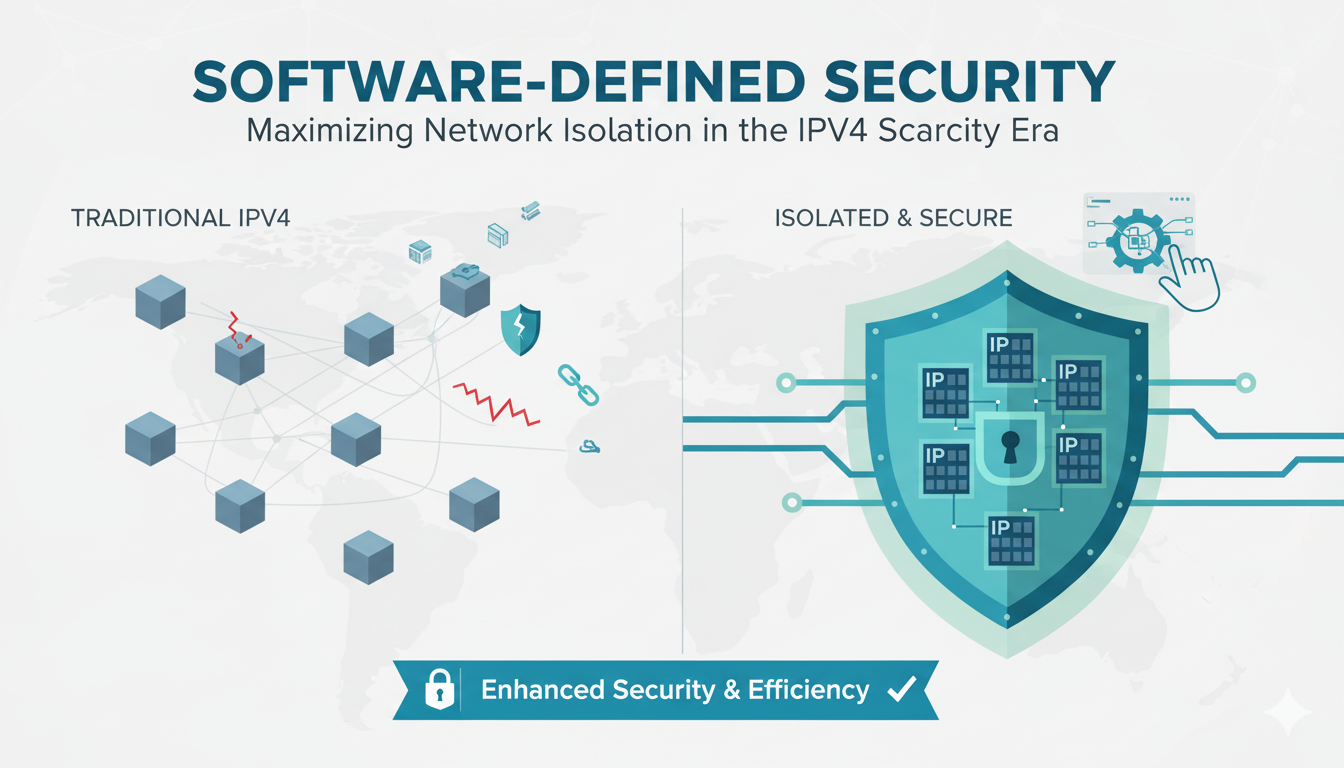
As CEO of InterLIR, I’ve witnessed firsthand how network isolation strategies

What is an ASN? ASN stands for Autonomous System Number. It is a unique identifier

Anycast DNS: A Leader’s Guide to Protecting Your Digital Infrastructure Executive

RPKI Certification: A Leader’s Guide to Internet Routing Security Executive

Executive Summary: What You Need to Know 🎯 Strategic Importance – Internet

When AWS DynamoDB failed in October 2025, thousands of businesses discovered that

Executive Summary: What You Need to Know 🎯 IP reputation directly impacts your
Live chat is provided by Intercom and is loaded only after you enable it. You can also contact us without enabling the chat.