The Open Systems Interconnection (OSI) model provides a strategic framework for understanding network architecture that drives business decisions across digital transformation initiatives. This comprehensive analysis explores how the seven-layer model translates complex networking concepts into actionable business intelligence for technology leaders navigating modern infrastructure investments.
Enterprise technology leaders face increasing challenges when making sense of complex network architectures in today’s interconnected business environment.
The Open Systems Interconnection (OSI) model serves as a seven-layer conceptual framework that defines how network communication occurs between computer systems, providing the systematic approach that business leaders need to understand their digital infrastructure investments.
Professional experience in advising enterprises on technology adoption reveals how this academic networking concept has proven to be one of the most practical frameworks for strategic decision-making in interconnected business environments.
The model’s ability to break down complex networking processes into manageable layers directly translates to:
💡 Better investment decisions — Clear understanding of where to allocate technology resources for maximum impact
🔧 More effective troubleshooting strategies — Systematic approach to identifying and resolving network issues
🤝 Clearer communication between technical teams and executive leadership — Common framework for discussing complex technical concepts
The transformation observed in how companies approach network architecture planning demonstrates the enduring relevance of this foundational framework, particularly as organizations navigate the complexities of cloud migration, digital transformation, and resource optimization strategies.
In the early 2000s, network architecture decisions were often made in silos. IT departments would focus on hardware specifications, security teams would implement isolated protection measures, and business leaders would make connectivity decisions based primarily on cost considerations.
The systematic approach offered by the OSI model has fundamentally changed this dynamic over the past two decades.
Analysis reveals three distinct phases in how organizations have evolved their network architecture thinking:
Initially, companies operated with proprietary, vendor-specific solutions that created significant integration challenges.
The second phase saw the adoption of standardized protocols, driven largely by internet growth and the need for interoperability.
Currently, organizations leverage the OSI model’s layered approach to make strategic decisions about cloud adoption, security implementation, and resource allocation.
A particularly striking example involves a global manufacturing client who was struggling with network performance issues across their international operations.
By applying OSI model principles to their troubleshooting approach, analysis identified that their problems weren’t rooted in bandwidth limitations as initially assumed, but rather in:
🌐 Inefficient routing protocols at the Network Layer — Poor path selection causing unnecessary delays
🔗 Inadequate session management at the Session Layer — Frequent connection drops impacting productivity
This systematic analysis saved them from unnecessary infrastructure upgrades while dramatically improving performance.
The historical challenge that the OSI model addressed – enabling diverse hardware and software systems to communicate effectively – remains as relevant today as it was in 1984. However, the scale and complexity have evolved dramatically.
Where companies once worried about connecting different office locations, they now must orchestrate communication between cloud services, mobile devices, IoT sensors, and edge computing resources across global networks.
Recent client engagements demonstrate how the seven-layer OSI framework provides crucial structure for understanding modern network developments.
The Application Layer has become the primary battleground for competitive advantage, with companies investing heavily in:
🔌 API strategies — Building robust interfaces for system integration and partner connectivity
🧩 Microservices architectures — Enabling scalable, maintainable application development
☁️ Cloud-native applications — Leveraging distributed computing for flexibility and resilience
The protocols operating at this layer – HTTP/HTTPS, RESTful APIs, and emerging GraphQL implementations – directly impact customer experience and operational efficiency.
The Presentation Layer has gained unprecedented importance due to cybersecurity concerns and data privacy regulations.
Experience working with numerous clients implementing comprehensive encryption strategies shows that the evolution from SSL to TLS 1.3 represents more than a technical upgrade – it’s a strategic business decision that affects:
📋 Compliance requirements — Meeting regulatory standards for data protection
🛡️ Customer trust — Building confidence through visible security measures
💰 Operational costs — Balancing security investments with business efficiency
Companies that understand these Presentation Layer implications make better decisions about security investments and regulatory compliance strategies.
At the Session Layer, significant innovation has been observed in how enterprises manage connection lifecycles. Database management systems and enterprise applications now implement sophisticated session management that directly impacts user experience and system reliability.
One financial services client improved their customer satisfaction scores significantly by optimizing session management protocols, reducing connection timeouts and improving application responsiveness.
The Transport Layer presents fascinating strategic considerations, particularly around the TCP versus UDP decision matrix:
| Protocol | Business Application | Strategic Consideration |
|---|---|---|
| TCP | E-commerce transactions | Reliability over speed |
| UDP | Real-time communications | Speed over guaranteed delivery |
| QUIC | Web performance optimization | Competitive advantage through faster loading |
The emergence of QUIC protocol, now standardized as HTTP/3, exemplifies how Transport Layer innovations create competitive advantages. Companies like Google and Cloudflare gained significant performance benefits by early adoption, demonstrating how understanding OSI layer implications enables strategic technology decisions.

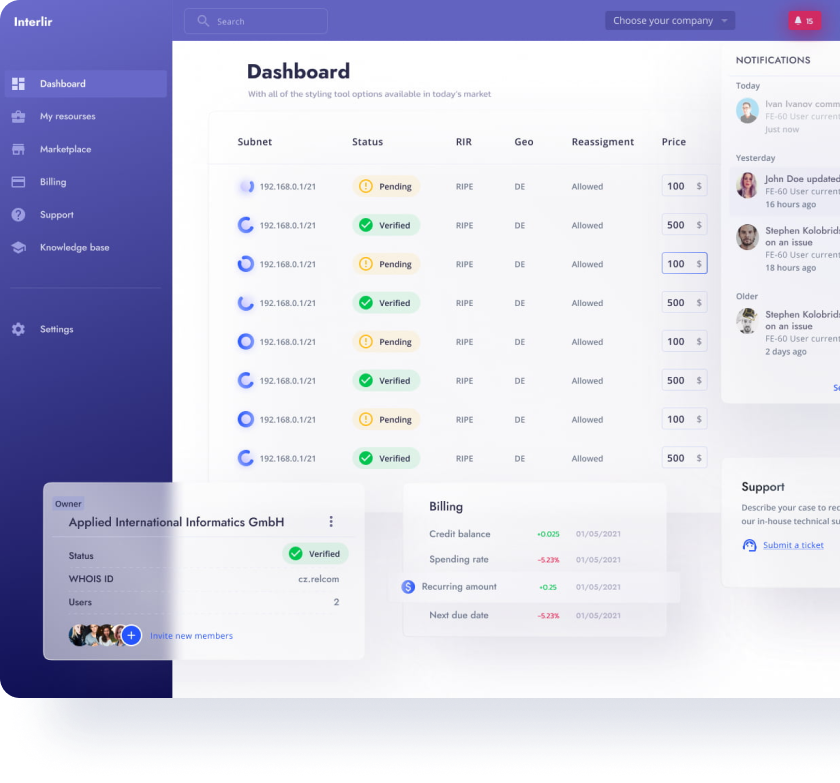
At the Network Layer, the profound impact of IPv4 address scarcity on business operations has been witnessed. With the limited number of IPv4 addresses (4.3 billion possible combinations) and growing demand with diminishing available resources, companies must make strategic decisions about IP address management that directly affect their ability to scale operations.
This is where specialized IPv4 marketplaces like InterLIR play a crucial role, helping organizations access the IP resources they need through services like:
🏠 IPv4 address rental — Short-term access to IP resources for temporary projects
📋 IPv4 address leasing — Medium-term contracts for ongoing operational needs
💰 IPv4 address purchase — Long-term ownership for strategic infrastructure investments
💱 IPv4 address selling — Monetizing unused IP assets for better resource allocation
The rise of Software-Defined Networking (SDN) has revolutionized how organizations approach Network Layer management, enabling programmable infrastructure that adapts to business needs rather than constraining them.
The Data Link Layer evolution from 10 Mbps Ethernet to 400 Gbps standards reflects the increasing bandwidth demands of modern business applications.
Key developments include:
⏱️ Time-Sensitive Networking (TSN) — Enabling new industrial applications with precise timing requirements
⚡ Power over Ethernet (PoE) — Simplifying IoT deployments by delivering both data and power over single cables
These aren’t just technical specifications – they’re enablers of new business models and operational efficiencies.
Finally, the Physical Layer continues to evolve with:
🌐 Fiber optic advances — Enabling higher speeds and longer distances for global connectivity
📱 5G implementations — Providing ultra-low latency for mobile and IoT applications
💡 Emerging technologies like Li-Fi — Exploring new ways to transmit data through light
The strategic implications extend beyond connectivity to include considerations about data sovereignty, latency requirements, and infrastructure resilience.
Professional consulting practice has developed a systematic approach to help executives make network architecture decisions using OSI model principles.
The recommended framework considers three critical factors:
When evaluating network solutions, leaders must understand how each OSI layer contributes to their business objectives. Companies have been observed making costly mistakes by:
⚠️ Focusing exclusively on Physical Layer specifications — While ignoring Application Layer requirements that affect user experience
🔐 Implementing robust security at the Presentation Layer — While leaving vulnerabilities at the Network Layer exposed
The most common concern encountered from executives is the complexity of coordinating decisions across multiple layers. A telecommunications client recently expressed frustration about conflicting recommendations from different technical teams.
By applying OSI model structure to their decision-making process, solutions were created that established:
✅ Clear accountability for each layer — Defined ownership and responsibility
🤝 Established protocols for cross-layer optimization decisions — Systematic coordination between teams
Risk management becomes more systematic when viewed through the OSI framework. Rather than treating network security as a monolithic challenge, companies can implement layered security strategies that address specific vulnerabilities at each level.
This approach not only improves security posture but also enables:
💰 More precise budget allocation — Targeting investments where they provide maximum security benefit
🏆 Better vendor selection — Choosing solutions that integrate well across multiple OSI layers
📄 Clearer compliance documentation — Demonstrating comprehensive security coverage to auditors
The business impact of OSI model implementation extends far beyond technical performance metrics. Experience working with enterprise clients reveals measurable improvements in operational efficiency, cost management, and strategic agility when companies adopt systematic approaches to network architecture.
Performance improvements are often dramatic when companies optimize across multiple OSI layers simultaneously. A recent client in the e-commerce sector achieved significant reduction in page load times by implementing coordinated improvements at:
🔧 Application Layer — API optimization for faster data retrieval
🚀 Transport Layer — HTTP/3 adoption for improved connection handling
🌐 Network Layer — CDN enhancement for global content delivery
This performance improvement directly translated to increased conversion rates and additional revenue.
Cost optimization becomes more strategic when viewed through the OSI framework. Rather than making isolated decisions about individual components, companies can evaluate total cost of ownership across the entire stack.
Work with a global logistics company resulted in substantial reduction of their networking costs by optimizing their approach to each OSI layer, from Physical Layer infrastructure consolidation to Application Layer protocol efficiency.
The most compelling case study from recent experience involves a financial services firm that was struggling with regulatory compliance across multiple jurisdictions.
By implementing a systematic OSI model approach, they created a compliance framework that addressed:
🔒 Data protection at the Presentation Layer — Encryption and data format security
📊 Audit trails at the Session Layer — Comprehensive logging of user activities
🌍 Geographic routing controls at the Network Layer — Ensuring data stays within required jurisdictions
This comprehensive approach not only ensured regulatory compliance but also reduced their compliance costs through elimination of redundant systems and processes.
Strategic implementation requires careful attention to interdependencies between layers. The recommended approach includes four key phases:
Companies that follow this systematic approach consistently achieve better outcomes than those that make isolated layer-specific improvements.
Looking ahead, analysis reveals three major trends that will reshape how companies apply OSI model principles:
Artificial intelligence is already transforming network optimization at multiple OSI layers. Machine learning algorithms can:
🔮 Predict and prevent failures at the Physical Layer — Proactive maintenance reducing downtime
🎯 Optimize routing decisions at the Network Layer — Dynamic path selection for performance
🛡️ Enhance security monitoring at the Presentation Layer — Real-time threat detection and response
Companies that understand these AI applications within the OSI framework will gain significant competitive advantages in network reliability and performance.
Edge computing represents a fundamental shift in how network architecture is approached. Rather than centralized data processing, edge computing distributes Application Layer functions geographically, creating new requirements for:
🔗 Session Layer management — Handling distributed user sessions across edge nodes
🌐 Network Layer routing — Intelligent traffic distribution to optimal processing locations
📡 Physical Layer connectivity — High-speed, low-latency connections to edge infrastructure
Companies are already planning their edge strategies using OSI model principles to ensure scalable, secure implementations.
Environmental sustainability is becoming a critical factor in infrastructure decisions, affecting choices at every OSI layer from energy-efficient Physical Layer components to optimized Application Layer protocols.
Analysis provides three key recommendations for future-proofing network infrastructure:
The OSI model’s enduring relevance lies not in its technical specifications, but in its systematic approach to complex problem-solving. As networks become more critical to business success, the structured thinking that the OSI model provides becomes increasingly valuable for strategic decision-making.
Companies that master this framework will be better positioned to navigate the evolving landscape of digital infrastructure and maintain competitive advantage through superior network architecture decisions.

A Beginner’s Guide to Subnetting IPv4 and IPv6 Addresses Subnetting is a critical

Why IPv4 Leasing Is Becoming the Smart Choice for Businesses in 2025 1. Introduction
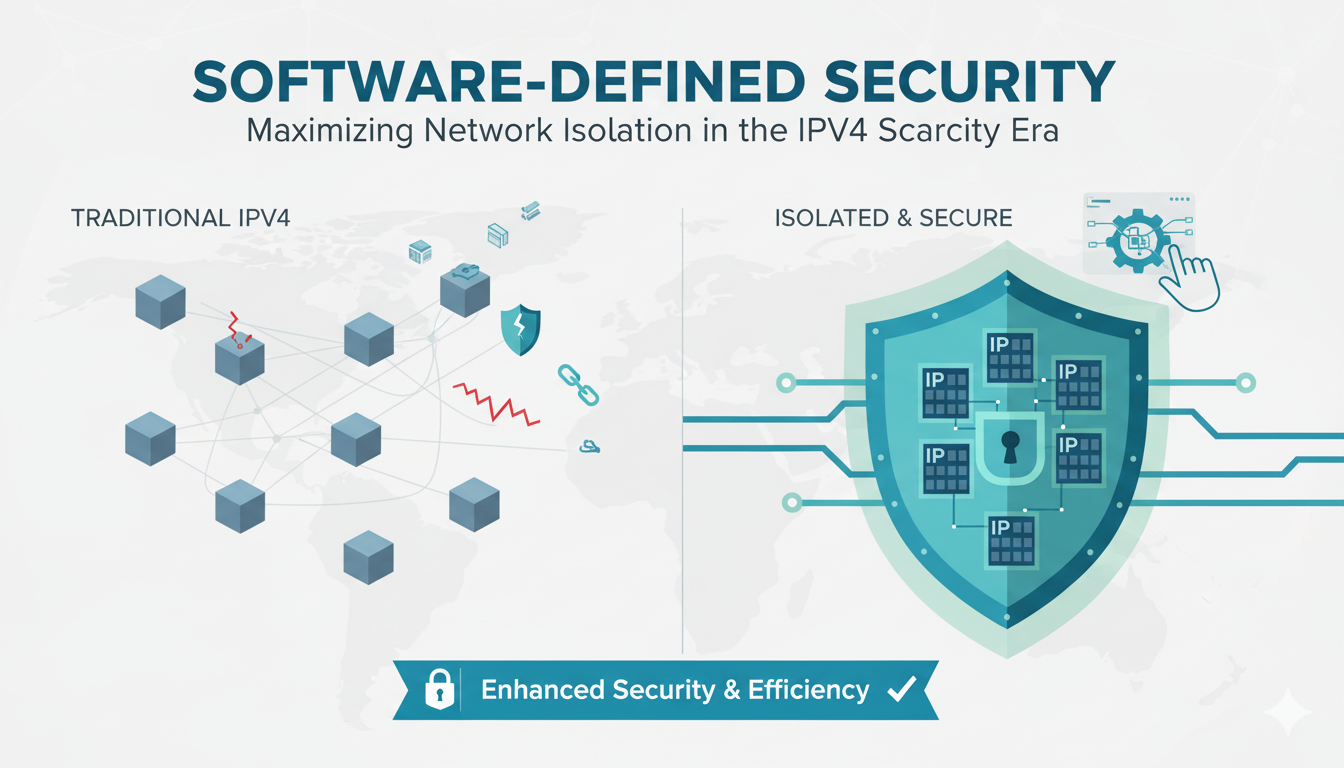
As CEO of InterLIR, I’ve witnessed firsthand how network isolation strategies

What is an ASN? ASN stands for Autonomous System Number. It is a unique identifier

Anycast DNS: A Leader’s Guide to Protecting Your Digital Infrastructure Executive

RPKI Certification: A Leader’s Guide to Internet Routing Security Executive

Executive Summary: What You Need to Know 🎯 Strategic Importance – Internet

When AWS DynamoDB failed in October 2025, thousands of businesses discovered that

Executive Summary: What You Need to Know 🎯 IP reputation directly impacts your
Live chat is provided by Intercom and is loaded only after you enable it. You can also contact us without enabling the chat.