MAC addresses play a critical role in network infrastructure, serving as the foundation for device identification and communication. This article explores the relationship between MAC addresses and IPv4 addressing, examining how proper MAC address management contributes to network efficiency, security, and resource optimization in today’s increasingly complex network environments.
In the IPv4 address marketplace, network administrators understand the critical importance of IP addresses but often overlook the equally vital role of MAC addresses in network infrastructure.
Media Access Control (MAC) addresses serve as the permanent hardware identifiers that enable devices to communicate effectively within local network environments, forming the foundation upon which IPv4 addressing builds its functionality.
Organizations with robust MAC address management strategies consistently demonstrate more efficient IPv4 resource utilization.
This correlation isn’t coincidental – MAC addresses operate at the data link layer, providing the stable hardware identification that enables IPv4 addresses to function effectively across network segments.
The relationship between MAC addresses and IPv4 infrastructure becomes particularly evident when examining how modern networks handle:
Understanding this relationship has proven essential for organizations seeking to optimize their IPv4 resource allocation and network performance.
In the networking industry, MAC addresses represented a simpler concept – permanent hardware identifiers that rarely required active management.
However, as IPv4 address scarcity has intensified and network infrastructures have grown more complex, there has been a fundamental shift in how organizations approach MAC address management.
The evolution of MAC address utilization can be seen in three distinct phases across the industry:
Initially, MAC addresses functioned primarily as passive identifiers, with network administrators rarely needing to actively manage or track them.
The second phase emerged with the growth of enterprise networks, where MAC addresses became crucial for DHCP reservations and basic security implementations.
The current phase, driven by IPv4 scarcity and increased security requirements, positions MAC addresses as active components in comprehensive network resource management strategies.
This evolution reflects broader changes in network architecture observed across telecommunications companies and hosting providers. IPv4 address scarcity has forced organizations to implement more sophisticated resource management approaches, where MAC addresses serve as the stable foundation for dynamic IP address allocation and network access control.
The Institute of Electrical and Electronics Engineers (IEEE) manages MAC address allocation through Organizationally Unique Identifiers (OUIs), creating a structured system that parallels the regional internet registry (RIR) system used for IPv4 addresses.
This parallel structure has become increasingly important as organizations seek to optimize both their hardware identification and IP address utilization strategies.
Based on experience facilitating IPv4 transactions across diverse geographic markets, there are several critical ways that MAC addresses directly impact IPv4 network efficiency and resource utilization.
The relationship between these two addressing systems creates opportunities for optimization that many organizations haven’t fully explored.
Address Resolution Protocol (ARP) optimization represents one of the most significant areas where MAC address management directly affects IPv4 network performance.
Networks with well-managed MAC address tables consistently demonstrate:
The ARP process creates a direct mapping between IPv4 addresses and MAC addresses, making the stability and management of MAC addresses crucial for overall network performance.
DHCP reservation strategies have evolved significantly in response to IPv4 scarcity. Organizations increasingly use MAC addresses as the foundation for sophisticated IPv4 address allocation policies.
Rather than allowing dynamic assignment across large address pools, companies now implement MAC-based reservations that ensure:

The security implications of MAC address management have become particularly relevant in the context of IPv4 resource protection. Cybersecurity companies implement MAC address filtering as part of comprehensive strategies to protect valuable IPv4 address blocks from unauthorized access.
While MAC addresses can be spoofed, they provide an additional layer of security that, when combined with other measures, helps organizations protect their IPv4 investments.
Network segmentation strategies increasingly rely on MAC address identification to optimize IPv4 address utilization across VLANs and subnets.
Organizations with limited IPv4 resources use MAC addresses to implement dynamic VLAN assignment, ensuring that devices receive appropriate network access while minimizing IPv4 address waste through more granular network segmentation.
Through interactions with network administrators across key markets in Germany, the USA, UAE, and China, consistent patterns emerge in how successful organizations approach MAC address management decisions.
These decision-making frameworks directly impact IPv4 resource efficiency and overall network performance.
When evaluating MAC address management strategies, leaders consider three primary factors:
The scalability consideration has become particularly important as organizations expand their network infrastructure while working within constrained IPv4 address allocations.
Security decision-making around MAC addresses has evolved significantly in response to increased cyber threats targeting network infrastructure.
Organizations implement MAC address monitoring as part of comprehensive security strategies designed to:
The most common concern regarding MAC address management relates to the administrative overhead of maintaining accurate MAC address databases.
However, organizations that implement automated MAC address discovery and management systems consistently report:
Analysis of implementations across the telecommunications, hosting, and SaaS sectors reveals that strategic MAC address management reduces IPv4 resource waste through more efficient address allocation and reduced address conflicts.
This improvement becomes particularly valuable given current IPv4 market conditions and the ongoing demand for address resources.
One example involves a hosting provider that implemented comprehensive MAC address management as part of their IPv4 optimization strategy.
By using MAC addresses to create detailed device inventories and implement precise DHCP reservations, they achieved:
This optimization allowed them to defer additional IPv4 address purchases, resulting in cost savings and improved operational efficiency.
The strategic implementation of MAC address management creates measurable business outcomes that extend beyond simple network administration.
Organizations report:
For organizations considering IPv4 address acquisitions or optimizations, these four key MAC address management practices are recommended:
These practices create a foundation for more efficient IPv4 resource utilization while providing the network visibility necessary for strategic planning and security management.
Looking ahead, MAC address management will become increasingly critical as organizations continue to optimize their IPv4 resource utilization in response to ongoing address scarcity.
The current internet infrastructure remains predominantly based on IPv4, and the economic factors involved in major infrastructure changes suggest that IPv4 optimization will remain a priority for the foreseeable future.
Here are three key recommendations for organizations seeking to optimize their network infrastructure through improved MAC address management:
The intersection of MAC address management and IPv4 resource optimization represents a practical approach to maximizing network efficiency within existing infrastructure constraints.
Organizations that master this relationship will be better positioned to manage their network resources effectively while maintaining the performance and security standards required for modern business operations.

Evgeny Sevastyanov
Support Team Leader

A Beginner’s Guide to Subnetting IPv4 and IPv6 Addresses Subnetting is a critical

Why IPv4 Leasing Is Becoming the Smart Choice for Businesses in 2025 1. Introduction
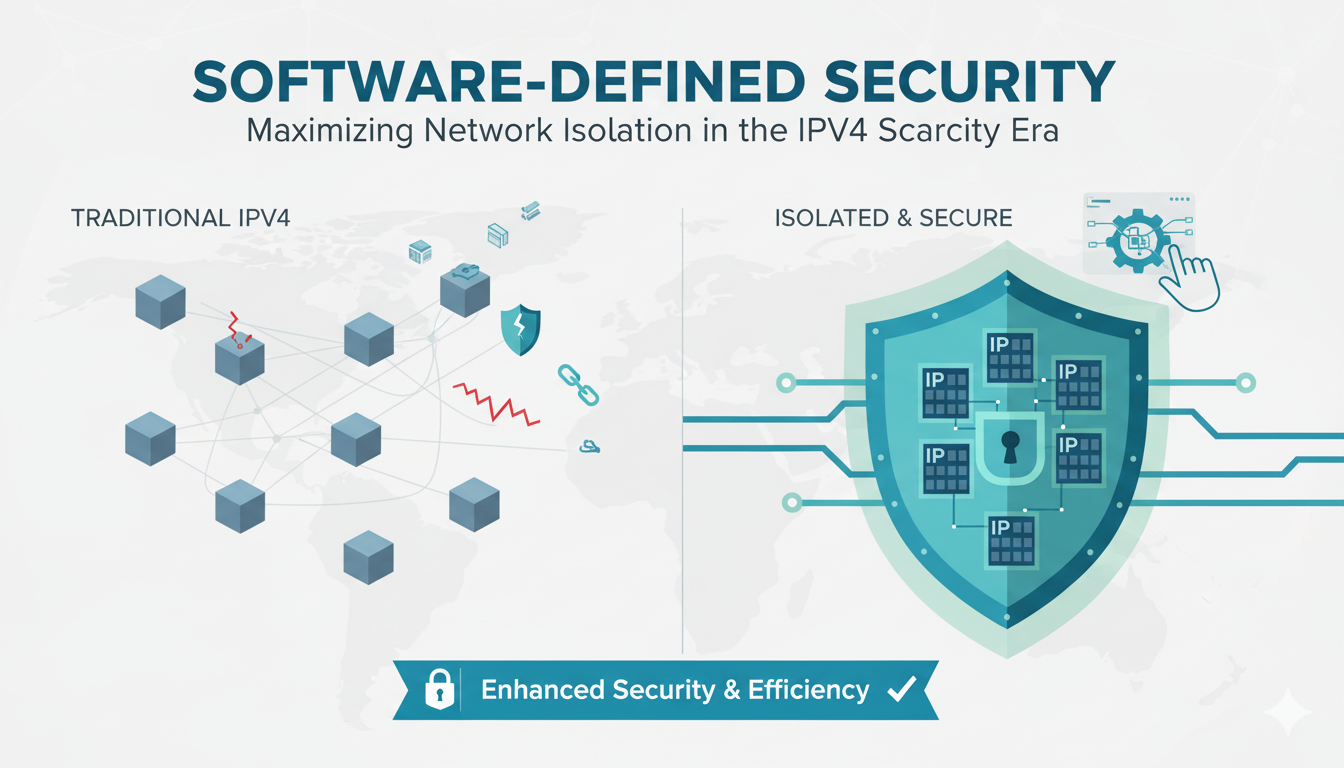
As CEO of InterLIR, I’ve witnessed firsthand how network isolation strategies

What is an ASN? ASN stands for Autonomous System Number. It is a unique identifier

Anycast DNS: A Leader’s Guide to Protecting Your Digital Infrastructure Executive

RPKI Certification: A Leader’s Guide to Internet Routing Security Executive

Executive Summary: What You Need to Know 🎯 Strategic Importance – Internet

When AWS DynamoDB failed in October 2025, thousands of businesses discovered that

Executive Summary: What You Need to Know 🎯 IP reputation directly impacts your
Live chat is provided by Intercom and is loaded only after you enable it. You can also contact us without enabling the chat.