Based on experience supporting hundreds of IPv4 transactions, the following strategic actions are recommended for organizations managing IPv4 resources:
The professional responsibility of mastering IPv4 resource management extends beyond technical competency to business stewardship. In an environment where IPv4 addresses represent significant capital investments and operational constraints, support leaders must develop expertise in resource optimization, market dynamics, and strategic planning.
Organizations that treat IPv4 management as a strategic capability rather than a technical afterthought will maintain competitive advantages in an increasingly connected world.
The internet’s scale continues expanding, but IPv4 remains the foundation supporting this growth. Through careful resource management, strategic acquisition, and proactive optimization, organizations can maximize the utility of existing IPv4 infrastructure while building sustainable frameworks for future expansion.
$400,000
Revenue loss (6 weeks)
$180,000
Emergency acquisition
3x
Market rate multiplier
IPv4 Leasing
$0.50-$2.00
per address/month
IPv4 Purchase
$25-$50
per address (one-time)
This 10:1 cost ratio makes leasing attractive for organizations prioritizing cash flow management or uncertain about long-term addressing needs.
Don’t wait for IPv4 scarcity to impact your business operations. Start implementing these strategic frameworks to optimize costs and ensure sustainable growth.
Organizations across industries face a recurring challenge: “We need IPv4 addresses, but the costs seem prohibitive.” This scenario recently played out when a growing SaaS company desperately sought 2,048 IPv4 addresses for their expanding infrastructure.
$80,000
Purchase quote that was too expensive
48 hours
Time to operational via leasing
This interaction perfectly encapsulates the critical challenge facing today’s digital infrastructure: IPv4 address scarcity has transformed from a technical consideration into a strategic business constraint.
4.3B
Total IPv4 addresses
3B
Actively supporting infrastructure
100%
Resource constraint level
IPv4 scarcity represents a present-day business limitation affecting everything from startup scaling to enterprise expansion, rather than just a future concern.
Organizations that master IPv4 resource optimization through strategic leasing, efficient allocation, and proper reputation management will maintain competitive advantages while those that ignore these realities will face escalating costs and operational constraints.
When IPv4 was standardized in 1981, the internet was a research network connecting universities and government institutions. The decision to allocate 32-bit address space – providing 4,294,967,296 unique addresses – seemed more than adequate for what was essentially an academic experiment.
The original architects couldn’t have anticipated that we’d eventually need to connect billions of smartphones, IoT devices, and cloud instances. This foundational assumption created one of the largest technical debt scenarios in computing history.
Early internet pioneers allocated massive address blocks with little consideration for conservation. MIT received a /8 block containing 16.7 million addresses. The same allocation went to companies like General Electric and Ford Motor Company – organizations that, while significant, had no immediate need for millions of IP addresses.
Many organizations inherited legacy allocation patterns from decades of organic growth. A telecommunications company recently discovered they were using only 30% of their allocated IPv4 space efficiently.
Their network had grown organically over two decades, with departments requesting address blocks without central coordination.
The result was a fragmented addressing scheme with massive gaps – classic technical debt that now costs thousands monthly in unused resources.
The 2011 IANA exhaustion marked the end of free IPv4 allocation, transforming these addresses from abundant infrastructure components into scarce commodities.
Regional Internet Registries began implementing waiting lists, and secondary markets emerged where IPv4 blocks trade for $25-$50 per address. This shift fundamentally altered the economics of internet infrastructure, making efficient IPv4 management a business imperative rather than a technical preference.
A comprehensive framework for modern IPv4 resource management addresses both immediate operational needs and long-term strategic planning. This framework operates across four critical layers, each requiring specific expertise and attention.
The foundation of effective IPv4 management begins with comprehensive resource assessment. Implementation across over 200 clients consistently reveals significant optimization opportunities.
The assessment involves three critical components: current utilization analysis, reputation evaluation, and growth projection modeling.
Current utilization analysis requires detailed subnet mapping to identify unused or underutilized address space. Specialized IP Address Management (IPAM) tools scan network infrastructure and create utilization heat maps.
This process typically reveals 15-30% unused capacity in established networks—addresses that can be reclaimed for new projects or monetized through leasing arrangements.
Reputation evaluation has become increasingly critical as IPv4 addresses change hands in secondary markets. Relationships with major reputation services including Spamhaus, SURBL, and Barracuda ensure clients receive clean address space.
A single compromised IP address can impact entire subnet reputation, making this assessment essential for any IPv4 transaction.
Growth projection modeling involves analyzing historical usage patterns and business expansion plans to determine future IPv4 requirements.
Developing 12-month and 36-month addressing roadmaps balances immediate needs with long-term scalability considerations.
The second layer focuses on strategic resource acquisition through purchase, lease, or hybrid arrangements. The optimal approach depends on specific organizational factors including cash flow patterns, growth velocity, and technical architecture requirements.
For rapidly growing companies, IPv4 leasing provides immediate access to address space without significant capital expenditure.
Leasing costs typically range from $0.50 to $2.00 per address monthly, compared to purchase prices of $25-$50 per address.
This 10:1 cost ratio makes leasing attractive for organizations prioritizing cash flow management or uncertain about long-term addressing needs.
Established enterprises with predictable growth patterns often benefit from strategic purchases, particularly when acquiring larger blocks (/16 or /15 networks) where economies of scale reduce per-address costs.
Clients achieve 20-30% cost savings by consolidating multiple smaller acquisitions into single large-block transactions.
Hybrid approaches combine purchased core address space with leased expansion capacity. This strategy provides ownership stability for critical infrastructure while maintaining flexibility for variable workloads and seasonal scaling requirements.
Technical implementation requires careful coordination with Regional Internet Registries (RIRs) and upstream providers to ensure proper routing and reachability.
Managing this process through established relationships with RIPE NCC, ARIN, and APNIC ensures rapid database updates and clean BGP announcements.
Route object creation in RIR databases establishes the technical foundation for address space utilization. RIPE Database Associate certification specifically addresses these technical requirements efficiently.
Proper route object configuration prevents routing issues and ensures global reachability for newly acquired address space.
BGP announcement coordination with upstream providers requires careful timing and validation. Establishing announcement schedules minimizes service disruption while ensuring rapid propagation across global routing tables.
This process typically requires 24-48 hours for complete global propagation, during which monitoring and validation are essential.
The final layer involves continuous optimization and regulatory compliance management. IPv4 resources require ongoing attention to maintain efficiency and compliance with RIR policies and local regulations.
Regular utilization audits identify opportunities for optimization and ensure compliance with RIR utilization requirements. Most RIRs require 80% utilization within specific timeframes, making ongoing monitoring essential for maintaining good standing and enabling future allocations.
Reputation monitoring prevents blacklisting issues that can impact business operations. Automated monitoring systems track IPv4 reputation across major services and provide early warning of potential issues.
This proactive approach prevents service disruptions and maintains the value of IPv4 investments.
The consequences of inadequate IPv4 resource management extend far beyond simple connectivity issues. Client support experience reveals the real-world costs of IPv4 mismanagement are sobering.
A mid-sized hosting company experienced a critical IPv4 shortage that prevented them from onboarding new customers for six weeks.
Their revenue impact exceeded $400,000, while emergency IPv4 acquisition costs reached $180,000 – nearly triple normal market rates due to urgent timing requirements.
This scenario illustrates how IPv4 scarcity can directly impact business growth and profitability.
Security implications of IPv4 scarcity create additional risk vectors that many organizations underestimate. When companies resort to purchasing IPv4 addresses from unknown sources without proper due diligence, they often inherit reputation problems that can take months to resolve.
Organizations have discovered their newly acquired IPv4 space was blacklisted across major email providers, effectively crippling their communication capabilities.
The architectural trade-offs between IPv4 optimization and alternative solutions require careful analysis. Network Address Translation (NAT) can extend IPv4 utility but introduces complexity and potential performance impacts.
Carrier-Grade NAT (CGN) solutions enable service providers to support more customers per IPv4 address but create troubleshooting challenges and limit certain applications.
IPv6 deployment represents the long-term solution to address scarcity, but practical implementation timelines remain extended. Despite IPv6’s technical advantages, client interactions reveal that most organizations prioritize IPv4 optimization over IPv6 migration due to compatibility requirements and implementation complexity.
The dual-stack approach – running both IPv4 and IPv6 simultaneously – doubles addressing complexity while providing limited short-term benefits.

Cost-benefit analysis of different IPv4 strategies reveals significant variations based on organizational characteristics:
The emergence of IPv4 trading markets has created new opportunities and risks that require careful navigation. Market prices fluctuate based on supply and demand dynamics, regional availability, and block size considerations.
Larger blocks (/16 networks) typically command premium pricing due to routing efficiency and administrative simplicity. Smaller blocks (/24 networks) offer more flexibility but may face routing limitations from some providers.
Three key trends will shape IPv4 resource management over the next 24 months.
First, IPv4 prices will continue rising as available inventory decreases and demand from emerging markets increases.
Second, reputation management will become increasingly critical as address space changes hands more frequently.
Third, regulatory frameworks around IPv4 transfers will evolve, potentially creating new compliance requirements.
The Internet of Things expansion will intensify IPv4 demand despite NAT and IPv6 alternatives. Industrial IoT deployments often require direct IPv4 connectivity for legacy system integration, creating sustained demand for address space.
Edge computing initiatives similarly require distributed IPv4 allocations to minimize latency and ensure optimal performance.
GLOBAL IP ADDRESS SOLUTIONS
Professional broker services for secure IP transfers, reputation-clean address blocks, and LIR support across all regional registries.

Evgeny Sevastyanov
Support Team Leader

A Beginner’s Guide to Subnetting IPv4 and IPv6 Addresses Subnetting is a critical

Why IPv4 Leasing Is Becoming the Smart Choice for Businesses in 2025 1. Introduction
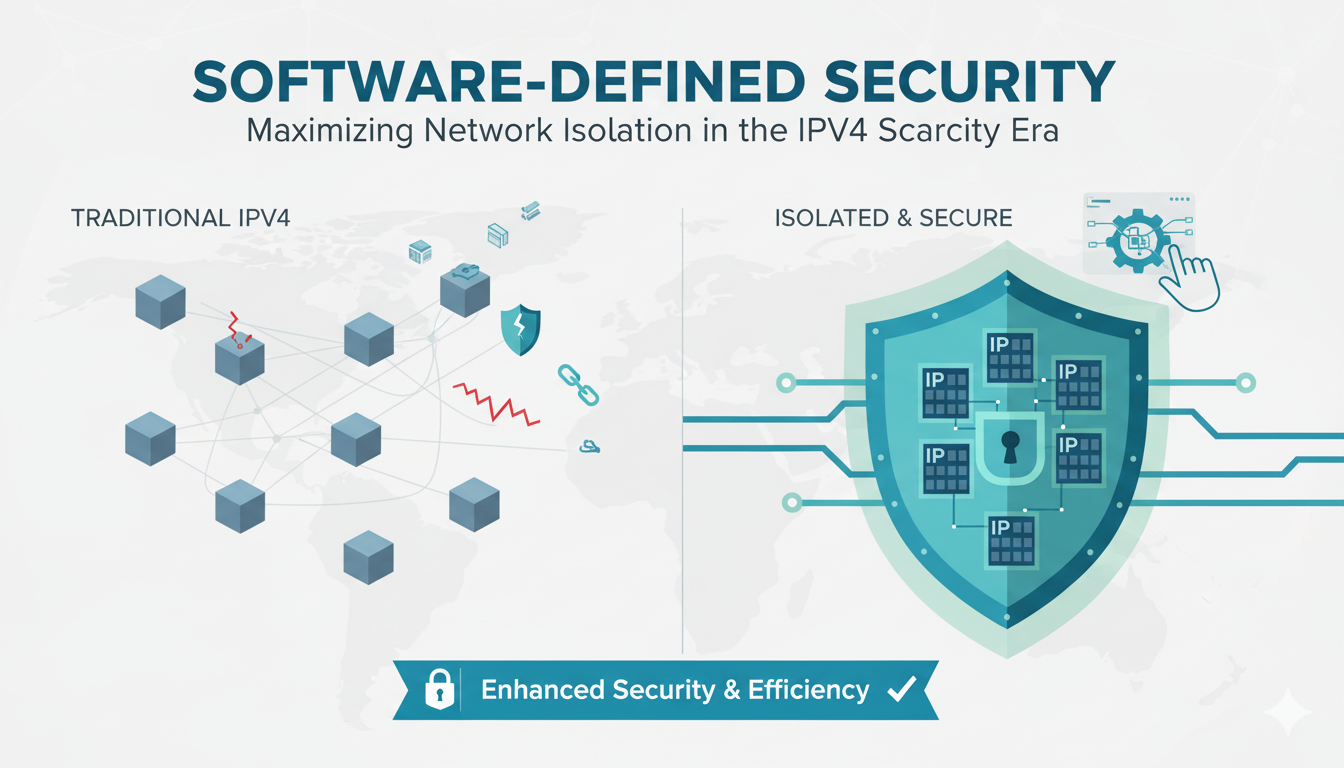
As CEO of InterLIR, I’ve witnessed firsthand how network isolation strategies

What is an ASN? ASN stands for Autonomous System Number. It is a unique identifier

Anycast DNS: A Leader’s Guide to Protecting Your Digital Infrastructure Executive

RPKI Certification: A Leader’s Guide to Internet Routing Security Executive

Executive Summary: What You Need to Know 🎯 Strategic Importance – Internet

When AWS DynamoDB failed in October 2025, thousands of businesses discovered that

Executive Summary: What You Need to Know 🎯 IP reputation directly impacts your
Live chat is provided by Intercom and is loaded only after you enable it. You can also contact us without enabling the chat.