The entire process can take significant time and resources, but the alternative – continuing to operate with compromised IP reputation – would result in ongoing operational challenges and customer communication failures.
This reinforces the understanding that proactive reputation management is not just a technical best practice but a business imperative.
This granular approach to reputation scoring has created new opportunities for organizations to understand and address specific reputation issues, but it has also increased the complexity of monitoring and remediation efforts.
Organizations can no longer simply check whether an IP is “blocklisted” or not; they must understand the specific nature of each listing and develop targeted remediation strategies accordingly.

IP reputation management is not just a cybersecurity concern – it’s a business continuity imperative. Organizations can face significant challenges when their primary IP addresses are suddenly blocklisted, rendering their email marketing campaigns and customer communications ineffective.
The reality is stark: with many emails being classified as spam and cybercriminals becoming increasingly sophisticated in their attack vectors, IP blocklists have evolved from simple filtering mechanisms into complex, interconnected systems that can make or break your digital operations.
What started as basic spam prevention has transformed into a critical infrastructure layer that determines whether your organization can effectively communicate with customers, partners, and stakeholders.
Analysis of recent industry developments reveals three fundamental shifts that every technology leader must understand:
When IP blocklists first emerged, they were relatively straightforward databases maintained by a handful of organizations. The concept was simple: if an IP address sent spam, it got blocked. Today’s reality is dramatically different, and understanding this evolution is crucial for any organization managing network infrastructure.
The transformation began when traditional static blocklists gave way to dynamic, real-time systems that could adapt to emerging threats within minutes.
The introduction of DNS-based blocklists (DNSBLs) revolutionized the technical implementation, but the real game-changer came with the integration of machine learning algorithms that could predict potentially problematic IP addresses before they actually caused harm.
Organizations often face challenges with inherited IP reputation issues. They may acquire a block of IPv4 addresses that seemed clean on the surface, but deeper analysis reveals they had been used for malicious operations earlier.
The reputation damage can persist across multiple blocklist systems, creating ongoing operational challenges that take months to resolve.
This demonstrates that IP reputation operates on multiple timescales simultaneously:
The shift from “blacklisting” to “blocklisting” terminology, while seemingly cosmetic, actually reflects a broader industry recognition that these systems have become more nuanced and sophisticated than simple binary allow/deny mechanisms.
The emergence of specialized threat blocklists has further complicated the landscape. Where once dealt primarily with email-focused lists, today’s organizations must navigate:
Each system operates with different criteria, update frequencies, and removal procedures, creating a complex web of interdependencies that can impact business operations in unexpected ways.
The current state of IP blocklist technology represents a fundamental shift from reactive filtering to proactive threat intelligence. Organizations are grappling with increasingly sophisticated systems that combine traditional reputation scoring with behavioral analysis, network topology mapping, and predictive threat modeling.
The technical architecture of modern blocklist systems has evolved into what could be called a “reputation ecosystem.”
At the foundation level, there are traditional DNS-based blocklists like Spamhaus, SURBL, and Barracuda, which continue to provide real-time IP reputation data through DNS queries.
However, these systems now integrate with secondary layers that include:
One of the most significant developments is the integration of artificial intelligence into reputation scoring algorithms. Modern systems can implement machine learning models that identify potentially compromised IP addresses based on:
These systems can flag addresses for enhanced monitoring before any actual malicious activity occurs, representing a shift from reactive to predictive security.
| Blocklist Type | Primary Function | Update Frequency | Business Impact |
|---|---|---|---|
| Email RBLs | Spam prevention | Real-time | Email deliverability |
| Malware Lists | Threat prevention | Hourly | Network access |
| Phishing Lists | User protection | Minutes | Website accessibility |
| Policy Lists | Compliance enforcement | Daily | Service availability |
The emergence of SURBL (Spam URI RBL) systems has created an additional layer of complexity that many organizations underestimate.
Unlike traditional IP-based blocklists, SURBL systems analyze the content of communications to identify and block domains and IP addresses mentioned in spam messages. This creates a feedback loop where successful spam campaigns become self-defeating as their target infrastructure gets blocklisted.
Companies may discover their legitimate marketing emails are being blocked because their website URLs had been mentioned in spam campaigns targeting their competitors. Spammers might use the company’s legitimate URLs as decoys to make their messages appear more credible, inadvertently causing the legitimate business to be added to SURBL databases.
The technical implementation of modern DNSBL systems has also become more sophisticated. The traditional approach of querying “reversed-ip.blocklist.domain” has been enhanced with response codes that provide detailed information about the specific reason for listing.
For example, Spamhaus now returns different codes for different types of violations:
127.0.0.2 for direct spam sources127.0.0.4 for compromised systems127.0.0.9 for exploit-related issues
Organizations typically approach blocklist management through a three-stage evolution:
Most organizations begin their journey in reactive mode, discovering blocklist issues only when business operations are impacted.
Many organizations first learn about IP reputation problems when:
This reactive approach is costly and disruptive, often requiring emergency remediation efforts that can take weeks to resolve.
The transition to systematic monitoring represents a critical maturity milestone. Organizations that reach this stage implement automated monitoring systems that check their IP addresses against major blocklists on a regular basis.
However, many companies underestimate the scope of monitoring required. There are numerous active blocklists in operation today, and comprehensive monitoring requires checking against many of the most influential lists.
The most sophisticated organizations have evolved to proactive reputation management, where they:
One common concern is the cost-benefit analysis of reputation management investments. Organizations often question whether the expense of comprehensive monitoring and professional reputation management services is justified.
The response is to frame this in terms of business continuity and risk management. The cost of prevention is invariably lower than the cost of remediation, and the business impact of reputation issues can be severe and long-lasting.
Another frequent objection relates to the perceived complexity of managing multiple blocklist relationships. Organizations worry about the administrative overhead of maintaining removal procedures for dozens of different blocklist operators.
This concern is valid, but partnering with specialized service providers can significantly reduce this burden while providing access to expertise that would be expensive to develop internally.
The business implications of IP reputation management extend far beyond technical considerations, impacting revenue generation, customer relationships, and operational efficiency in ways that many organizations fail to fully appreciate.
Organizations with poor IP reputation management practices experience:
The financial impact becomes particularly acute for organizations that rely heavily on email marketing or automated customer communications.
When customer onboarding emails are blocked due to IP reputation issues, this can result in:
The resolution process requires not only technical remediation but also a comprehensive review of email authentication practices and sending patterns.
From a strategic perspective, IP reputation management should be integrated into broader infrastructure planning and risk management frameworks.
Organizations need to consider reputation implications when making decisions about:
The interconnected nature of modern blocklist systems means that reputation issues can cascade across multiple services and communication channels.
Companies expanding into new geographic markets may acquire IPv4 address blocks from different regions to support their expansion, but fail to conduct comprehensive reputation assessments before deployment.
They might discover that several of their newly acquired IP addresses are blocklisted in major markets, severely impacting their ability to communicate with customers and partners.
The remediation process requires a coordinated effort across multiple teams and external partners. A systematic approach includes:

For organizations managing their own IPv4 address resources, the strategic implications are even more significant.
The limited availability of IPv4 addresses means that reputation damage to existing resources can be extremely costly to remediate. Organizations may need to:
Looking ahead, industry analysis anticipates three major trends that will reshape the IP reputation landscape over the next five years:
The artificial intelligence trend is particularly significant because it represents a fundamental shift from reactive to predictive reputation management.
Early implementations of systems can identify potentially problematic IP addresses based on:
These systems will become increasingly sophisticated, potentially identifying reputation risks before any actual malicious activity occurs.
Based on industry analysis, here are three key recommendations for organizations seeking to future-proof their IP reputation management strategies:
First, implement comprehensive automated monitoring that covers major blocklists and provides real-time alerting when reputation issues are detected.
The cost of automated monitoring is minimal compared to the potential business impact of undetected reputation problems, and early detection significantly improves remediation success rates.
Second, develop strategic partnerships with specialized service providers who can provide expertise and resources that would be expensive to develop internally.
The complexity of modern blocklist ecosystems makes it increasingly difficult for organizations to manage reputation issues effectively without specialized knowledge and established relationships with blocklist operators.
Third, integrate reputation considerations into all infrastructure planning and acquisition decisions.
Whether acquiring new IP addresses, changing hosting providers, or implementing new email systems, reputation implications should be evaluated as part of the decision-making process.
The interconnected nature of modern reputation systems means that seemingly minor infrastructure changes can have significant and unexpected impacts on organizational communications.
The organizations that will thrive in this evolving landscape are those that recognize IP reputation as a strategic asset requiring ongoing investment and attention.
The technical complexity will continue to increase, the business stakes will continue to rise, and the cost of reactive approaches will become increasingly prohibitive.

Alexei Krylov
Head of Sales

A Beginner’s Guide to Subnetting IPv4 and IPv6 Addresses Subnetting is a critical

Why IPv4 Leasing Is Becoming the Smart Choice for Businesses in 2025 1. Introduction
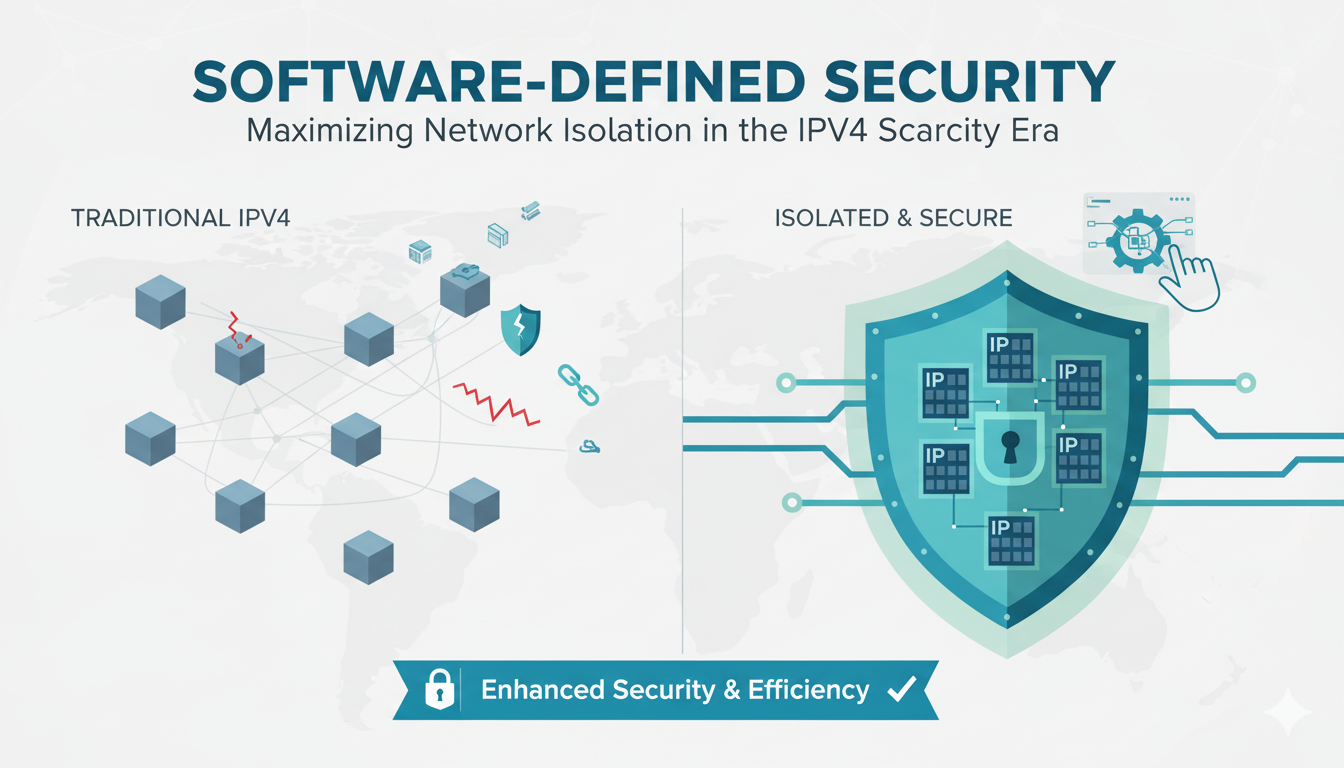
As CEO of InterLIR, I’ve witnessed firsthand how network isolation strategies

What is an ASN? ASN stands for Autonomous System Number. It is a unique identifier

Anycast DNS: A Leader’s Guide to Protecting Your Digital Infrastructure Executive

RPKI Certification: A Leader’s Guide to Internet Routing Security Executive

Executive Summary: What You Need to Know 🎯 Strategic Importance – Internet

When AWS DynamoDB failed in October 2025, thousands of businesses discovered that

Executive Summary: What You Need to Know 🎯 IP reputation directly impacts your
Live chat is provided by Intercom and is loaded only after you enable it. You can also contact us without enabling the chat.