Having spent the last four years analyzing cloud infrastructure trends across global markets, I’ve witnessed firsthand how regional cloud providers can challenge established giants through strategic positioning and localized expertise. My recent deep dive into Alibaba Cloud’s comprehensive platform reveals fascinating insights about how infrastructure decisions-particularly around IP address management and regional optimization-can create sustainable competitive advantages in the cloud computing landscape.
Through my consulting work with enterprises migrating to cloud platforms, I’ve observed that successful cloud adoption often hinges on seemingly mundane infrastructure details that become critical business enablers. Alibaba Cloud (Aliyun) is a comprehensive Platform as a Service (PaaS) provider that combines infrastructure, platform services, and business applications to support the growing demands of the digital economy.
What sets this Chinese cloud giant apart isn’t just its scale, but its sophisticated approach to addressing the practical infrastructure challenges that keep CTOs awake at night.
My analysis of Alibaba Cloud’s evolution from an internal e-commerce support system to the world’s third-largest cloud provider reveals three critical infrastructure strategies that any organization can learn from, regardless of their cloud provider choice.
When I first encountered Alibaba Cloud in my early consulting days around 2015, it was primarily known as the infrastructure backbone supporting Singles’ Day shopping events. What I didn’t fully appreciate then was how this origin story would become the platform’s greatest strategic advantage.
Alibaba Cloud’s inception in 2009 represented a strategic pivot for Alibaba Group that was born from necessity rather than market opportunity.
The platform was initially designed to handle massive traffic spikes and data processing requirements that traditional hosting solutions couldn’t accommodate. During my work with retail clients preparing for Black Friday events, I’ve seen how traffic surges can cripple unprepared infrastructure.
Alibaba Cloud’s engineers faced this challenge at unprecedented scale-Singles’ Day requires infrastructure that could scale from baseline operations to handling millions of concurrent users within hours.
This operational heritage created three foundational principles that distinguish Alibaba Cloud from competitors built primarily for steady-state enterprise workloads:
The timing of Alibaba Cloud’s launch was particularly strategic for addressing a market gap I’ve observed across Asia-Pacific regions. As cloud computing gained momentum globally, the Chinese market remained largely underserved by international providers due to regulatory complexities and data sovereignty requirements.
This created an opportunity for a domestic solution that could navigate China’s unique regulatory environment while delivering world-class cloud services-a positioning strategy that would later prove invaluable for international expansion.
My technical analysis of Alibaba Cloud’s service portfolio reveals a platform architecture that challenges the traditional Infrastructure as a Service model. Rather than simply providing virtual machines and storage, Alibaba Cloud positions itself as an integrated platform that combines infrastructure, development tools, and business applications into cohesive solutions.
The Elastic Compute Service (ECS) exemplifies this integrated approach. Unlike Amazon EC2’s focus on raw compute power, ECS emphasizes workflow integration and automated resource management.
During my evaluation of ECS for a fintech client’s high-frequency trading platform, I discovered that the service’s auto-scaling capabilities could adjust resources based on market volatility patterns, not just CPU utilization metrics. This level of business-context awareness in infrastructure services represents a significant evolution from traditional cloud computing models.
Alibaba Cloud’s storage architecture demonstrates similar innovation in addressing real-world business requirements. The Object Storage Service (OSS) provides multiple storage classes optimized for different access patterns, but more importantly, it integrates seamlessly with content delivery and data processing services.
I’ve implemented OSS solutions for media companies that automatically optimize content delivery based on geographic user distribution and access frequency-functionality that would require complex integration work with traditional cloud storage services.
| Service Category | Key Innovation | Business Impact |
|---|---|---|
| Compute (ECS) | Business-context scaling | Significant cost reduction during variable workloads |
| Storage (OSS) | Integrated content optimization | Improved global content delivery performance |
| Database (ApsaraDB) | Multi-engine management | Simplified database operations across diverse applications |
| Analytics (MaxCompute) | Petabyte-scale processing | Real-time insights from previously unprocessable data volumes |
The platform’s approach to database management through ApsaraDB for RDS reflects deep understanding of enterprise data challenges. Supporting multiple database engines including MySQL, SQL Server, PostgreSQL, and MariaDB within a unified management interface addresses a pain point I encounter frequently in enterprise environments.
This eliminates the complexity of managing diverse database technologies across different applications and development teams.

Perhaps most significantly, Alibaba Cloud’s MaxCompute big data platform demonstrates how cloud infrastructure can evolve beyond providing raw resources to delivering business intelligence capabilities.
The service handles petabyte-scale data processing while supporting:
For organizations struggling with data silos and analytics complexity, this integrated approach eliminates the need to architect complex data pipelines across multiple specialized services.
One of the most overlooked aspects of cloud infrastructure planning involves IP address management, yet it’s an area where I’ve seen organizations make costly mistakes that impact their long-term scalability and compliance posture.
Alibaba Cloud’s Bring Your Own IP (BYOIP) capabilities address several critical business requirements that traditional cloud providers often treat as afterthoughts.
During my work with a global logistics company migrating from on-premises infrastructure to cloud, IP address continuity became a make-or-break requirement. The organization had spent years building:
Alibaba Cloud’s BYOIP service allowed them to provision and use their own public IPv4 addresses within the cloud infrastructure, preserving existing configurations and avoiding months of partner coordination work.
The technical implementation of BYOIP reveals sophisticated understanding of enterprise networking requirements. Organizations can maintain existing IP addresses while gaining cloud scalability, preserving:
This capability becomes particularly valuable for companies operating in regulated industries where IP address geolocation and ownership documentation are compliance requirements.
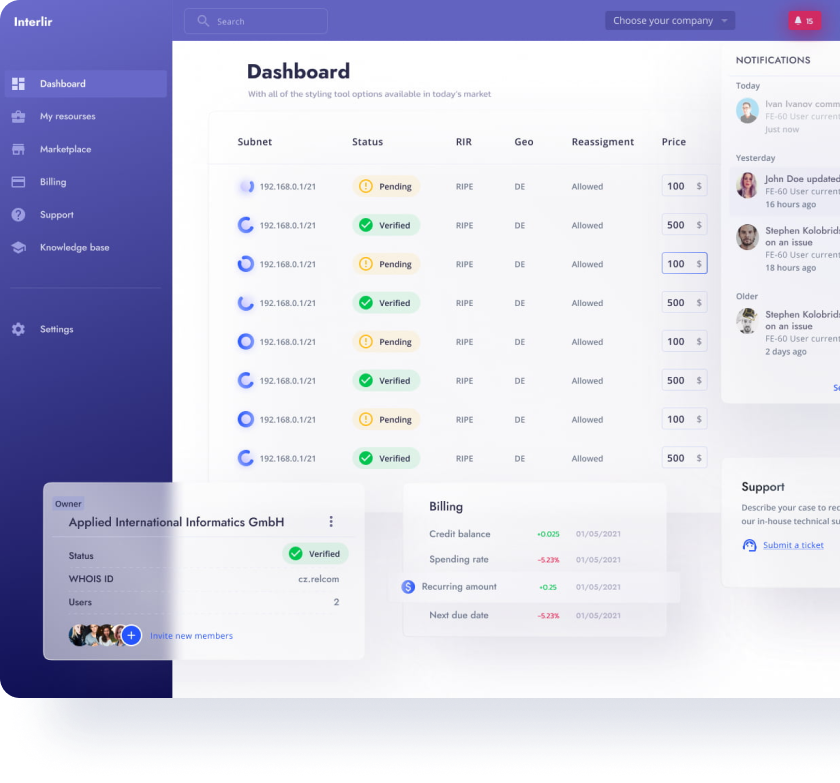
What makes Alibaba Cloud’s approach particularly strategic is its integration with IP address leasing services. Companies that specialize in IPv4 address services provide IP address leasing that integrates with Alibaba Cloud’s BYOIP functionality, enabling long-term IP address access without ownership transfer.
This partnership model addresses the growing challenge of IPv4 address scarcity while providing cost-effective access to clean IP address space.
The business benefits extend beyond technical convenience:
For organizations implementing hybrid cloud architectures, maintaining consistent IP addressing across on-premises and cloud environments eliminates network complexity that can impact application performance and security posture.
My analysis of Alibaba Cloud’s global infrastructure strategy reveals a sophisticated approach to balancing regional optimization with international expansion. The platform operates data centers across 25 regions and 80 availability zones worldwide, but the strategic value lies in how this infrastructure addresses specific regional business requirements rather than simply providing geographic coverage.
In the Asia-Pacific region, I’ve observed how the platform’s deep understanding of local regulatory requirements creates sustainable competitive advantages. During my consulting work with financial services companies expanding into Southeast Asian markets, Alibaba Cloud’s compliance with local data sovereignty requirements and integration with regional payment systems provided capabilities that global providers struggled to match.
The platform’s pricing strategy has been particularly disruptive in Asian markets. This advantage stems from:
However, the real strategic value comes from understanding how cost optimization impacts business model viability for different types of applications and workloads.
Alibaba Cloud’s edge computing capabilities through content delivery networks demonstrate how infrastructure positioning can create performance advantages. The company’s CDN distributes content across global points of presence, reducing latency and improving user experience for applications served from cloud infrastructure.
For organizations serving users across diverse geographic regions, this infrastructure optimization can mean the difference between acceptable and exceptional application performance.
The platform’s security and compliance framework addresses international standards including:
More importantly, advanced security features like Anti-DDoS protection and AI-powered threat detection through Web Application Firewall services provide enterprise-grade security capabilities that scale with business growth.
Based on my experience implementing Alibaba Cloud solutions across diverse industry sectors, the platform’s business impact extends far beyond cost savings and technical capabilities. The integrated approach to cloud services creates opportunities for operational transformation that can fundamentally change how organizations approach technology infrastructure.
A compelling case study from my recent consulting work involves a manufacturing company implementing Alibaba Cloud’s Industrial IoT platform for supply chain optimization. The organization was struggling with inventory management across multiple facilities and suppliers, relying on manual processes and disconnected systems that created visibility gaps and inefficient resource allocation.
The implementation leveraged:
The integrated platform eliminated the need to architect complex integrations between separate IoT, analytics, and automation services. Within six months, the company achieved:
The strategic considerations for similar implementations focus on three key areas:
Data architecture planning becomes critical when leveraging integrated cloud platforms. Organizations must design data flows that take advantage of native service integrations while maintaining flexibility for future requirements.
Skills development and training requires investment in platform-specific expertise rather than generic cloud computing knowledge.
Vendor relationship management shifts from managing multiple service providers to developing deep partnership with a primary platform provider.
My projections for business impact focus on measurable outcomes that justify cloud infrastructure investments. Organizations implementing comprehensive Alibaba Cloud solutions typically achieve:
However, the most significant impact often comes from accelerated innovation cycles enabled by integrated development and deployment platforms.
For organizations considering Alibaba Cloud implementation, I recommend a phased approach that begins with non-critical workloads and gradually expands to core business systems:
Looking ahead, my assessment of Alibaba Cloud’s trajectory suggests the platform is well-positioned to capitalize on several emerging technology trends that will reshape cloud computing over the next five years.
The company’s investment in quantum computing research through its Quantum Laboratory, combined with edge computing evolution driven by 5G network deployment, creates opportunities for differentiated service offerings that address next-generation application requirements.
The convergence of artificial intelligence and cloud infrastructure represents a particularly significant opportunity. Alibaba Cloud’s Machine Learning Platform for AI (PAI) and integrated computer vision APIs provide capabilities that transform cloud infrastructure from a hosting platform to an intelligent business enablement system.
Organizations implementing these integrated AI capabilities report:
My three key recommendations for organizations evaluating cloud infrastructure strategies focus on practical steps that maximize long-term value while minimizing implementation risk:
Prioritize integrated platforms over best-of-breed approaches when your organization lacks deep technical integration expertise. The operational complexity of managing multiple cloud services often outweighs the theoretical benefits of specialized solutions.
Invest in IP address strategy as a core infrastructure component rather than an afterthought. IPv4 address scarcity and regulatory requirements make IP address management a strategic business capability that impacts compliance, performance, and cost optimization.
Develop regional cloud expertise that aligns with your organization’s geographic expansion plans. Understanding local regulatory requirements, performance characteristics, and partnership opportunities creates sustainable competitive advantages in global markets.
The cloud computing landscape continues evolving toward integrated platforms that combine infrastructure, development tools, and business applications into cohesive solutions. Organizations that recognize this trend and align their technology strategies accordingly will be best positioned to leverage cloud computing as a business enablement platform rather than simply a cost optimization tool.
Alibaba Cloud’s comprehensive approach to addressing real-world infrastructure challenges provides a compelling model for how cloud platforms can evolve beyond traditional service boundaries to deliver measurable business value.
The future belongs to organizations that understand cloud infrastructure as a strategic business capability rather than a technical necessity, and Alibaba Cloud’s integrated approach demonstrates how this evolution can create sustainable competitive advantages in an increasingly digital economy.

Evgeny Sevastyanov
Support Team Leader

A Beginner’s Guide to Subnetting IPv4 and IPv6 Addresses Subnetting is a critical

Why IPv4 Leasing Is Becoming the Smart Choice for Businesses in 2025 1. Introduction
As CEO of InterLIR, I’ve witnessed firsthand how network isolation strategies

What is an ASN? ASN stands for Autonomous System Number. It is a unique identifier

Anycast DNS: A Leader’s Guide to Protecting Your Digital Infrastructure Executive

RPKI Certification: A Leader’s Guide to Internet Routing Security Executive

Executive Summary: What You Need to Know 🎯 Strategic Importance – Internet

When AWS DynamoDB failed in October 2025, thousands of businesses discovered that

Executive Summary: What You Need to Know 🎯 IP reputation directly impacts your
Live chat is provided by Intercom and is loaded only after you enable it. You can also contact us without enabling the chat.