
Email reputation issues can devastate business operations overnight. When a company’s primary sending IP lands on the Barracuda Reputation Block List, marketing automation systems can grind to a halt. Fragmented IP strategies often create unnecessary vulnerabilities that could be avoided with proper IPv4 resource planning.
The Barracuda blocklist removal process reveals a critical truth about modern digital infrastructure: email deliverability and IP reputation management are inseparable from strategic IPv4 resource allocation.
Organizations that treat these as separate concerns inevitably face more severe disruptions and longer recovery times when reputation incidents occur.
The intersection of email security and IPv4 scarcity creates unique challenges that demand both technical expertise and strategic resource planning.
When network infrastructure management was in its early stages, email reputation was largely a reactive concern. Companies would acquire IPv4 addresses, configure their mail servers, and deal with blocklist issues as they arose.
The abundance of available IPv4 space meant that switching to clean IPs was often the quickest solution to reputation problems.
That landscape has fundamentally changed. With IPv4 addresses becoming increasingly scarce and valuable, organizations have shifted toward more sophisticated reputation management strategies.
Telecommunications companies illustrate this evolution. Many had been cycling through IPv4 addresses whenever reputation issues arose, but as acquisition costs climbed, this approach became no longer economically viable.
The Barracuda Reputation Block List emerged as a particularly influential force during this transition period. Unlike some blocklists that focus primarily on known spam sources, Barracuda’s three-tier detection system creates a more nuanced but also more complex challenge for legitimate senders:
Organizations with well-planned IPv4 allocation strategies consistently recover from reputation incidents faster than those with ad-hoc IP management.
Hosting providers that implement a systematic approach to IP pool management, dedicating specific address ranges for different email functions, can minimize business disruption when security breaches occur. When marketing IPs are affected, transactional email systems can continue operating normally.
The evolution toward real-time reputation monitoring has also changed IPv4 resource planning approaches. Where companies once needed only enough addresses for their current operations, they now require strategic reserves for reputation management and business continuity.
The Barracuda blocklist removal process has become significantly more sophisticated since 2020, reflecting broader changes in email security and IPv4 resource management.
Based on recent industry experiences, three critical developments affect how organizations should approach both email reputation and IPv4 allocation.
First, the integration of machine learning into Barracuda’s detection systems has made reputation incidents more unpredictable but also more precisely targeted.
Cybersecurity organizations have experienced this firsthand when their automated security scanning triggered Barracuda’s behavioral analysis algorithms. The system can identify legitimate penetration testing activities as potential botnet behavior, leading to swift blocklist inclusion.
What makes these cases particularly interesting is how quickly incidents can escalate – within hours, entire subnets can be flagged, affecting multiple business units.
A crucial insight from such cases: modern blocklist systems don’t just evaluate individual IPs – they assess entire network ranges and organizational behavior patterns.
For companies managing limited IPv4 resources, this means that reputation incidents can have cascading effects across their entire address space.
Second, Barracuda’s removal process has become more stringent about documentation and remediation evidence.
Gaming industry clients have spent weeks gathering the technical documentation required for their removal requests, including:
The days of simple removal requests are over – Barracuda now expects comprehensive incident analysis and prevention measures.

This evolution has created new requirements for IPv4 resource planning. Organizations need not just clean IP addresses, but also the technical infrastructure and documentation capabilities to maintain and defend their reputation.
It’s advisable to factor reputation management costs into IPv4 acquisition decisions, including the personnel and systems needed for effective monitoring and incident response.
Third, the interconnected nature of modern email infrastructure means that reputation incidents increasingly affect multiple services simultaneously.
VPN providers have discovered that Barracuda blocklist inclusion impacts not just marketing emails, but also:
The business impact extends far beyond marketing departments.
These developments have led to recommendations for a more integrated approach to IPv4 resource management and email infrastructure. Rather than treating IP addresses as commodity resources, organizations need to view them as strategic assets that require ongoing investment in reputation management, security monitoring, and technical documentation.
The most successful companies have implemented “reputation-aware IPv4 allocation” – they consider email deliverability requirements, security monitoring capabilities, and incident response procedures when planning their address space usage.
This approach has proven particularly effective for organizations in high-risk sectors like marketing, business intelligence, and cybersecurity, where email reputation incidents can have severe business consequences.
A systematic approach can help organizations make informed decisions about email infrastructure and IPv4 resource allocation in the context of reputation management.
The following framework addresses the interconnected nature of these challenges while providing practical guidance for different organizational contexts.
The first principle to emphasize is risk-based IP segmentation. Organizations need to evaluate their email functions based on reputation risk and business criticality, then allocate IPv4 resources accordingly.
High-risk activities like marketing automation and bulk communications should operate on dedicated IP ranges, separate from mission-critical transactional systems.
SaaS companies can implement this approach by dedicating a subnet exclusively to customer onboarding emails, ensuring that marketing campaign issues can’t affect user account creation and password reset messages.
The second key decision framework involves geographic and regulatory considerations. Different regions have varying spam definitions and blocklist sensitivities, which affects both email deliverability and IPv4 resource requirements.
Companies expanding into Asian markets may discover that their European IP ranges have different reputation profiles in China and Japan, necessitating region-specific address allocation strategies.
Cost-benefit analysis forms the third pillar of strategic decision-making. With IPv4 addresses commanding premium prices, organizations must balance the costs of maintaining clean IP pools against the business impact of reputation incidents.
It’s recommended that companies calculate their “reputation incident cost” – including:
This calculation helps determine appropriate investment levels in IP resources and monitoring systems.
The decision-making process also requires consideration of vendor relationships and shared infrastructure risks. Many organizations rely on email service providers or shared hosting environments, which can create reputation dependencies beyond their direct control.
It’s advisable to evaluate these relationships carefully, ensuring companies have contingency plans and sufficient IPv4 resources to maintain operational independence when needed.
The business implications of email reputation management extend far beyond technical considerations, particularly in today’s IPv4-constrained environment.
Based on experience working with companies across multiple sectors, several strategic considerations have been identified that organizations must address to maintain competitive advantage while managing reputation risks effectively.
Revenue impact represents the most immediate concern for most organizations. Marketing technology companies have quantified their Barracuda blocklist incident costs in terms of significant lost revenue over a two-week period, plus additional remediation expenses and IPv4 resource acquisition.
Such incidents can occur despite having dedicated marketing IPs, highlighting how reputation issues can cascade across business operations regardless of infrastructure segmentation.
The strategic response to such incidents requires balancing immediate recovery needs with long-term infrastructure resilience. A recommended three-tier IPv4 allocation strategy includes:
This approach requires an increase in IPv4 resource allocation, but can reduce potential incident recovery time from weeks to hours.
Operational complexity represents another critical consideration. As organizations implement more sophisticated reputation management strategies, they often discover that their technical teams lack the specialized knowledge required for effective IPv4 resource management and email infrastructure optimization.
Telecommunications companies have invested heavily in staff training and external consulting to develop internal capabilities, recognizing that reputation management has become a core business competency rather than a technical afterthought.
The competitive implications of email reputation management have also evolved significantly. Companies with robust reputation management capabilities can maintain consistent customer communications during market disruptions, while competitors struggle with deliverability issues.
This dynamic is particularly evident in the cybersecurity and business intelligence sectors, where reliable email communications directly impact customer trust and retention.
Implementation success requires addressing both technical and organizational challenges. The most effective approach involves phased implementation, starting with critical email functions and gradually expanding coverage across the organization.
Hosting providers have successfully implemented this strategy by:
This approach allows organizations to develop expertise and refine processes before applying reputation management strategies to their highest-volume email systems.
Resource allocation decisions must also consider the ongoing nature of reputation management. Unlike traditional IT infrastructure investments, email reputation requires:
It’s typically recommended that organizations budget a portion of their annual IPv4 costs for reputation management activities, including monitoring tools, incident response capabilities, and strategic reserve addresses.
Looking ahead, email reputation management will likely become increasingly complex as IPv4 scarcity intensifies and security threats evolve.
The integration of artificial intelligence into blocklist systems like Barracuda will likely create more sophisticated detection capabilities, but also more nuanced challenges for legitimate senders managing limited IPv4 resources.
The primary recommendation for organizations is to develop integrated IPv4 and email reputation strategies that treat these as interconnected business capabilities rather than separate technical functions.
This approach requires investment in both:
However, it provides significant competitive advantages in an environment where email deliverability directly impacts business performance.
The companies that will thrive in this evolving landscape are those that recognize email reputation management as a strategic differentiator requiring:
Organizations that continue treating reputation issues as reactive technical problems will face increasing operational disruptions and competitive disadvantages as the IPv4 market continues to mature.
Success in this environment demands proactive planning, strategic resource allocation, and the recognition that effective email infrastructure management has become a core business competency in our increasingly connected digital economy.

Alexander Timokhin
CEO

A Beginner’s Guide to Subnetting IPv4 and IPv6 Addresses Subnetting is a critical

Why IPv4 Leasing Is Becoming the Smart Choice for Businesses in 2025 1. Introduction
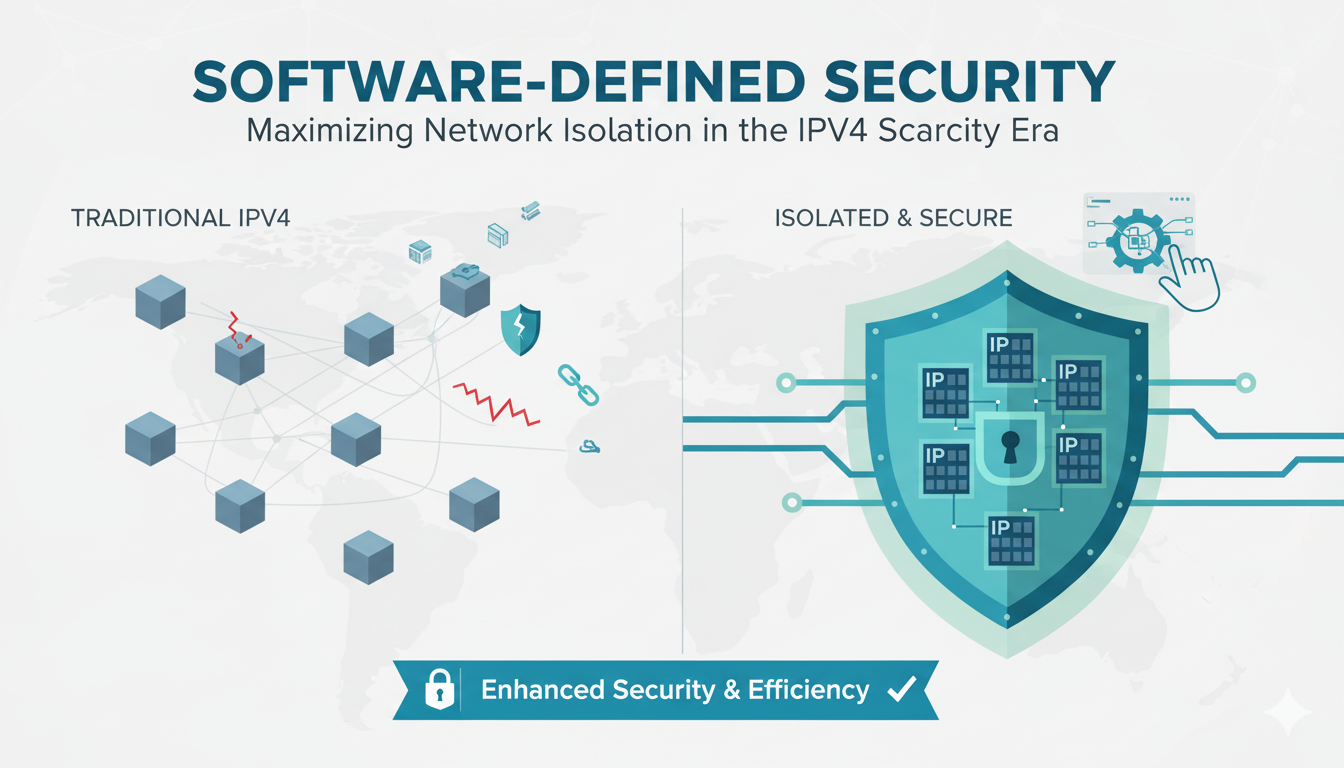
As CEO of InterLIR, I’ve witnessed firsthand how network isolation strategies

What is an ASN? ASN stands for Autonomous System Number. It is a unique identifier

Anycast DNS: A Leader’s Guide to Protecting Your Digital Infrastructure Executive

RPKI Certification: A Leader’s Guide to Internet Routing Security Executive

Executive Summary: What You Need to Know 🎯 Strategic Importance – Internet

When AWS DynamoDB failed in October 2025, thousands of businesses discovered that

Executive Summary: What You Need to Know 🎯 IP reputation directly impacts your
Live chat is provided by Intercom and is loaded only after you enable it. You can also contact us without enabling the chat.