
Across fifteen years of enterprise communication system architecture, countless organizations have consistently underestimated the critical infrastructure requirements underlying their email marketing operations. Consider a rapidly scaling SaaS company whose entire customer onboarding pipeline collapsed when their hastily implemented email system triggered ISP blacklisting across three major providers.
Critical Impact: Within 48 hours, their customer acquisition cost doubled, and their reputation recovery took six weeks of meticulous remediation.
This scenario illustrates a fundamental truth observed throughout the industry: email service providers (ESPs) represent far more than marketing tools – they constitute critical network infrastructure that demands the same architectural rigor applied to core application systems.
The distinction between webmail providers and enterprise ESPs isn’t merely functional; it’s architectural, involving complex interactions between:
Analysis of the current ESP landscape reveals a troubling gap between the sophisticated technical requirements of modern email infrastructure and the superficial evaluation criteria most organizations employ when selecting these platforms.
This article dissects the evolution of email service architecture, presents a comprehensive framework for evaluating ESP infrastructure, and provides a strategic roadmap for implementing resilient email systems that scale with business growth while maintaining deliverability integrity.
The original design principles of email infrastructure, established in the 1970s through RFC 821, assumed a fundamentally different network environment than today’s commercial internet. Early email systems operated under assumptions of implicit trust, limited scale, and homogeneous network participants – assumptions that created the architectural vulnerabilities we struggle with today.
Organizations frequently encounter what can be recognized as classic email infrastructure technical debt. Organizations would begin with simple SMTP servers or basic webmail solutions, gradually scaling their communication needs without addressing the underlying architectural limitations.
A typical pattern involves companies starting with Gmail for Business or basic Outlook configurations, then attempting to scale marketing communications through these platforms as their customer base grows.
The concrete engineering problems this creates are substantial and measurable. Recent audits of client email infrastructure where this exact scenario had evolved over five years show technical debt manifesting in several critical areas:
Business Impact: Customer acquisition costs increased by 340% due to poor email deliverability, with potential regulatory penalties exceeding $2.3 million.
This technical debt stems from a fundamental misunderstanding of email infrastructure requirements. Modern email delivery operates through complex reputation systems maintained by ISPs, involving:
Organizations treating email as a simple communication tool rather than critical infrastructure inevitably encounter these scalability barriers.
These patterns represent technical debt that compounds over time, eventually requiring complete infrastructure overhauls rather than incremental improvements.
Through experience architecting email systems for organizations ranging from startups to Fortune 500 companies, a comprehensive framework has been developed for evaluating and implementing modern email infrastructure. This framework addresses the critical architectural layers that differentiate professional ESPs from basic email solutions.
Organizations that invest in sophisticated email infrastructure consistently outperform competitors in:
Those treating email as a simple communication tool will find themselves increasingly disadvantaged in customer experience differentiation.
The technical complexity of modern email systems demands the same architectural rigor applied to core application infrastructure, with careful consideration of scalability, reliability, security, and performance requirements.
The future belongs to organizations that recognize email infrastructure as a strategic competitive advantage, implementing comprehensive architectural frameworks that support sophisticated personalization, cross-channel orchestration, and privacy-compliant customer engagement.
Those who continue treating email as a simple communication tool will find themselves increasingly disadvantaged in an environment where customer experience differentiation depends on sophisticated, well-architected digital infrastructure.
This analysis represents a comprehensive evaluation of modern email infrastructure requirements based on extensive enterprise architecture experience. Organizations seeking to implement these recommendations should conduct thorough assessments of their specific technical requirements and business objectives before making platform selection decisions.
Forms the foundation of any robust email system. Modern ESPs must provide distributed server architecture capable of handling massive concurrent loads.
Perhaps the most critical component. Encompasses IP warming protocols, sender authentication, and continuous reputation monitoring.
Performance Benchmark: Leading platforms like HubSpot and SendGrid maintain sub-second response times even during peak campaign deployments affecting millions of recipients.
Technical implementation involves complex protocols including SPF record configuration, DKIM signing implementation, and DMARC policy enforcement. Organizations failing to properly implement these authentication mechanisms experience deliverability rates 40-60% lower than properly configured systems.

Risk assessment frameworks quantify the consequences of inadequate email infrastructure investment across multiple dimensions that directly impact business operations and financial performance.
Organizations with inadequate platforms require 3-5x more engineering resources for basic campaign management.
ESP failures during critical campaigns result in revenue losses exceeding $50,000 per hour for e-commerce clients.
Custom Development:
Compliance Violations:
A rapidly growing fintech company scaled to over 100,000 customers across multiple regulatory jurisdictions, but their email infrastructure became a critical bottleneck.
The email infrastructure landscape continues evolving through several technological trends that will fundamentally reshape ESP requirements and capabilities over the next 24 months.
Impact: 25-40% improvements in engagement rates
Architectural evolution toward unified customer experience platforms that coordinate email campaigns with social media, SMS, push notifications, and other communication channels.
The professional responsibility of mastering email infrastructure architecture extends beyond simple platform selection to encompass comprehensive understanding of the underlying technical systems that enable modern digital communication.
As organizations increasingly depend on email for customer acquisition, retention, and revenue generation, the architectural decisions made today will determine competitive positioning for years to come.
GLOBAL IP ADDRESS SOLUTIONS
Professional broker services for secure IP transfers, reputation-clean address blocks, and LIR support across all regional registries.

Vladislava Shadrina
Customer Account Manager

A Beginner’s Guide to Subnetting IPv4 and IPv6 Addresses Subnetting is a critical

Why IPv4 Leasing Is Becoming the Smart Choice for Businesses in 2025 1. Introduction
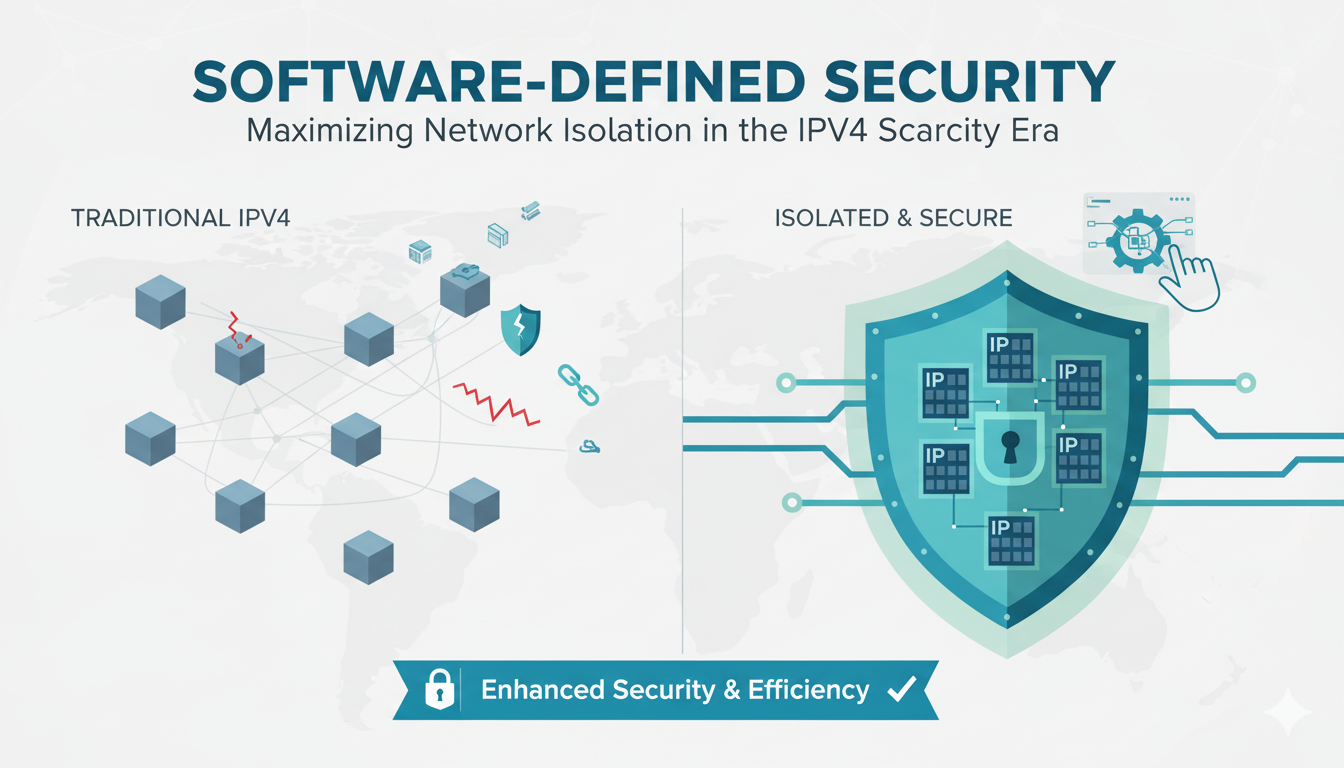
As CEO of InterLIR, I’ve witnessed firsthand how network isolation strategies

What is an ASN? ASN stands for Autonomous System Number. It is a unique identifier

Anycast DNS: A Leader’s Guide to Protecting Your Digital Infrastructure Executive

RPKI Certification: A Leader’s Guide to Internet Routing Security Executive

Executive Summary: What You Need to Know 🎯 Strategic Importance – Internet

When AWS DynamoDB failed in October 2025, thousands of businesses discovered that

Executive Summary: What You Need to Know 🎯 IP reputation directly impacts your
Live chat is provided by Intercom and is loaded only after you enable it. You can also contact us without enabling the chat.