Working in customer support at InterLIR, I encounter the practical realities of IPv4 address management every single day. When clients reach out asking about address allocation, subnet planning, or optimizing their existing IP resources, they’re essentially asking about CIDR – even if they don’t realize it. Just last week, I helped a German hosting company restructure their entire /20 block using CIDR principles, and the efficiency gains were remarkable.
What struck me most about analyzing the comprehensive technical overview of Classless Inter-Domain Routing is how this 30-year-old innovation continues to be absolutely critical for modern internet operations. While everyone talks about the future of networking, CIDR remains the backbone that makes our current IPv4 infrastructure not just functional, but surprisingly efficient. From my experience supporting clients across Germany, the USA, Turkey, and Brazil, I can tell you that understanding CIDR isn’t just academic – it’s the difference between wasting valuable IP resources and maximizing every address in your allocation.
The reality is that CIDR has evolved from a solution to IPv4 exhaustion into the fundamental framework that allows businesses to extract maximum value from their IP investments. Whether you’re a cybersecurity firm needing precise network segmentation, a telecommunications provider managing customer allocations, or a SaaS company planning for growth, CIDR principles directly impact your operational efficiency and costs. Let me share what I’ve learned about how this technology has shaped our digital infrastructure and why it’s more relevant than ever.

Looking back at the evolution from classful to classless addressing, I’m always amazed by how a seemingly simple change in notation fundamentally transformed internet infrastructure. The original classful system – with its rigid Class A, B, and C categories – was like trying to fit every business into three predetermined office sizes. You either got a massive Class A space with 16.7 million addresses, a medium Class B with 65,536 addresses, or a tiny Class C with just 254 addresses.
From my work with clients at InterLIR, I see the legacy of this inefficiency every day. A telecommunications client in Turkey recently approached us because they had inherited multiple Class B allocations from the 1990s that were barely 10% utilized. The waste was staggering – thousands of addresses sitting unused while other organizations desperately needed IP space. This is exactly the problem CIDR was designed to solve.
The introduction of CIDR in 1993 represented a paradigm shift that I compare to moving from fixed-size storage units to custom-built spaces. Instead of being locked into predetermined categories, network administrators could suddenly create subnets of any size using variable-length subnet masking. The /24, /25, /26 notation that seems so natural now was revolutionary – it meant you could allocate exactly the number of addresses you needed, not what some arbitrary classification system dictated.
I worked with a German cybersecurity firm last year that perfectly illustrated this transformation. They needed to segment their network into multiple security zones with very specific requirements: a DMZ with 30 addresses, an internal server network with 100 addresses, and employee subnets with 200 addresses each. Under the old classful system, they would have needed multiple Class C networks with massive waste. With CIDR, we designed a /22 allocation that they subdivided into /27, /25, and /24 subnets respectively – perfect fit, zero waste.
The technical breakthrough of supernetting and route aggregation that CIDR enabled has had profound implications for internet scalability. When I explain this to clients, I use the analogy of mail delivery: instead of postal workers needing to memorize every individual address, they can work with larger geographic blocks. A router seeing traffic destined for 192.168.0.0/22 knows it covers 192.168.0.0 through 192.168.3.255 without needing separate entries for each /24 subnet.
This aggregation capability became crucial as the internet exploded in size during the 1990s and 2000s. Without CIDR’s route summarization, internet routing tables would have become unmanageably large, potentially causing the entire system to collapse under its own complexity. The hierarchical address allocation that CIDR enabled – from IANA to RIRs to ISPs to end users – created a scalable framework that continues to support billions of connected devices today.
Another client story that illustrates CIDR’s historical impact involves a Brazilian hosting provider I worked with earlier this year. They showed me documentation from their early operations in the late 1990s, when they were forced to request multiple Class C allocations for different customer segments. The administrative overhead was enormous – separate routing announcements, complex firewall rules, and inefficient address utilization. When they consolidated everything into CIDR blocks in the early 2000s, their operational costs dropped significantly while their addressing efficiency improved dramatically.
The transition period from classful to classless addressing wasn’t without challenges. Many organizations had to retrain their network teams, update routing configurations, and redesign their addressing schemes. However, the benefits were so compelling that adoption happened relatively quickly. By the mid-1990s, CIDR had become the standard approach for internet addressing, laying the foundation for the massive growth we’ve seen since.

In my daily work at InterLIR, I see firsthand how CIDR principles continue to evolve and adapt to modern networking challenges. The technical architecture that seemed revolutionary in 1993 has proven remarkably resilient, forming the backbone of everything from enterprise networks to cloud computing platforms. What’s particularly fascinating is how CIDR’s flexibility has enabled innovations that its original designers probably never imagined.
Variable-Length Subnet Masking (VLSM) remains one of CIDR’s most powerful features, and I regularly help clients leverage it for optimal address utilization. Just last month, I worked with a Canadian gaming company that needed to restructure their /20 allocation to support different server clusters with varying capacity requirements. Using VLSM, we created a /23 for their main game servers (510 addresses), multiple /25 subnets for development environments (126 addresses each), and smaller /28 blocks for management interfaces (14 addresses each). The precision of this allocation meant they could support their entire infrastructure with room for growth, all within their existing address space.
The supernetting capabilities that CIDR introduced have become even more critical as organizations consolidate their network infrastructure. I recently assisted a multinational corporation with operations across Germany, the USA, and Australia in aggregating their regional allocations. They had acquired various /24 blocks over the years through different subsidiaries, creating a complex routing nightmare. By strategically renumbering some networks and leveraging CIDR aggregation, we reduced their global routing announcements from 47 separate prefixes to just 8 supernets. The impact on their network performance and management overhead was immediate and substantial.
Modern enterprise network design has embraced CIDR principles in ways that go far beyond simple address allocation. The hierarchical addressing schemes I help clients implement often reflect their organizational structure, security requirements, and operational workflows. A recent project with a Spanish telecommunications provider involved designing a CIDR hierarchy that supported their service offerings: residential customers received /29 blocks, small businesses got /28 allocations, and enterprise clients received /24 or larger blocks based on their requirements. This structure enabled automated provisioning, simplified billing, and efficient resource utilization.
Cloud computing has amplified CIDR’s importance in unexpected ways. Every major cloud provider – AWS, Azure, Google Cloud – relies heavily on CIDR for Virtual Private Cloud (VPC) design and multi-tenant isolation. I worked with a SaaS company migrating to AWS that needed to design their VPC architecture around CIDR principles. We allocated a /16 block for their production environment, subdivided into /24 subnets for different application tiers, with careful planning to avoid conflicts with their on-premises networks and customer VPN connections. The precision that CIDR enables in cloud networking is remarkable – you can create isolated environments with exactly the addressing scope you need.
The security implications of CIDR have evolved significantly since its introduction. Modern firewall rules, access control lists, and network segmentation strategies all depend on CIDR notation for precise traffic control. I recently helped a cybersecurity firm implement a zero-trust network architecture where every CIDR block corresponded to a specific security zone with defined access policies. The granularity of control this provided – allowing traffic from 192.168.100.0/24 while blocking 192.168.200.0/24 – enables sophisticated security models that would be impossible with classful addressing.
DDoS mitigation has become another area where CIDR proves invaluable. Content delivery networks and security appliances use CIDR blocks to identify and filter malicious traffic patterns. A hosting client in the UAE showed me how their DDoS protection system automatically blocks entire /24 subnets when attack patterns are detected, while maintaining granular control to avoid blocking legitimate traffic from adjacent address ranges. This level of precision in threat response demonstrates how CIDR’s flexibility continues to enable new security capabilities.
The performance optimization aspects of CIDR have become increasingly important as networks grow more complex. Route aggregation reduces memory requirements and processing overhead for internet routers, but it also enables sophisticated traffic engineering. I worked with a European ISP that uses CIDR aggregation strategically to influence traffic flows, advertising more specific routes during peak hours to balance load across their infrastructure. This dynamic use of CIDR for performance optimization shows how the technology continues to evolve beyond its original scope.
Load balancing and redundancy implementations have embraced CIDR for traffic distribution and failover scenarios. Geographic load balancing often uses CIDR blocks to identify user locations and direct traffic to the nearest data center. A client in the gaming industry showed me their global load balancing setup, where traffic from specific CIDR ranges is automatically routed to regional servers, improving user experience while optimizing bandwidth costs.
The integration of CIDR with modern networking technologies like Software-Defined Networking (SDN) and Network Function Virtualization (NFV) has opened new possibilities for dynamic address management. I’ve seen implementations where CIDR blocks are automatically allocated and deallocated based on application demand, with orchestration systems managing the entire lifecycle of network resources. This level of automation would be impossible without CIDR’s flexible addressing framework.
Container networking represents another frontier where CIDR principles are being applied in innovative ways. Kubernetes clusters use CIDR blocks for pod networking, with each node receiving a subnet allocation for its containers. The scalability and isolation that CIDR provides in these environments is crucial for modern application deployment patterns. A recent client deployment involved designing CIDR allocations for a microservices architecture with hundreds of containers, each requiring unique addressing while maintaining network isolation and security.

From my experience supporting clients across diverse industries at InterLIR, I’ve observed that CIDR-related decisions often reflect broader strategic considerations about network architecture, security posture, and operational efficiency. The decision-making frameworks I encounter typically balance technical requirements with business objectives, regulatory compliance, and cost optimization.
Network planning decisions increasingly revolve around CIDR allocation strategies that support both current needs and future growth. I regularly work with organizations that need to balance address conservation with operational flexibility. The key principle I’ve observed is that successful CIDR implementations require upfront planning that considers not just immediate requirements, but also potential mergers, acquisitions, network expansions, and technology migrations. Companies that allocate CIDR blocks reactively often find themselves with fragmented address spaces that become increasingly difficult to manage.
Security considerations have become a primary driver in CIDR decision-making processes. Organizations are designing their address hierarchies to support network segmentation, access control, and threat containment strategies. The principle of least privilege extends to network addressing, where CIDR blocks are allocated to minimize potential attack surfaces and enable granular security policies. I’ve seen companies restructure their entire addressing schemes to align with zero-trust security models, where every CIDR block corresponds to a specific trust zone with defined access controls.
Compliance requirements increasingly influence CIDR allocation decisions, particularly in regulated industries like finance and healthcare. Data residency requirements, audit trails, and regulatory reporting often depend on network segmentation that CIDR enables. Organizations need to demonstrate that sensitive data flows are properly isolated and controlled, which requires careful CIDR planning that supports compliance objectives while maintaining operational efficiency.
Cost optimization has become a critical factor in CIDR decision-making, especially as IPv4 addresses have become valuable commodities. Organizations are evaluating their address utilization efficiency and identifying opportunities to consolidate, reallocate, or monetize unused address space. The strategic value of well-planned CIDR allocations extends beyond technical functionality to include asset management and financial optimization.
Vendor selection and technology adoption decisions often hinge on CIDR compatibility and support. Organizations evaluate networking equipment, cloud services, and software solutions based on their ability to work effectively with existing CIDR allocations. The interoperability that CIDR standards provide has become a key requirement in procurement processes, ensuring that new technologies can integrate seamlessly with established addressing schemes.
Risk management considerations play an increasingly important role in CIDR planning decisions. Organizations assess the risks associated with address space fragmentation, routing complexity, and potential conflicts with business partners or cloud providers. The resilience and flexibility that well-designed CIDR hierarchies provide have become important factors in business continuity planning and disaster recovery strategies.
The decision-making process for CIDR implementations typically involves cross-functional teams that include network engineers, security professionals, compliance officers, and business stakeholders. This collaborative approach ensures that technical decisions align with business objectives and regulatory requirements. The most successful implementations I’ve observed involve early engagement with all stakeholders to understand requirements and constraints before finalizing addressing schemes.
The strategic implications of CIDR extend far beyond technical networking considerations, directly impacting business operations, financial performance, and competitive positioning. Based on my analysis of current market trends and client experiences at InterLIR, I can project several key areas where CIDR will continue to drive business value and strategic advantage.
Operational Efficiency and Cost Reduction
Organizations that implement sophisticated CIDR strategies consistently achieve significant operational efficiencies. The route aggregation capabilities reduce network complexity, lower administrative overhead, and minimize the risk of configuration errors. Companies with well-designed CIDR hierarchies typically see substantial reductions in network management costs through automation opportunities and simplified troubleshooting processes.
The financial impact of efficient CIDR utilization has become increasingly apparent as IPv4 addresses appreciate in value. Organizations with optimized addressing schemes can monetize unused address space, while those with inefficient allocations face higher costs for additional resources. The secondary market for IPv4 addresses has created new opportunities for asset optimization that directly impact the bottom line.
Security and Compliance Advantages
CIDR-enabled network segmentation provides fundamental security benefits that translate into reduced risk exposure and lower compliance costs. Organizations can implement granular access controls, contain security incidents more effectively, an

Georgy Masterov
Business analyst

A Beginner’s Guide to Subnetting IPv4 and IPv6 Addresses Subnetting is a critical

Why IPv4 Leasing Is Becoming the Smart Choice for Businesses in 2025 1. Introduction
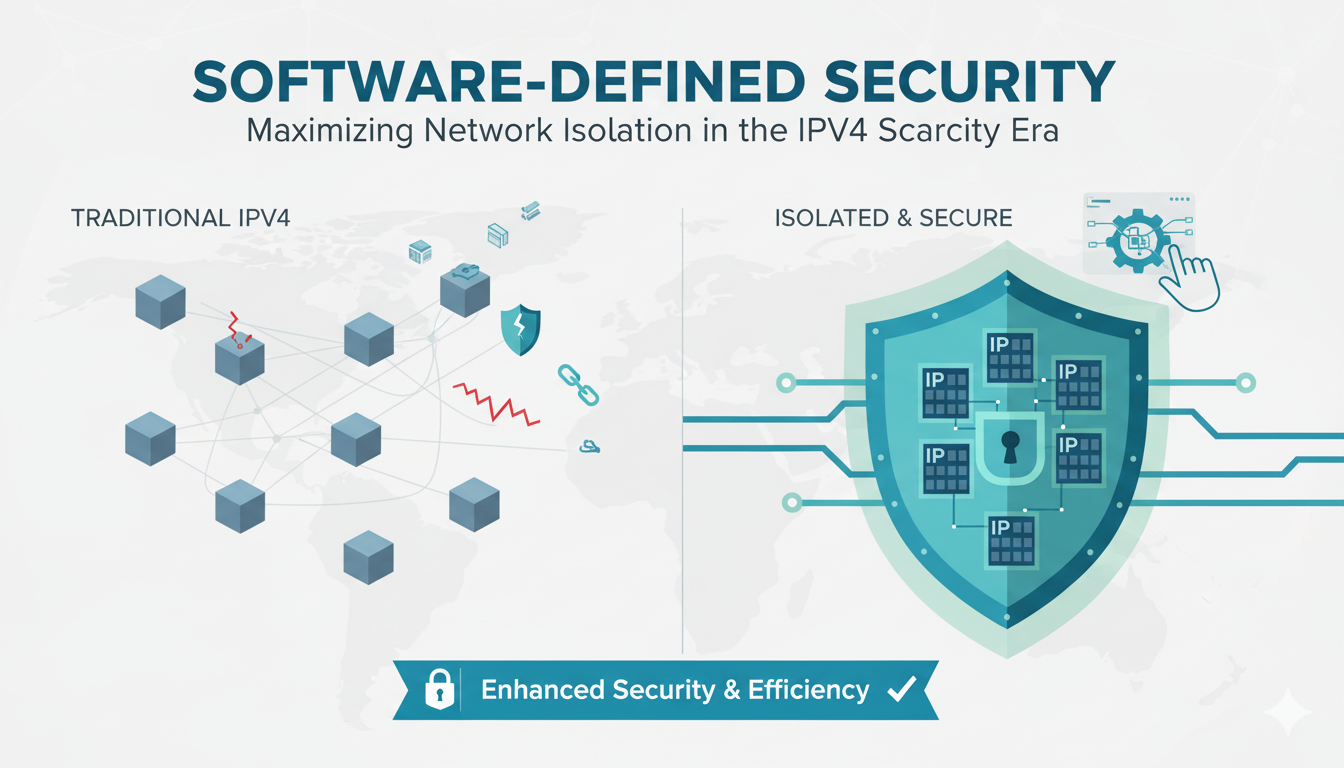
As CEO of InterLIR, I’ve witnessed firsthand how network isolation strategies

What is an ASN? ASN stands for Autonomous System Number. It is a unique identifier

Anycast DNS: A Leader’s Guide to Protecting Your Digital Infrastructure Executive

RPKI Certification: A Leader’s Guide to Internet Routing Security Executive

Executive Summary: What You Need to Know 🎯 Strategic Importance – Internet

When AWS DynamoDB failed in October 2025, thousands of businesses discovered that

Executive Summary: What You Need to Know 🎯 IP reputation directly impacts your
Live chat is provided by Intercom and is loaded only after you enable it. You can also contact us without enabling the chat.