Hello, friends and colleagues! 🌐
As someone who works daily with IPv4 address allocation and client network infrastructure needs at InterLIR, I’ve witnessed firsthand how the Internet’s remarkable success has created an unexpected paradox. The very foundations that made our global network so robust and scalable have now become barriers to fundamental change – a phenomenon known as network ossification.
Just last month, I was working with a telecommunications client in Germany who needed additional IPv4 addresses for their expanding infrastructure. During our consultation, they expressed frustration about the complexity of implementing newer protocols while maintaining compatibility with their existing systems. This conversation perfectly illustrated what network ossification means in practical terms: when networks become so successful and widespread that changing them becomes extraordinarily difficult and expensive.
Through my experience managing client accounts across diverse sectors – from cybersecurity firms in the USA to hosting providers in Turkey and Brazil – I’ve observed how this technological inertia affects every aspect of Internet infrastructure. From the basic Internet Protocol that we work with daily to transport mechanisms and application protocols, the very success of current standards has created deployment scales that make change a monumental challenge.

What I’ll explore in this analysis is how network ossification represents not just a technical curiosity, but a fundamental economic and engineering reality that shapes every decision we make in network infrastructure today. This understanding has become crucial for anyone working in IP resource management and network planning.
To understand where we are today, I need to share what I’ve learned about how we got here – and it’s a story that directly impacts every IPv4 transaction I handle at InterLIR.
The concept of network ossification isn’t new to telecommunications, and understanding its history helps explain why IPv4 addresses remain so valuable today. The Public Switched Telephone Network (PSTN) provides the classic example of how successful network architectures become resistant to change.
The telephone network was brilliantly engineered around human voice communication, using synchronous time-division multiplexing and 64kbps circuit-switched channels that perfectly matched speech characteristics. This “smart network, dumb devices” philosophy worked exceptionally well – the network handled all routing, switching, and connection complexity while end devices remained simple and inexpensive.
However, this same success created profound resistance to adaptation. When computer-to-computer communications became important, the telephone network’s assumptions about synchronous, constant-bit-rate communications proved suboptimal for bursty, asynchronous computer data. Solutions like fax machines and analog modems had to work within these constraints, creating workarounds rather than optimal solutions.
I encountered this legacy challenge recently while working with a client in the Czech Republic who was upgrading from legacy telecommunications infrastructure. Their existing systems were so deeply integrated with circuit-switched assumptions that migrating to packet-switched IP networks required extensive planning and phased implementation. This experience reinforced how architectural decisions made decades ago continue to influence network design today.
The Internet’s founders recognized these limitations and chose a radically different approach. By inverting the paradigm to “dumb network, smart devices,” they created a packet-switched network that stripped intelligence from the network core. This stateless packet-switching model eliminated time synchronization needs and centralized resource management, enabling larger, more scalable networks at lower cost.
The Internet Protocol was intentionally designed to be minimal and flexible, providing only basic packet delivery services. This simplicity was meant to prevent the network from becoming ossified around any particular service profile. By pushing intelligence to network edges, the architecture promised to support unlimited applications without requiring core infrastructure changes.
Working with hosting providers across our target markets – Germany, USA, Turkey, Brazil, and throughout Latin America – I’ve seen how this design philosophy continues to influence network architecture decisions. A SaaS provider in Canada recently explained to me how their application architecture leverages this edge intelligence principle, allowing them to optimize performance without requiring changes to underlying network infrastructure.

Yet even this flexible design has created its own ossification challenges. The Internet Protocol itself has become resistant to change, as evidenced by the ongoing IPv4 to IPv6 transition challenges that directly impact our daily work at InterLIR.
Another client scenario that illustrates this point involved a gaming company in Estonia. They needed additional IPv4 addresses for their expanding player base, but when I discussed IPv6 options, they explained that their existing game servers, client software, and network monitoring tools were all built around IPv4 assumptions. Migrating would require coordinating changes across multiple systems, third-party integrations, and player devices – a complexity that made IPv4 expansion the more practical immediate solution.
The research I’ve been analyzing reveals how network ossification manifests in today’s Internet infrastructure, and these patterns directly influence the IPv4 address market dynamics I observe daily.
The IPv4 to IPv6 transition provides the most compelling example of network ossification in action. When IPv4 was designed in the 1970s, 32-bit addresses seemed more than adequate for anticipated computer networking scale. The explosive Internet growth in the 1990s quickly revealed these limitations, leading to IPv6’s proposal in 1995.
The scale of this challenge has grown exponentially. When IPv6 was proposed, the Internet was significantly smaller than today’s massive network with billions of connected devices. Yet despite years of availability, IPv6 adoption remains limited across the global Internet.
This slow adoption rate demonstrates how deployment scale creates resistance to change, even when technical benefits are clear and need is urgent. In my role at InterLIR, I see this challenge daily. Companies continue requesting IPv4 addresses because their existing infrastructure, applications, and operational procedures are built around IPv4 assumptions.
A telecommunications provider in Spain recently shared their perspective during our consultation. They explained that while they support IPv6 technically, their customer support systems, billing platforms, and network monitoring tools all require IPv4 compatibility. Maintaining dual-stack operations increases complexity and costs, while retiring IPv4 isn’t feasible until their entire ecosystem supports IPv6.
This creates what the research describes as a “stable but suboptimal equilibrium” – networks supporting dual-stack operation cannot retire IPv4 until IPv4-only networks upgrade, while those IPv4-only networks often lack immediate incentives to add IPv6 support. This dynamic directly drives the continued demand for IPv4 addresses that we serve at InterLIR.
The transport layer presents another significant ossification example. The Internet’s two primary transport protocols, UDP and TCP, have remained largely unchanged since inception, despite evolving application requirements that could benefit from alternative approaches.
TCP’s remarkable flexibility made it the Internet’s workhorse protocol, but this same flexibility represents a compromise that may not be optimal for specific use cases. Modern web applications often require loading multiple components from the same server, creating inefficiencies in TCP’s connection-oriented model. Each HTTP request traditionally required a new TCP connection with associated Transport Layer Security handshakes, creating significant overhead.
A cybersecurity firm in the UAE recently described this challenge during our IPv4 consultation. Their security monitoring applications generate thousands of small data requests, and TCP’s connection overhead significantly impacts performance. They’ve optimized their applications to work within these constraints, but acknowledged that purpose-built protocols could be more efficient.
While HTTP/2 and HTTP/3 have addressed some issues through multiplexing, they also reveal limitations of building new functionality on existing protocols. HTTP/2’s multiplexing over single TCP connections can create head-of-line blocking, where delays in one stream affect all others. HTTP/3’s adoption of QUIC represents an attempt to address these limitations, but its deployment faces the same ossification challenges as IPv6.
The widespread deployment of Network Address Translation devices exemplifies how practical solutions to immediate problems create new forms of ossification. NATs were introduced to address IPv4 address scarcity by allowing multiple devices to share a single public address through port multiplexing.
While NATs successfully extended IPv4’s viability, they created new deployment constraints. NATs typically only support UDP and TCP protocols, dropping packets using other transport protocols. This “NAT ossification” makes it extremely difficult to deploy new transport protocols, as they cannot traverse the NAT devices now ubiquitous in IPv4 networks.
The irony is that NATs were originally intended as a temporary solution to address IPv4 limitations while IPv6 transition proceeded. Instead, they’ve become permanent fixtures that actively impede both IPv6 adoption and transport protocol innovation.
A hosting provider in Poland illustrated this challenge perfectly. They use NAT extensively to maximize their IPv4 address utilization, but this creates constraints for customers wanting to deploy applications using newer protocols. The provider must balance IPv4 efficiency with protocol flexibility, often choosing IPv4 optimization because it provides immediate, measurable benefits.

This dynamic reinforces why IPv4 addresses remain valuable assets. Rather than being obsoleted by newer technologies, IPv4’s limitations have created workarounds that actually increase its importance in current network architectures.
Through my work with diverse clients across cybersecurity, telecommunications, hosting, SaaS, VPN, gaming, marketing, and business intelligence sectors, I’ve observed consistent patterns in how organizations approach network ossification challenges.
Network ossification fundamentally stems from economic considerations. Each network element represents an investment in specific capabilities, and modifying these capabilities incurs costs. As networks grow in scale, the aggregate cost of change increases proportionally, while benefits often remain fixed or grow more slowly.
This economic reality creates a rising threshold for protocol changes. New protocols must not only demonstrate technical superiority but must also justify enormous costs of upgrading deployed infrastructure. The larger the network, the higher this threshold becomes, making incremental improvements increasingly difficult to justify.
Organizations consistently apply practical decision-making frameworks when evaluating network changes. They assess immediate operational needs, compatibility requirements, migration costs, and business continuity risks. In most cases, optimizing existing IPv4 infrastructure provides better return on investment than implementing newer protocols.
The Internet’s global scale creates unique challenges for protocol evolution. Unlike enterprise networks where changes can be coordinated systematically, the Internet spans multiple administrative domains with varying upgrade cycles, priorities, and capabilities.
This distributed ownership model means no single entity can mandate protocol changes. Instead, upgrades must be voluntary and backward-compatible, further constraining feasible changes. The result is a system where major improvements are often blocked by the need to maintain compatibility with the least capable components.
Industry decision-makers recognize these constraints and adapt their strategies accordingly. Rather than waiting for coordinated protocol transitions, they focus on optimizing current infrastructure and implementing incremental improvements that provide immediate value.
The commercial ecosystem surrounding Internet infrastructure creates additional ossification pressures. Equipment vendors face pressure to minimize costs and maximize compatibility, leading to conservative design choices that avoid challenging existing deployment assumptions.
Network operators prioritize stability and predictability over innovation. The complexity of modern networks makes change risky and expensive, creating strong incentives to maintain the status quo unless compelling business cases exist for specific improvements.
These market dynamics reinforce the value of IPv4 addresses as stable, proven network resources. Organizations can invest in IPv4 infrastructure with confidence that it will remain compatible and supported across the entire Internet ecosystem.
Based on my analysis of current network ossification trends and extensive client interactions, I can project several key implications for business strategy and network infrastructure planning.
The research clearly demonstrates that network ossification will continue to sustain IPv4 address demand for the foreseeable future. Rather than being displaced by newer protocols, IPv4’s embedded position in Internet infrastructure makes it increasingly valuable as a stable, universally compatible resource.
Organizations across all sectors continue to require IPv4 addresses for new deployments, geographic expansion, and infrastructure scaling. The ossification phenomenon means that even as newer protocols become available, IPv4 compatibility remains essential for reaching the entire Internet user base.
My projections based on current market dynamics suggest that IPv4 addresses will maintain their value as critical network resources. The combination of limited supply (4.3 billion possible combinations) and sustained demand driven by ossification creates a stable market foundation.
Organizations should develop network strategies that acknowledge ossification realities while positioning for future evolution. This includes optimizing IPv4 resource utilization, implementing efficient address management practices, and maintaining flexibility for gradual protocol adoption.
Key strategic considerations include:
Based on successful client implementations, I recommend a phased approach to addressing network ossification challenges:
Phase 1: Assessment and Planning
Phase 2: Optimization and Efficiency
Phase 3: Strategic Positioning
A recent client success story illustrates these principles in action. A business

Vladislava Shadrina
Customer Account Manager

A Beginner’s Guide to Subnetting IPv4 and IPv6 Addresses Subnetting is a critical

Why IPv4 Leasing Is Becoming the Smart Choice for Businesses in 2025 1. Introduction
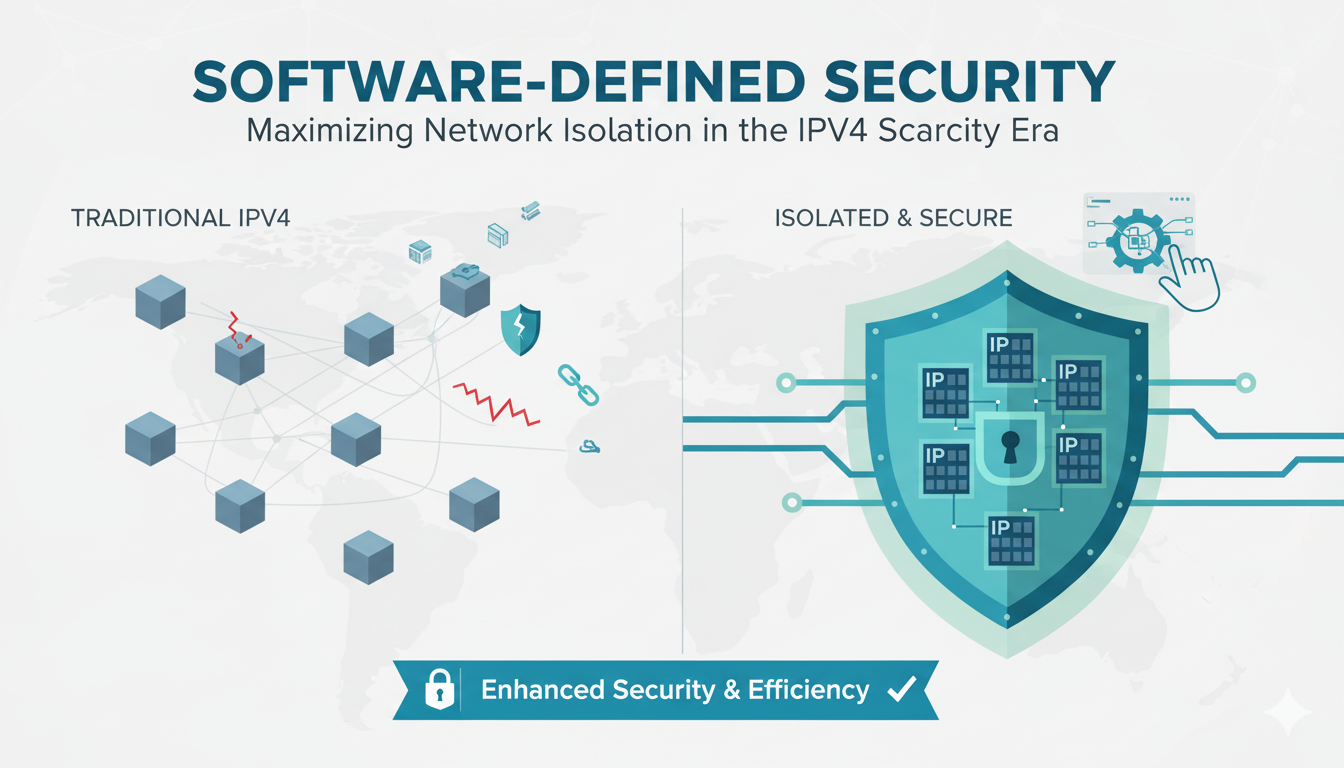
As CEO of InterLIR, I’ve witnessed firsthand how network isolation strategies

What is an ASN? ASN stands for Autonomous System Number. It is a unique identifier

Anycast DNS: A Leader’s Guide to Protecting Your Digital Infrastructure Executive

RPKI Certification: A Leader’s Guide to Internet Routing Security Executive

Executive Summary: What You Need to Know 🎯 Strategic Importance – Internet

When AWS DynamoDB failed in October 2025, thousands of businesses discovered that

Executive Summary: What You Need to Know 🎯 IP reputation directly impacts your
Live chat is provided by Intercom and is loaded only after you enable it. You can also contact us without enabling the chat.