Last month, while helping a client troubleshoot their IPv4 address allocation for a new web service deployment, I found myself deep in a conversation about HTTP protocol evolution. The client, a German hosting provider expanding their services, was concerned about how different HTTP versions would impact their IPv4 resource planning. This got me thinking about how protocol bootstrapping—the process of negotiating which HTTP version to use—has become increasingly complex, and more importantly, how it affects network resource allocation decisions that we deal with at InterLIR.
The evolution from HTTP/1.1 to HTTP/3 represents one of the most significant shifts in web infrastructure since the early internet days. But here’s what caught my attention: despite all the technical advances, the fundamental challenge remains the same—efficiently managing network resources, including IPv4 addresses, to support these evolving protocols.

HTTP/1.1 continues to serve as the universal fallback mechanism that every web client and server must support. In my experience at InterLIR, I’ve observed how various hosting providers and telecommunications companies across Germany, USA, and other markets we serve rely on this protocol as the common denominator for initial connection establishment.
What’s fascinating is how HTTP/1.1’s simplicity becomes both its strength and limitation. The protocol operates over standard TCP connections using human-readable headers, making it debuggable and implementable across diverse platforms. However, its design predates today’s multimedia-rich web applications, creating performance bottlenecks that drive demand for more IPv4 addresses.
I’ve learned about a Brazilian SaaS company that was experiencing connection issues due to HTTP/1.1’s head-of-line blocking problem. Their solution? Scaling horizontally by acquiring additional IPv4 address blocks to distribute load across multiple endpoints. This approach, while effective, highlighted how protocol limitations directly impact IP resource requirements.
The relationship between HTTP protocol efficiency and IPv4 address consumption is more direct than many realize. When protocols can’t efficiently multiplex connections, organizations compensate by deploying more servers with unique IP addresses. This creates additional demand in an already constrained IPv4 market.

Before diving into HTTP version upgrades, the fundamental shift from HTTP to HTTPS has reshaped how we think about network infrastructure. This migration represents one of the most significant security improvements in web infrastructure over the past decade, and it’s had direct implications for IPv4 address management.
The most common transition mechanism involves server-side redirects using 3xx status codes. When clients make HTTP requests, servers respond with 301 or 307 redirects pointing to HTTPS versions. While effective, this approach introduces latency costs—clients must establish new TCP connections, complete TLS handshakes, and resubmit requests.
At InterLIR, we’ve seen this challenge with a Turkish telecommunications provider who was migrating their customer portal to HTTPS-only. The redirect overhead was causing user experience issues, particularly for customers on slower networks. The solution involved optimizing their IPv4 address allocation to support geographically distributed HTTPS endpoints, reducing the impact of connection establishment overhead.
HTTP Strict Transport Security (HSTS) policies help mitigate future redirect overhead by instructing clients to automatically upgrade subsequent requests to HTTPS. The HSTS preload list takes this further by hard-coding domains into browser codebases, ensuring first-time visitors automatically connect via HTTPS.
From a network resource perspective, the HTTPS migration has increased the importance of IPv4 address reputation. Clean IP addresses with good reputation scores become more valuable when supporting encrypted connections, as they’re less likely to be blocked by security systems or flagged by reputation services.

HTTP/2 addresses many performance limitations inherent in HTTP/1.1 while maintaining backward compatibility. Built on Google’s SPDY experimental protocol, HTTP/2 uses binary framing instead of text-based headers, reducing parsing overhead and enabling more efficient wire protocols.
The protocol’s request and response multiplexing capability allows multiple HTTP exchanges over a single TCP connection, eliminating head-of-line blocking at the application layer. This is where things get interesting from an IPv4 resource management perspective—better connection efficiency means organizations can potentially serve more users with fewer IP addresses.
Application-Layer Protocol Negotiation (ALPN) serves as the primary mechanism for HTTP/2 protocol negotiation. Unlike HTTP/1.1’s upgrade mechanism, ALPN negotiation occurs during the TLS handshake, allowing clients and servers to agree on protocols before establishing connections. This eliminates protocol upgrade requests after connection establishment, reducing latency and improving efficiency.
A Canadian hosting company that worked with InterLIR saw significant reduction in their IPv4 address requirements after implementing HTTP/2 across their infrastructure. The improved connection efficiency allowed them to consolidate services that previously required separate IP addresses for performance reasons.
The Alt-Svc header provides a mechanism for servers to advertise alternative protocol endpoints, informing clients about additional protocol options for future connections. This header’s caching behavior allows clients to remember server capabilities across sessions, optimizing future connection establishment.
However, HTTP/2’s benefits aren’t automatic. Organizations must carefully plan their IPv4 address allocation to take advantage of the protocol’s multiplexing capabilities. This often involves consolidating services behind fewer IP addresses while ensuring adequate performance and redundancy.
HTTP/3 represents a paradigm shift by adopting QUIC (Quick UDP Internet Connections) as its underlying transport mechanism. This change from TCP to UDP fundamentally alters connection establishment and maintenance, with significant implications for network infrastructure planning.
QUIC addresses several TCP limitations by implementing custom congestion control algorithms and including built-in encryption. Connection migration support allows QUIC connections to survive network changes without requiring new connection establishment—particularly valuable for mobile applications and dynamic network environments.
The implementation complexity of HTTP/3 is substantial. Unlike HTTP/2, which leverages existing TLS libraries, HTTP/3 requires QUIC-enabled implementations that remain experimental in many environments. This complexity has slowed adoption compared to HTTP/2’s more straightforward implementation path.
Network infrastructure compatibility presents another challenge. Many corporate firewalls, proxies, and middleboxes designed for TCP traffic may not properly handle QUIC’s UDP-based communication patterns. Organizations must evaluate their network infrastructure before deploying HTTP/3 in production environments.
Despite implementation challenges, HTTP/3 offers compelling performance advantages. The protocol’s 0-RTT connection establishment can significantly reduce latency for returning visitors. Improved loss recovery mechanisms and per-stream flow control eliminate many TCP-level inefficiencies that impact HTTP/2 performance.
The introduction of HTTPS DNS resource records represents a significant advancement in protocol discovery mechanisms. These records allow servers to advertise supported protocols and connection parameters directly through DNS, enabling clients to make informed protocol decisions before establishing connections.
HTTPS DNS records include SvcParamKey values specifying supported application protocols, connection hints, and service parameters. The alpn parameter indicates which HTTP versions the server supports, enabling clients to attempt connections using the most appropriate protocol version.
This approach eliminates trial-and-error protocol negotiation and reduces connection establishment latency. Clients can parse DNS responses to determine optimal connection strategies, potentially avoiding unnecessary protocol upgrade sequences.
Modern browsers implement sophisticated connection strategies balancing performance optimization with compatibility requirements. The “Happy Eyeballs” approach, originally designed for IPv4/IPv6 dual-stack connectivity, has been adapted for HTTP protocol selection.
Different browsers implement protocol discovery with varying approaches. Chrome tends to be aggressive in adopting new protocols, often racing multiple connection types simultaneously. Firefox implements more conservative strategies, particularly when DNS-over-HTTPS isn’t available. Safari balances performance optimization with stability requirements.

The performance implications of HTTP protocol upgrades extend beyond simple latency measurements. Organizations must consider connection establishment overhead, resource utilization, and user experience across diverse network conditions.
Each protocol upgrade introduces specific overhead characteristics. HTTP/1.1 to HTTPS migration requires TLS handshake completion, adding approximately one round-trip time to connection establishment. HTTP/2 upgrade via ALPN occurs during TLS negotiation, avoiding additional round trips but requiring compatible implementations.
HTTP/3’s 0-RTT capability can eliminate connection establishment overhead entirely for returning visitors, but initial connections may require additional UDP probing and congestion control initialization. The net performance impact depends heavily on connection patterns and client behavior.
Advanced HTTP protocols can impact server resource utilization in complex ways. HTTP/2’s multiplexing capabilities may increase memory usage due to concurrent stream management, while potentially reducing CPU overhead by eliminating connection establishment costs.
In my customer support role at InterLIR, I’ve learned about a US-based cybersecurity company that was evaluating HTTP/3 deployment for their threat intelligence platform. Their analysis showed that while HTTP/3 offered latency improvements, the increased CPU requirements for QUIC processing meant they needed to consider their IPv4 address strategy carefully. This highlighted how protocol advances can sometimes increase rather than decrease IP resource requirements.
Content delivery networks (CDNs) play a crucial role in protocol optimization, terminating advanced protocols close to end users while maintaining efficient origin connections. Edge computing strategies can leverage HTTP/3’s connection migration capabilities to maintain session continuity across geographic regions.
From an IPv4 address management perspective, organizations must consider how protocol efficiency affects their IP resource requirements. More efficient protocols may reduce the need for multiple IP addresses, while implementation complexity might require additional addresses for testing and gradual deployment.
The HTTP protocol ecosystem continues evolving rapidly, with ongoing developments in performance optimization, security enhancement, and deployment simplification. Several IETF working groups are developing extensions to existing HTTP protocols, including HTTP/2 Push optimization, improved header compression algorithms, and enhanced multiplexing capabilities.
HTTP/3 extensions focusing on improved connection migration, enhanced security features, and better integration with edge computing infrastructure are also in development. These extensions may provide additional performance and functionality benefits without requiring fundamental protocol changes.
The maturity of HTTP protocol implementations varies significantly across platforms and environments. While HTTP/2 has achieved widespread adoption and stable implementations, HTTP/3 remains in various stages of experimental or limited production deployment across different ecosystems.
For organizations planning HTTP protocol upgrades, careful consideration of specific requirements, network infrastructure, and user base characteristics is essential. While newer protocols offer compelling advantages, successful deployment requires thorough testing, careful performance analysis, and ongoing operational management.
The journey from HTTP/1.1 to HTTP/3 isn’t merely a technical upgrade—it’s a fundamental shift in web communication approaches. Success requires not only technical expertise but also strategic planning, careful implementation, and ongoing commitment to web infrastructure best practices. As someone working in customer support at InterLIR, I’ve learned how these protocol evolutions directly impact IPv4 address requirements and management strategies.
Feel free to reach out to me anytime if you’re planning HTTP protocol upgrades and need guidance on IPv4 resource planning. I’m always open to discussing how these technical advances affect practical network infrastructure decisions! ✅

Georgy Masterov
Business analyst

A Beginner’s Guide to Subnetting IPv4 and IPv6 Addresses Subnetting is a critical

Why IPv4 Leasing Is Becoming the Smart Choice for Businesses in 2025 1. Introduction
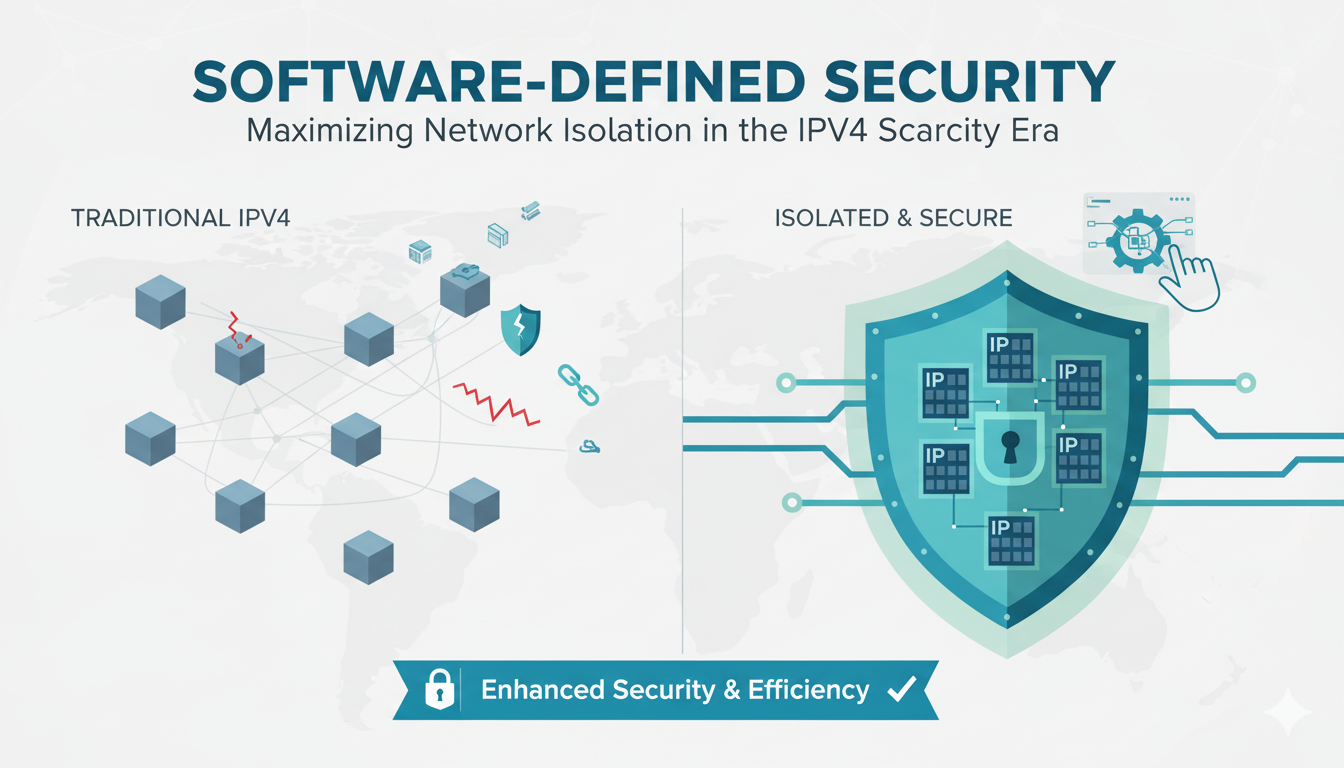
As CEO of InterLIR, I’ve witnessed firsthand how network isolation strategies

What is an ASN? ASN stands for Autonomous System Number. It is a unique identifier

Anycast DNS: A Leader’s Guide to Protecting Your Digital Infrastructure Executive

RPKI Certification: A Leader’s Guide to Internet Routing Security Executive

Executive Summary: What You Need to Know 🎯 Strategic Importance – Internet

When AWS DynamoDB failed in October 2025, thousands of businesses discovered that

Executive Summary: What You Need to Know 🎯 IP reputation directly impacts your
Live chat is provided by Intercom and is loaded only after you enable it. You can also contact us without enabling the chat.