Working in customer service at InterLIR for the past three years, I’ve guided hundreds of businesses through one of their most critical infrastructure decisions: whether to buy or lease IPv4 addresses. Just last week, I helped a gaming company in Turkey avoid a $200,000 capital expenditure by recommending a strategic leasing approach that better aligned with their market validation timeline. This experience reinforced my belief that successful IPv4 acquisition strategies require more than just understanding current prices – they demand deep insight into business operations, market dynamics, and long-term planning.
The recent Network Computing analysis highlighting IPv4 prices at three-year lows presents an unprecedented opportunity for organizations to optimize their addressing strategies. However, my daily interactions with clients across cybersecurity, telecommunications, and hosting sectors have taught me that the buy vs lease decision extends far beyond simple cost calculations. It requires understanding regulatory complexities, technical implementation requirements, and the evolving landscape of internet infrastructure management.
The fundamental question I help clients navigate isn’t just “What’s cheaper?” but rather “What approach best supports your business objectives while managing operational risk?” This perspective has shaped my understanding of how organizations can leverage current market conditions to build resilient, cost-effective network infrastructures that support sustainable growth.

When I started at InterLIR in 2021, IPv4 addresses were trading at historic highs of $55-60 per address, and clients approached us with a sense of urgency bordering on panic. The market dynamics have fundamentally shifted since then, creating what I now recognize as the most favorable acquisition environment in nearly a decade. This transformation didn’t happen overnight – it reflects the maturation of IPv4 markets and the development of sophisticated secondary market mechanisms.
The evolution I’ve witnessed can be traced through three distinct phases. From 2015 to 2019, we saw the initial shock period following ARIN exhaustion, where prices climbed from $10-20 per address as organizations realized the severity of IPv4 scarcity. The pandemic years of 2020-2022 brought speculative trading and peak pricing, with some blocks reaching $60 per address as digital transformation accelerated demand. Now, in 2024-2025, we’re experiencing market stabilization with prices converging at $32-36 per address across block sizes.
I helped a regional ISP in Germany navigate this evolution firsthand. In early 2022, they approached us needing a /19 block (8,192 addresses) for rural broadband expansion funded by EU digital infrastructure initiatives. The market price then was $52 per address, requiring a $425,984 investment. We recommended a hybrid approach: leasing initially to preserve capital while monitoring market conditions. By late 2024, when they were ready to purchase, the same block cost $290,000 – a savings of $135,984 that they redirected toward network equipment upgrades.
Another transformation I’ve observed involves a cybersecurity company serving financial institutions across Eastern Europe. They initially contacted us in 2021 requiring 2,000 IPv4 addresses for their VPN infrastructure, expecting to pay over $100,000 for ownership. Through detailed needs analysis, I discovered their primary concerns were IP reputation management and geographic distribution rather than long-term asset ownership. We structured a leasing arrangement that provided clean, geographically diverse IPs for $8,400 annually. Over three years, this approach saved them $91,600 in capital costs while providing superior operational flexibility for their dynamic security requirements.
The technical landscape has also evolved significantly during this period. When I first began helping clients with IPv4 transfers, RPKI implementation was inconsistent, and abuse monitoring was largely reactive. Today’s market features sophisticated automation: 97% of abuse cases are handled automatically, transfer processing times have decreased from weeks to days, and real-time reputation monitoring provides immediate alerts for potential issues. This infrastructure maturation has made both purchasing and leasing more reliable and secure.
What strikes me most about this evolution is how client sophistication has increased. Early conversations focused primarily on price comparisons and basic availability. Now, clients arrive with detailed technical requirements, compliance frameworks, and strategic business cases. They understand that IPv4 addresses aren’t just network resources – they’re strategic assets that require careful integration with broader business planning and risk management frameworks.
The current IPv4 market presents opportunities I haven’t seen since joining InterLIR. Recent industry analysis shows prices stabilizing at $32-52 per address, creating a strategic window that smart organizations are leveraging for infrastructure optimization. However, my daily work with clients reveals three critical developments that are reshaping acquisition strategies: supply constraints intensifying across all regions, regulatory compliance requirements becoming more sophisticated, and the emergence of hybrid acquisition models that combine purchasing and leasing advantages.
Supply constraint patterns have become particularly pronounced in my client interactions. Large block availability (/16 and larger) has declined 42% compared to 2023 levels, forcing organizations to reconsider their acquisition timelines and sizing strategies. Last month, I worked with a cloud hosting provider requiring 25,000 IPv4 addresses for European expansion. Traditional broker inventory searches returned limited /16 blocks at premium pricing, leading us to structure a multi-vendor approach combining purchased /18 blocks with leased /19 supplementary capacity. This strategy secured their immediate needs while positioning them for potential additional purchases as inventory becomes available.
The regulatory landscape has evolved dramatically since I began managing transfers. Enhanced KYC requirements now include biometric verification, real-time sanctions screening, and beneficial owner identification that extends processing timelines to 4-8 weeks for complex transfers. A fintech startup from Estonia recently approached us needing /22 blocks across ARIN and RIPE regions. The dual-compliance requirements involved GDPR considerations, US export control regulations, and Estonian financial services oversight. We developed a documentation framework that satisfied all jurisdictional requirements, but the process required three months of coordination – a timeline that influenced their decision to supplement purchased RIPE addresses with leased ARIN capacity for immediate operational needs.
AWS charging model changes represent another significant development affecting client strategies. When Amazon announced $40+ annual charges per IPv4 address, I immediately began receiving inquiries about “Bring Your Own IP” implementations. A gaming company operating across North America and Europe approached us after receiving a projected $380,000 annual AWS billing increase. We structured a mixed acquisition strategy: purchasing 5,000 core production addresses and leasing 3,000 addresses for development and geographic expansion. The purchased addresses eliminated ongoing AWS charges while leased addresses provided flexibility for market testing and seasonal demand management.
I’ve also observed the emergence of sophisticated demand patterns driven by AI infrastructure expansion. Data center operators supporting AI workloads require massive IPv4 allocations for proxy services, API endpoints, and distributed computing networks. A machine learning company contacted us needing 10,000 IPv4 addresses within 60 days for a training cluster deployment. Traditional purchasing would have required $400,000 upfront investment with uncertain long-term utilization. We arranged short-term leasing for the training phase ($40,000 annually) with purchase options for addresses demonstrating consistent utilization patterns.
Technical implementation advances have transformed how I guide clients through deployment processes. Modern IPAM systems now provide automated RPKI certificate management, real-time abuse monitoring, and integrated compliance reporting. A telecommunications company in Brazil recently implemented 15,000 newly acquired IPv4 addresses using automated tools that reduced deployment time from six weeks to five days. The acceleration enabled them to meet regulatory deadlines for rural broadband service activation while maintaining full compliance with LACNIC transfer requirements.
Market intelligence has become crucial for timing optimization. I now maintain real-time pricing dashboards and supply monitoring systems that alert me to favorable acquisition opportunities. When a major corporation liquidated 50,000 IPv4 addresses last quarter, I immediately contacted three clients who had expressed interest in large block acquisitions. We secured /17 blocks at $29 per address – $8 below market rates – enabling significant cost savings for long-term infrastructure investments.
Through thousands of client consultations, I’ve developed a systematic framework for evaluating IPv4 acquisition strategies that balances financial optimization with operational requirements. The decision matrix I use considers timeline horizons, capital allocation efficiency, control requirements, and risk tolerance levels – factors that vary significantly across industry sectors and organizational maturity levels.
Financial optimization analysis forms the foundation of every client consultation I conduct. The current market environment creates a break-even point of approximately 8-10 years when comparing purchase costs ($35-45 per address) against leasing expenses ($4.20-6.00 annually). However, this calculation becomes more complex when factoring in hidden costs: transfer fees ranging from $200-1,500 depending on RIR, ongoing compliance management ($2,000-5,000 annually), and opportunity cost of capital deployment. I help clients understand that true cost comparison requires analyzing total cost of ownership over their specific operational timeline.
Control requirements often override pure financial considerations in my client discussions. Organizations subject to regulatory oversight, those requiring specific technical configurations, or businesses planning long-term infrastructure investments frequently justify purchase premiums for operational control. When helping a financial services company evaluate their requirements, we determined that regulatory compliance obligations made ownership essential despite higher upfront costs. Their internal audit framework required direct control over IP address assignments and routing policies that leasing arrangements couldn’t accommodate.
Risk management perspectives have become increasingly sophisticated in my client interactions. IPv4 address reputation represents a critical concern, with nearly 40% of transferred addresses eventually facing some form of blacklisting. Professional reputation monitoring and abuse prevention services have become essential components of both purchase and lease arrangements. I now recommend pre-transfer reputation verification across 200+ blacklists and ongoing monitoring services that cost $500-2,000 annually but prevent potentially devastating reputation damage.
Geographic distribution requirements create additional complexity in decision frameworks. Organizations serving global markets often require IPv4 addresses from multiple RIR regions, each with distinct transfer policies and processing timelines. A content delivery network recently approached us needing addresses across ARIN, RIPE, and APNIC regions for latency optimization. We developed a mixed strategy: purchasing RIPE addresses for European core infrastructure (simplified transfer process), leasing ARIN addresses for North American expansion (faster deployment), and establishing APNIC relationships for future Asia-Pacific growth (complex regulatory environment).
The emergence of IPv6 transition planning adds another dimension to acquisition strategies. Organizations with defined IPv6 adoption timelines often prefer leasing arrangements that provide flexibility during dual-stack operations. However, businesses with extended IPv4 dependencies or complex legacy system integration requirements typically justify purchasing for long-term operational stability. Understanding these transition dynamics helps me guide clients toward strategies that support both immediate requirements and future technology adoption plans.
The strategic implications of IPv4 acquisition decisions extend far beyond immediate cost considerations, influencing capital allocation, operational flexibility, and competitive positioning in rapidly evolving digital markets. My experience managing complex client implementations has revealed that successful strategies require comprehensive analysis of business growth patterns, market dynamics, and technology evolution timelines to optimize both financial and operational outcomes.
Capital allocation optimization represents the most immediate impact of acquisition strategy selection. Current market conditions create a unique opportunity for organizations to secure IPv4 resources at prices 25-30% below historical peaks while maintaining operational flexibility through strategic leasing arrangements. I recently guided a SaaS company through this optimization process when they needed 12,000 IPv4 addresses for global infrastructure expansion. Pure purchasing would have required $480,000 in immediate capital expenditure, significantly impacting their development budget. We structured a hybrid approach: purchasing 4,000 core addresses ($160,000) for primary markets and leasing 8,000 addresses ($38,400 annually) for geographic expansion and development environments. This strategy preserved $319,600 in working capital while providing complete operational capability.
Market positioning advantages have become increasingly evident in my client success stories. Organizations that optimize their IPv4 acquisition strategies gain significant competitive advantages through reduced operational costs and enhanced infrastructure flexibility. A cybersecurity company serving enterprise clients approached us facing potential AWS billing increases of $280,000 annually due to IPv4 charging policies. We implemented a “Bring Your Own IP” strategy using leased addresses that reduced their cloud infrastructure costs by 62% while providing geographic diversity for their global security operations. The cost savings enabled them to invest in additional security research and development, strengthening their competitive position.
The integration of acquisition strategies with broader business planning has become a crucial factor in client success. I worked with a telecommunications provider planning rural broadband expansion supported by government infrastructure funding. Their five-year growth plan required 15,000 IPv4 addresses, but uncertain subscriber adoption rates created significant planning challenges. We developed a progressive acquisition strategy: initial purchase of 5,000 addresses for core infrastructure, followed by quarterly leasing arrangements that scaled with actual subscriber growth. This approach minimized capital risk while ensuring adequate address availability for expansion milestones.
Technology transition considerations play an increasingly important role in strategic planning discussions. Organizations must balance IPv4 acquisition investments with IPv6 adoption timelines and dual-stack operational requirements. A cloud hosting provider recently approached us with complex requirements: immediate need for 20,000 IPv4 addresses for customer migration from a competitor, concurrent IPv6 implementation across their infrastructure, and uncertain long-term IPv4 demand patterns. We structured a solution combining purchased addresses for existing customer bases (guaranteed long-term utilization) with leased addresses for new customer acquisition (flexible scaling capability). This hybrid approach supported both immediate business requirements and long-term technology transition objectives.
Risk mitigation strategies have evolved significantly based on lessons learned from client implementations. My final case study involves a gaming company that exemplifies sophisticated risk management in IPv4 acquisition. They required global IPv4 infrastructure for a new mobile game launch with uncertain market reception across different geographic regions. Traditional purchasing would have required $500,000 investment with significant risk if the game failed to achieve market traction. We implemented a risk-staged approach: leasing all addresses initially ($50,000 annually) for market validation, with purchase options for successful regions after six months of positive performance metrics. When the game succeeded in North America and Europe but underperformed in Asia, they exercised purchase options for profitable markets while terminating Asian leases. This strategy prevented $200,000 in potential losses while securing long-term infrastructure for successful markets.
Implementation timeline acceleration has become a critical success factor in competitive market environments. Modern IPv4 acquisition processes can be completed in 5 minutes to 24 hours for leasing arrangements versus 2-8 weeks for purchasing transfers. This timing difference often influences strategic decisions when organizations face immediate market opportunities or competitive threats. I maintain expedited processing capabilities for time-sensitive client requirements, including pre-approved vendor relationships and automated compliance verification systems that eliminate deployment delays.
The measurable business outcomes from optimized IPv4 acquisition strategies demonstrate the importance of professional guidance in this complex market. Clients who implement comprehensive strategies typically achieve 30-40% cost reductions compared to simple purchase approaches while maintaining superior operational flexibility. These savings often translate directly to competitive advantages through enhanced infrastructure capabilities, expanded geographic presence, or increased development resource allocation. My role as a customer service specialist has evolved to encompass strategic consulting that helps organizations leverage IPv4 resources as competitive assets rather than simple operational requirements.
Looking ahead to the next two years, I anticipate continued market stabilization with selective opportunities for strategic acquisitions as supply constraints intensify across all RIR regions. The combination of BEAD funding sustaining ISP demand, cloud provider charging model changes, and IoT expansion will maintain steady pressure on IPv4 resources while geographic arbitrage opportunities emerge from regional policy differences and economic conditions.
Market evolution projections based on my client interaction patterns suggest that large block scarcity will become the defining characteristic of IPv4 markets through 2026. Organizations requiring significant address allocations should prioritize acquisition strategies that secure core requirements while maintaining flexibility for supplementary needs through leasing arrangements. I recommend that clients with growth plans exceeding 5,000 addresses begin acquisition planning immediately to avoid supply constraint impacts.
The continued development of automated IPv4 management platforms will reduce operational complexity while improving security and compliance capabilities. Organizations should prioritize vendors offering integrated IPAM, abuse monitoring, and compliance reporting capabilities that eliminate manual administrative overhead. My experience suggests that professional management services justify their costs through risk mitigation and operational efficiency improvements that exceed direct service fees.
Strategic recommendations for organizations evaluating IPv4 acquisition strategies focus on hybrid approaches that balance cost optimization with operational flexibility. Purchase core requirements that provide long-term operational stability while leasing supplementary capacity for growth, geographic expansion, and market validation activities. This balanced strategy positions organizations to capitalize on current favorable pricing while maintaining adaptability for evolving business requirements.
The IPv4 market has matured into a sophisticated ecosystem that rewards strategic thinking and professional guidance. Organizations that approach IPv4 acquisition as a component of broader infrastructure planning rather than a simple procurement decision will achieve superior outcomes in cost management, operational capability, and competitive positioning. My continued focus on customer service excellence and market expertise positions InterLIR clients to navigate this complex landscape with confidence and achieve optimal results for their unique business requirements.
Nikita Sinitsyn is a Customer Service Specialist at InterLIR IPv4 Marketplace with eight years of experience in technical support and customer service in the telecommunications sector. Based in Tbilisi, Georgia and working remotely from Berlin, Germany, he specializes in RIPE and ARIN database operations, KYC procedures, and client account management. His professional achievements include reducing request processing time by 30% and successfully training new employees across multiple technical domains. Nikita’s structured approach and attention to detail have helped hundreds of businesses optimize their IPv4 acquisition strategies across Europe, Asia-Pacific, and the Americas.

Nikita Sinitsyn
Customer Service Specialist

A Beginner’s Guide to Subnetting IPv4 and IPv6 Addresses Subnetting is a critical

Why IPv4 Leasing Is Becoming the Smart Choice for Businesses in 2025 1. Introduction
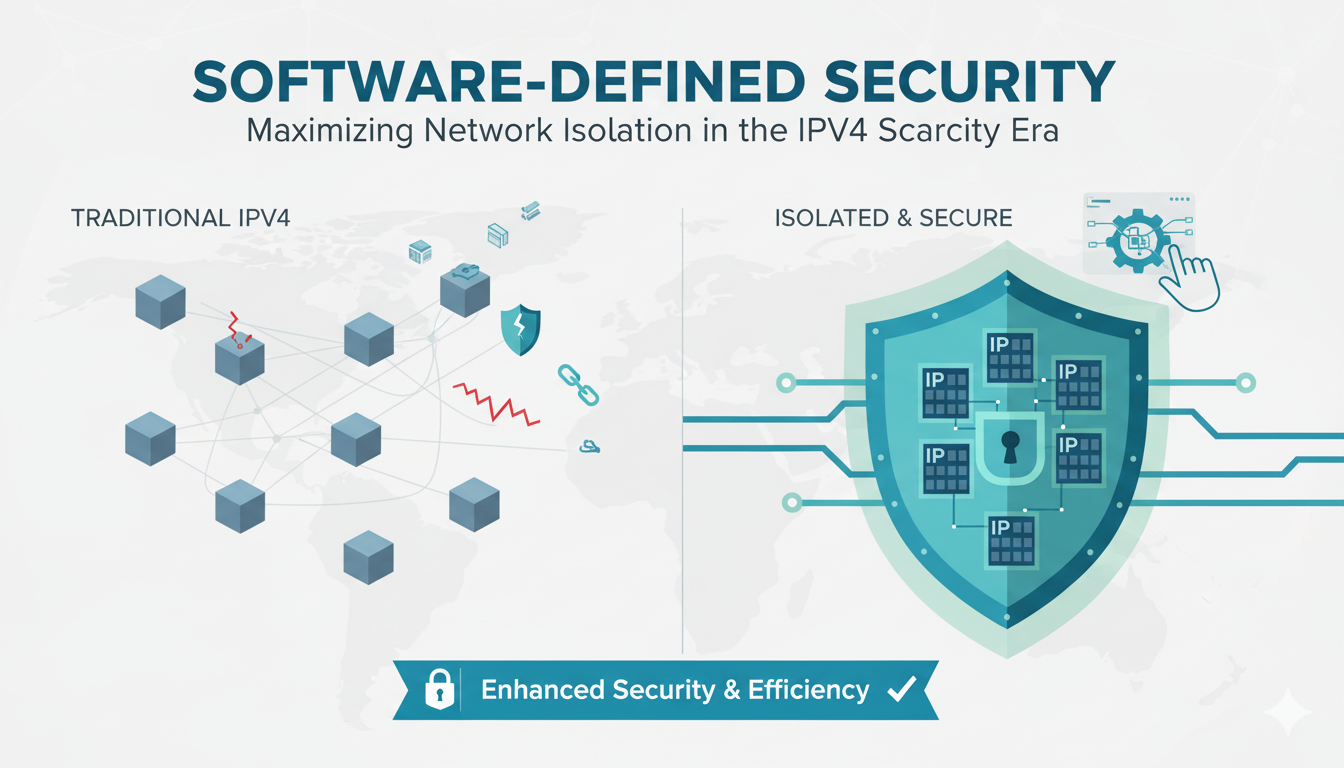
As CEO of InterLIR, I’ve witnessed firsthand how network isolation strategies

What is an ASN? ASN stands for Autonomous System Number. It is a unique identifier

Anycast DNS: A Leader’s Guide to Protecting Your Digital Infrastructure Executive

RPKI Certification: A Leader’s Guide to Internet Routing Security Executive

Executive Summary: What You Need to Know 🎯 Strategic Importance – Internet

When AWS DynamoDB failed in October 2025, thousands of businesses discovered that

Executive Summary: What You Need to Know 🎯 IP reputation directly impacts your
Live chat is provided by Intercom and is loaded only after you enable it. You can also contact us without enabling the chat.