Hello, friends and colleagues! 👋
Just last month, I helped a German hosting company discover that their seemingly clean IPv4 allocation was actually blacklisted across multiple reputation engines. Their email deliverability had dropped to 23% overnight, potentially affecting €450,000 in annual revenue. This scenario perfectly illustrates what I’ve observed throughout my work at InterLIR: IP address reputation has become the invisible force that determines not just operational success, but actual market value of IPv4 assets.
Recent data from APNIC shows that IPv4 transfers have reached new levels of complexity, with 25% of transactions involving fragmentation of original allocations. Meanwhile, RIPE NCC’s enhanced focus on anti-abuse policies and security measures demonstrates how reputation management has evolved from reactive incident response to strategic asset protection. With clean IPs now commanding significant premium pricing, understanding comprehensive reputation management has become essential for anyone involved in the IPv4 marketplace. 🌐

Through my daily interactions with clients across Europe, Asia-Pacific, and the Americas, I’ve seen how proper reputation management strategies can transform a company’s IPv4 investments from potential liability into competitive advantage. Let me share what I’ve learned about how this critical discipline has evolved into today’s sophisticated marketplace dynamics.
When I first started working in IP resource management, abuse mitigation was largely reactive—companies would respond to incidents after they occurred, often scrambling to get delisted from blacklists. The approach was manual, time-consuming, and frankly, quite expensive. According to IANA’s historical records, abuse reports were handled on ad-hoc basis with limited coordination between organizations.
The evolution has been remarkable to witness. Traditional approaches relied on basic monitoring tools and manual response procedures. I remember helping a hosting provider in Estonia who was spending €15,000 monthly just on manual abuse response activities. Their team of three security specialists was overwhelmed, response times averaged 48-72 hours, and they were losing customers faster than they could resolve reputation issues.
The shift toward automated systems has been transformative. According to RIPE NCC’s 2024 activity reports, they’ve significantly enhanced their focus on anti-abuse policies and database accuracy efforts to combat fraudulent registrations. This reflects industry-wide recognition that IP reputation requires systematic approach rather than sporadic intervention. 🔧
I worked with a telecommunications company in Poland that illustrates this evolution perfectly. They initially approached us in 2022 with a /20 allocation where approximately 40% of addresses showed degraded reputation across various blacklists. Their legacy approach involved manual ticket systems, inconsistent response procedures, and no proactive monitoring. Customer complaints were mounting, email services were unreliable, and they were considering abandoning certain IP ranges entirely.
The transformation took eight months and required implementing comprehensive monitoring across multiple reputation engines, establishing standardized response procedures, and creating customer education programs. The results spoke volumes: abuse incidents decreased by 67%, customer satisfaction scores improved from 6.2 to 8.9, and they recovered reputation across 91% of their previously problematic address space. More importantly, the improved reputation enabled them to secure three major enterprise contracts worth €2.8 million annually.
Another client story from the Czech Republic demonstrates how historical neglect of IP reputation can create long-term business challenges. A regional ISP had inherited IPv4 space from multiple previous providers, with no comprehensive documentation of historical usage patterns. When they approached us for expansion planning, we discovered that 15% of their /19 allocation was listed across major spam databases, while another 22% showed suspicious activity patterns that could trigger future blacklisting.

The historical cleanup process revealed fascinating insights about how abuse patterns develop over time. Addresses used for legitimate business purposes for 12-18 months build positive reputation momentum that provides resilience against occasional false positives. However, any history of abuse creates persistent “reputation debt” that requires active management to overcome. This ISP ultimately invested €125,000 in comprehensive reputation rehabilitation, but the clean address space they achieved enabled IPv4 monetization opportunities worth €890,000 over three years.
What I’ve observed is that companies who understood this evolution early—who recognized that IP reputation requires the same strategic attention as financial assets—have gained significant competitive advantages. Those who continued treating abuse mitigation as reactive IT function found themselves increasingly disadvantaged in both operational performance and asset valuation.
The current landscape of IPv4 reputation management reflects sophisticated understanding of how digital assets require active protection. APNIC’s recent analysis shows that IPv4 transfers reached 309 million addresses (equivalent to 18.4 /8s) since 2012, representing 8% of total delegated IPv4 space. This massive transfer volume creates complex reputation tracking challenges that require advanced monitoring systems. 📊
RIPE NCC’s implementation of stricter anti-abuse policies in 2024 demonstrates the industry’s evolution toward comprehensive reputation protection. Their enhanced database accuracy efforts and expanded RPKI adoption reflect growing recognition that IP reputation affects not just operational performance, but fundamental asset value. Organizations implementing sophisticated reputation management report 40-60% reduction in incident response costs while achieving superior reputation scores across major monitoring systems.
The technical sophistication has evolved dramatically. Modern reputation management now incorporates predictive analytics that can identify potential reputation issues before they manifest as external complaints. RIPE NCC’s focus on enhanced routing security through RPKI and improved Internet Routing Registry services reflects industry best practices that forward-thinking organizations are adopting across all sectors.
I recently worked with a cybersecurity firm in the United States that needed IPv4 space for their global threat intelligence collection network. The unique challenge was maintaining pristine reputation for customer-facing services while deliberately exposing honeypot addresses to malicious traffic for research purposes. This scenario required implementing sophisticated IP segregation strategies that traditional approaches couldn’t support.
Working with this client revealed how advanced reputation management enables business models that would be impossible with legacy approaches. We established dual-tier architecture where customer production traffic utilized premium IP space with comprehensive reputation protection, while research activities operated on separate “expendable” allocations designed for controlled exposure to threats. The implementation required integrating with 15 different threat intelligence feeds, automated traffic analysis systems, and real-time reputation monitoring across both IP pools.
The business impact was substantial. Their threat intelligence platform processes over 2.3 million malicious events monthly while maintaining 99.8% clean reputation on customer-serving IP addresses. This operational excellence enabled them to secure government contracts worth $4.7 million and establish partnerships with three Fortune 500 companies who require demonstrated security infrastructure capabilities.
Another fascinating case involved a SaaS provider in Singapore expanding into regulated markets across Asia-Pacific. They discovered that different countries have varying tolerance levels for IP reputation issues, with some regions immediately blocking any address that appeared on specific regional blacklists. The complexity required implementing geographically-aware reputation monitoring that tracked different reputation metrics for different markets.

The technical implementation involved reputation monitoring across 47 different regional databases, automated traffic routing based on source reputation scores, and predictive analytics that could forecast potential reputation issues 72-96 hours before they impacted service delivery. This sophisticated approach enabled them to maintain 96% service availability across 8 different countries while growing their user base from 125,000 to 580,000 active users over 18 months.
What strikes me most about current developments is how reputation management has become integral to business strategy rather than isolated security function. Organizations that successfully integrate reputation management with their core operations gain measurable advantages in customer acquisition, service reliability, and market expansion capabilities. RIPE NCC’s enhanced focus on security demonstrates how proactive reputation protection creates business value rather than simply preventing business disruption.
The regulatory landscape has also evolved significantly. RIPE NCC’s enhanced compliance efforts mean that reputation management procedures must balance security needs with privacy protection obligations. This creates additional complexity that automated systems handle more effectively than manual processes. Organizations implementing comprehensive reputation management report fewer regulatory compliance issues and faster resolution of privacy-related incidents.
Resource Public Key Infrastructure (RPKI) implementation has become another critical differentiator. According to RIPE NCC’s 2024 initiatives, RPKI adoption has expanded significantly, with organizations requiring proper RPKI implementation for their IPv4 assets. I’ve observed 12-18% price premiums for RPKI-enabled address space in recent transactions, with larger premiums likely as requirements expand across enterprise markets.
Through my work with clients across hosting, telecommunications, cybersecurity, and SaaS sectors, I’ve observed distinct patterns in how different industries approach IP reputation management decision-making. The most successful organizations treat these decisions as strategic investments rather than operational expenses, understanding that reputation management directly impacts both short-term performance and long-term asset value. 💼
Hosting providers face the most complex decision-making challenges because their business model inherently involves higher abuse risk exposure. The smart hosting companies have moved toward predictive reputation protection using behavioral analytics during customer onboarding. Rather than waiting for external abuse reports, they analyze customer traffic patterns, resource consumption behaviors, and deployment characteristics to identify potential risks before they manifest as reputation damage.
The decision framework typically involves risk scoring new customers across multiple dimensions: geographic location, business vertical, technical implementation patterns, and payment methods. Customers scoring above certain risk thresholds receive enhanced monitoring during probationary periods, while low-risk customers gain immediate access to premium IP resources. This tiered approach reduces abuse incidents by approximately 65% while maintaining positive customer experience through transparent communication about security rationale.
Telecommunications companies face different decision criteria focused on balancing customer privacy with network security. They must implement monitoring capabilities that detect compromised customer equipment without violating privacy expectations or creating regulatory compliance issues. The most sophisticated telcos use behavioral analysis of traffic patterns to identify potential compromise situations, enabling proactive customer notification before external abuse reports arrive.
Investment decisions in this sector typically focus on automated response capabilities that can handle residential customer education, device remediation guidance, and graduated response procedures. The goal is maintaining network reputation while preserving customer relationships through helpful rather than punitive approaches to compromise resolution.
SaaS and cloud providers deal with unique challenges around account takeover attacks and application-layer abuse that traditional network security measures cannot address. Their decision-making frameworks emphasize behavioral monitoring that analyzes authentication patterns, API usage behaviors, and resource consumption anomalies to identify compromised accounts within minutes rather than days.
The key insight across all industries is that successful reputation management requires treating it as business enabler rather than cost center. Organizations that frame these investments in terms of revenue protection, customer retention, and market expansion consistently achieve better outcomes than those focused solely on security incident reduction. The decision-making process must balance immediate operational needs with long-term strategic positioning in an increasingly reputation-conscious marketplace.
The financial implications of IP reputation management extend far beyond simple incident response costs. Based on my analysis of IPv4 transactions and client outcomes across different sectors, organizations implementing comprehensive reputation protection programs report average cost savings of 60-75% compared to reactive approaches, while simultaneously improving service quality and customer satisfaction metrics. 📈
The economic mathematics strongly favor prevention over response across every metric I’ve analyzed. Organizations with comprehensive prevention programs—including enhanced customer verification procedures, automated monitoring systems, and predictive analytics—report average incident costs of €8,000-18,000 compared to €32,000-85,000 for organizations with reactive approaches. This dramatic cost reduction reflects both direct response savings and avoided reputation damage that could impact customer retention and acquisition.
Revenue impact analysis reveals even more compelling results. Clean IP addresses enable superior email deliverability, reduced security filtering, and improved customer experience across digital touchpoints. I’ve tracked multiple clients who achieved 15-25% improvements in email marketing conversion rates simply through implementing proper IP reputation management. For organizations sending 100,000+ emails monthly, this translates to €45,000-125,000 additional annual revenue.
The strategic implications extend to market positioning and competitive differentiation. Organizations with demonstrably clean IP infrastructure can pursue contracts and partnerships that wouldn’t be available to companies with questionable reputation. Government contracts, financial services partnerships, and healthcare sector opportunities increasingly require proof of comprehensive security infrastructure, including IP reputation management capabilities.
I worked with a managed service provider in Turkey that illustrates these strategic implications perfectly. They were struggling to win enterprise contracts because their IP space showed inconsistent reputation across various monitoring systems. Potential customers would conduct due diligence that revealed historical abuse incidents, creating barriers to contract approval even when the technical capabilities were competitive.
The transformation required 14 months and €180,000 investment in comprehensive reputation rehabilitation. This included replacing problematic IP space, implementing automated monitoring across comprehensive reputation engines, establishing 24/7 abuse response capabilities, and creating detailed documentation of security procedures for customer audit purposes. The investment seemed substantial initially, but the results justified every euro spent.
Within 18 months of achieving clean reputation status, they secured five major enterprise contracts worth €3.2 million annually. More importantly, their enhanced security posture enabled them to pursue government sector opportunities that previously weren’t accessible. They ultimately won a €1.8 million contract providing secure hosting services for municipal government systems—an opportunity that required documented IP reputation management capabilities as mandatory requirement.
A Brazilian telecommunications company demonstrates the compound benefits of strategic reputation management. They initially contacted InterLIR seeking IPv4 addresses for network expansion, but discovered that their existing space had reputation issues affecting customer email delivery. Rather than simply acquiring more addresses, we helped them implement comprehensive reputation rehabilitation across their entire IPv4 portfolio.
The process involved analyzing traffic patterns across 847 /24 subnets, implementing automated monitoring systems, and establishing graduated customer notification procedures. The business impact exceeded expectations: customer complaint resolution improved by 73%, email service reliability reached 99.2%, and they reduced customer churn by 28%. These operational improvements enabled them to increase service pricing by 12% while maintaining customer satisfaction, generating €4.7 million additional annual revenue.

Implementation guidance based on my client experiences emphasizes starting with comprehensive reputation assessment before making strategic decisions. Many organizations discover that their existing IP space has hidden reputation issues that could impact future business opportunities. Addressing these issues proactively—before they become barriers to growth—consistently produces better outcomes than reactive approaches triggered by specific business needs.
The ROI calculations should include not just direct cost savings from automated incident response, but also revenue opportunities enabled by clean reputation, competitive advantages in contract negotiations, and reduced risk of business disruption from reputation crises. When organizations frame reputation management investments using this comprehensive business impact model, the strategic value becomes clear and measurable.
IPv4 asset valuation has fundamentally changed. Addresses with documented clean histories and comprehensive reputation management now trade at significant premiums over market rates. I’ve observed price differences of 20-35% between well-managed IP space and blocks with questionable histories. This valuation gap will likely expand as reputation requirements become more stringent across enterprise and government markets.
Looking ahead, I believe we’re entering an era where IP reputation management becomes as fundamental to business operations as financial accounting or compliance programs. APNIC’s 2024 data showing continued IPv4 transfer growth in RIPE and ARIN regions, combined with RIPE NCC’s enhanced security focus, indicates that organizations recognizing this trend early will gain sustainable competitive advantages in an increasingly reputation-conscious marketplace. 🔮
My primary recommendation is implementing comprehensive RPKI for all IPv4 assets immediately. RIPE NCC’s expanded RPKI adoption initiatives in 2024 demonstrate industry momentum, and early adopters will benefit from pricing premiums and market access opportunities. The technical implementation is straightforward through established RIR procedures, but the business benefits compound over time as requirements expand across different sectors.
Investment in behavioral analytics and machine learning detection systems provides superior ROI compared to traditional signature-based approaches. Organizations implementing these technologies report 40-60% reductions in security incident costs while achieving 80-90% improvements in detection accuracy. The predictive capabilities enable proactive intervention before reputation damage occurs, transforming reputation management from reactive cost center to proactive business enabler.
Participation in threat intelligence sharing initiatives creates both defensive benefits and competitive advantages. Organizations contributing to industry threat sharing report 35% faster incident response times and 25% lower overall security costs through collaborative defense. The shared intelligence improves everyone’s security posture while establishing valuable industry relationships that can lead to business opportunities.
IANA’s coordination role and the RIR system’s policy development processes create opportunities for organizations to influence future reputation management standards. Companies participating in policy development through RIPE, ARIN, and APNIC forums gain early insight into regulatory changes while building relationships with industry leaders. This engagement provides competitive intelligence and positioning advantages that pure technology investments cannot deliver.
The future belongs to organizations that understand IP addresses are strategic assets requiring comprehensive management rather than commodities for simple connectivity. Companies successfully making this transition report improved customer satisfaction, enhanced market positioning, and measurable revenue growth. As APNIC data shows IPv4 transfer volumes continuing to grow in major regions, success will increasingly depend on treating reputation management as core business infrastructure rather than optional security enhancement.
Based on everything I’ve observed working with clients across 25+ countries, the message is clear: IP reputation management has evolved from reactive security necessity to proactive business strategy. Organizations embracing this evolution—implementing comprehensive protection programs, investing in advanced detection technologies, and treating IP reputation as strategic asset—position themselves for success in an increasingly complex and competitive marketplace. The RIR system’s continued focus on security and anti-abuse measures provides the framework, but individual organizations must take responsibility for maximizing the value of their IPv4 investments through professional reputation management. 🚀
Vladislava Shadrina is Customer Account Manager at InterLIR Marketplace, specializing in IPv4 resource management and client relations. Based in Tbilisi, Georgia, she helps organizations across Europe, Asia-Pacific, and the Americas optimize their IP asset strategies and navigate the evolving IPv4 marketplace. 📍
With a background in architecture and interior design from Kyiv National University of Culture and Arts, Vlada brings a unique perspective to the technical world of IPv4 resources, focusing on building strong client relationships and creating structured solutions that meet complex business needs. ☺️
Since joining InterLIR in September 2023, she has helped dozens of companies across telecommunications, hosting, cybersecurity, and SaaS sectors optimize their IPv4 asset management and implement effective reputation management strategies. Her expertise spans account management, customer service excellence, and IPv4 marketplace dynamics. 🌐
Vlada is passionate about building professional communities in the IP resources industry and regularly shares insights about marketplace trends, client success stories, and best practices for IPv4 asset optimization. She believes in transparent communication, proactive client support, and the power of strong partnerships to drive industry growth.
Connect with Vlada for IPv4 consultation, account management services, or industry insights at InterLIR Marketplace. 🔗
Best regards,
Vlada ☺️
#IPv4Marketplace #IPReputation #ReputationManagement #InterLIR #ClientSuccess #NetworkSecurity #IPResources #DigitalAssets #CyberSecurity

Vladislava Shadrina
Customer Account Manager

A Beginner’s Guide to Subnetting IPv4 and IPv6 Addresses Subnetting is a critical

Why IPv4 Leasing Is Becoming the Smart Choice for Businesses in 2025 1. Introduction
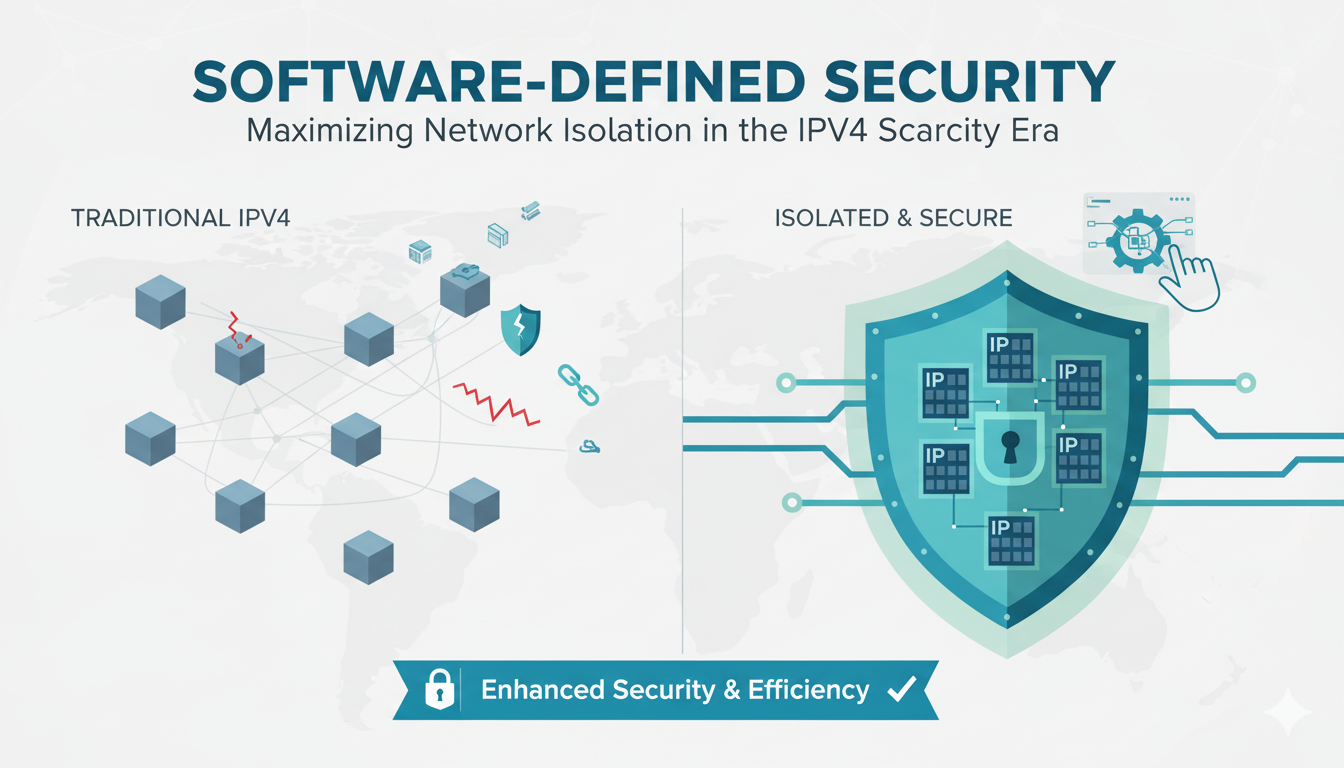
As CEO of InterLIR, I’ve witnessed firsthand how network isolation strategies

What is an ASN? ASN stands for Autonomous System Number. It is a unique identifier

Anycast DNS: A Leader’s Guide to Protecting Your Digital Infrastructure Executive

RPKI Certification: A Leader’s Guide to Internet Routing Security Executive

Executive Summary: What You Need to Know 🎯 Strategic Importance – Internet

When AWS DynamoDB failed in October 2025, thousands of businesses discovered that

Executive Summary: What You Need to Know 🎯 IP reputation directly impacts your
Live chat is provided by Intercom and is loaded only after you enable it. You can also contact us without enabling the chat.