The recent publication of RIPE-826 document represents a crucial framework for anyone operating within the IPv4 ecosystem. As the CEO of InterLIR, I’ve observed how these policy frameworks directly impact business operations and market dynamics across our industry.

The evolution of IPv4 address management policies reflects the fundamental transformation of how we view these digital resources. What began as technical identifiers distributed through straightforward allocation processes have evolved into valuable business assets with complex governance frameworks.
When I first engaged with the internet infrastructure sector, IPv4 addresses were managed primarily as technical resources. Today, they represent strategic assets that organizations must carefully plan for, acquire, and optimize. This evolution accelerated dramatically following the IANA’s allocation of the final five /8 blocks to the Regional Internet Registries in February 2011.
I recall working with a major telecommunications provider in Germany back in 2021, shortly after taking the helm at InterLIR. Their expansion into Eastern European markets required significant IPv4 resources, but they found themselves constrained by the waiting list mechanism. Through our marketplace platform, we facilitated a transfer that allowed them to acquire the necessary resources within two weeks rather than potentially waiting months.

The RIPE-826 document codifies several key policies that directly shape the current IPv4 marketplace. The most consequential elements include:
New allocations are limited to exactly one /24 block per LIR, with a maximum lifetime allocation of 256 IPv4 addresses per LIR. This constraint creates significant implications:
These constraints drive organizations toward the transfer market, where addresses can be acquired in larger blocks and with more predictable timelines. At InterLIR, I’ve observed a direct correlation between waiting list times and transfer market activity.
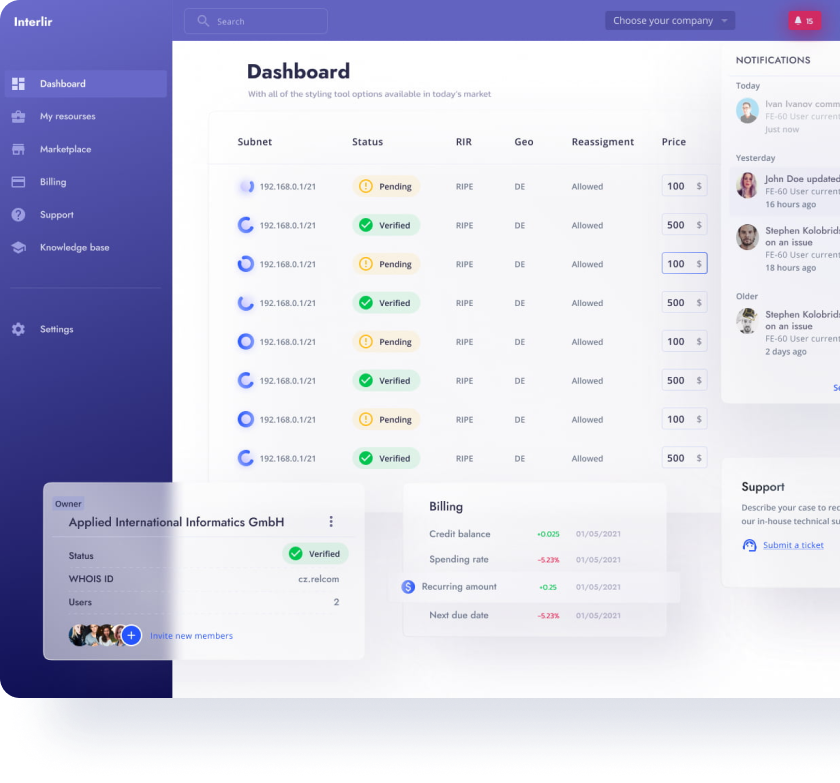
The transfer mechanisms have created a functional market for IPv4 resources that allows organizations to acquire needed addresses despite the exhaustion of the free pool. The transfer market has matured significantly, with specialized platforms like InterLIR providing structured marketplaces that ensure compliance with RIPE policies while facilitating efficient transactions.

The policy framework established in RIPE-826 directly influences how organizations approach IPv4 resource decisions. Based on my experience working with diverse clients across the RIPE region, I’ve observed several key patterns:
Organizations have shifted from reactive to proactive IP resource planning. Rather than acquiring addresses only when immediately needed, forward-thinking companies now develop multi-year IP resource strategies that account for both business growth and the evolving policy landscape. These planning horizons typically extend 3-5 years into the future.
The transfer market has established IPv4 addresses as assets with quantifiable economic value. Organizations now apply sophisticated financial analysis to their IP resource decisions, evaluating total cost of ownership, opportunity costs, and potential appreciation of address space value.
The policy framework creates substantial business implications for organizations across all sectors. Current market values have stabilized around €40-50 per individual IPv4 address, representing a significant capital investment for organizations requiring substantial address space.
A digital media company I advised last year provides an illustrative example. Their ability to rapidly expand into new geographic markets depended on securing appropriate IP resources for their content delivery infrastructure. By leveraging the transfer mechanisms enabled by RIPE policies, they acquired necessary resources within three weeks, allowing them to launch in two new European markets ahead of schedule.

Based on the current policy framework and anticipated future developments, I recommend organizations consider the following strategic approaches:
The IPv4 ecosystem continues to demonstrate remarkable resilience and adaptability despite the fundamental constraint of address exhaustion. Organizations that approach IPv4 resource management strategically will maintain the flexibility and capability needed to thrive in this constrained environment.
Come and meet us at the upcoming RIPE meeting to discuss how these policies impact your organization and explore strategic approaches to IP resource management in today’s dynamic environment.
#IPv4Strategy #RIPE826 #InternetGovernance #NetworkInfrastructure
I’m Alexander Timokhin, CEO of InterLIR IPv4 Marketplace, a Berlin-based specialized marketplace for IPv4 addresses. With extensive experience in IT infrastructure, international relations, and public policy, I bring a unique perspective to the evolving landscape of internet resources. My expertise spans IP address management, business operations, and strategic planning for technology companies.
Prior to founding InterLIR, I established TA Consulting & Services UG and worked with Wolkee Technology. My experience includes collaborating with Birmingham City Council on EU projects, providing me with valuable insights into both public and private sector technology initiatives. I hold a Master’s degree in British Studies from Humboldt University of Berlin and a Bachelor’s degree in International Relations from Lomonosov Moscow State University.
As a RIPE Database Associate certification holder, I combine technical knowledge with business acumen to help organizations navigate the complexities of IP resource management in today’s constrained environment.
For more information on strategic approaches to IPv4 resource management, contact me and the InterLIR team at www.interlir.com

Alexander Timokhin
CEO

A Beginner’s Guide to Subnetting IPv4 and IPv6 Addresses Subnetting is a critical

Why IPv4 Leasing Is Becoming the Smart Choice for Businesses in 2025 1. Introduction
As CEO of InterLIR, I’ve witnessed firsthand how network isolation strategies

What is an ASN? ASN stands for Autonomous System Number. It is a unique identifier

Anycast DNS: A Leader’s Guide to Protecting Your Digital Infrastructure Executive

RPKI Certification: A Leader’s Guide to Internet Routing Security Executive

Executive Summary: What You Need to Know 🎯 Strategic Importance – Internet

When AWS DynamoDB failed in October 2025, thousands of businesses discovered that

Executive Summary: What You Need to Know 🎯 IP reputation directly impacts your
Live chat is provided by Intercom and is loaded only after you enable it. You can also contact us without enabling the chat.