As a Customer Service Specialist at InterLIR, I’ve witnessed firsthand how shifts in RIR governance directly impact businesses navigating the IPv4 marketplace. A recent case involved a European telecommunications provider that faced delays in acquiring critical IPv4 resources due to evolving RIR compliance requirements. This example underscores the tangible consequences of policy changes for enterprises reliant on finite IP address inventories. The ongoing consultation on the draft “Governance Document for the Recognition, Maintenance, and Derecognition of Regional Internet Registries” represents the most significant overhaul of RIR oversight mechanisms since the adoption of ICP-2 in 2001. This analysis examines how these proposed changes could reshape global IP address markets, alter compliance landscapes, and influence strategic decision-making for network-dependent industries.

The foundation of today’s RIR system traces back to ICP-2, established when the Internet Assigned Numbers Authority (IANA) delegated regional responsibility for IP address distribution. For over two decades, this framework enabled the creation of LACNIC in 2002 and AFRINIC in 2005, both requiring unanimous approval from existing RIRs—a precedent that continues to influence current debates. A Middle Eastern cloud services provider recently shared with me how this historical requirement complicated their 2018 attempt to establish a regional registry, ultimately leading them to lease IPv4 addresses through marketplaces like InterLIR instead.
The original ICP-2 focused primarily on technical coordination, but the Internet’s commercialization has introduced complex geopolitical and economic dimensions. Between 2010 and 2020, IPv4 address prices surged 3,000% as available pools dwindled, transforming what was once an administrative process into a high-stakes economic arena. This shift exposed gaps in governance, particularly regarding RIR accountability and dispute resolution—issues the new draft seeks to address through formalized remediation processes and derecognition protocols.

The draft document introduces three transformative elements: enhanced governance transparency, explicit derecognition procedures, and standardized performance metrics. For hosting providers in emerging markets, these changes could significantly alter operational landscapes. A Southeast Asian VPN service operator recently noted that stricter RIR compliance requirements might force them to audit 40% of their existing IP allocations—a process with both cost and operational implications.
Key provisions include:
A Latin American cybersecurity firm highlighted how these changes might affect their IP acquisition strategy, stating: “If our local RIR faces remediation measures, we need contingency plans for address sourcing through secondary markets.”
The NRO Number Council’s approach combines technical governance with economic pragmatism. Their multi-phase consultation process, running through May 2025, demonstrates commitment to stakeholder input while maintaining tight control over policy outcomes. An analysis of the 2024 principles questionnaire revealed that 68% of respondents supported enhanced RIR accountability measures, though opinions diverged sharply on implementation specifics.
Client experiences reveal practical concerns. A North American data center operator participating in the consultation process noted: “The 60-day feedback window creates challenges for coordinating responses across global subsidiaries.” Others express skepticism about whether community input will substantially alter predetermined outcomes, particularly regarding the unanimity clause.
The governance changes carry specific implications for different market segments:

Nikita Sinitsyn
Customer Service Specialist

A Beginner’s Guide to Subnetting IPv4 and IPv6 Addresses Subnetting is a critical

Why IPv4 Leasing Is Becoming the Smart Choice for Businesses in 2025 1. Introduction
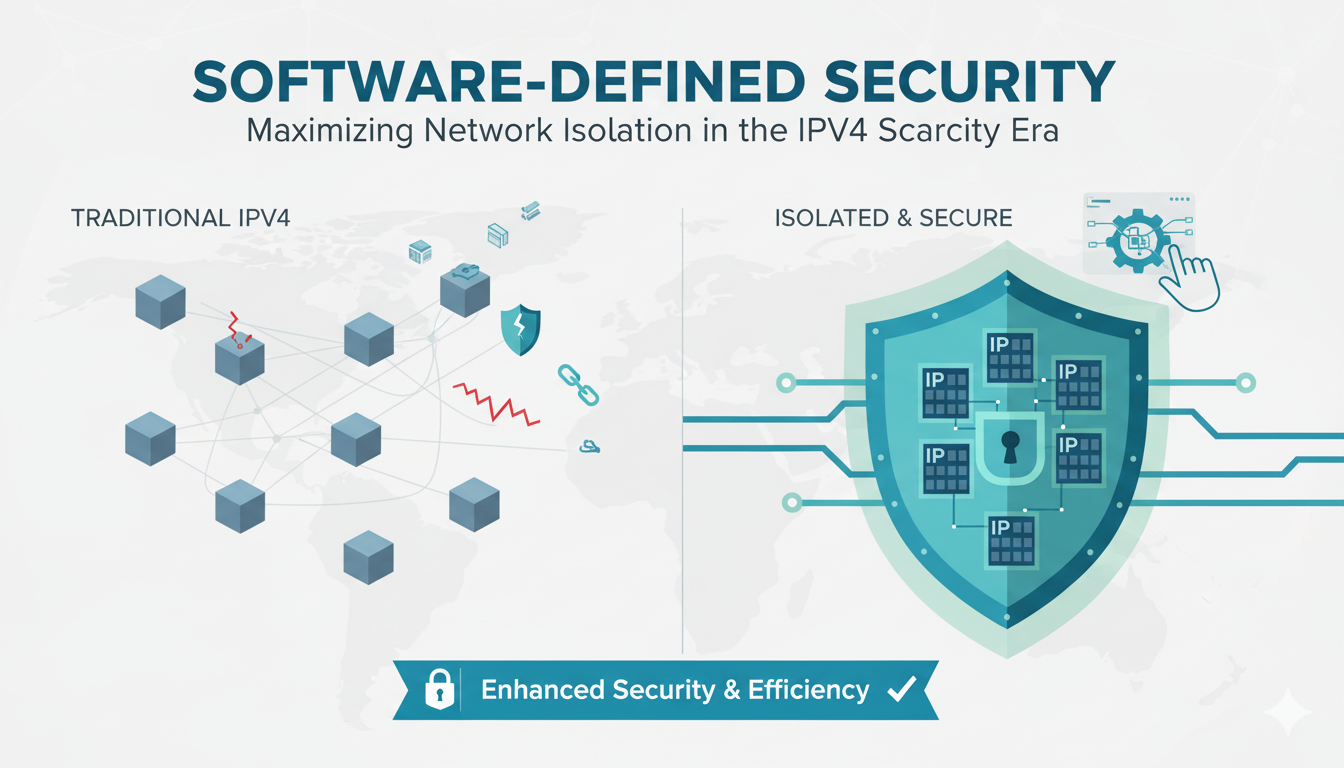
As CEO of InterLIR, I’ve witnessed firsthand how network isolation strategies

What is an ASN? ASN stands for Autonomous System Number. It is a unique identifier

Anycast DNS: A Leader’s Guide to Protecting Your Digital Infrastructure Executive

RPKI Certification: A Leader’s Guide to Internet Routing Security Executive

Executive Summary: What You Need to Know 🎯 Strategic Importance – Internet

When AWS DynamoDB failed in October 2025, thousands of businesses discovered that

Executive Summary: What You Need to Know 🎯 IP reputation directly impacts your
Live chat is provided by Intercom and is loaded only after you enable it. You can also contact us without enabling the chat.