In the evolving landscape of internet technology, two protocols stand at the forefront of the digital architecture: IPv4 and IPv6. These protocols are the backbone of our networking infrastructure, guiding the flow of data across the web. With the advent of IPv6, significant changes and improvements have been introduced to address the limitations of the older IPv4.

An IP (Internet Protocol) address serves as a unique identifier for each device connected to the internet or a local network. Think of it as a postal address for your device that allows it to send and receive data. Over the years, two main versions of IP addresses have emerged: IPv4 and IPv6.
IPv4, or Internet Protocol version 4, has been the bedrock of internet communication since its inception in 1983. It uses 32-bit addresses, resulting in about 4.3 billion unique combinations. Represented in dotted-decimal format (e.g., 192.168.1.1), IPv4 addresses are familiar to many users. However, the exponential growth of internet-connected devices has led to the near depletion of available IPv4 addresses.
Enter IPv6, or Internet Protocol version 6, designed to overcome the address exhaustion faced by IPv4. With its 128-bit address system, IPv6 boasts a virtually limitless number of unique addresses, catering to the ever-expanding internet ecosystem. IPv6 addresses are written in hexadecimal and separated by colons (e.g., 2001:0db8:85a3:0000:0000:8a2e:0370:7334), offering a robust solution to the scalability challenges of IPv4.
| Aspect | IPv4 | IPv6 |
| Address Space | 32-bit (4.3 billion addresses) | 128-bit (340 undecillion addresses) |
| Security | Requires additional measures | Built-in IPsec for enhanced security |
| Address Configuration | Manual and DHCP | Auto-configuration and renumbering |
| Packet Size | Variable header (20-60 bytes) | Fixed header (40 bytes) |
| Quality of Service (QoS) | Basic QoS features | Advanced labeling for traffic prioritization |
| Multicasting | Limited support | Enhanced support for efficient data distribution |
| Fragmentation | Performed by sender and routers | Performed by sender only |
| Address Types | Unicast, multicast, and broadcast | Unicast, multicast, and anycast |
Despite its advantages, the transition from IPv4 to IPv6 has been gradual. Compatibility issues, the need for infrastructure upgrades, and the coexistence of both protocols pose challenges for network administrators. However, the long-term benefits of IPv6, including enhanced security, improved performance, and virtually unlimited address space, make it an essential evolution for the future of networking.
The transition from IPv4 to IPv6 is more than just a technical upgrade; it’s a transformational shift that ensures the continued growth and sustainability of the internet. By embracing IPv6, we can look forward to a more inclusive, secure, and high-performing digital world.

Alexey Shkittin
CEO

A Beginner’s Guide to Subnetting IPv4 and IPv6 Addresses Subnetting is a critical

Why IPv4 Leasing Is Becoming the Smart Choice for Businesses in 2025 1. Introduction
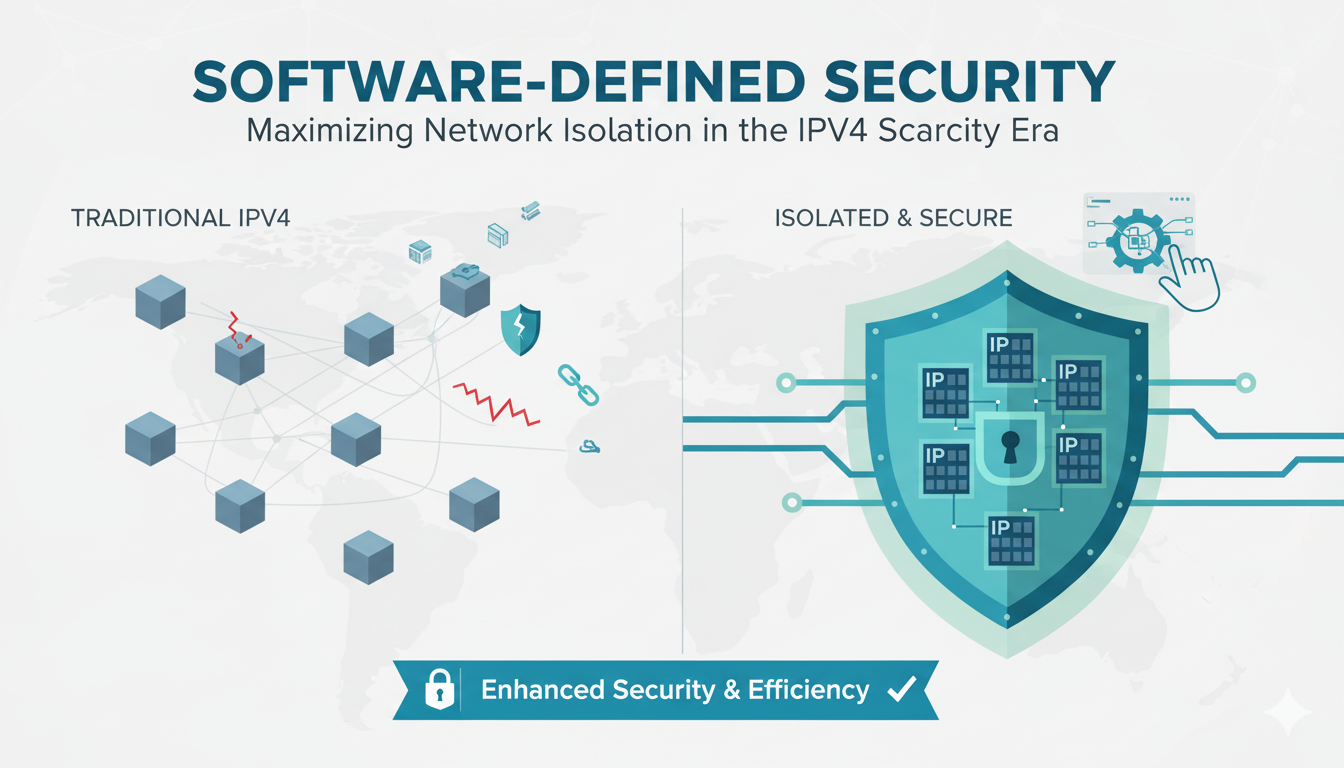
As CEO of InterLIR, I’ve witnessed firsthand how network isolation strategies
What is an ASN? ASN stands for Autonomous System Number. It is a unique identifier

Anycast DNS: A Leader’s Guide to Protecting Your Digital Infrastructure Executive

RPKI Certification: A Leader’s Guide to Internet Routing Security Executive

Executive Summary: What You Need to Know 🎯 Strategic Importance – Internet

When AWS DynamoDB failed in October 2025, thousands of businesses discovered that

Executive Summary: What You Need to Know 🎯 IP reputation directly impacts your
Live chat is provided by Intercom and is loaded only after you enable it. You can also contact us without enabling the chat.