The Inter-RIR transfer policy enables efficient utilization of IPv4 address space by facilitating the transfer of IP addresses between owners in different regional Internet registries (RIRs) such as APNIC, ARIN, LACNIC, and RIPE. This policy creates additional opportunities for sellers and buyers to engage in the transfer of IP addresses across different regions.
RIRs, or Regional Internet Registries, are responsible for various functions related to address space allocation, LIR (Local Internet Registry) registration, statistics, and dispute resolution. These organizations operate on a non-profit basis and do not engage in the sale of any products or services. However, LIRs are required to pay membership fees to their respective RIRs, which are determined based on the size of their network. It is important to note that RIRs do not directly interact with end users or individuals. Currently, there are five recognized RIRs: RIPE for Europe and the Middle East, ARIN for North America, APNIC for Asia and the Pacific, LACNIC for Latin America, and AFRINIC for Africa. The designation of an RIR is determined by IANA, and it is not possible for an organization to become an RIR.
LIRs, or Local Internet Registries, are classified into different categories based on the size of their network. There are a total of five categories: Extra Large, Large, Medium, Small, and Extra Small. The classification of an LIR depends on various factors and is determined by the respective RIR. LIRs are responsible for paying membership fees to their RIR, which are calculated based on the LIR’s category. These fees are relatively small and proportional to the size of the LIR. An LIR has the authority to allocate or sell Sub-Allocated Number Resources (SAN) and IP/PI (Provider Independent) addresses to its customers. Additionally, an LIR can act as an intermediary between end users and the RIPE NCC, particularly in cases involving the registration of Autonomous Systems (AS), Provider Independent resources, or Local Internet Registry services. Typically, LIR status is held by larger network operators such as providers, data centers, and registrars.
Account creation.
The buyer must create an account with the respective RIR (Regional Internet Registry). This step is necessary to acquire an IPv4 address.
Application for approval.
The buyer submits an application to the RIR, providing justification for the intended use of the IPv4 address space. It is important to demonstrate the need for obtaining these addresses.
Negotiations.
To finalize the transfer, the buyer and seller engage in negotiations. They discuss the transfer details, including the IPv4 address and the associated cost. During this process, a confidentiality agreement is reached, outlining the timing of fund transfers, recipients, and initiation and completion of the transfer. A broker may oversee the negotiations.
Initiating the transfer process.
Either the buyer or seller submits a transfer request through the RIR’s online portal. Detailed information about the buyer’s organization is provided as part of the request.
Transfer fee.
In regions such as APNIC, LACNIC, and some areas of ARIN, a small transfer fee may be required from the owners of the addresses being transferred.
The request confirmation by seller.
The seller confirms the request for transferring the IPv4 address.
The request confirmation by the buyer.
Upon the seller’s confirmation, the buyer is required to confirm the transfer of the address space.
RIR approval.
Once both the seller and buyer have confirmed the transfer request, the RIR may request them to sign a consent form, acknowledging their agreement.
Completion of the process.
The RIR completes the transfer of the IPv4 address space. The Whois database is updated to reflect the transfer, marking the completion of the process.

Alexei Krylov Nikiforov
Sales manager

A Beginner’s Guide to Subnetting IPv4 and IPv6 Addresses Subnetting is a critical

Why IPv4 Leasing Is Becoming the Smart Choice for Businesses in 2025 1. Introduction
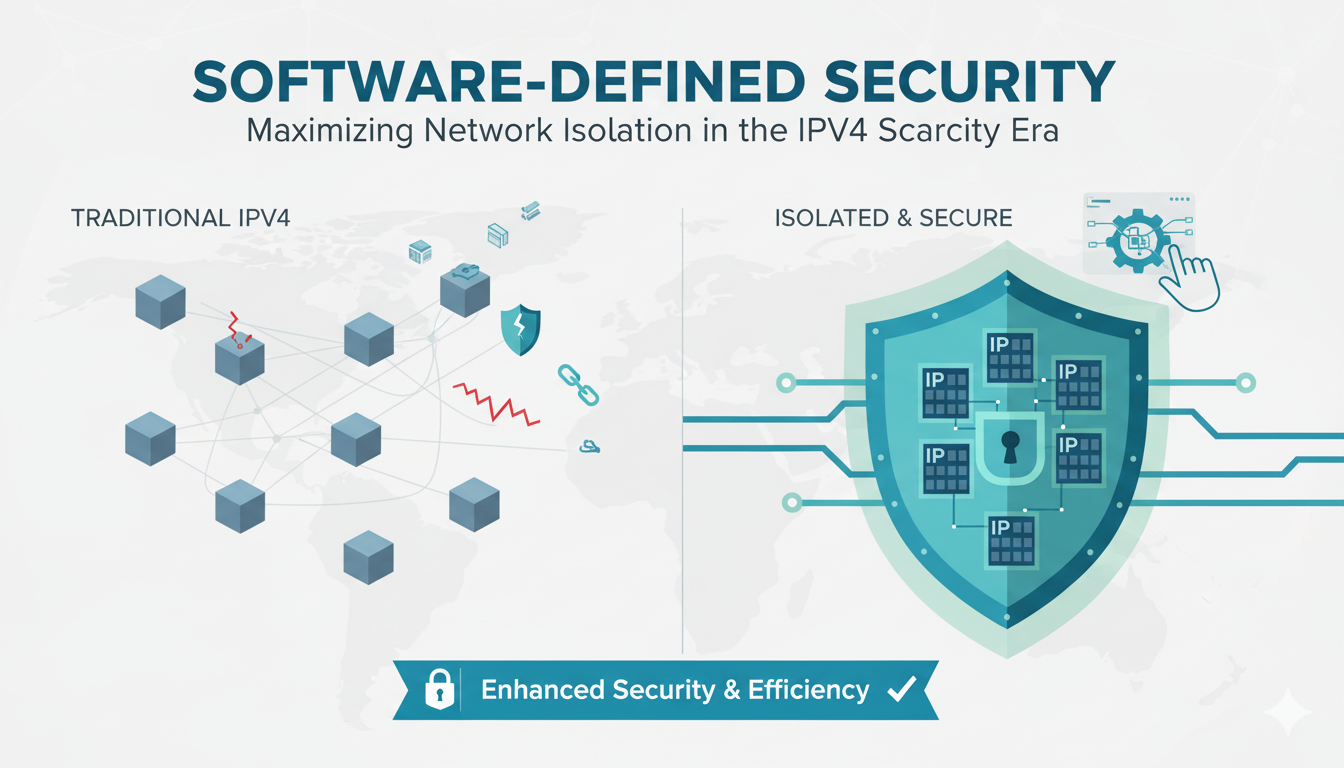
As CEO of InterLIR, I’ve witnessed firsthand how network isolation strategies

What is an ASN? ASN stands for Autonomous System Number. It is a unique identifier

Anycast DNS: A Leader’s Guide to Protecting Your Digital Infrastructure Executive

RPKI Certification: A Leader’s Guide to Internet Routing Security Executive

Executive Summary: What You Need to Know 🎯 Strategic Importance – Internet

When AWS DynamoDB failed in October 2025, thousands of businesses discovered that

Executive Summary: What You Need to Know 🎯 IP reputation directly impacts your
Live chat is provided by Intercom and is loaded only after you enable it. You can also contact us without enabling the chat.