The internet has undergone a remarkable transformation over the past half-century, evolving from specialized research networks to the global communications infrastructure that powers our modern world. At InterLIR, we've witnessed firsthand how this evolution has fundamentally reshaped not just technology, but the entire landscape of network resource management and digital infrastructure. This article explores the evolutionary journey of the internet, examining how the marriage of computing and communications has fundamentally reshaped our society, economy, and technological landscape - and what this means for businesses navigating today's complex network environment.
The invention of the transistor in December 1947 and the integrated circuit in 1958 set the stage for one of the most transformative technological marriages in human history. Before these innovations, human endeavors were largely constrained by geography. The industrial revolution and the introduction of railways in the mid-19th century had already begun shifting the foundations of wealth and power from agriculture to industrial production, with the telegraph and telephone enabling companies to project their influence across greater distances.
Sin embargo, cuando las computadoras ingresaron al ámbito de las comunicaciones, el ritmo del cambio se aceleró drásticamente. El tiempo entre innovaciones importantes se redujo de décadas a años, con la informática pasando de ser herramientas de investigación esotéricas a componentes esenciales de la vida cotidiana. Esta aceleración continúa hoy, impulsando la demanda de recursos de red que ayudamos a las empresas a proteger en InterLIR.
Durante este período surgieron varias tecnologías fundamentales que darían forma a la arquitectura de internet durante décadas:
🔧 Sistema Operativo Unix - Desarrollado por Ken Thompson y Dennis Ritchie en Bell Labs a finales de los años 60, este sistema operativo abierto escrito en el lenguaje C se convirtió en un pilar del desarrollo informático
🔌 Ethernet - La invención de Bob Metcalf en 1973 en Xerox PARC introdujo el revolucionario concepto "X-Wire", un enfoque simple pero transformador para las redes informáticas
💻 Computación Personal - La transición de las mainframes a dispositivos personales democratizó el acceso al poder computacional
🌐 Protocolo de Internet - El desarrollo de protocolos de comunicación estandarizados permitió la interconexión de redes dispares
The open distribution model of Unix was particularly significant. Due to antitrust restrictions, Bell Labs was required to license their patents upon request and forbidden from entering businesses outside common carrier communications. As a result, Unix source code was shared widely, allowing universities and organizations to modify and extend it, leading to influential variants like the Berkeley Software Distribution (BSD). This open approach to technology development would become a defining characteristic of internet evolution.
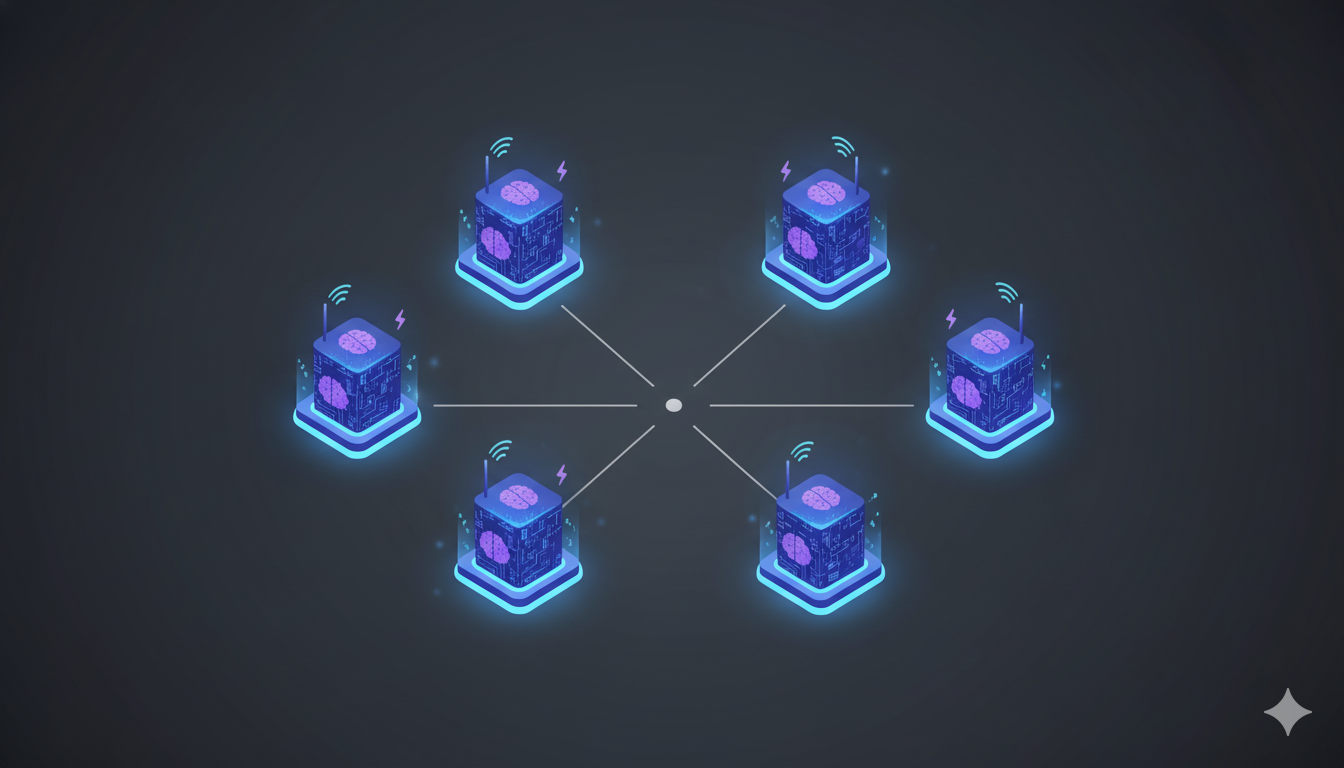
Ethernet network cable connecting distributed edge devices with simple topology diagram
Ethernet represents one of the most influential networking technologies ever developed, and its design philosophy continues to influence network architecture today. What made it revolutionary was its radical simplicity-it was, essentially, just a wire. Rather than building intelligence into the network itself, Ethernet pushed all networking functions to the edge devices (comput) connected to it.
This "dumb network, smart devices" philosophy transformed network design fundamentally. Ethernet required no internal switch, no packet framing, no controller, and maintained no network state. Instead, connected computers handled all these functions through distributed algorithms. This approach meant that network costs were distributed to the connected devices rather than centralized, creating a more scalable and flexible architecture.
The technical elegance of Ethernet's design included several key innovations:
📡 Distributed Intelligence - Network functions handled by edge devices rather than centralized infrastructure
🔄 Self-Clocking Packets - Using a 64-bit preamble for synchronization
🔍 MAC Addressing - The 48-bit MAC address system introduced then remains in use today
🔓 Open Standards - The open specification enabled widespread adoption and innovation
⚡ Collision Detection - CSMA/CD protocol allowed multiple devices to share the same medium efficiently
This design philosophy of pushing intelligence to the edges while keeping the network simple and fast has profound implications for how we think about network resources today. At InterLIR, we see this principle reflected in modern network architectures where flexibility and scalability depend on intelligent endpoint management rather than complex core infrastructure.
The exponential improvements in computing capability driven by Moore's Law have been the fundamental force behind the internet's evolution. Gordon Moore's 1965 observation that the number of transistors on an integrated circuit doubles approximately every two years while fabrication costs increase far less dramatically has held remarkably consistent for decades.
This exponential growth pattern has continuously rendered even recent technologies obsolete. Unlike cars or other technological artifacts that might remain functional for decades, computers from just a few years ago are often considered hopelessly outdated. The VAX 11/780 computer from 1977, once a cutting-edge mainframe capable of executing 1 million instructions per second, now exists primarily in museums. Today's smartphones possess computing power that would have seemed like science fiction just a generation ago.
Un área crítica donde la Ley de Moore impactó el diseño de redes fue en la planificación del espacio de direcciones, un dominio que se relaciona directamente con nuestro trabajo en InterLIR. Protocolos tempranos como DECnet Fase 3 utilizaban un campo de direcciones de 16 bits, permitiendo un máximo de 65,535 dispositivos conectados. Esta cantidad parecía más que suficiente en una era de computadoras del tamaño de una habitación que costaban millones de dólares.
Los creadores del Protocolo de Internet (IP) adoptaron un enfoque mucho más visionario al implementar una arquitectura de direccionamiento de 32 bits, que permitió aproximadamente 4,300 millones de direcciones únicas. Esta decisión, aparentemente extravagante en los años 70 cuando solo existían miles de computadoras en el mundo, demostró una notable visión sobre la trayectoria de crecimiento potencial de la computación.
| Protocolo | Bits de dirección | Dispositivos máximos | Época | Estado actual |
|---|---|---|---|---|
| DECnet Fase 3 | 16 bits | 65,535 | 1970s-1980s | Obsoleto |
| IPv4 | 32 bits | ~4.3 mil millones | 1980s-presente | Agotado |
| IPv6 | 128 bits | 340 undecillones | 1998-presente | Adopción creciente |
Yet even this vast address space proved inadequate as Moore's Law continued to drive the proliferation of connected devices. What seemed like "fore" capacity in the 1980s would be exhausted by the explosive growth of the internet decades later. This exhaustion of IPv4 addresses created the specialized marketplace that InterLIR serves today, where businesses must carefully manage and acquire the IPv4 resources they need to operate.
As personal computing emerged in the 1980s, another fundamental shift occurred in how we conceptualized computer networks. Early network designs assumed symmetry-like telephone networks where each endpoint both speaks and listens, computers were expected to both provide and consume services equally.
This shift led to a segmentation of the computing environment into dedicated client and server roles, fundamentally changing network architecture and resource requirements.
🏠 Residential Connections - Designed with faster download speeds than upload capacities, reflecting consumption-focused usage patterns
🏢 Data Centers - Emerged to coalesce servers into managed environments with reliable power, cooling, and...
This architectural decision aligned with the limitations of existing infrastructure. The dial-up world of the 1990s and the DSL/Cable modem era of the 2000s provided a good fit for client/server networking, allowing rapid expansion by leveraging legacy last-mile infrastructure. However, this asymmetry also created challenges for businesses requiring substantial upload capacity or hosting services, driving demand for dedicated server infrastructure and specialized network resources.
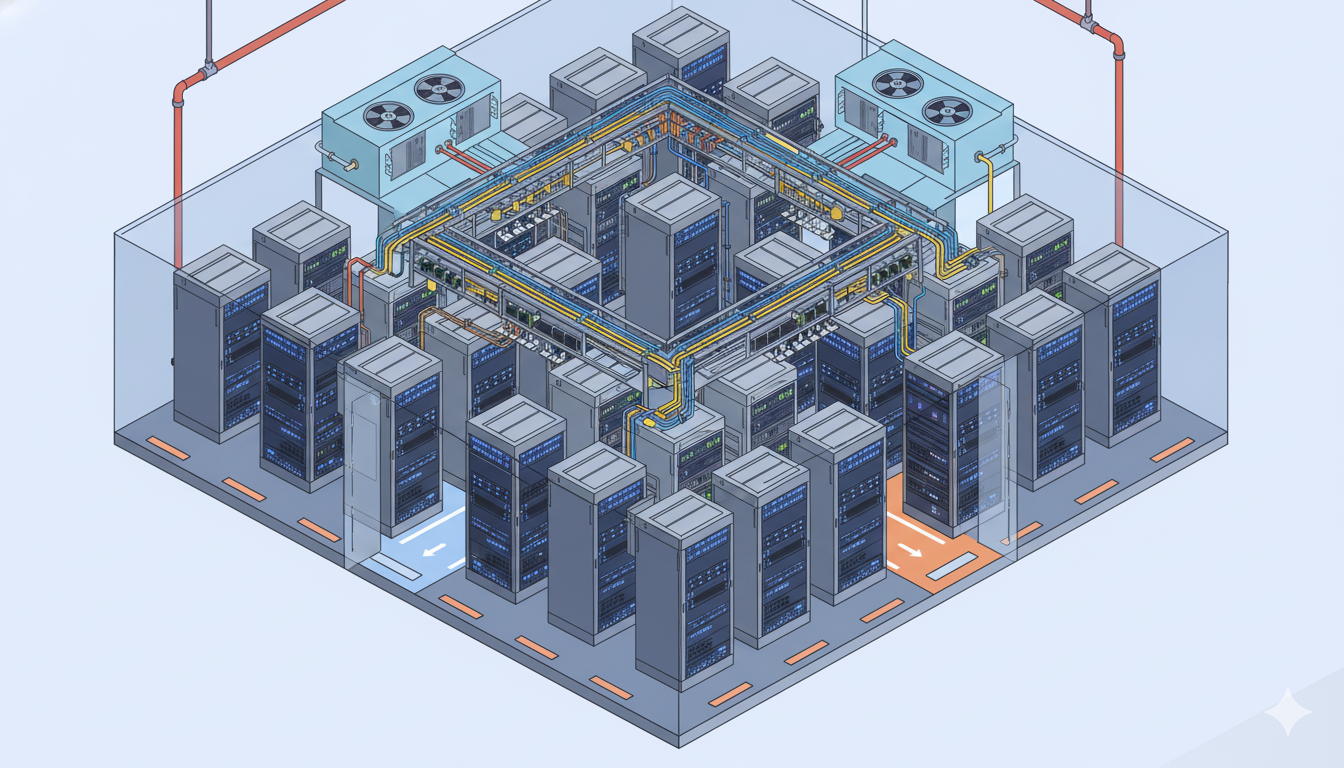
Data center server racks with network infrastructure and cooling systems
Around the year 2000, specialized data centers began to emerge, consolidating servers into controlled environments with robust power, cooling, and that world, this centralization created new patterns in how IPv4 addresses were allocated and utilized.
Service specialization accelerated, with dedicated servers for web hosting, email, data storage, and various other functions. Compared to today's massive AI-scale data centers, these early facilities were relatively modest - typically occupying just a room or two with power requirements in the hundreds of kilowatts rather than megawatts.
wp_paragraph {"className":"std-text"} -->
The next major evolutionary phase came with the emergence of cloud computing, which further abstracted computing resources from physical hardware. This shift has fundamentally transformed how businesses think about and interact with computing resources:
☁️ Infrastructure as a Service (IaaS) - Providing virtualized computing infrastructure on demand, including network resources and IP addresses
⚙️ Platform as a Service (PaaS) - Offering hardware and software tools over the internet, abstracting infrastructure management
Network as a Service (NaaS) - Providing network capabilities on-demand, including routing, security, and connectivity
Cloud computing represents the culmination of several evolutionary trends: the increasing power of computing hardware driven by Moore's Law, the client-server model's maturation, and the continuing abstraction of computing resources from physical infrastructure. However, this centralization also concentrated demand for IPv4 addresses in data center environments, contributing to address scarcity and creating the specialized market we serve.
As predicted by the relentless progress of Moore's Law, the seemingly vast IPv4 address space with its 4.3 billion addresses eventually proved inadequate. The proliferation of personal computers, mobile devices, and later IoT devices created an address scarcity that threatened to constrain the internet's continued growth. This scarcity is precisely what drives the IPv4 marketplace that InterLIR facilitates.
La respuesta fue IPv6, introducido en 1998 con un espacio de direcciones de 128 bits capaz de soportar aproximadamente 340 undecillones (3.4×10^38) de direcciones únicas. Esta expansión no solo representó una mejora cuantitativa, sino un replanteamiento cualitativo de cómo debería funcionar el direccionamiento en un entorno de internet enormemente ampliado.
A pesar de la superioridad técnica de IPv6 y su espacio de direcciones prácticamente ilimitado, la transición desde IPv4 ha sido más lenta de lo esperado. Varios factores contribuyen a esta adopción gradual:
Infraestructura heredada - Miles de millones de dispositivos e innumerables configuraciones de red basadas en IPv4 no pueden reemplazarse instantáneamente
Traducción de Direcciones de Red (NAT) - Esta tecnología alternativa extendió la vida útil de IPv4 al permitir que múltiples dispositivos compartieran direcciones públicas únicas
Complejidad de doble pila - Ejecutar simultáneamente IPv4 e IPv6 añade complejidad operacional y costos
Continuidad del negocio - Las organizaciones priorizan el mantenimiento de los servicios existentes sobre las actualizaciones de infraestructura
Factores económicos - La disponibilidad de direcciones IPv4 a través de mercados secundarios reduce la urgencia de adoptar IPv6
Este período de transición ha creado una dinámica de mercado única. Si bien IPv6 representa el futuro a largo plazo, las direcciones IPv4 siguen siendo esenciales para las operaciones actuales, especialmente para las empresas que requieren compatibilidad con la infraestructura de internet existente. En InterLIR, ayudamos a las organizaciones a navegar esta transición facilitando el acceso a recursos IPv4 mientras desarrollan sus estrategias IPv6.
La transición de IPv4 a IPv6 ejemplifica un patrón más amplio en la evolución de la informática: el cambio de la escasez de recursos a la abundancia. Los primeros sistemas informáticos se diseñaron con especial atención a la eficiencia debido a la limitada capacidad de procesamiento, memoria y ancho de banda. A medida que la Ley de Moore impulsó mejoras exponenciales en estas capacidades, las filosofías de diseño evolucionaron hacia el aprovechamiento de la abundancia en lugar de la optimización para la escasez.
Sin embargo, este cambio de paradigma ocurre de manera desigual en diferentes recursos. Mientras que la potencia de cálculo y el almacenamiento se han vuelto abundantes, las direcciones de red experimentaron un retorno temporal a la escasez con el agotamiento de IPv4. IPv6 promete restaurar la abundancia, pero el período de transición crea desafíos y oportunidades únicos para las empresas que gestionan su infraestructura de red.
El internet actual continúa evolucionando en varias dimensiones clave, cada una construyendo sobre los elementos fundamentales establecidos hace décadas. Comprender estas tendencias es crucial para las empresas que planean su infraestructura de red y requisitos de recursos:
🤖 Inteligencia Artificial y Aprendizaje Automático - Las cargas de trabajo de IA están impulsando una demanda sin precedentes de potencia computacional, ancho de banda de red e infraestructura especializada, creando nuevos patrones en la asignación de recursos
🌐 Computación en el Edge - El procesamiento más cercano a las fuentes de datos reduce la latencia y los requisitos de ancho de banda, pero aumenta la distribución geográfica de los recursos de red
📱 Paradigma Mobile-First - La computación está cada vez más dominada por dispositivos móviles en lugar de PCs tradicionales, cambiando los patrones de tráfico y los requisitos de conectividad
🔒 Seguridad y Privacidad - El creciente enfoque en proteger datos y comunicaciones impulsa la demanda de arquitecturas de red seguras y recursos dedicados
⚡ 5G y más allá - Las redes inalámbricas de próxima generación permiten nuevas aplicaciones y patrones de conectividad
Los principios fundamentales establecidos en épocas anteriores - estándares abiertos, inteligencia distribuida y las mejoras constantes impulsadas por la Ley de Moore - continúan moldeando cómo estas tecnologías más nuevas se desarrollan e implementan. Sin embargo, cada tendencia crea implicaciones específicas para la gestión y planificación de recursos de red.
Quizás la manifestación más dramática de la Ley de Moore en el internet contemporáneo es la explosión de dispositivos conectados más allá de las computadoras tradicionales. El Internet de las Cosas representa una extensión natural de las tendencias que han impulsado la evolución de internet desde el principio: a medida que el poder de cómputo se vuelve más pequeño, económico y energéticamente eficiente, resulta práctico integrarlo en una gama cada vez más amplia de objetos.
Esta proliferación de dispositivos conectados genera tanto oportunidades como desafíos. El vasto espacio de direcciones IPv6 proporciona la base necesaria para miles de millones o billones de dispositivos conectados, pero las cuestiones de seguridad, privacidad, estandarización y eficiencia energética aún no se han resuelto por completo. Para las empresas que implementan soluciones de IoT, la planificación cuidadosa de los recursos de red se vuelve crítica.
Para las organizaciones que navegan en el complejo entorno de red actual, comprender la evolución de internet proporciona un contexto crucial para la planificación estratégica:
# CHUNK_START:19/30| Evolutionary Trend | Business Impact | Strategic Consider |
|---|---|---|
| IPv4 Scarcity | Increased resource costs | Plan IPv4 acquisition and IPv6 transition |
| Cloud Centralization | Reduced infrastructure burden | Balance cloud vs. on-premise resources |
| Edge Computing | Distributed architecture needs | Plan for geographic resource distribution|
| IoT Proliferation | Massive device connectivity | Develop scalable addressing strategies |
| Security Requirements | Need for dedicated resourcesInvest in secure network infrastructure |
At InterLIR, we work with businesses to understand how these evolutionary trends impact their specific network resource needs. Whether acquiring IPv4 addresses for immediate operational requirements or planning long-term IPv6 strategies, understanding the historical context and future trajectory of internet evolution enables more informed decision-making.
# CHUNK_END:19/30La evolución de internet representa uno de los viajes tecnológicos más notables en la historia de la humanidad, y comprender este recorrido es esencial para navegar en el entorno de red complejo de hoy. # From its origins in research networks connecting room-sized computers to today's ubiquitous global infrastructure connecting billions of devices, this evolution has been driven by a few key forces: Moore's Law's relentless improvements in computing capability, the power of open standards and systems, and the shift from symmetrical to asymmetrical network architectures. # At InterLIR, we've built our business on understanding these evolutionary patterns and their practical implications for organizations managing network resources. El agotamiento de las direcciones IPv4, que alguna vez se consideraron prácticamente ilimitadas, demuestra cómo incluso la planificación visionaria puede verse superada por el crecimiento tecnológico exponencial. This scarcity has created the specialized marketplace we serve, helping businesses secure the IPv4 resources they need while the industry gradually transitions to IPv6's abundance.
Understanding this evolutionary history provides valuable context for anticipating future developments. Los patrones establecidos durante las últimas cinco décadas—la mejora exponencial de capacidades, la tensión entre arquitecturas centralizadas y distribuidas, y la abstracción continua de los recursos informáticos del hardware físico—probablemente seguirán moldeando cómo evoluciona Internet en los próximos años. For businesses, this means planning network infrastructure with both current needs and future flexibility in mind.
As we look toward emerging technologies like quantum computing, advanced AI, and ubiquitous connectivity, the lessons of internet evolution remind us that the most transformative innovations often come from combining existing technologies in novel ways, opening access through standardization, and designing with an eye toward future capabilities rather than current constraints. Whether you're managing IPv4 resources, planning IPv6 deployment, or developing strategies for emerging technologies, understanding the internet's evolutionary trajectory provides essential context for making informed decisions about your network infrastructure.
The internet's journey from simple networks to modern computing systems continues, and at InterLIR, we remain committed to helping businesses navigate this evolution successfully, ensuring they have the resources needed to thrive in an increasingly connected world.
The internet has undergone a remarkable transformation over the past half-century, evolving from specialized research networks to the global communications infrastructure that powers our modern world. At InterLIR, we've witnessed firsthand how this evolution has fundamentally reshaped not just technology, but the entire landscape of network resource management and digital infrastructure. This article explores the evolutionary journey of the internet, examining how the marriage of computing and communications has fundamentally reshaped our society, economy, and technological landscape - and what this means for businesses navigating today's complex network environment.
The invention of the transistor in December 1947 and the integrated circuit in 1958 set the stage for one of the most transformative technological marriages in human history. Before these innovations, human endeavors were largely constrained by geography. The industrial revolution and the introduction of railways in the mid-19th century had already begun shifting the foundations of wealth and power from agriculture to industrial production, with the telegraph and telephone enabling companies to project their influence across greater distances.
Sin embargo, cuando las computadoras ingresaron al ámbito de las comunicaciones, el ritmo del cambio se aceleró drásticamente. El tiempo entre innovaciones importantes se redujo de décadas a años, con la informática pasando de ser herramientas de investigación esotéricas a componentes esenciales de la vida cotidiana. Esta aceleración continúa hoy, impulsando la demanda de recursos de red que ayudamos a las empresas a proteger en InterLIR.
Durante este período surgieron varias tecnologías fundamentales que darían forma a la arquitectura de internet durante décadas:
🔧 Sistema Operativo Unix - Desarrollado por Ken Thompson y Dennis Ritchie en Bell Labs a finales de los años 60, este sistema operativo abierto escrito en el lenguaje C se convirtió en un pilar del desarrollo informático
🔌 Ethernet - La invención de Bob Metcalf en 1973 en Xerox PARC introdujo el revolucionario concepto "X-Wire", un enfoque simple pero transformador para las redes informáticas
💻 Computación Personal - La transición de las mainframes a dispositivos personales democratizó el acceso al poder computacional
🌐 Protocolo de Internet - El desarrollo de protocolos de comunicación estandarizados permitió la interconexión de redes dispares
The open distribution model of Unix was particularly significant. Due to antitrust restrictions, Bell Labs was required to license their patents upon request and forbidden from entering businesses outside common carrier communications. As a result, Unix source code was shared widely, allowing universities and organizations to modify and extend it, leading to influential variants like the Berkeley Software Distribution (BSD). This open approach to technology development would become a defining characteristic of internet evolution.
Ethernet network cable connecting distributed edge devices with simple topology diagram
Ethernet represents one of the most influential networking technologies ever developed, and its design philosophy continues to influence network architecture today. What made it revolutionary was its radical simplicity-it was, essentially, just a wire. Rather than building intelligence into the network itself, Ethernet pushed all networking functions to the edge devices (comput) connected to it.
This "dumb network, smart devices" philosophy transformed network design fundamentally. Ethernet required no internal switch, no packet framing, no controller, and maintained no network state. Instead, connected computers handled all these functions through distributed algorithms. This approach meant that network costs were distributed to the connected devices rather than centralized, creating a more scalable and flexible architecture.
The technical elegance of Ethernet's design included several key innovations:
📡 Distributed Intelligence - Network functions handled by edge devices rather than centralized infrastructure
🔄 Self-Clocking Packets - Using a 64-bit preamble for synchronization
🔍 MAC Addressing - The 48-bit MAC address system introduced then remains in use today
🔓 Open Standards - The open specification enabled widespread adoption and innovation
⚡ Collision Detection - CSMA/CD protocol allowed multiple devices to share the same medium efficiently
This design philosophy of pushing intelligence to the edges while keeping the network simple and fast has profound implications for how we think about network resources today. At InterLIR, we see this principle reflected in modern network architectures where flexibility and scalability depend on intelligent endpoint management rather than complex core infrastructure.
The exponential improvements in computing capability driven by Moore's Law have been the fundamental force behind the internet's evolution. Gordon Moore's 1965 observation that the number of transistors on an integrated circuit doubles approximately every two years while fabrication costs increase far less dramatically has held remarkably consistent for decades.
This exponential growth pattern has continuously rendered even recent technologies obsolete. Unlike cars or other technological artifacts that might remain functional for decades, computers from just a few years ago are often considered hopelessly outdated. The VAX 11/780 computer from 1977, once a cutting-edge mainframe capable of executing 1 million instructions per second, now exists primarily in museums. Today's smartphones possess computing power that would have seemed like science fiction just a generation ago.
Un área crítica donde la Ley de Moore impactó el diseño de redes fue en la planificación del espacio de direcciones, un dominio que se relaciona directamente con nuestro trabajo en InterLIR. Protocolos tempranos como DECnet Fase 3 utilizaban un campo de direcciones de 16 bits, permitiendo un máximo de 65,535 dispositivos conectados. Esta cantidad parecía más que suficiente en una era de computadoras del tamaño de una habitación que costaban millones de dólares.
Los creadores del Protocolo de Internet (IP) adoptaron un enfoque mucho más visionario al implementar una arquitectura de direccionamiento de 32 bits, que permitió aproximadamente 4,300 millones de direcciones únicas. Esta decisión, aparentemente extravagante en los años 70 cuando solo existían miles de computadoras en el mundo, demostró una notable visión sobre la trayectoria de crecimiento potencial de la computación.
| Protocolo | Bits de dirección | Dispositivos máximos | Época | Estado actual |
|---|---|---|---|---|
| DECnet Fase 3 | 16 bits | 65,535 | 1970s-1980s | Obsoleto |
| IPv4 | 32 bits | ~4.3 mil millones | 1980s-presente | Agotado |
| IPv6 | 128 bits | 340 undecillones | 1998-presente | Adopción creciente |
Yet even this vast address space proved inadequate as Moore's Law continued to drive the proliferation of connected devices. What seemed like "fore" capacity in the 1980s would be exhausted by the explosive growth of the internet decades later. This exhaustion of IPv4 addresses created the specialized marketplace that InterLIR serves today, where businesses must carefully manage and acquire the IPv4 resources they need to operate.
As personal computing emerged in the 1980s, another fundamental shift occurred in how we conceptualized computer networks. Early network designs assumed symmetry-like telephone networks where each endpoint both speaks and listens, computers were expected to both provide and consume services equally.
This shift led to a segmentation of the computing environment into dedicated client and server roles, fundamentally changing network architecture and resource requirements.
By the late 1990s, this client-server model became embedded in the internet's architecture itself. Network design accommodated this asymmetry through several key developments:
🏠 Residential Connections - Designed with faster download speeds than upload capacities, reflecting consumption-focused usage patterns
🏢 Data Centers - Emerged to coalesce servers into managed environments with reliable power, cooling, and...
This architectural decision aligned with the limitations of existing infrastructure. The dial-up world of the 1990s and the DSL/Cable modem era of the 2000s provided a good fit for client/server networking, allowing rapid expansion by leveraging legacy last-mile infrastructure. However, this asymmetry also created challenges for businesses requiring substantial upload capacity or hosting services, driving demand for dedicated server infrastructure and specialized network resources.
Data center server racks with network infrastructure and cooling systems
Around the year 2000, specialized data centers began to emerge, consolidating servers into controlled environments with robust power, cooling, and that world, this centralization created new patterns in how IPv4 addresses were allocated and utilized.
Service specialization accelerated, with dedicated servers for web hosting, email, data storage, and various other functions. Compared to today's massive AI-scale data centers, these early facilities were relatively modest - typically occupying just a room or two with power requirements in the hundreds of kilowatts rather than megawatts.
wp_paragraph {"className":"std-text"} -->
The next major evolutionary phase came with the emergence of cloud computing, which further abstracted computing resources from physical hardware. This shift has fundamentally transformed how businesses think about and interact with computing resources:
☁️ Infrastructure as a Service (IaaS) - Providing virtualized computing infrastructure on demand, including network resources and IP addresses
⚙️ Platform as a Service (PaaS) - Offering hardware and software tools over the internet, abstracting infrastructure management
Network as a Service (NaaS) - Providing network capabilities on-demand, including routing, security, and connectivity
Cloud computing represents the culmination of several evolutionary trends: the increasing power of computing hardware driven by Moore's Law, the client-server model's maturation, and the continuing abstraction of computing resources from physical infrastructure. However, this centralization also concentrated demand for IPv4 addresses in data center environments, contributing to address scarcity and creating the specialized market we serve.
As predicted by the relentless progress of Moore's Law, the seemingly vast IPv4 address space with its 4.3 billion addresses eventually proved inadequate. The proliferation of personal computers, mobile devices, and later IoT devices created an address scarcity that threatened to constrain the internet's continued growth. This scarcity is precisely what drives the IPv4 marketplace that InterLIR facilitates.
La respuesta fue IPv6, introducido en 1998 con un espacio de direcciones de 128 bits capaz de soportar aproximadamente 340 undecillones (3.4×10^38) de direcciones únicas. Esta expansión no solo representó una mejora cuantitativa, sino un replanteamiento cualitativo de cómo debería funcionar el direccionamiento en un entorno de internet enormemente ampliado.
A pesar de la superioridad técnica de IPv6 y su espacio de direcciones prácticamente ilimitado, la transición desde IPv4 ha sido más lenta de lo esperado. Varios factores contribuyen a esta adopción gradual:
Infraestructura heredada - Miles de millones de dispositivos e innumerables configuraciones de red basadas en IPv4 no pueden reemplazarse instantáneamente
Traducción de Direcciones de Red (NAT) - Esta tecnología alternativa extendió la vida útil de IPv4 al permitir que múltiples dispositivos compartieran direcciones públicas únicas
Complejidad de doble pila - Ejecutar simultáneamente IPv4 e IPv6 añade complejidad operacional y costos
Continuidad del negocio - Las organizaciones priorizan el mantenimiento de los servicios existentes sobre las actualizaciones de infraestructura
Factores económicos - La disponibilidad de direcciones IPv4 a través de mercados secundarios reduce la urgencia de adoptar IPv6
Este período de transición ha creado una dinámica de mercado única. Si bien IPv6 representa el futuro a largo plazo, las direcciones IPv4 siguen siendo esenciales para las operaciones actuales, especialmente para las empresas que requieren compatibilidad con la infraestructura de internet existente. En InterLIR, ayudamos a las organizaciones a navegar esta transición facilitando el acceso a recursos IPv4 mientras desarrollan sus estrategias IPv6.
La transición de IPv4 a IPv6 ejemplifica un patrón más amplio en la evolución de la informática: el cambio de la escasez de recursos a la abundancia. Los primeros sistemas informáticos se diseñaron con especial atención a la eficiencia debido a la limitada capacidad de procesamiento, memoria y ancho de banda. A medida que la Ley de Moore impulsó mejoras exponenciales en estas capacidades, las filosofías de diseño evolucionaron hacia el aprovechamiento de la abundancia en lugar de la optimización para la escasez.
Sin embargo, este cambio de paradigma ocurre de manera desigual en diferentes recursos. Mientras que la potencia de cálculo y el almacenamiento se han vuelto abundantes, las direcciones de red experimentaron un retorno temporal a la escasez con el agotamiento de IPv4. IPv6 promete restaurar la abundancia, pero el período de transición crea desafíos y oportunidades únicos para las empresas que gestionan su infraestructura de red.
El internet actual continúa evolucionando en varias dimensiones clave, cada una construyendo sobre los elementos fundamentales establecidos hace décadas. Comprender estas tendencias es crucial para las empresas que planean su infraestructura de red y requisitos de recursos:
🤖 Inteligencia Artificial y Aprendizaje Automático - Las cargas de trabajo de IA están impulsando una demanda sin precedentes de potencia computacional, ancho de banda de red e infraestructura especializada, creando nuevos patrones en la asignación de recursos
🌐 Computación en el Edge - El procesamiento más cercano a las fuentes de datos reduce la latencia y los requisitos de ancho de banda, pero aumenta la distribución geográfica de los recursos de red
📱 Paradigma Mobile-First - La computación está cada vez más dominada por dispositivos móviles en lugar de PCs tradicionales, cambiando los patrones de tráfico y los requisitos de conectividad
🔒 Seguridad y Privacidad - El creciente enfoque en proteger datos y comunicaciones impulsa la demanda de arquitecturas de red seguras y recursos dedicados
⚡ 5G y más allá - Las redes inalámbricas de próxima generación permiten nuevas aplicaciones y patrones de conectividad
Los principios fundamentales establecidos en épocas anteriores - estándares abiertos, inteligencia distribuida y las mejoras constantes impulsadas por la Ley de Moore - continúan moldeando cómo estas tecnologías más nuevas se desarrollan e implementan. Sin embargo, cada tendencia crea implicaciones específicas para la gestión y planificación de recursos de red.
Quizás la manifestación más dramática de la Ley de Moore en el internet contemporáneo es la explosión de dispositivos conectados más allá de las computadoras tradicionales. El Internet de las Cosas representa una extensión natural de las tendencias que han impulsado la evolución de internet desde el principio: a medida que el poder de cómputo se vuelve más pequeño, económico y energéticamente eficiente, resulta práctico integrarlo en una gama cada vez más amplia de objetos.
Esta proliferación de dispositivos conectados genera tanto oportunidades como desafíos. El vasto espacio de direcciones IPv6 proporciona la base necesaria para miles de millones o billones de dispositivos conectados, pero las cuestiones de seguridad, privacidad, estandarización y eficiencia energética aún no se han resuelto por completo. Para las empresas que implementan soluciones de IoT, la planificación cuidadosa de los recursos de red se vuelve crítica.
Para las organizaciones que navegan en el complejo entorno de red actual, comprender la evolución de internet proporciona un contexto crucial para la planificación estratégica:
# CHUNK_START:19/30| Evolutionary Trend | Business Impact | Strategic Consider |
|---|---|---|
| IPv4 Scarcity | Increased resource costs | Plan IPv4 acquisition and IPv6 transition |
| Cloud Centralization | Reduced infrastructure burden | Balance cloud vs. on-premise resources |
| Edge Computing | Distributed architecture needs | Plan for geographic resource distribution|
| IoT Proliferation | Massive device connectivity | Develop scalable addressing strategies |
| Security Requirements | Need for dedicated resourcesInvest in secure network infrastructure |
At InterLIR, we work with businesses to understand how these evolutionary trends impact their specific network resource needs. Whether acquiring IPv4 addresses for immediate operational requirements or planning long-term IPv6 strategies, understanding the historical context and future trajectory of internet evolution enables more informed decision-making.
# CHUNK_END:19/30La evolución de internet representa uno de los viajes tecnológicos más notables en la historia de la humanidad, y comprender este recorrido es esencial para navegar en el entorno de red complejo de hoy. # From its origins in research networks connecting room-sized computers to today's ubiquitous global infrastructure connecting billions of devices, this evolution has been driven by a few key forces: Moore's Law's relentless improvements in computing capability, the power of open standards and systems, and the shift from symmetrical to asymmetrical network architectures. # At InterLIR, we've built our business on understanding these evolutionary patterns and their practical implications for organizations managing network resources. El agotamiento de las direcciones IPv4, que alguna vez se consideraron prácticamente ilimitadas, demuestra cómo incluso la planificación visionaria puede verse superada por el crecimiento tecnológico exponencial. This scarcity has created the specialized marketplace we serve, helping businesses secure the IPv4 resources they need while the industry gradually transitions to IPv6's abundance.
Understanding this evolutionary history provides valuable context for anticipating future developments. Los patrones establecidos durante las últimas cinco décadas—la mejora exponencial de capacidades, la tensión entre arquitecturas centralizadas y distribuidas, y la abstracción continua de los recursos informáticos del hardware físico—probablemente seguirán moldeando cómo evoluciona Internet en los próximos años. For businesses, this means planning network infrastructure with both current needs and future flexibility in mind.
As we look toward emerging technologies like quantum computing, advanced AI, and ubiquitous connectivity, the lessons of internet evolution remind us that the most transformative innovations often come from combining existing technologies in novel ways, opening access through standardization, and designing with an eye toward future capabilities rather than current constraints. Whether you're managing IPv4 resources, planning IPv6 deployment, or developing strategies for emerging technologies, understanding the internet's evolutionary trajectory provides essential context for making informed decisions about your network infrastructure.
The internet's journey from simple networks to modern computing systems continues, and at InterLIR, we remain committed to helping businesses navigate this evolution successfully, ensuring they have the resources needed to thrive in an increasingly connected world.
InterLIR GmbH es un marketplace de rápido crecimiento enfocado en abordar los problemas
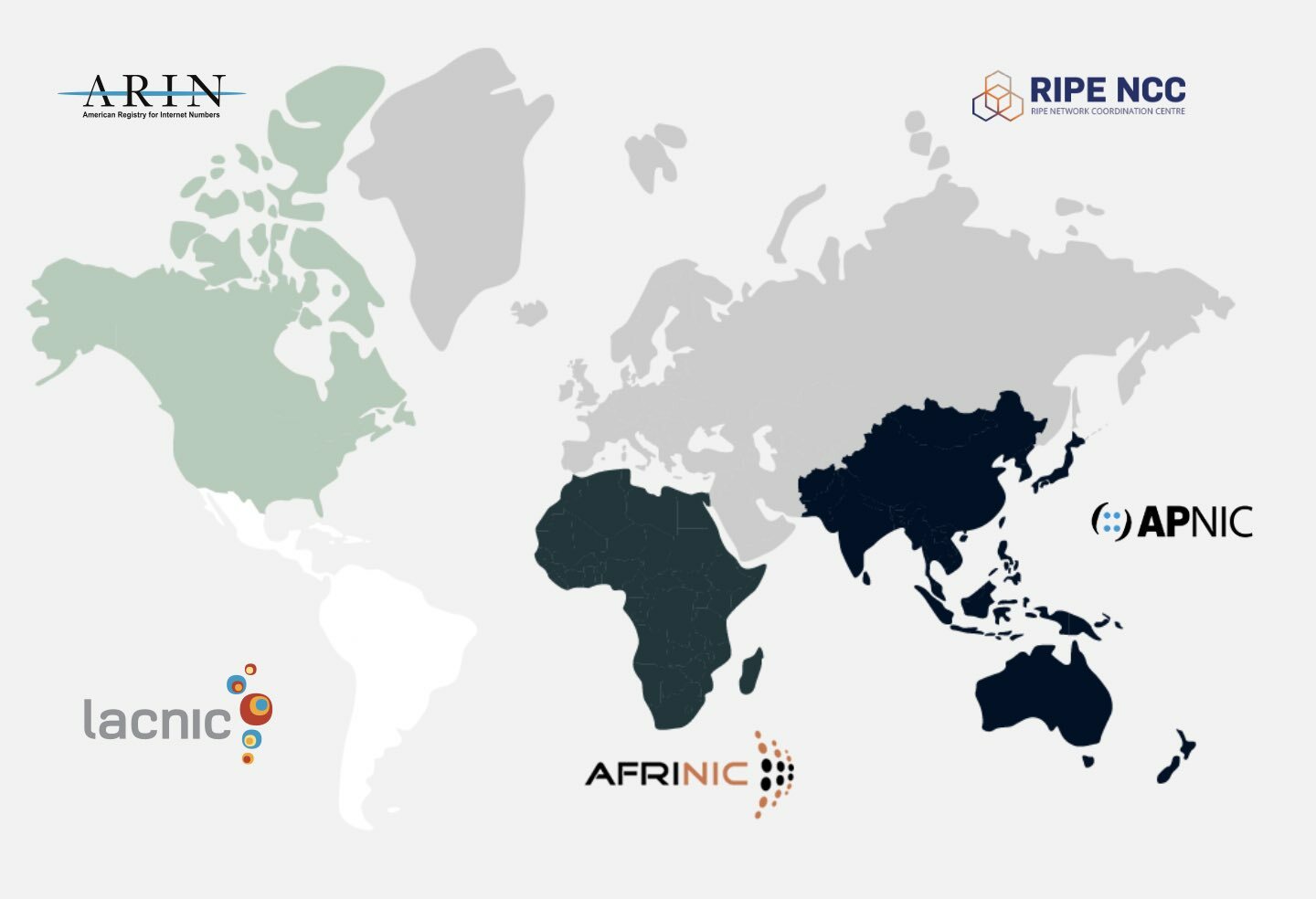
La utilización eficiente del espacio de direcciones IPv4 existente es un enfoque
Incluso si no planeas vender tu bloque IPv4, aún hay formas de obtener ganancias

Una dirección de Protocolo de Internet (IP) es un identificador único asignado
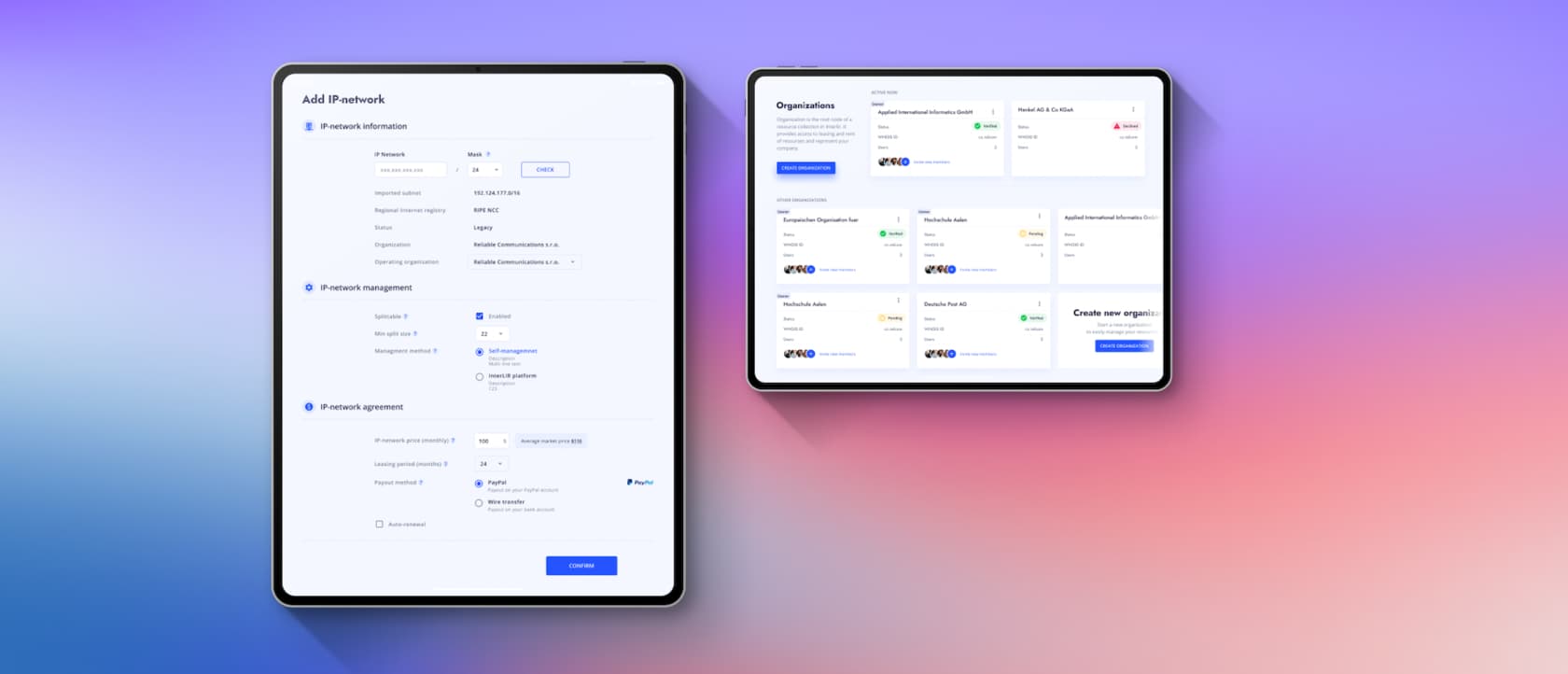
La creciente demanda de bloques de direcciones IP ha elevado los precios y ha convertido
Todo lo que necesitas saber sobre la política de transferencia, fusión, adquisición
Esta política permite transferir direcciones IP solo dentro de la región. Además,
La política de transferencia inter-RIR permite la utilización eficiente del espacio
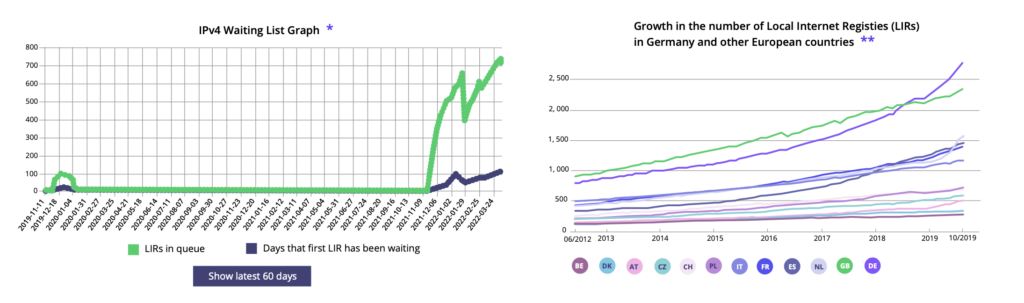
La agotación de direcciones IPv4 es un problema urgente, y las empresas se están
El chat en línea se proporciona mediante Intercom y solo se carga después de su consentimiento. También puede contactarnos sin activar el chat.